There’s something about a European front porch that stops you in your tracks. Maybe it’s the weathered stone, the climbing roses, or the way an old iron lantern catches the evening light. That charm isn’t luck. It comes from thoughtful choices that have stood the test of centuries across France, Italy, England, and beyond.
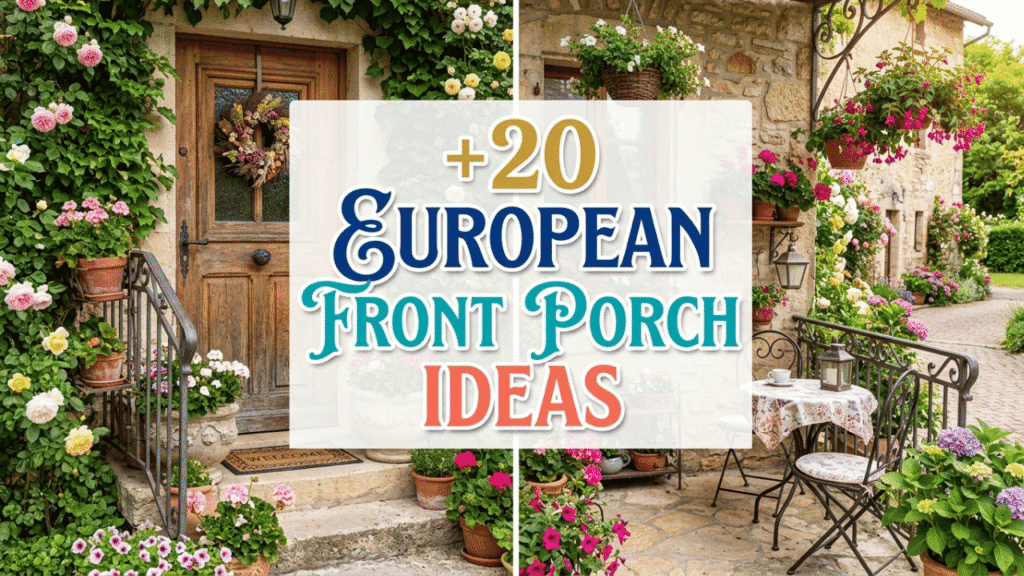
The good news? You don’t need a château or a cobblestone village to bring that look home. With the right materials, colors, and details, you can transform any entryway into something that feels rooted, warm, and timeless.
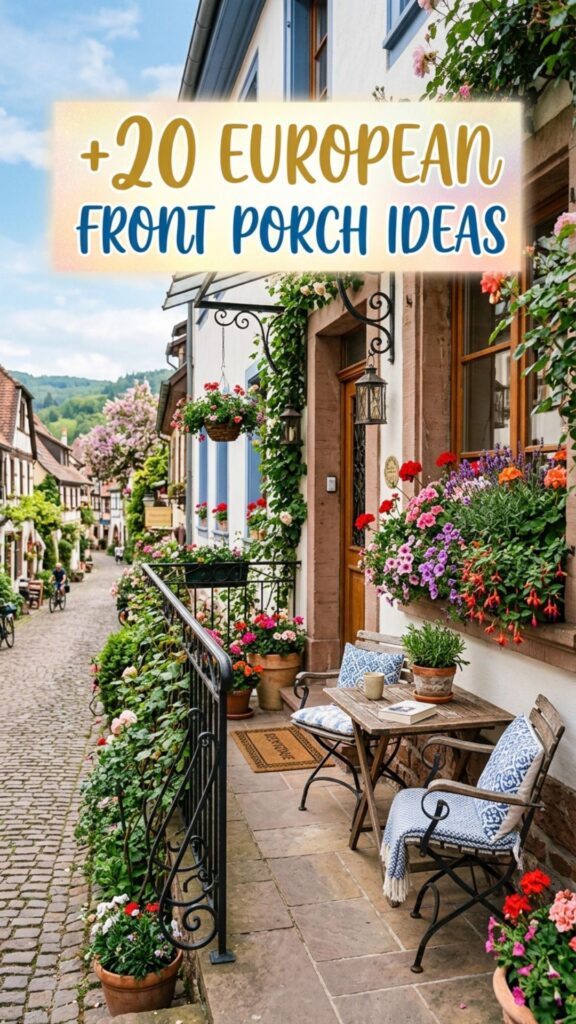
Below, I’ve gathered 20 European front porch ideas you can actually use, whether you’re renovating a whole facade or just refreshing a small stoop. Let’s walk through them.
1. Start With Natural Stone Flooring
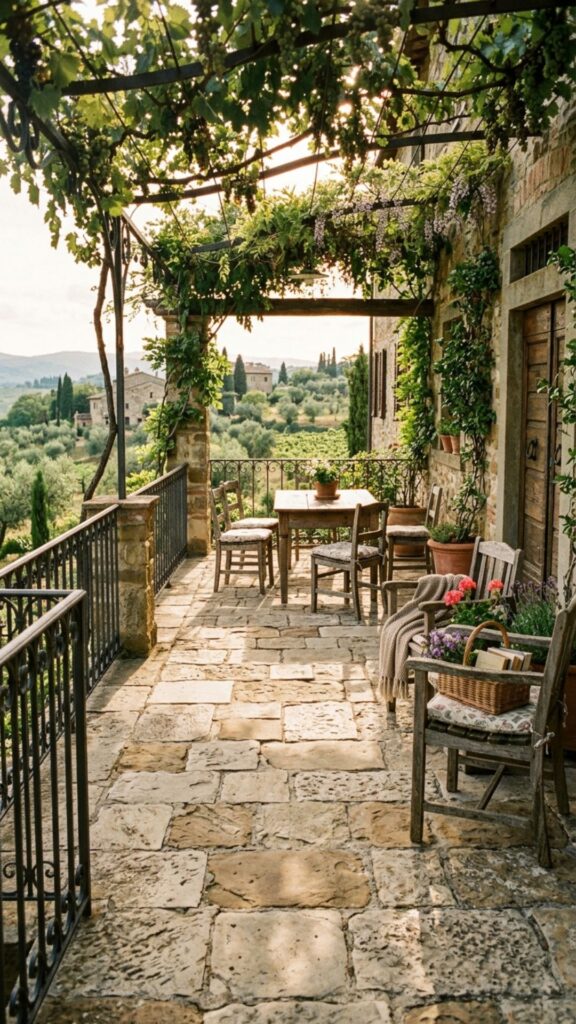
Stone is the backbone of European porch design. Limestone, travertine, and cobblestone pavers give an entryway that grounded, been-here-forever feel. Unlike poured concrete, stone ages gracefully and hides scuffs and weather wear instead of showing them off.
If a full stone replacement feels out of reach, consider stone-look porcelain tiles rated for outdoor use. They mimic the texture of aged limestone at a fraction of the cost and hold up beautifully in freeze-thaw climates. Lay them in an irregular pattern for authenticity.
2. Add a Wrought Iron Railing
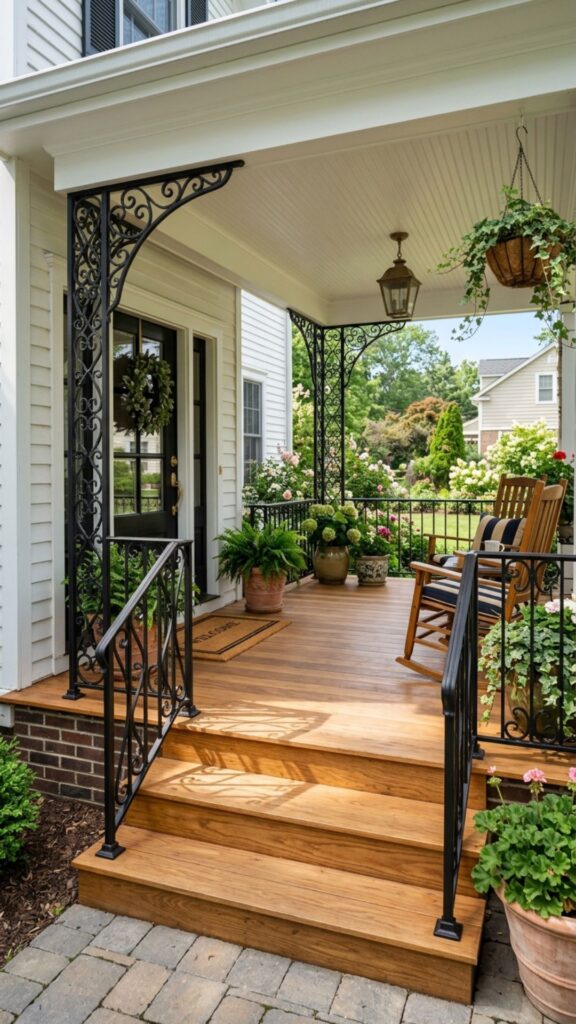
Nothing says European faster than delicate wrought iron. Curved scrollwork railings echo the balconies of Paris and the courtyards of Seville. They add height and drama without blocking your view or making a small porch feel boxed in.
For a lighter budget, look for powder-coated aluminum that mimics iron. It resists rust, needs almost no upkeep, and works in coastal areas where salt air destroys real metal. Paint it matte black or deep bronze for the most convincing effect.
3. Hang a Statement Lantern
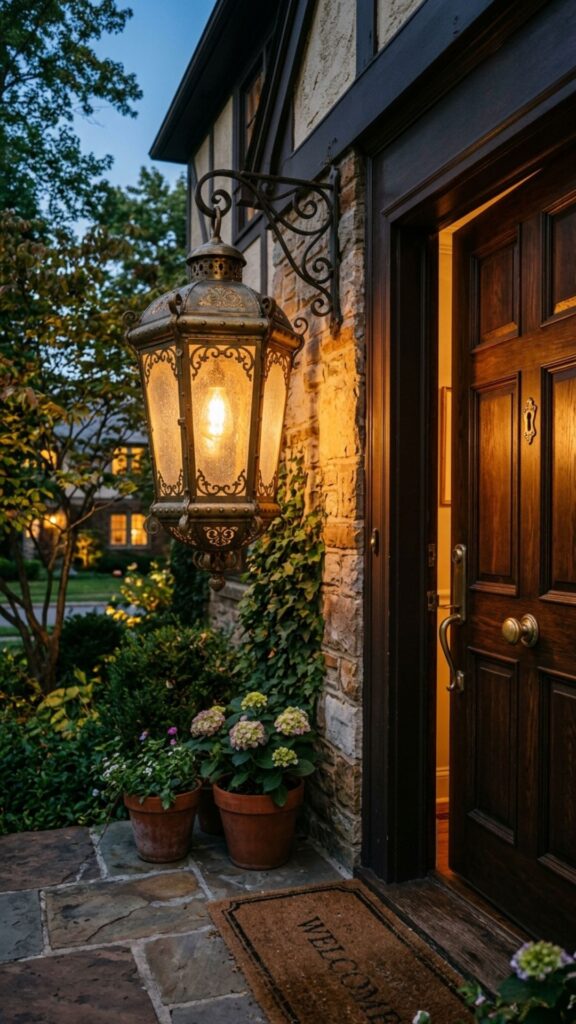
A single oversized lantern can anchor an entire entryway. Think aged brass, seeded glass, and a warm bulb that glows at dusk. European homes often favor one bold fixture over several small ones, and that restraint reads as elegance.
Mount it slightly above eye level so the light spreads across your door and steps. If you have the space, flank the door with matching sconces. Keep the finish consistent to tie the whole look together.
4. Frame the Door With Climbing Roses
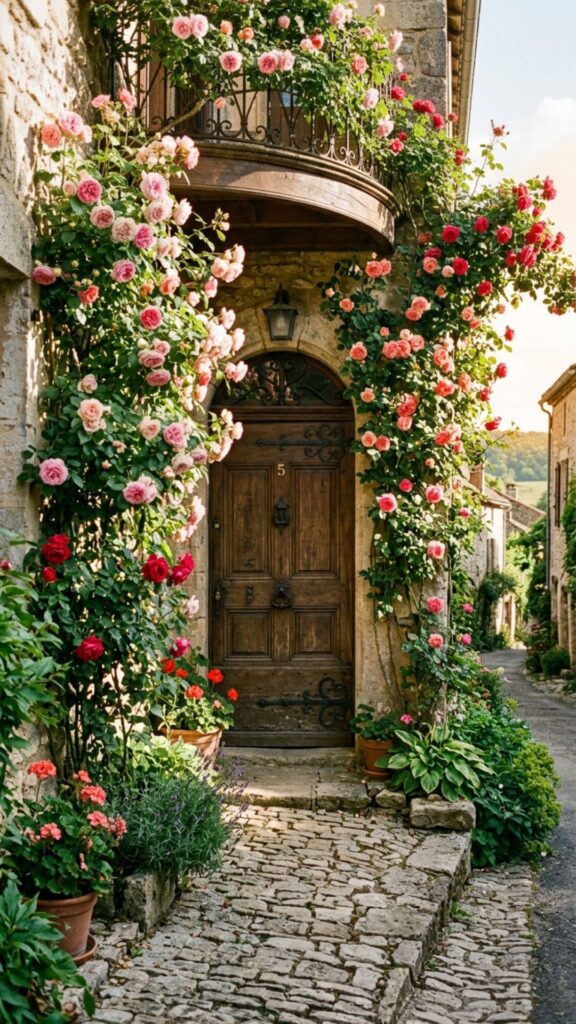
Few things feel more romantic than roses spilling over an archway. Climbing varieties like New Dawn or Zéphirine Drouhin trained around a doorway instantly soften hard architecture and add that lived-in cottage charm.
Install a sturdy trellis before planting, and be patient. Climbers take a season or two to establish. In the meantime, quick-growing clematis or jasmine can fill the gap and add fragrance that greets every guest.
5. Choose a Rich, Muted Door Color
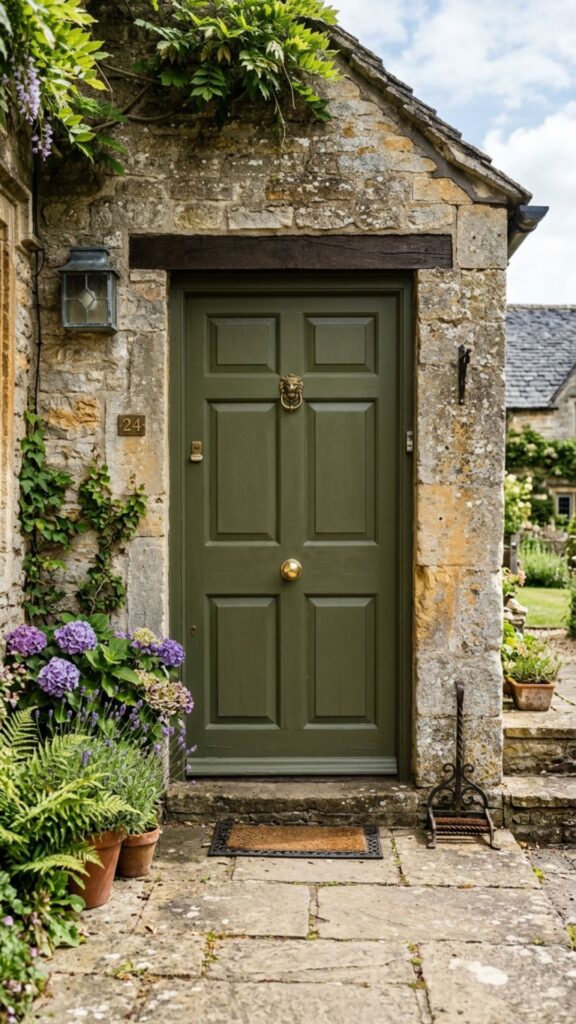
Skip the bright primary colors and reach for something with depth. Think olive green, dusty blue, oxblood red, or a soft chalky gray. These heritage tones feel pulled from an old paint tin in a countryside farmhouse.
A quality exterior paint in a satin finish holds color longer and wipes clean easily. Test a swatch in both morning and evening light before committing, since these muted shades shift dramatically with the sun.
6. Install Weathered Wooden Shutters
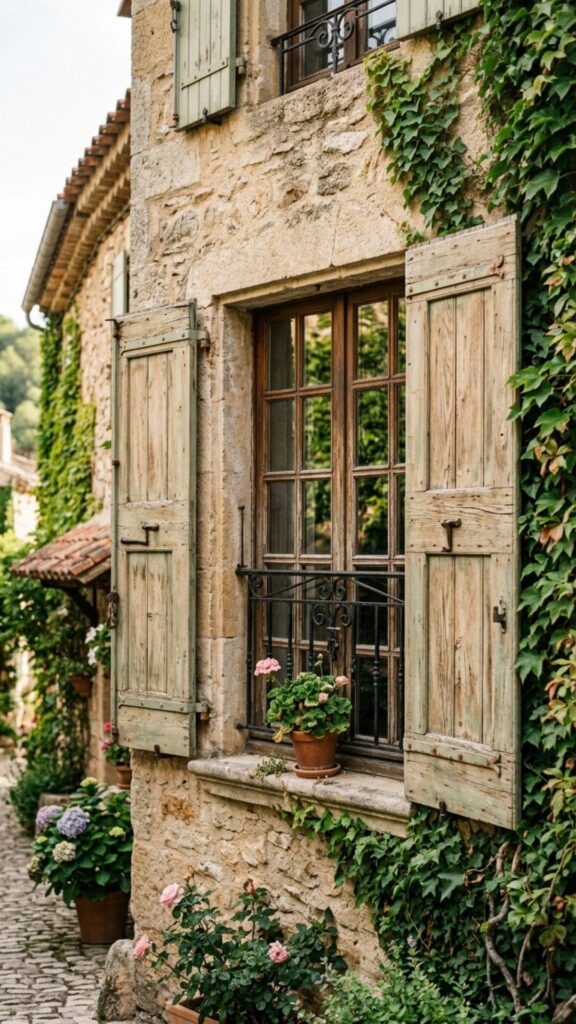
Functional or purely decorative, shutters frame windows and add rhythm to a facade. Wooden louvered or board-and-batten styles suit French and Provençal looks especially well. Left slightly distressed, they nod to homes that have seen generations.
If you go decorative, size them correctly. Each shutter should look like it could actually cover half the window. Undersized shutters are the fastest way to undo an otherwise polished European aesthetic.
7. Layer in Terracotta Pots
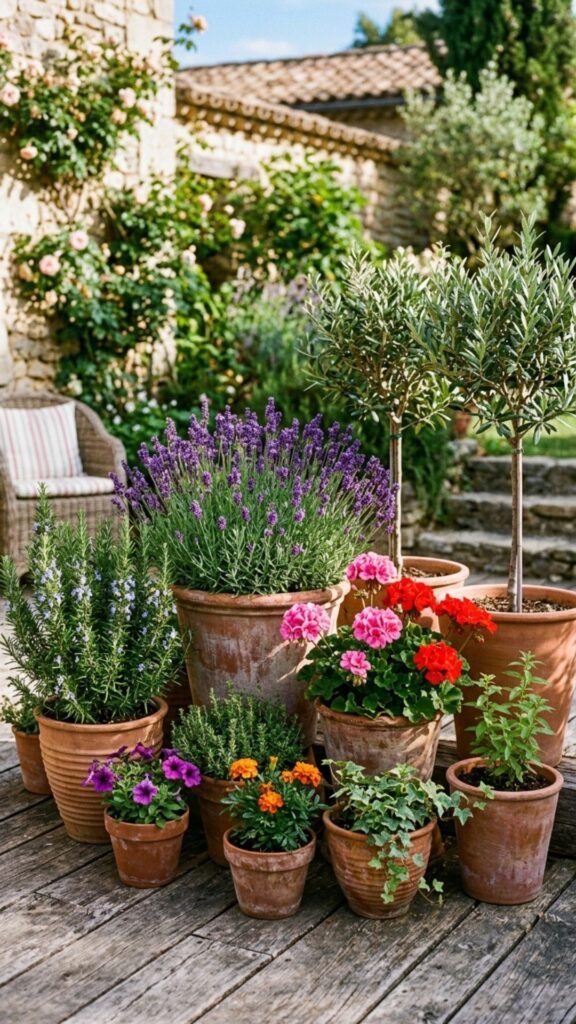
Terracotta is the workhorse of Mediterranean porches. Its warm, earthy tone complements stone and greenery, and it develops a lovely chalky patina over time. Group pots in odd numbers and vary the heights for a relaxed, collected look.
Fill them with lavender, rosemary, olive topiaries, or trailing geraniums. These plants thrive in pots, smell wonderful, and reinforce that sun-drenched European feel even in a cooler climate.
8. Create a Symmetrical Entrance
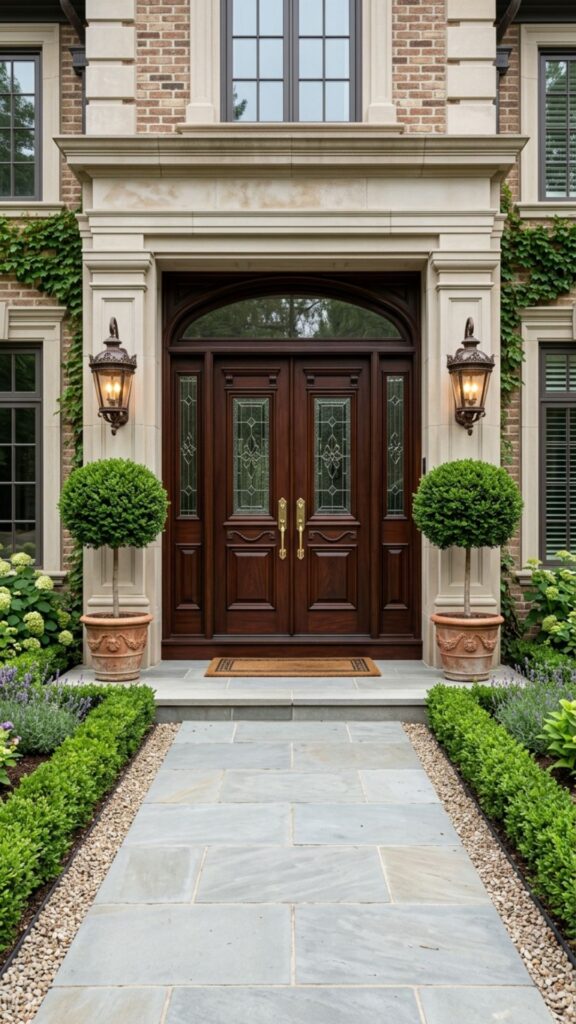
Classic European architecture loves balance. Matching planters, paired lanterns, or twin topiaries on either side of the door create instant order and a sense of grandeur, even on a modest home.
Symmetry is also forgiving. It draws the eye to the center and makes an entrance feel intentional. If your door sits off-center, use plantings or furniture to visually rebalance the space.
9. Use Aged Brick Accents
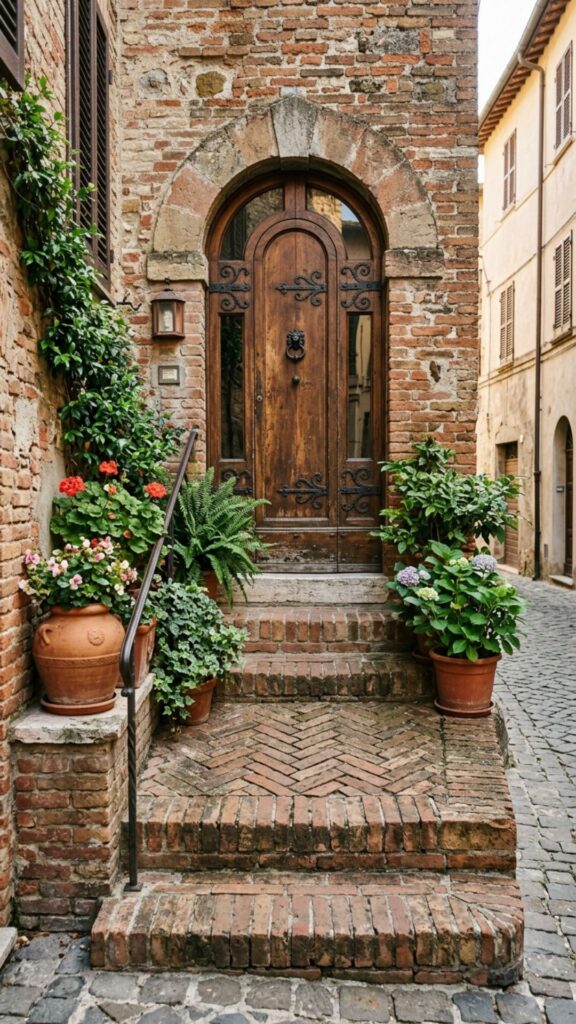
Reclaimed or tumbled brick brings warmth and history. A brick knee wall, column bases, or a herringbone-laid landing can add texture that new construction often lacks. The imperfections are the point.
Pair muted red or buff-toned brick with lime-based mortar for an authentically old finish. Avoid stark white grout, which reads too modern and fights against the aged look you’re after.
10. Add a Vintage Bench or Bistro Set
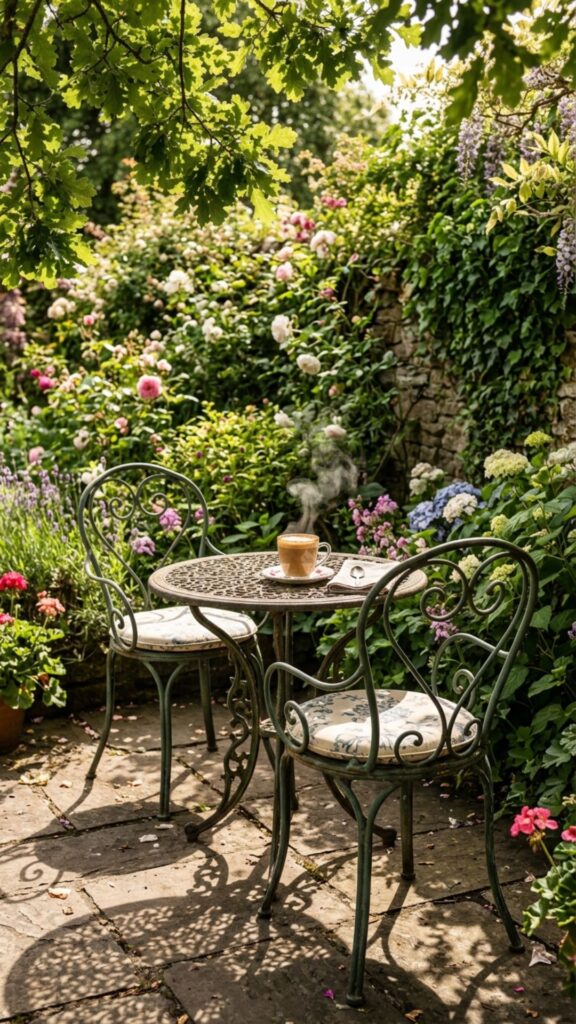
A porch should invite you to linger. A weathered wooden bench, a curved iron bench, or a small café table with two chairs turns an entry into a spot for morning coffee. This is where European homes shine, treating the threshold as a room in itself.
Choose pieces with a little age or patina. New furniture can look right too, but distressed finishes blend more naturally with stone and iron. Add a linen cushion for comfort.
11. Incorporate an Arched Doorway
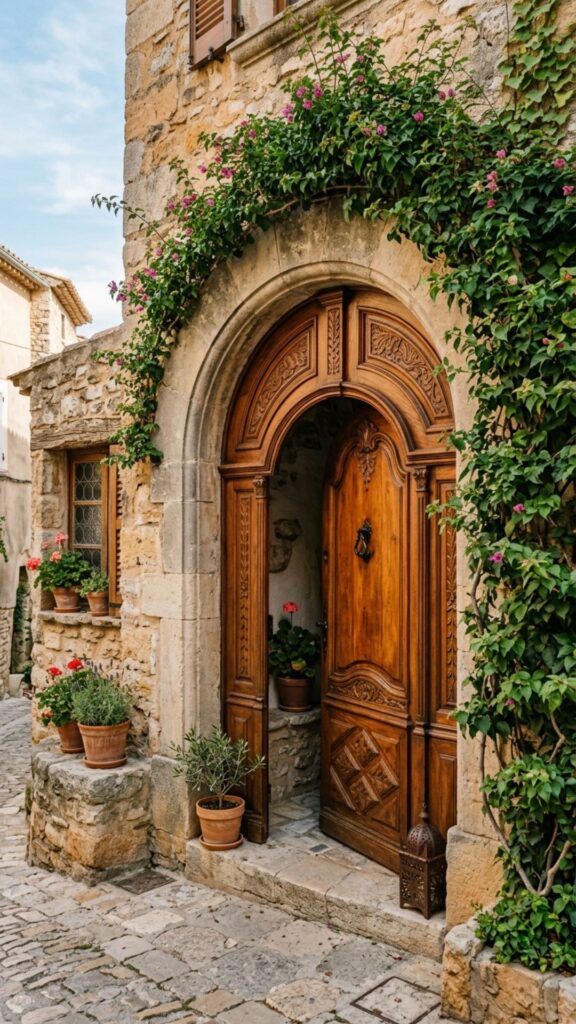
The arch is a signature of Mediterranean and Tudor design. If your budget allows, an arched doorway or an added arch over an existing rectangular door softens the entire facade and adds architectural interest.
Can’t rebuild the door? An arched trellis, an arched mirror, or arched planting beds can suggest the shape without construction. Even an arch painted on stucco can trick the eye beautifully.
12. Lay Down a Gravel Path
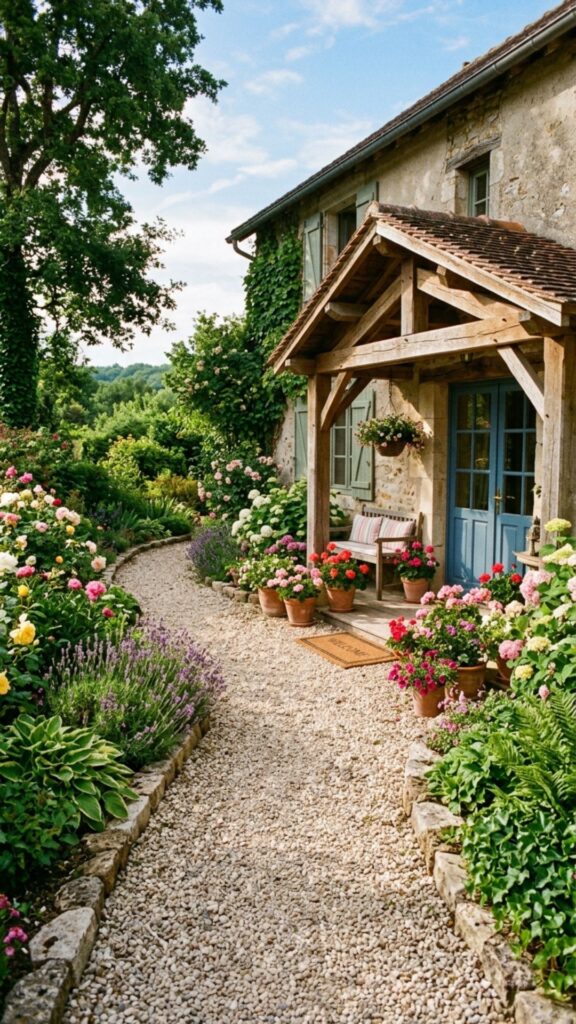
Crunchy pea gravel or crushed limestone leading to your door feels straight out of a French garden. It drains well, costs little, and pairs perfectly with stone and greenery.
Edge the path with stone or steel to keep gravel contained. A few stepping stones set into the gravel add function and keep shoes cleaner during wet weather.
13. Hang Window Boxes Full of Blooms
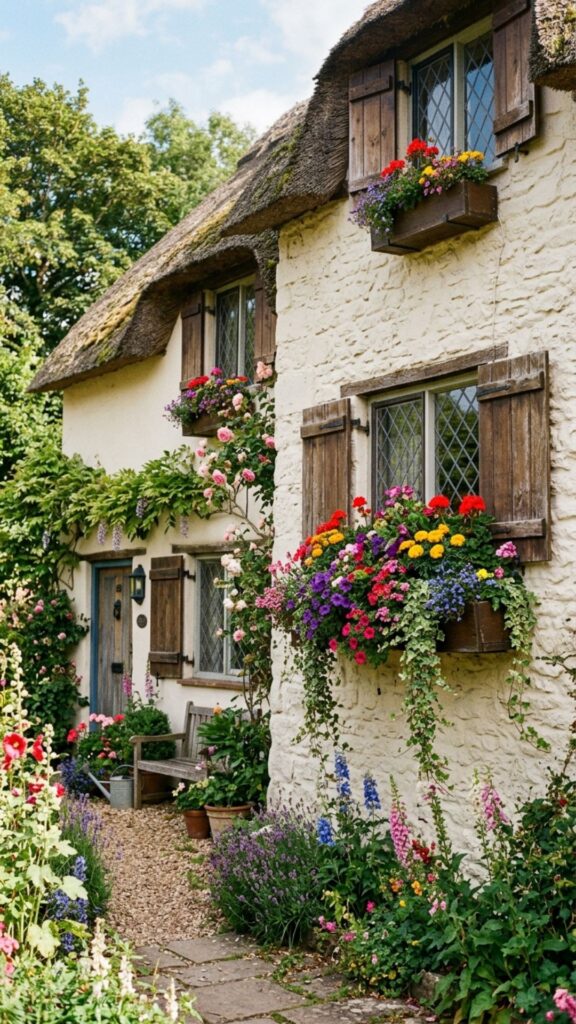
Window boxes overflowing with color are a hallmark of Swiss chalets and English cottages alike. They add cheer at eye level and connect your porch to the windows above it.
Plant a mix of upright and trailing flowers, like petunias with ivy, so blooms cascade down the wall. Line boxes with a good potting mix and water often, since raised planters dry out fast in summer sun.
14. Feature a Stone or Iron Water Detail
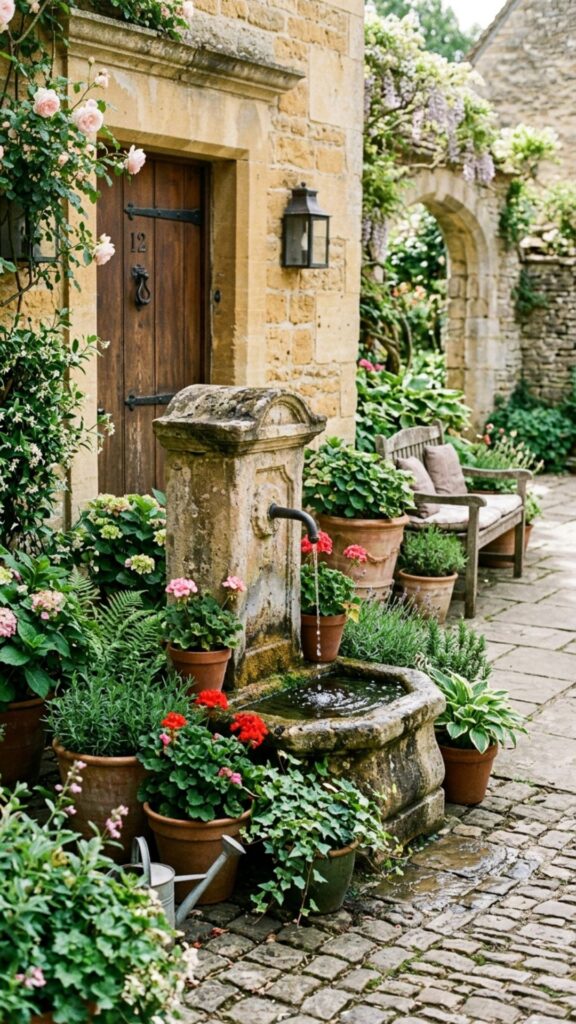
A small wall-mounted fountain or an old stone trough adds gentle sound and a sense of calm. European courtyards often center on water, and even a compact version brings that serene mood home.
If plumbing feels like too much, a recirculating solar fountain needs no wiring. Tuck it among your potted plants where the trickle can be heard from your seating area.
15. Install a Timber Pergola or Overhang
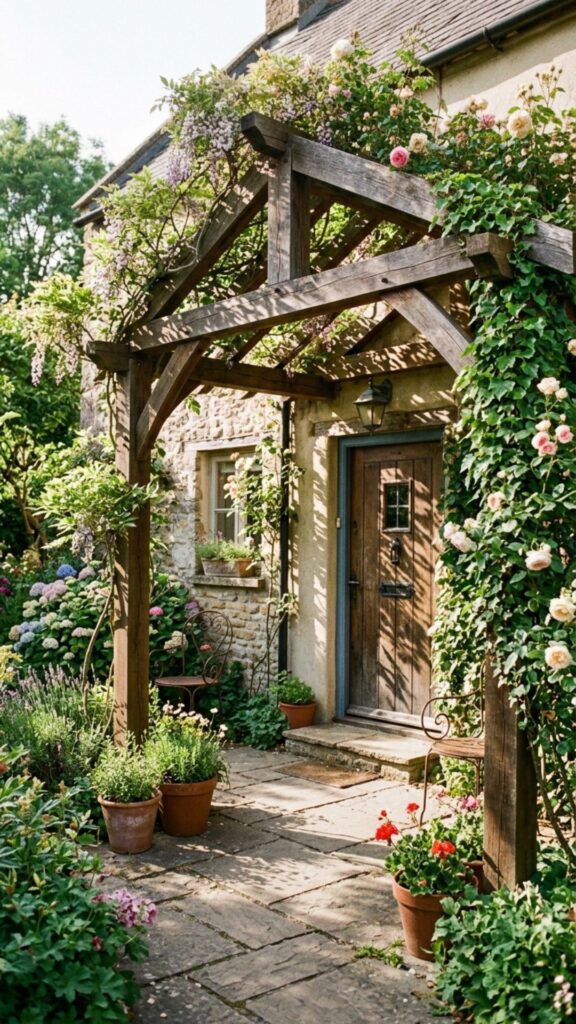
A wooden pergola over the entrance provides shade, structure, and a place for vines to climb. Heavy timber beams feel especially at home on rustic Italian and French country facades.
Stain the wood in a warm, natural tone rather than painting it. Over time, a grapevine or wisteria trained across the top will create dappled shade and a living ceiling that changes with the seasons.
16. Choose Antique Hardware
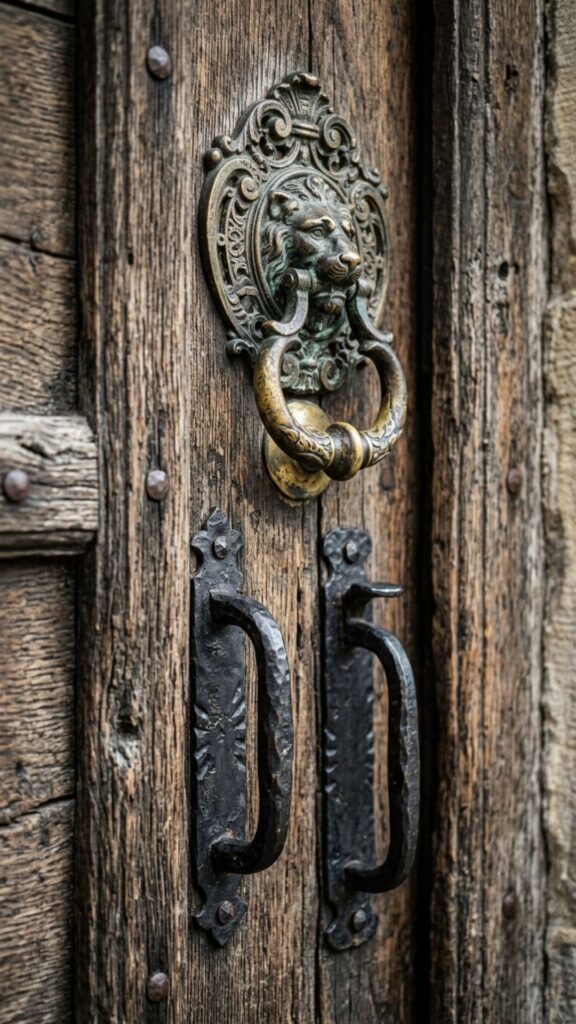
Details matter. Swap shiny modern handles and knockers for aged brass, black iron, or hand-forged pieces. A heavy door knocker or an oversized handle instantly signals old-world craftsmanship.
Salvage yards and specialty shops are goldmines for authentic pieces. If you buy new, look for living finishes that darken and mellow with handling rather than sealed coatings that stay glossy forever.
17. Add Lime-Washed or Stucco Walls
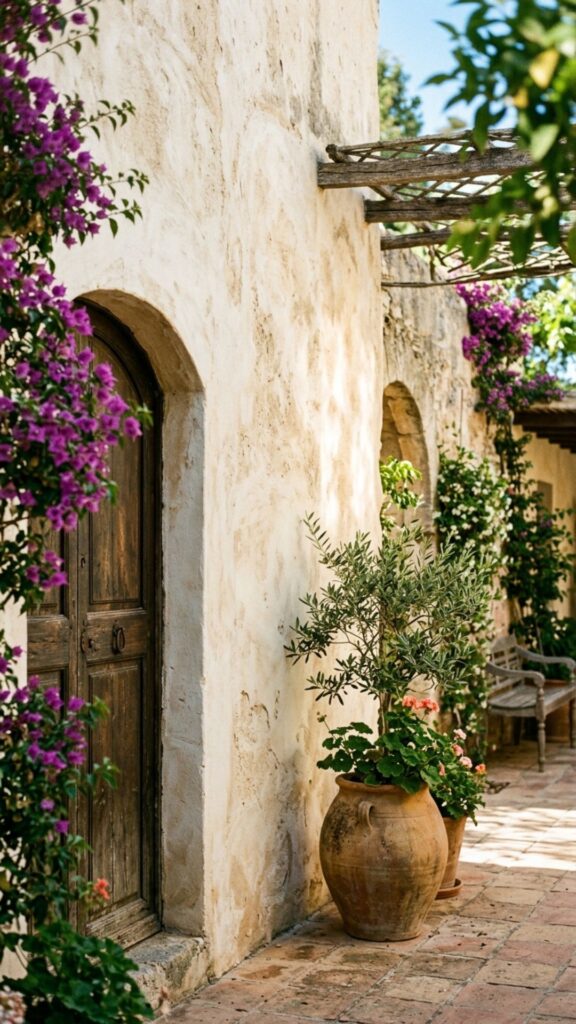
Lime wash and textured stucco give walls that soft, chalky depth found across the Mediterranean. The finish reflects light gently and looks better as it weathers, unlike flat modern paint.
Warm whites, soft creams, and pale ochres suit this technique best. Lime wash is breathable, which helps older masonry walls stay dry and healthy, an added bonus beyond the good looks.
18. Layer Textured Outdoor Textiles
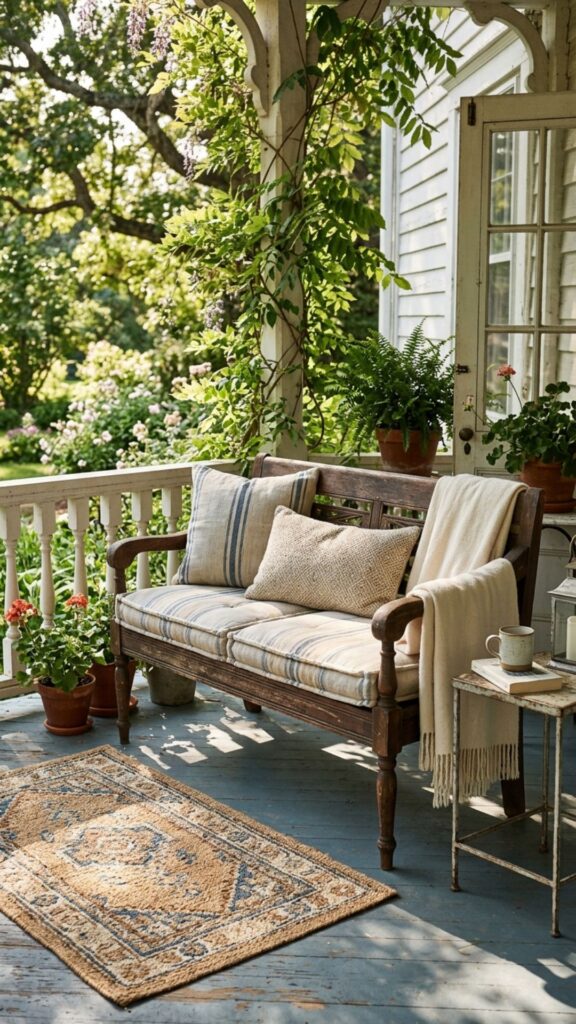
Soft touches keep a porch from feeling cold. A striped linen cushion, a woven jute mat, or a draped throw over a bench adds comfort and that gathered, personal quality European homes do so well.
Stick to natural fibers and muted, earthy patterns. Ticking stripes, faded florals, and simple neutrals age gracefully and won’t compete with the stone and iron around them.
19. Add Boxwood or Topiary Greenery
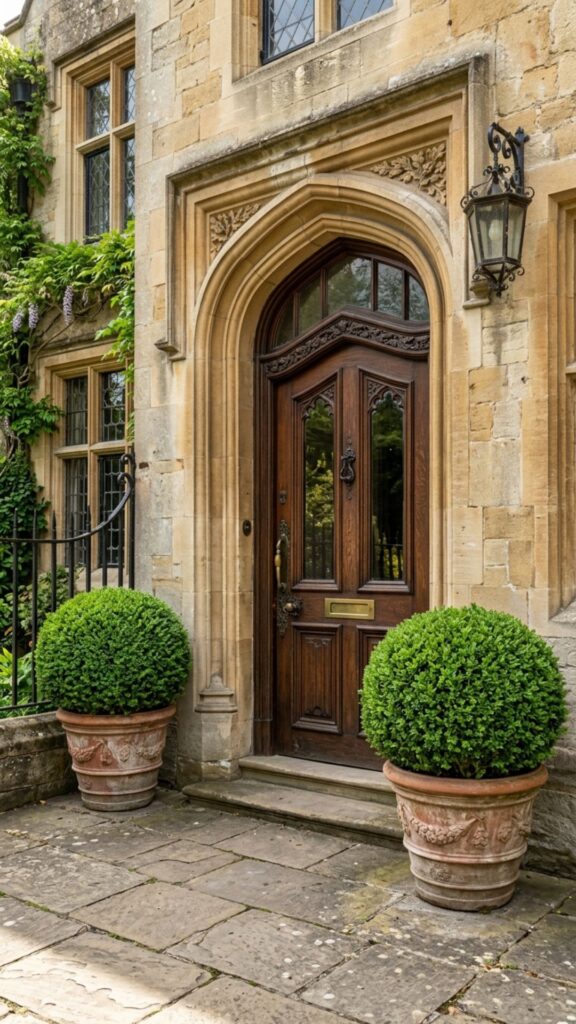
Clipped boxwood, bay laurel, and topiaries bring year-round structure. Their neat shapes contrast beautifully with rougher stone and add the manicured formality of a European garden.
Flank your door with a matching pair in handsome pots for instant polish. Trim them a few times a year to keep the shapes crisp, and they’ll reward you with green through every season.
20. Finish With Warm, Layered Lighting
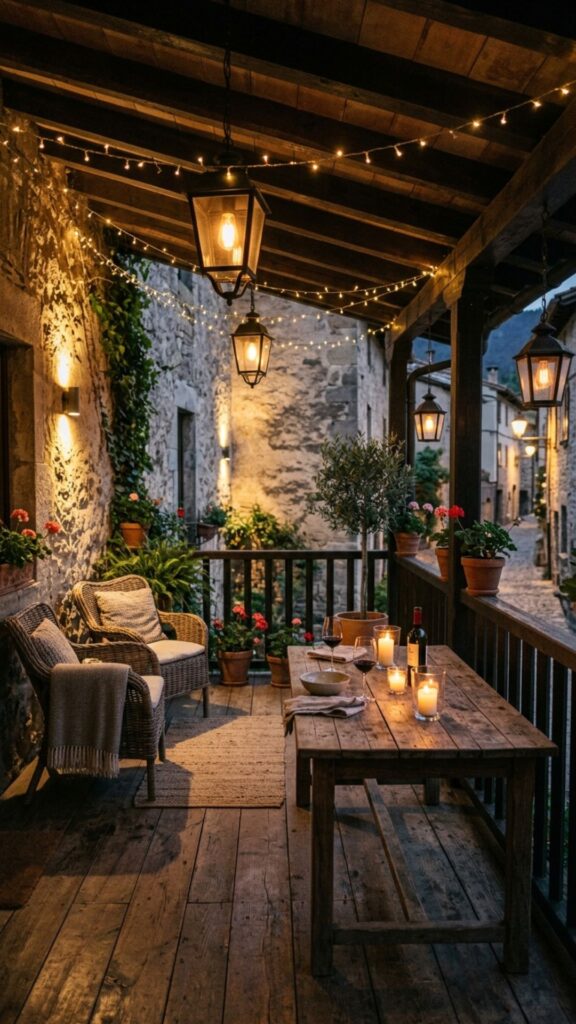
Lighting ties everything together once the sun sets. Combine your main lantern with softer accents: a string of café lights, a candle lantern on the table, or subtle uplighting on a stone wall.
Aim for warm bulbs around 2700K to mimic candlelight. Layered, low light feels intimate and inviting, exactly the mood a timeless European entrance should give off after dark.
Bringing Your European Porch Vision to Life
Building timeless curb appeal isn’t about copying one style exactly. It’s about layering natural materials, muted colors, and thoughtful details until your entrance feels rooted and welcoming. Start with one or two of these ideas, like a stone path and a statement lantern, then build from there as budget and time allow.
Ready to transform your entryway? Pick your three favorite ideas from this list and sketch out a simple plan this weekend. Snap a photo of your current porch, note what materials and colors you already have, and choose one project to tackle first. Small, steady changes add up to the kind of timeless charm that turns heads for years to come.
What makes a front porch look European?
A European front porch typically features natural materials like stone, aged brick, and wrought iron, paired with muted heritage colors, symmetrical layouts, and greenery such as climbing roses or clipped boxwood. The overall goal is a weathered, timeless look rather than a bright, brand-new one.
How can I get European front porch ideas on a budget?
Focus on high-impact, low-cost swaps. Repaint your door in a muted heritage color, add terracotta pots with lavender or rosemary, lay down pea gravel, and switch out modern hardware for aged brass or black iron. These small changes deliver big charm without major construction.
What colors work best for a European-style porch?
Muted, earthy tones work best. Think olive green, dusty blue, oxblood red, soft creams, pale ochres, and warm whites. These heritage shades feel authentic and pair naturally with stone, brick, and iron accents.
What plants suit a European front porch?
Lavender, rosemary, boxwood, bay laurel, climbing roses, geraniums, jasmine, and wisteria are all excellent choices. They thrive in pots or trained on trellises and reinforce that classic Mediterranean and cottage-garden feel.
How do I make a small porch feel European?
Use symmetry, a single bold lantern, a compact bistro set, and a few terracotta pots to make the most of limited space. Vertical elements like a trellis or climbing vine draw the eye upward and add charm without crowding the floor.