Your kitchen is one of the hardest-working rooms in your home — and your appliances work just as hard. But between the air fryer, the stand mixer, the toaster, the blender, and that coffee maker you couldn’t live without, counter space disappears fast. If you’re constantly shuffling gadgets just to find room to chop an onion, you’re not alone.
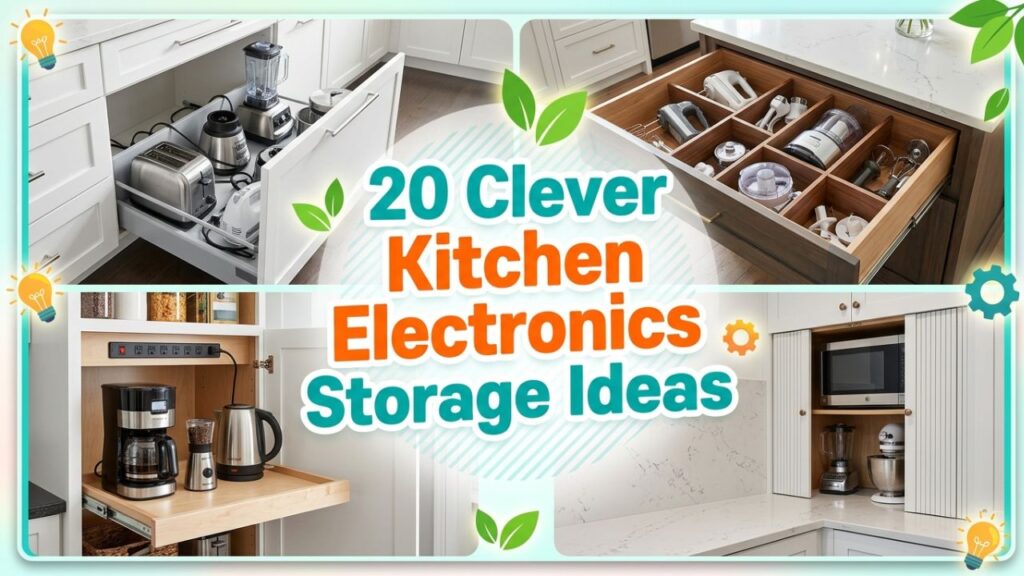
Smart kitchen electronics storage isn’t just about tidiness. It’s about making your kitchen actually work for you. When your appliances are organized, accessible, and properly stored, cooking becomes less stressful and more enjoyable.
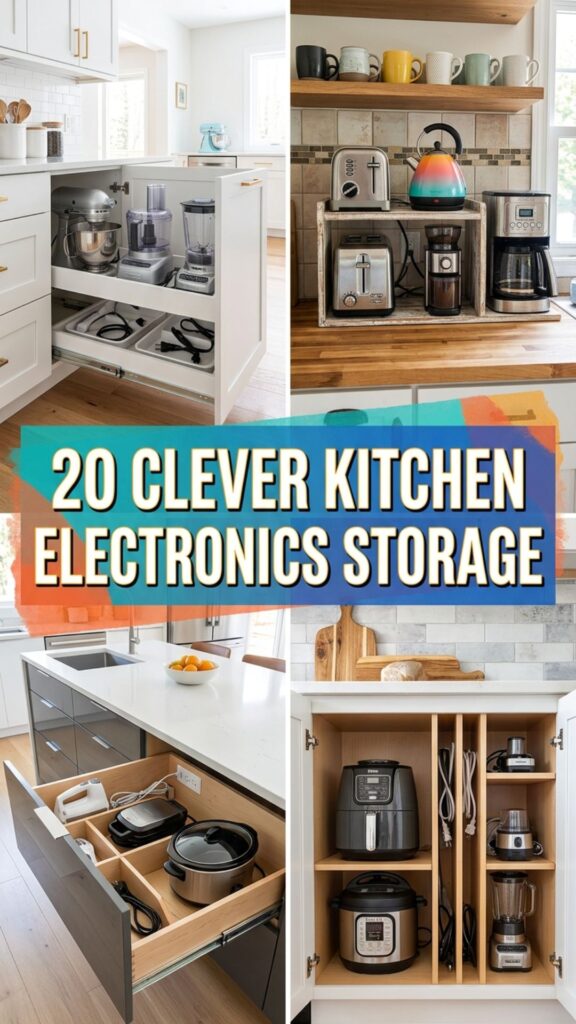
In this guide, you’ll find 20 practical, creative ideas to store your kitchen electronics — whether you’re working with a compact apartment kitchen or a spacious suburban layout. Some ideas cost nothing. Others require a small investment. All of them can genuinely change how you use your kitchen every day.
1. Use a Dedicated Appliance Garage to Hide Countertop Clutter
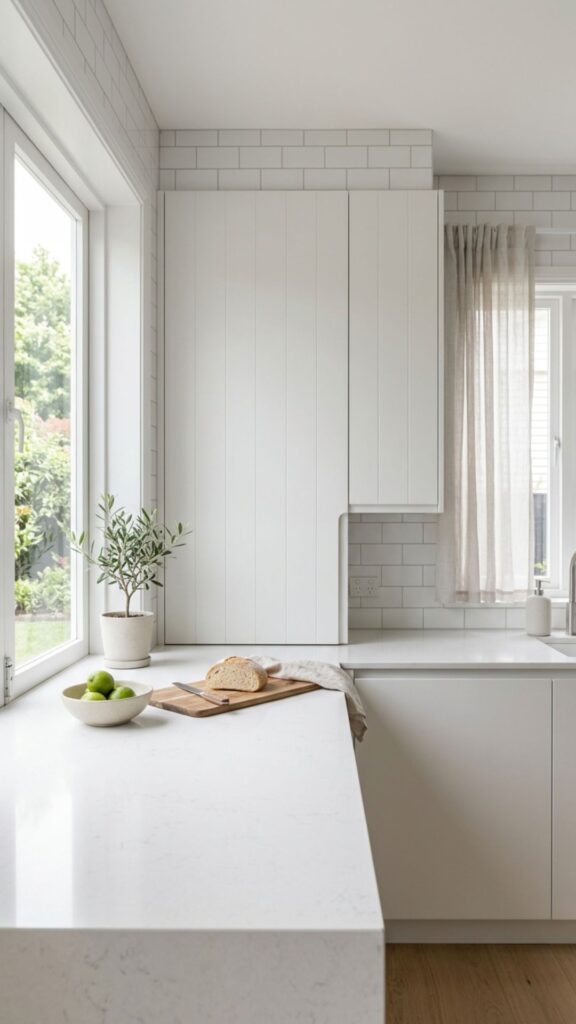
An appliance garage is a cabinet built directly on the countertop, usually with a roll-up or hinged door. Slide your toaster, coffee maker, or blender inside, close the door, and your counter looks instantly clean. These are especially popular in kitchens with limited upper cabinet space. You can find ready-made versions at home improvement stores or have one built into existing cabinetry.
For the best results, make sure the garage has an interior outlet so appliances stay plugged in and ready to use without pulling them out entirely.
2. Mount a Microwave Under the Cabinet to Free Counter Space
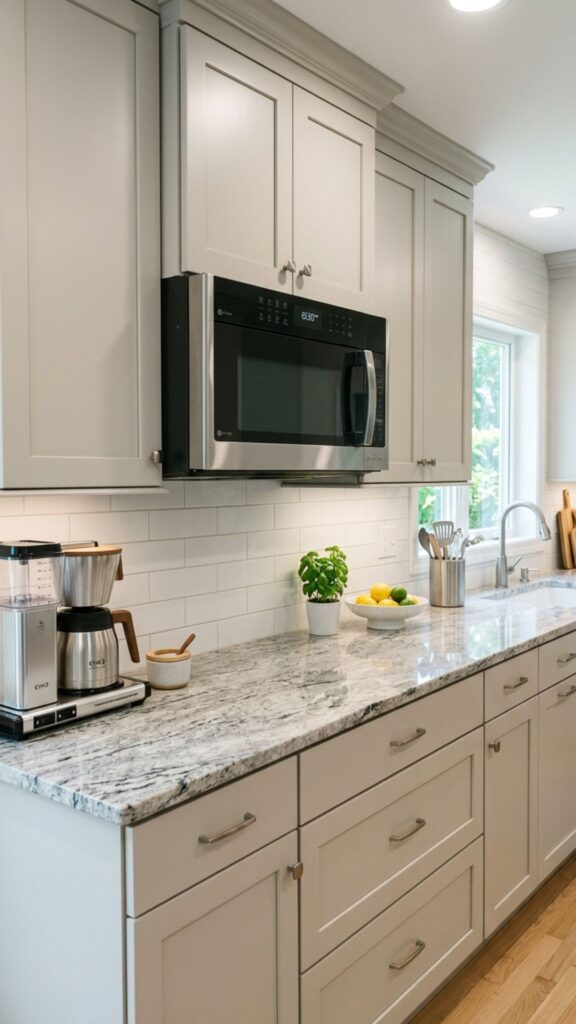
If your microwave lives on the counter, it’s taking up more real estate than almost any other appliance. Under-cabinet microwaves mount directly to the bottom of your upper cabinets, freeing that space entirely. Many models also double as range hoods, which makes them a practical two-in-one solution over the stove.
Installation requires basic tools and an outlet nearby, but the payoff in counter space is significant — often 2 to 3 square feet recovered immediately.
3. Install Pull-Out Shelves in Lower Cabinets for Heavy Appliances
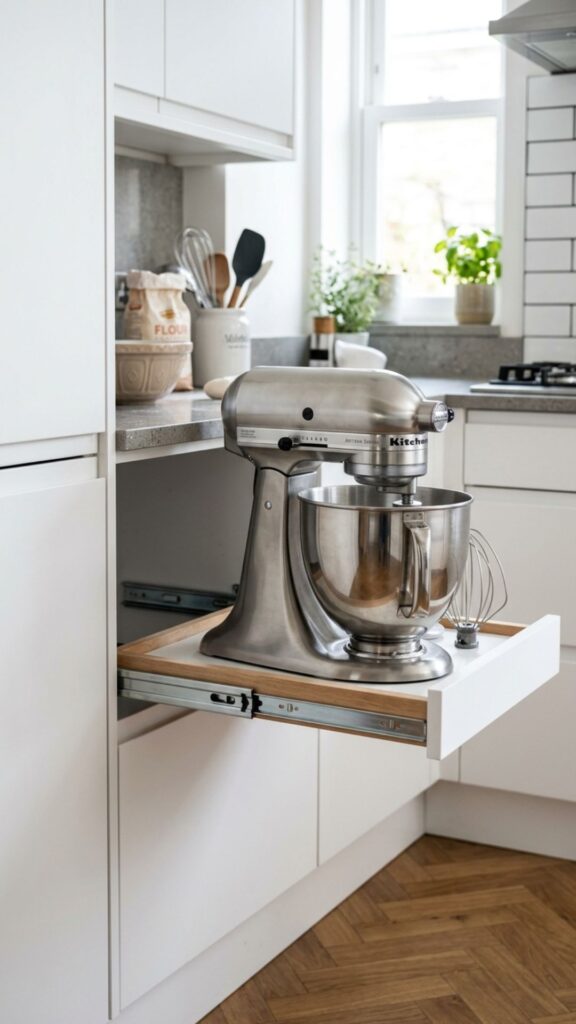
Stand mixers, food processors, and large blenders are heavy and awkward to lift. A pull-out shelf inside a lower cabinet lets you slide the appliance forward, use it in place, then slide it back — no heavy lifting needed. These shelves are available in standard sizes and can be retrofitted into most existing cabinets with basic hardware.
Look for models rated for at least 50 pounds if you’re storing heavier appliances like a KitchenAid mixer.
4. Create a Charging Station Drawer for Small Kitchen Electronics
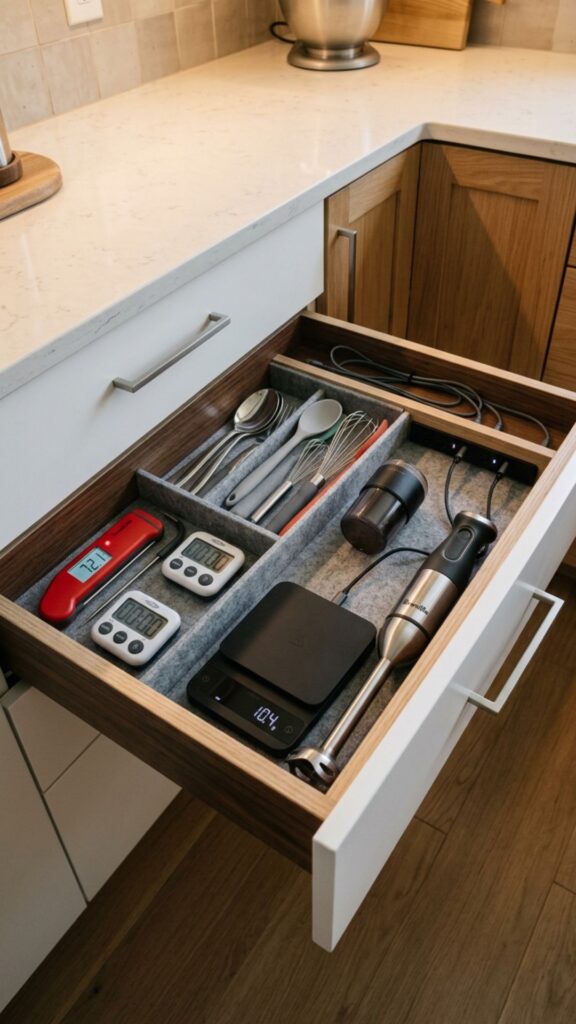
Small gadgets like digital meat thermometers, kitchen timers, handheld mixers, and tablet recipe holders all need a home. A dedicated drawer with a built-in charging strip keeps these smaller electronics organized, charged, and out of sight. You can DIY this by adding a power strip to the back of a deep drawer and running the cord through a small drilled hole.
Divide the drawer with bamboo or acrylic organizers to keep each item in its own spot.
5. Use a Rolling Cart as Flexible Kitchen Electronics Storage
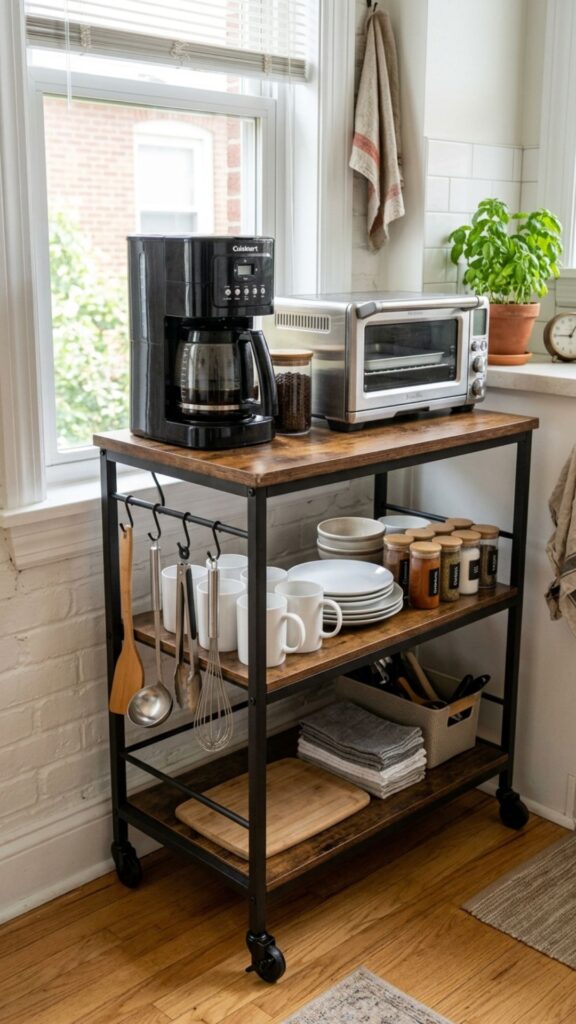
A rolling kitchen cart gives you extra surface and storage space that moves where you need it. Use the top for your coffee station or toaster oven, and tuck the cart under a counter or against a wall when it’s not in use. Many carts include shelves, hooks, and drawers that let you store accessories alongside the appliances.
The key advantage here is flexibility — you can rearrange as your needs change without committing to permanent installations.
6. Mount a Tablet or Recipe Screen Holder Under Cabinets
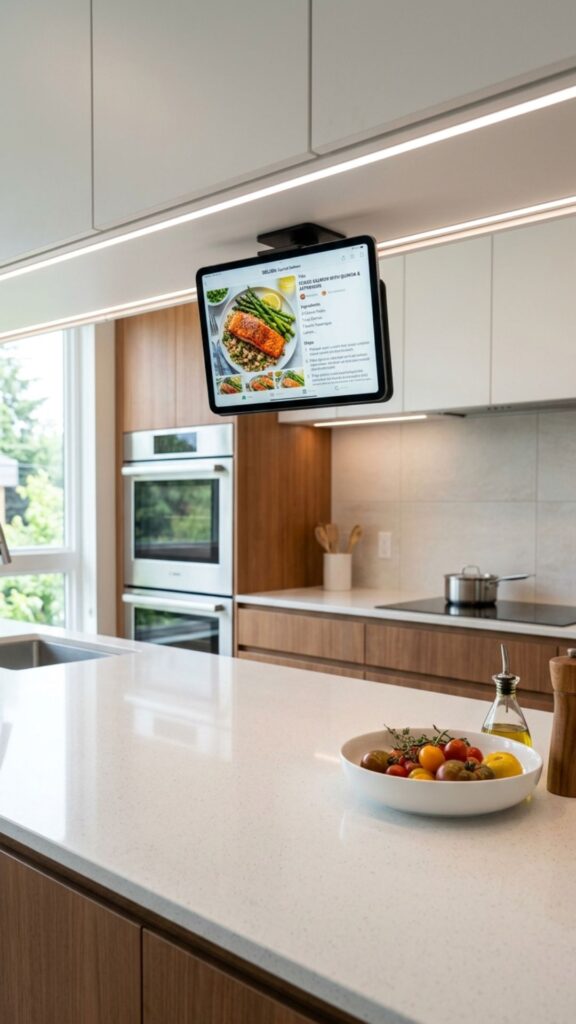
If you use a tablet or phone as your recipe source, a mounted holder keeps it at eye level and off the counter. There are under-cabinet brackets designed specifically for this that swing out when needed and fold flat when not. This small change clears a surprising amount of counter space and protects your device from spills.
7. Dedicate a Deep Pantry Shelf to Medium-Sized Appliances
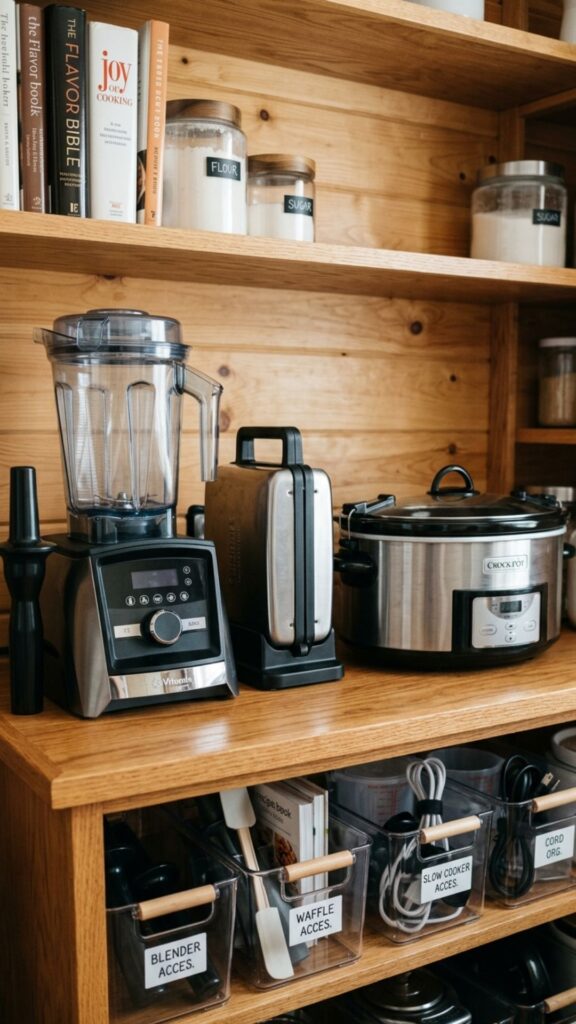
Pantries are underutilized for appliance storage. A deep shelf — at least 18 inches — can comfortably hold a blender, food processor, waffle maker, or slow cooker. Group similar appliances together and store accessories in labeled bins on the same shelf. This approach works especially well for appliances you use weekly but not daily.
Measure your appliances before adjusting shelf heights so nothing gets crammed in awkwardly.
8. Add a Pegboard Wall for Lightweight Electronics and Accessories
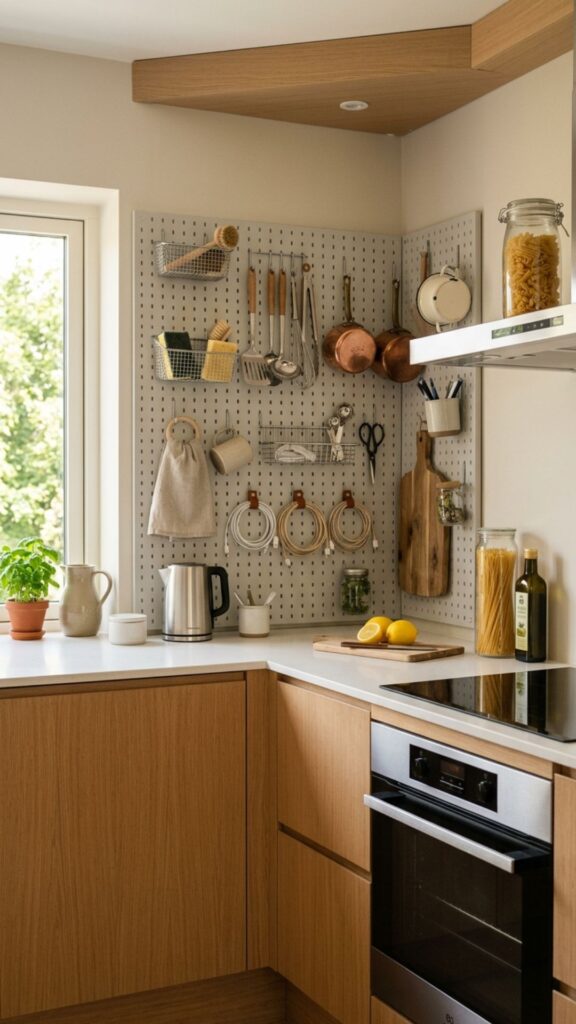
Pegboards aren’t just for garages. Mounted on a kitchen wall, a pegboard lets you hang lightweight items like a handheld immersion blender, a small scale, cord organizers, or even the tablet you use for recipes. Hooks and baskets are completely customizable and can be rearranged as your kitchen evolves.
Paint the pegboard to match your kitchen’s color scheme and it becomes a functional design feature rather than an eyesore.
9. Store Seldom-Used Appliances in High Cabinets or on Top of Fridges
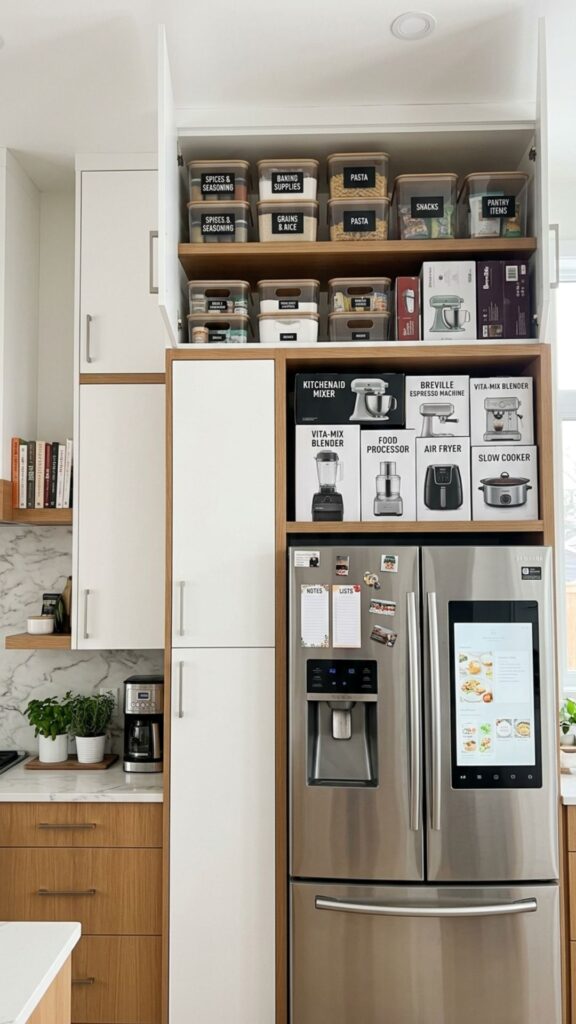
The highest shelves in your kitchen and the space on top of your refrigerator are prime real estate for appliances you use only occasionally — think bread makers, ice cream machines, or holiday-specific gadgets. Store these in their original boxes or in labeled bins to protect them and keep things tidy.
Keep a step stool nearby so accessing these spots is safe and easy.
10. Use Cabinet Door Organizers for Cords and Small Accessories
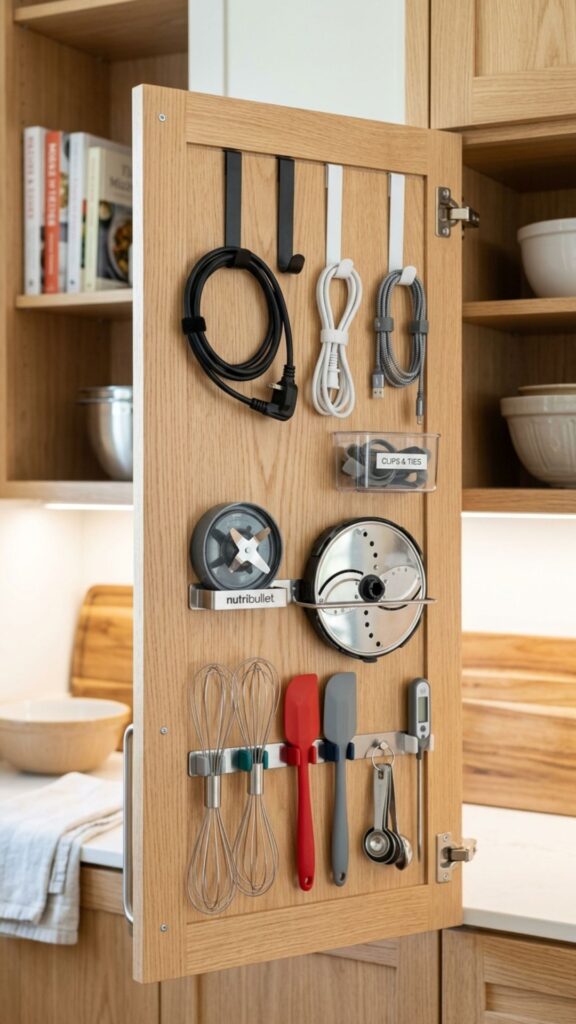
The insides of cabinet doors are often completely empty. Adhesive or screw-mounted organizers can hold charging cables, small kitchen electronics accessories like blender blades, or even a compact tablet stand. This approach uses space that already exists without requiring any new furniture or major renovation.
11. Create a Coffee Station With Built-In Electronics Storage
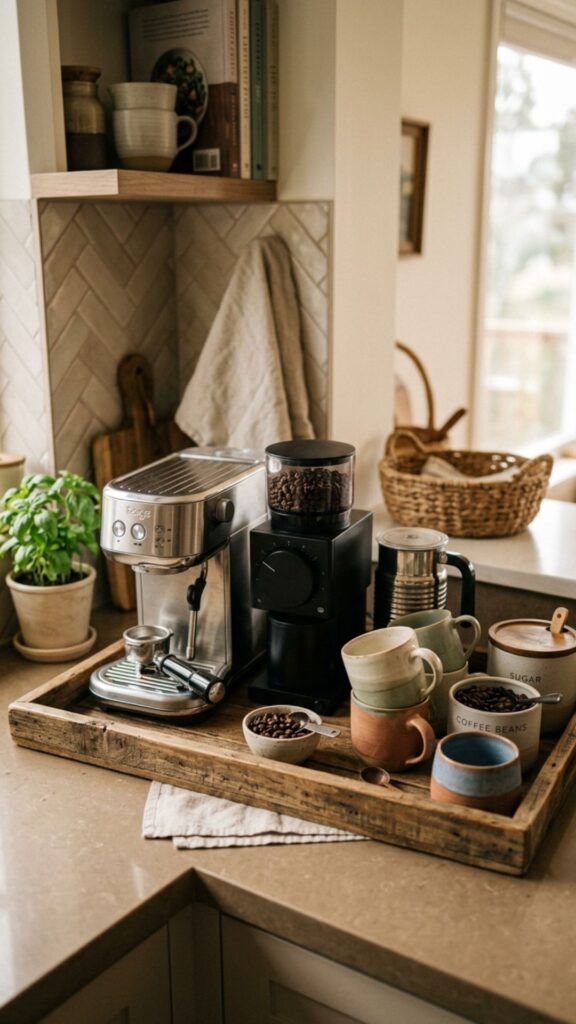
If coffee is a daily ritual, give it a dedicated zone. Group your coffee maker, grinder, frother, and any smart coffee accessories together on a tray or in a designated corner. Use a small shelf above to store mugs and supplies. Keeping everything in one spot reduces clutter elsewhere and makes your morning routine faster.
A wooden tray or a small butcher block slab works perfectly as a base to define the space.
12. Use Vertical Dividers in Cabinets for Flat Appliances
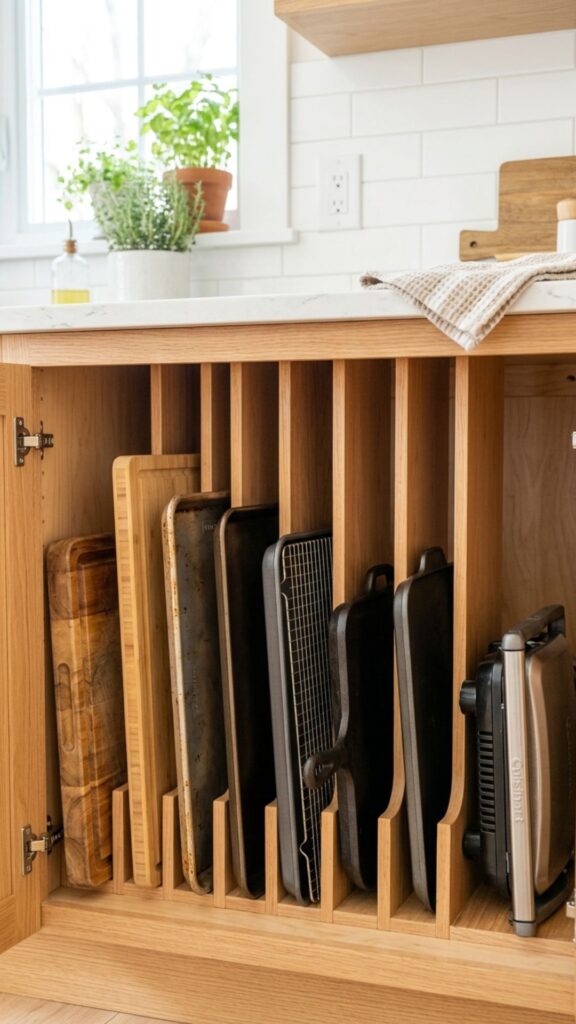
Baking sheets, cutting boards, and flat appliances like panini presses and griddles are notoriously hard to store because they don’t stack well. Vertical dividers — either installed or store-bought — let you slide these items in upright, like files in a drawer. This makes them easy to grab without unstacking a pile.
Tension-mounted dividers require no tools and work in most cabinet widths.
13. Try a Dedicated Appliance Cabinet With Interior Outlets
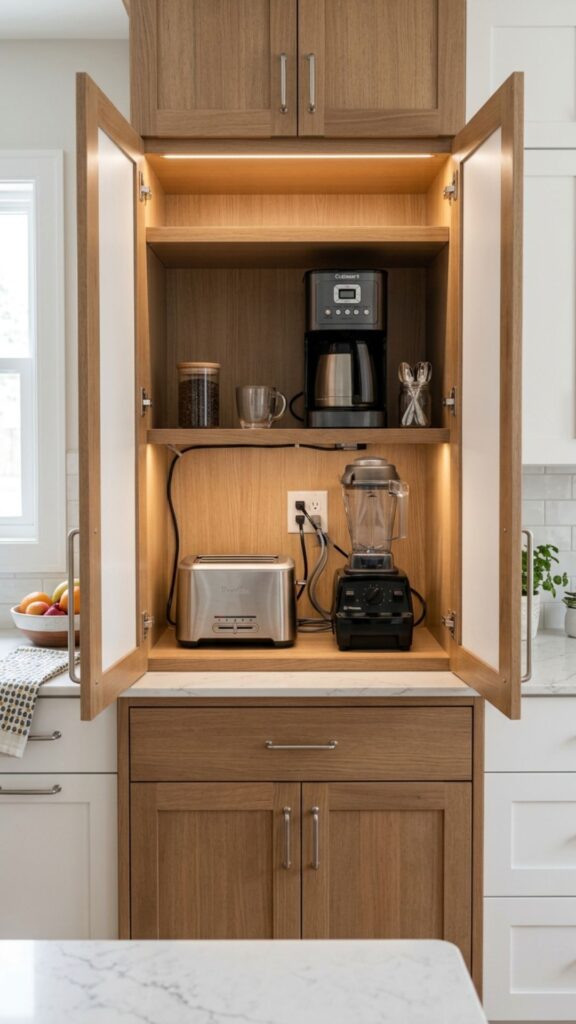
If you’re doing a kitchen renovation or have an unused cabinet, converting it into an appliance station with interior electrical outlets is a game-changer. Everything from your toaster to your blender lives inside, plugged in and ready to go. When guests come over or you want a clean look, just close the door.
This is one of the most effective kitchen electronics storage solutions for people who cook frequently and own multiple appliances.
14. Use Stackable Bins or Crates in Deep Cabinets
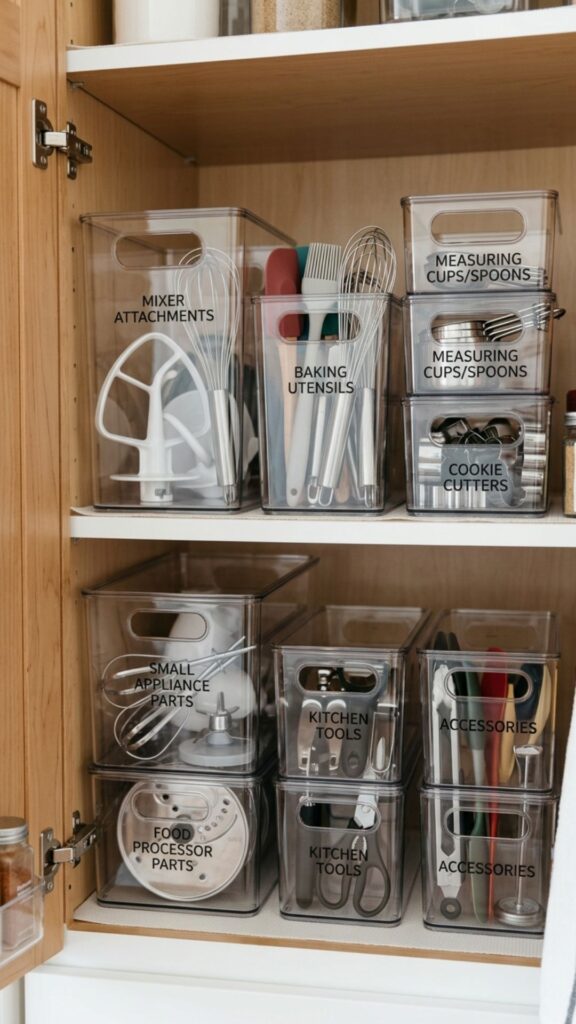
Deep cabinets are notorious for swallowing appliances and accessories into a black hole at the back. Stackable clear bins let you group items logically — one bin for baking tools, one for blending accessories — and pull the whole bin out when you need it. Clear bins make it easy to see what’s inside at a glance.
Label the fronts for even quicker access.
15. Hang a Pot Rack That Includes Shelf Space for Small Electronics
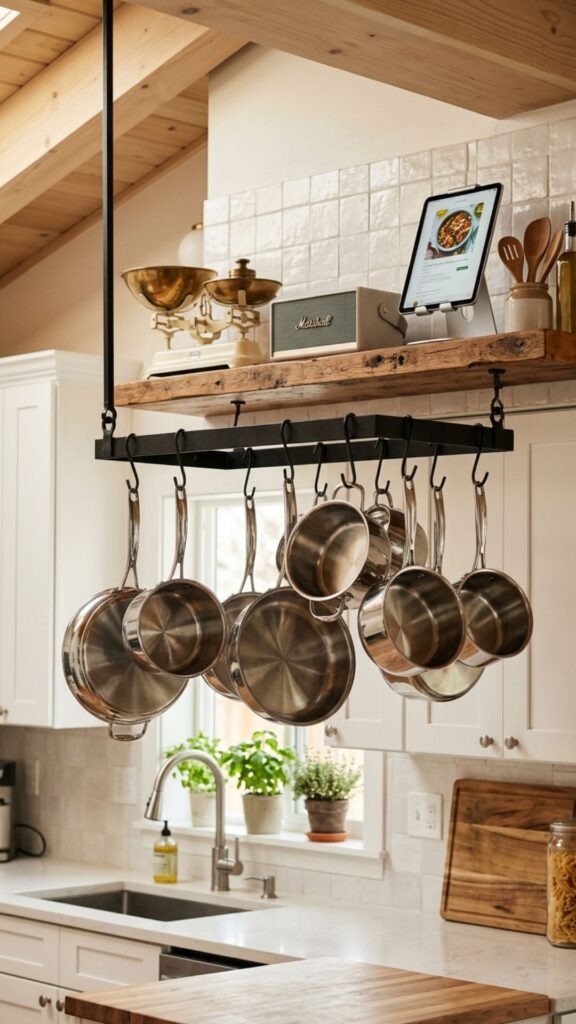
Many wall-mounted or ceiling pot racks include a shelf component. That shelf space can double as kitchen electronics storage for items like a small speaker, a digital scale, or a tablet holder. It keeps frequently used items within arm’s reach while hanging pots free up cabinet space below.
16. Store Blender and Food Processor Bases Together With Their Parts
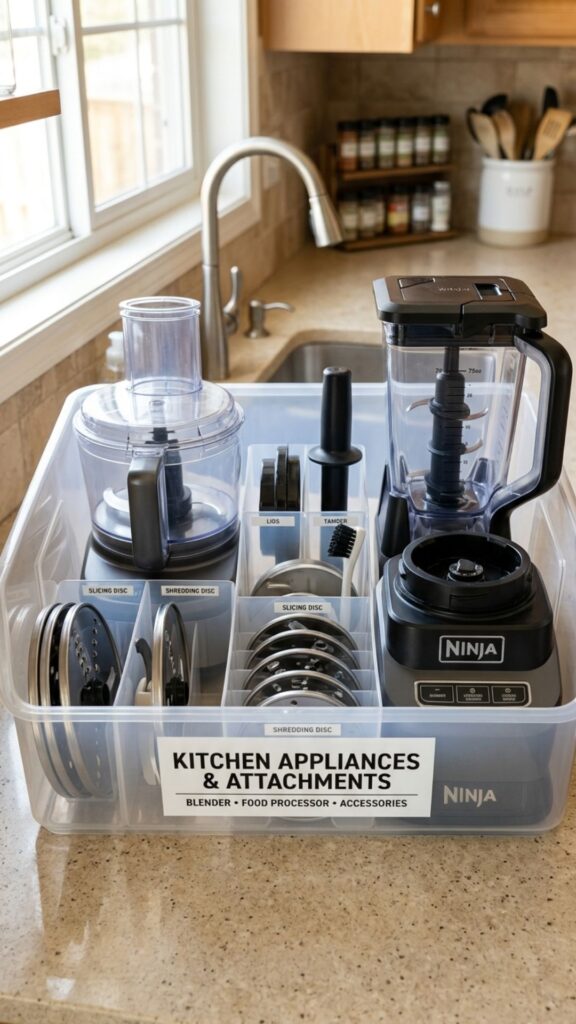
One of the most common kitchen frustrations is finding an appliance only to discover a crucial part is missing. Store blender and food processor bases with all their attachments in one place — a labeled bin, a mesh bag hanging from the same cabinet shelf, or a drawer with compartments. You’ll never have a lid-less blender situation again.
17. Use the Space Above Cabinets for Decorative and Functional Storage
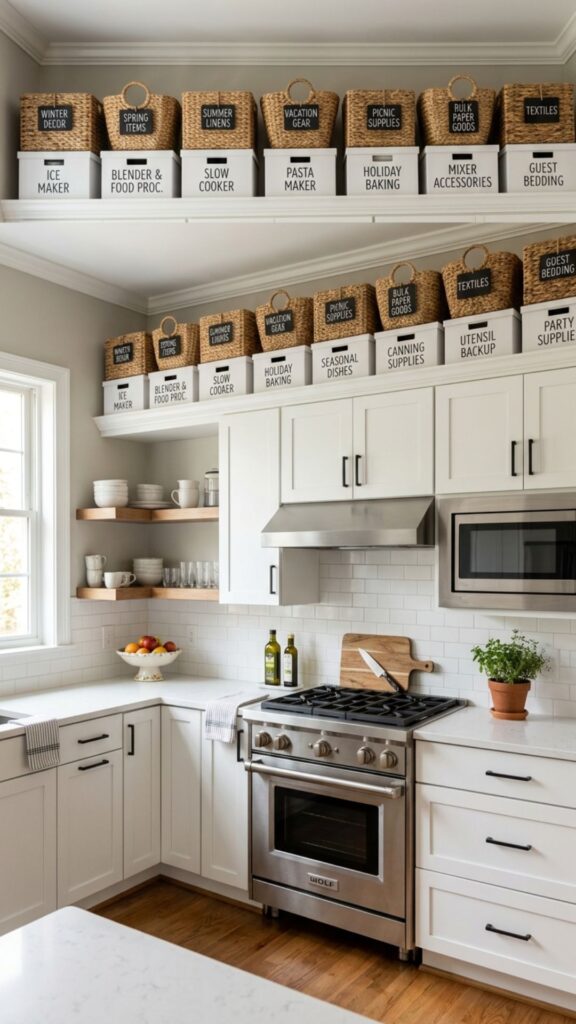
The gap between the tops of your upper cabinets and the ceiling is often wasted. With the right baskets or labeled boxes, it can hold appliances you use only a few times a year — think roasters, specialty cookers, or large countertop grills. Keep items in sealed containers to prevent grease and dust buildup.
18. Install a Countertop Shelf Riser to Double Your Surface Layers
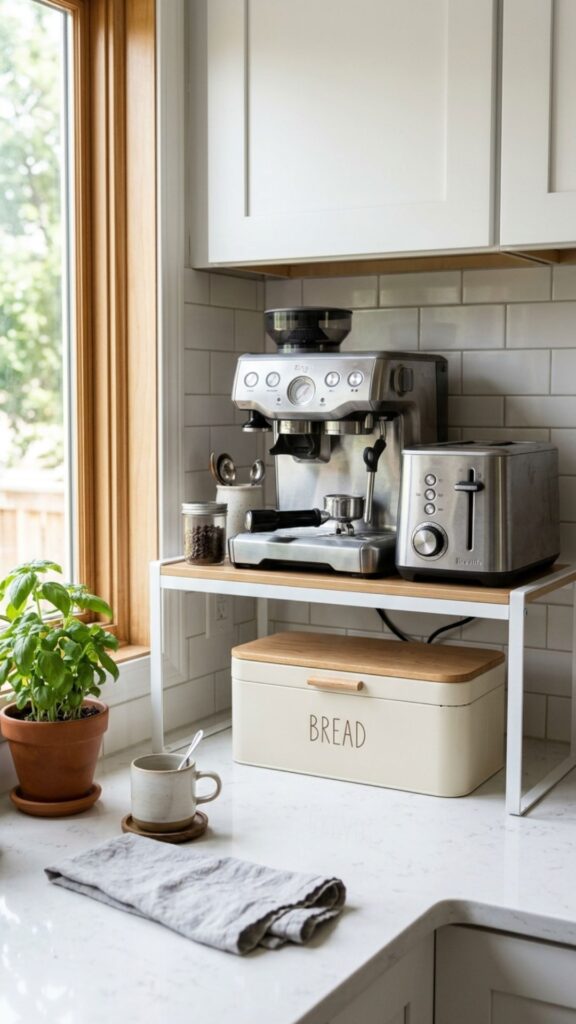
A countertop shelf riser adds a second tier to your counter space without taking up additional floor or wall area. Store your coffee maker on the bottom level and a small toaster or bread box above. Some risers include built-in outlets and USB ports, making them ideal for a compact kitchen electronics storage hub.
19. Use an Island or Breakfast Bar for Built-In Appliance Cubbies
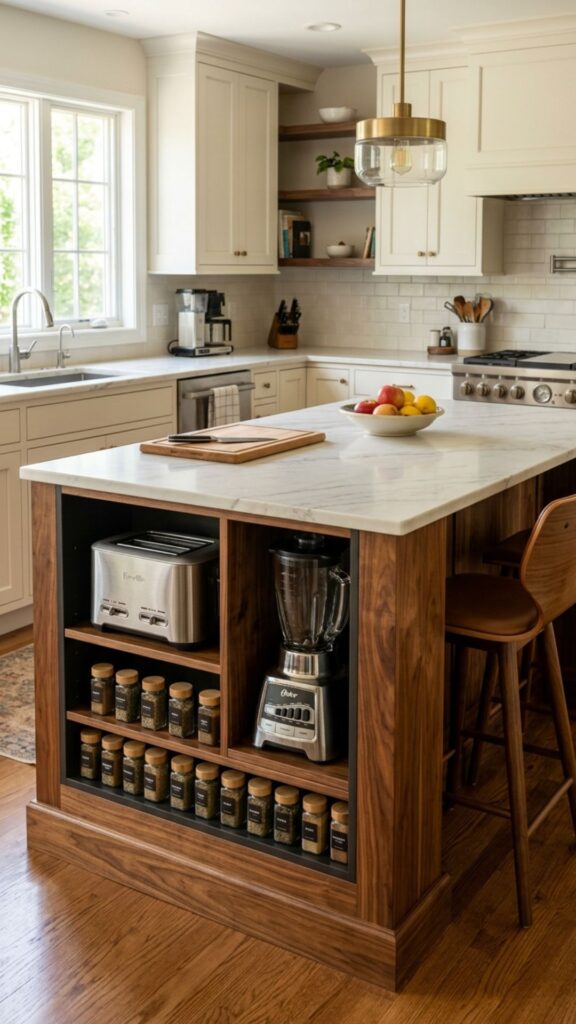
If your kitchen includes an island or breakfast bar, the cabinetry inside is perfect for appliance storage. Assign each cubby a specific appliance and keep its accessories stored alongside it. Open cubbies give you quick access, while those with doors keep things out of sight when you want a cleaner look.
20. Label Everything for Smarter, Faster Kitchen Electronics Organization
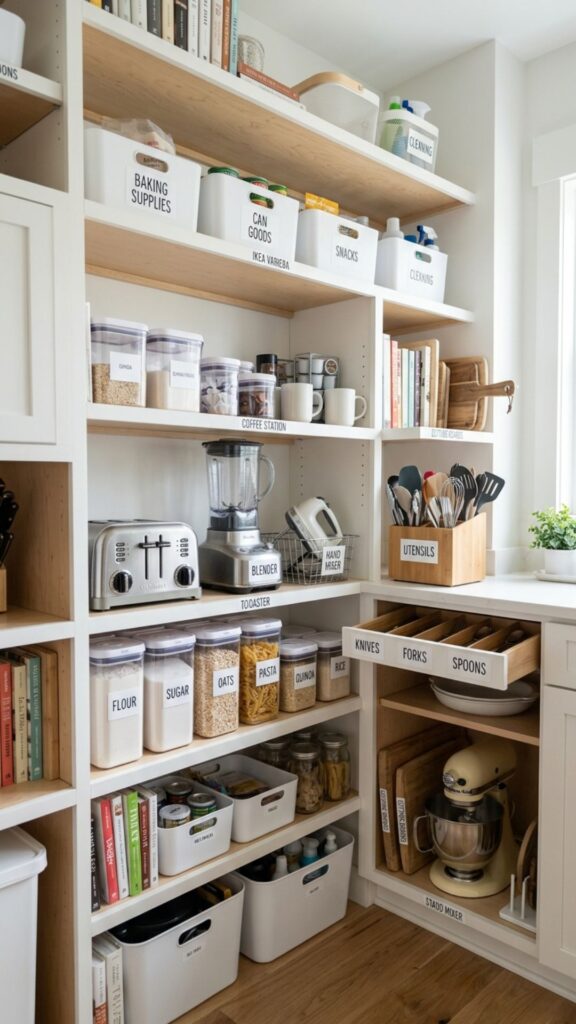
This might sound simple, but labeling shelves, bins, and cabinets is one of the most powerful habits for maintaining a well-organized kitchen. When every appliance and accessory has a clearly marked home, it’s easy for everyone in the household to return things correctly. Labels also help you quickly notice when something is missing or out of place.
Use a label maker, chalkboard labels, or simple masking tape and a marker — whatever fits your style.
Putting It All Together: Building a Kitchen Storage System That Sticks
The best kitchen electronics storage solution isn’t the most expensive one — it’s the one that fits how you actually cook and live. Start by auditing what you own. Pull everything out, decide what you use regularly versus rarely, and then match each appliance to one of the ideas above. You don’t need to overhaul everything at once.
Pick two or three changes that address your biggest pain points first. Maybe that means mounting your microwave, adding a pull-out shelf for your stand mixer, and setting up a dedicated coffee station. Small wins build momentum, and before long, your kitchen will feel like an entirely different space.
If you’re ready to transform your kitchen storage, start with a free measurement of your cabinet and counter space this week. Knowing what you’re working with is the first step to making these ideas a reality.
What is the best way to store kitchen appliances in a small kitchen?
The best approach for small kitchens is to prioritize vertical and hidden storage. Mount your microwave under the cabinet, use an appliance garage on the counter, and store rarely used gadgets in high cabinets or on top of the refrigerator. A rolling cart is also a flexible option that adds storage without permanently taking up floor space.
How do I organize kitchen appliances I don’t use every day?
Store infrequently used appliances in high cabinets, pantry shelves, or the space above your upper cabinets. Keep them in labeled bins or their original boxes to protect them and make them easy to identify. Group similar items together so you always know where to look.
Is it safe to store appliances in a cabinet with electrical outlets?
Yes, as long as the outlet and wiring meet local electrical codes and are installed by a qualified electrician. Appliance cabinets with interior outlets are a popular kitchen upgrade, and when done correctly, they’re perfectly safe. Always follow manufacturer guidelines for each appliance regarding ventilation and heat.
How do I prevent kitchen appliance cords from becoming tangled and messy?
Use Velcro cable ties or cord organizers to wrap and secure cords when appliances are stored. A drawer with a built-in cable management channel is ideal for smaller electronics. For appliances that stay on the counter, a cable management box or clip system routed along the backsplash keeps cords tidy and out of the way.
What appliances should stay on the counter versus being stored away?
Keep appliances on the counter only if you use them daily — typically a coffee maker, toaster, or electric kettle. Everything else should find a home in a cabinet, pantry, or dedicated storage area. The rule of thumb: if you haven’t reached for it in the past week, it doesn’t need counter space.