A cluttered kitchen isn’t just frustrating — it slows you down when you’re cooking, makes cleaning harder, and can make even a decent-sized kitchen feel impossibly small. If your counters are buried under appliances, your cabinets are bursting at the seams, and you can’t find a lid that matches a pot, you’re not alone.
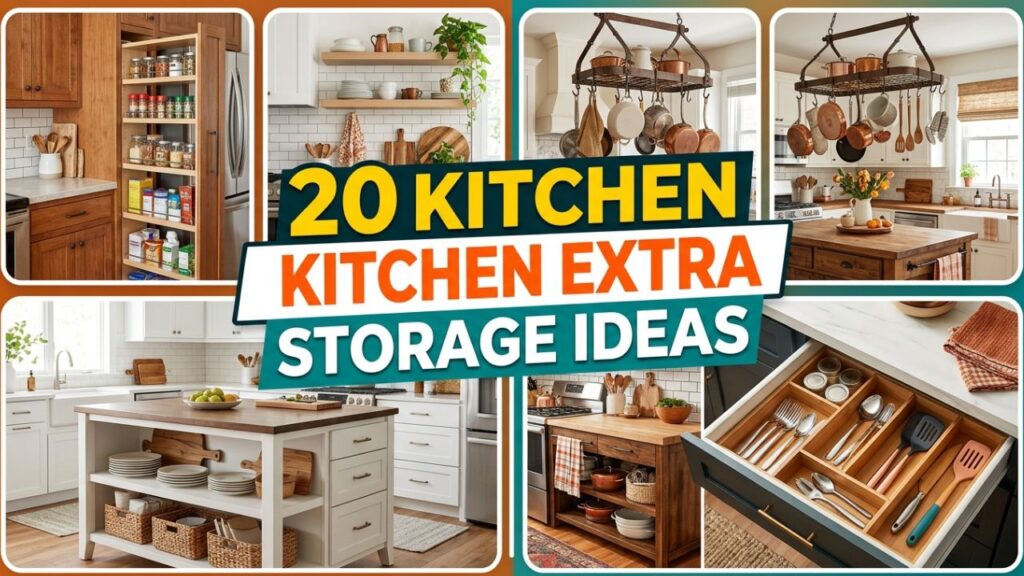
The good news? You don’t need a full renovation to fix it. With the right kitchen extra storage ideas, you can reclaim lost space, reduce clutter, and create a kitchen that actually works for you. Whether you’re dealing with a tiny apartment galley or a suburban kitchen with awkward corners, these 20 solutions cover everything from vertical wall space to deep cabinet organization.
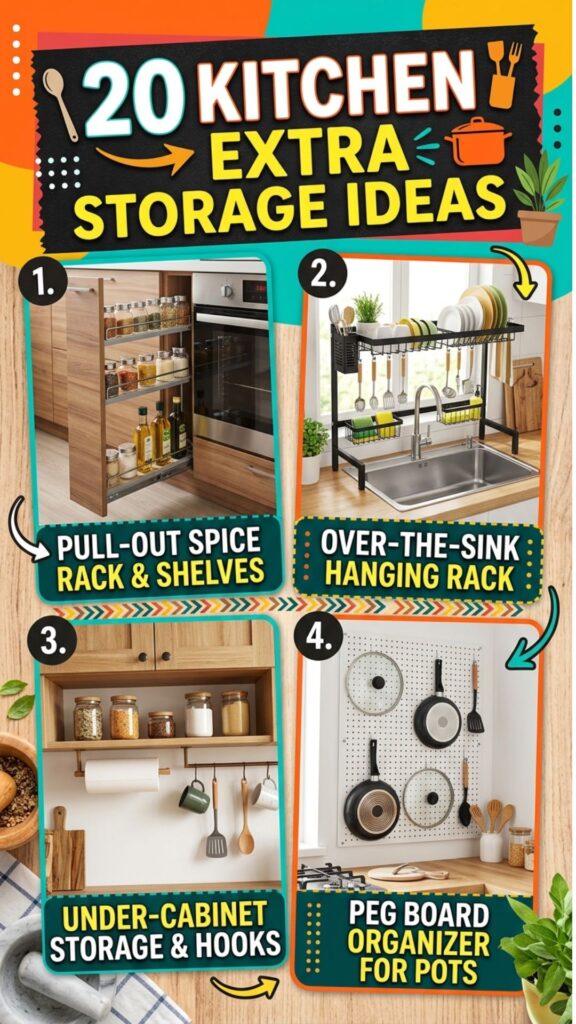
Here’s what you’ll find in this guide:
- Smart cabinet and drawer upgrades
- Clever use of walls, doors, and unused corners
- Budget-friendly additions that make a real difference
Let’s get into it.
1. Install Open Floating Shelves
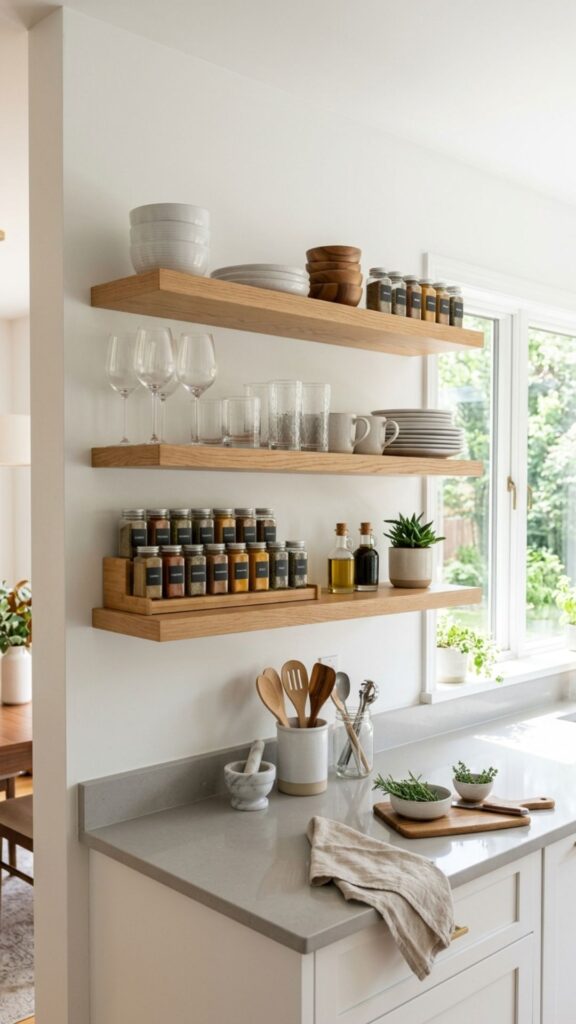
Open shelves turn blank wall space into functional storage without the visual weight of upper cabinets. Mount two or three shelves above the counter to store everyday dishes, glasses, or spice jars within easy reach.
Use uniform containers or matching dishware to keep the look clean. Floating shelves work especially well in smaller kitchens where upper cabinets can make the room feel closed in. A standard 10-inch depth is enough for most items.
2. Use a Pegboard for Tools and Utensils
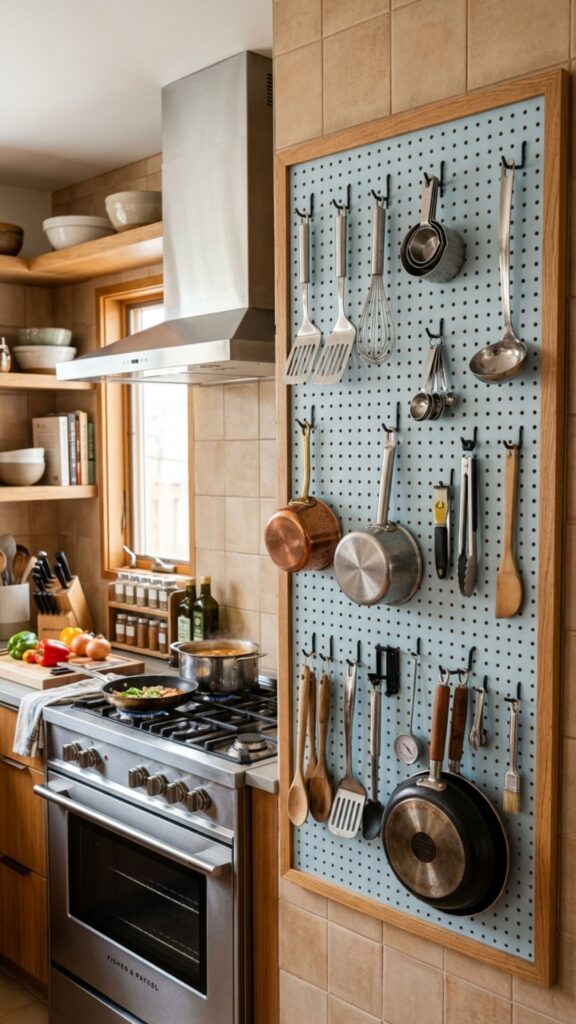
A pegboard mounted on the wall gives you completely customizable storage for spatulas, ladles, measuring cups, and small pots. You can rearrange hooks and holders as your needs change — no drilling required once it’s up.
Paint it to match your kitchen for a polished look, or keep it natural wood for a farmhouse feel. Pegboards are especially useful near the stove where you want cooking tools close at hand.
3. Add a Kitchen Island With Storage Underneath
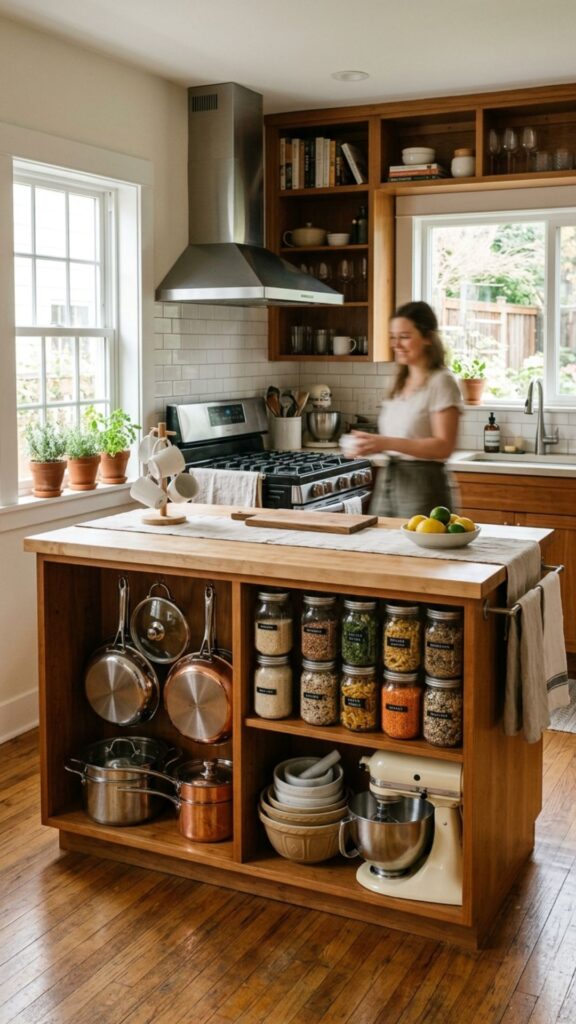
If your kitchen has room to move around, a freestanding island with shelves or drawers underneath adds both prep space and storage. Use the lower shelves for bulky items like stand mixers, large pots, or bulk pantry goods.
You don’t need a custom unit — rolling kitchen carts from home goods stores start under $100 and come with built-in shelves, drawers, or towel bars.
4. Hang a Magnetic Knife Strip
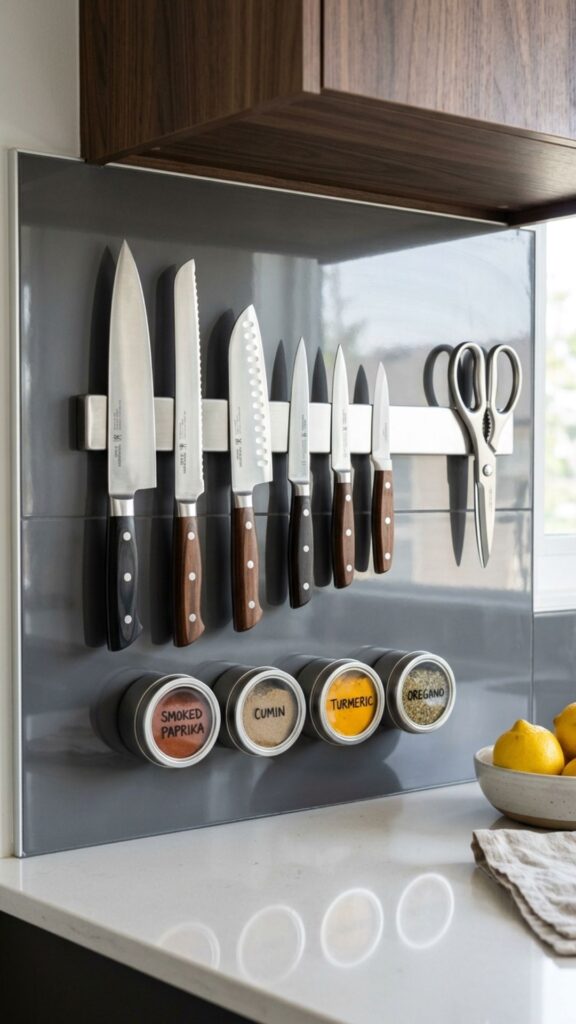
A magnetic knife strip keeps your knives accessible and frees up an entire drawer or knife block space on your counter. Mount it at eye level on a backsplash wall or the side of a cabinet.
Most strips hold six to eight knives and can also hold metal spice tins, scissors, or bottle openers. It’s one of the most space-efficient kitchen extra storage ideas you can implement in under 15 minutes.
5. Use Over-the-Door Organizers
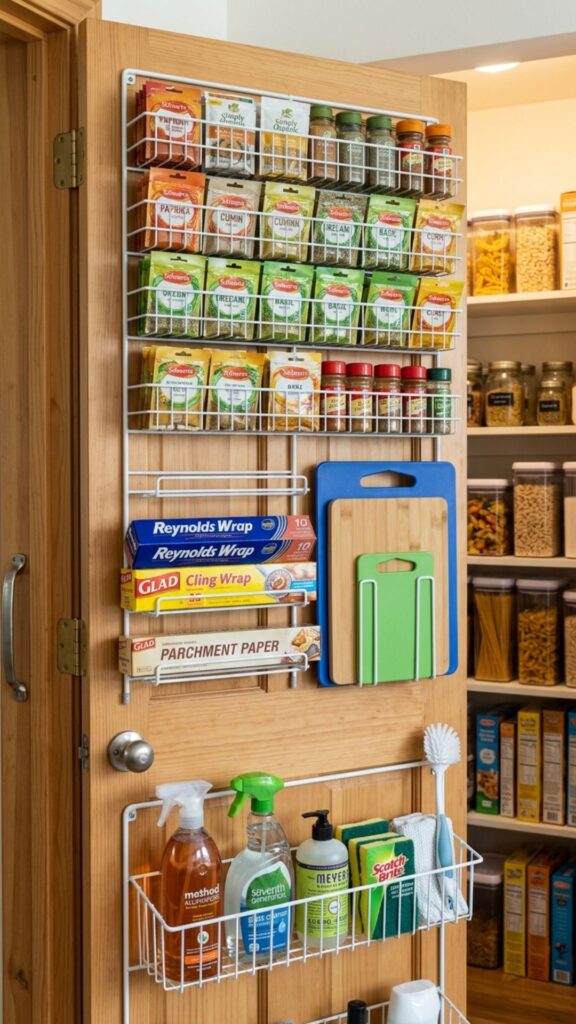
The back of a pantry or cabinet door is prime real estate most kitchens waste entirely. Over-the-door organizers with wire pockets or hooks can hold spice packets, foil and wrap boxes, cleaning supplies, or cutting boards.
Look for slim-profile versions that won’t interfere with shelves when you close the door. This single change can free up one to two entire shelf levels inside the cabinet.
6. Stack With Cabinet Shelf Risers
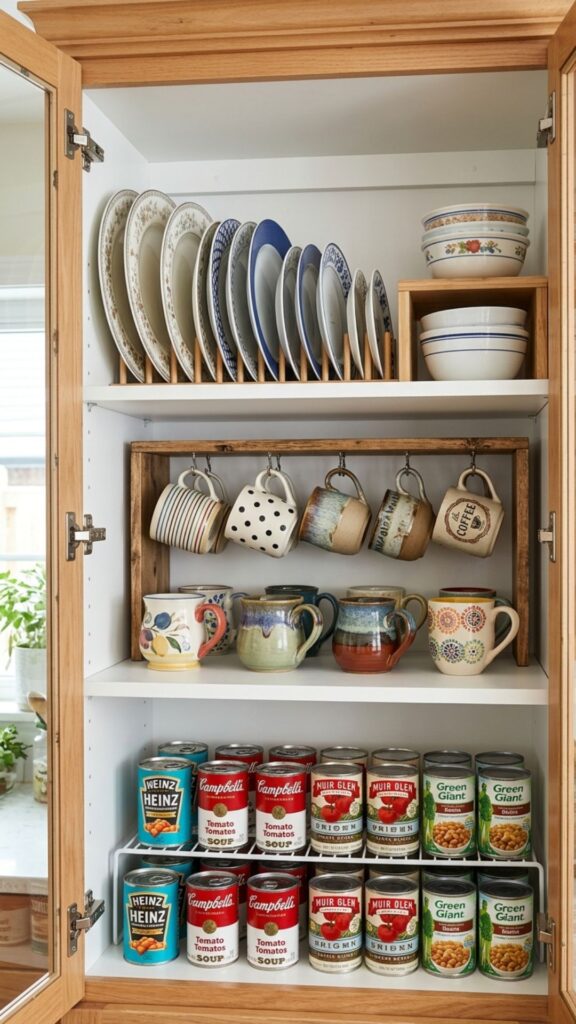
Inside your cabinets, you probably have unused vertical space between shelves. Shelf risers — simple stackable platforms — let you double the capacity of a single cabinet level by creating a second tier for plates, mugs, or canned goods.
They’re inexpensive, require no installation, and work in any cabinet. Use them in your pantry to keep cans organized and visible so nothing gets lost at the back.
7. Hang Pots and Pans From a Ceiling Rack
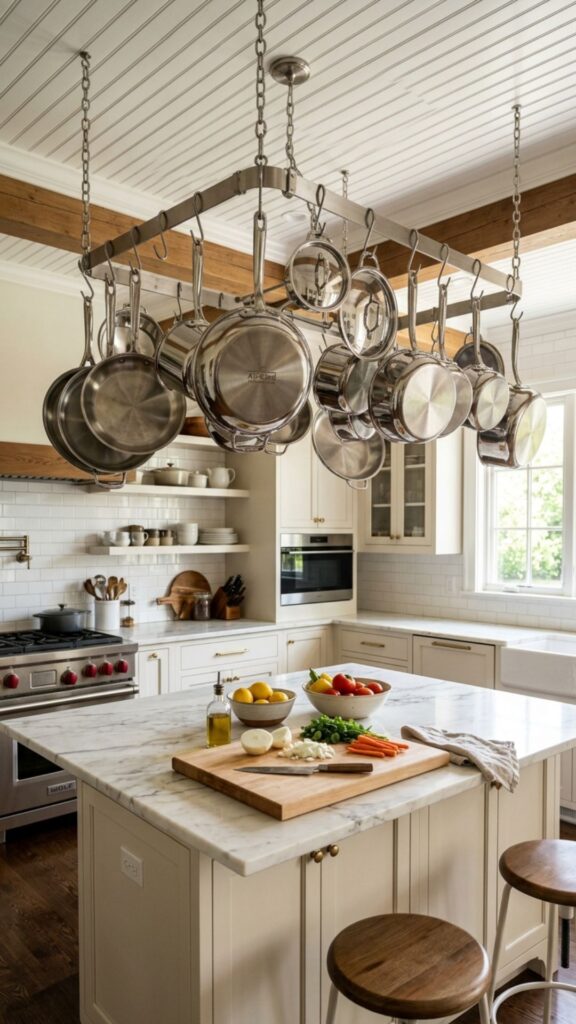
A ceiling-mounted pot rack solves one of the biggest storage problems in most kitchens: bulky cookware. By hanging pots and pans overhead, you free up multiple lower cabinet shelves for other items.
Most ceiling racks are rated for 50–100 lbs and come with S-hooks that fit standard cookware handles. Make sure you’re anchoring into ceiling joists for safety. This works best over an island or central prep area.
8. Install Pull-Out Drawer Organizers in Lower Cabinets
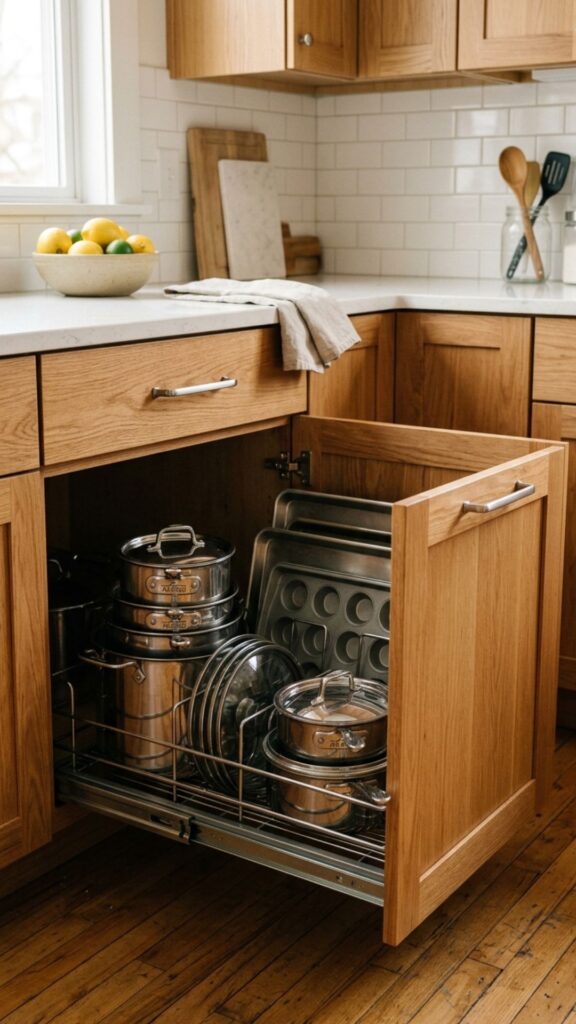
Deep lower cabinets are notorious for swallowing items whole. Pull-out drawer inserts transform these awkward spaces into accessible storage by bringing everything to the front with a single pull.
You can find pull-out organizers for pots, baking sheets, cleaning supplies, and even trash bins. Many fit standard cabinet widths without any custom work — just measure the interior width before ordering.
9. Add a Corner Lazy Susan
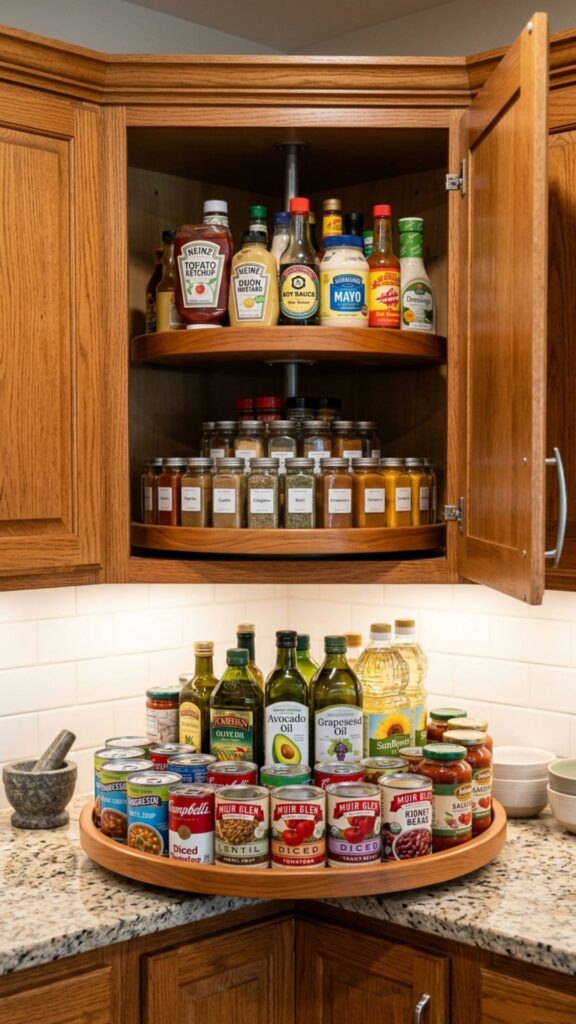
Corner cabinets are typically the most underused storage in any kitchen. A lazy Susan — a rotating tray system — makes every inch of that curved corner accessible without digging or reaching.
Two-tier lazy Susans are ideal for storing canned goods, condiments, oils, or spices. They spin smoothly and keep everything visible at a glance. If you’re installing one in an existing cabinet, measure the depth and width carefully to get the right diameter.
10. Use Tension Rods to Create Vertical Dividers
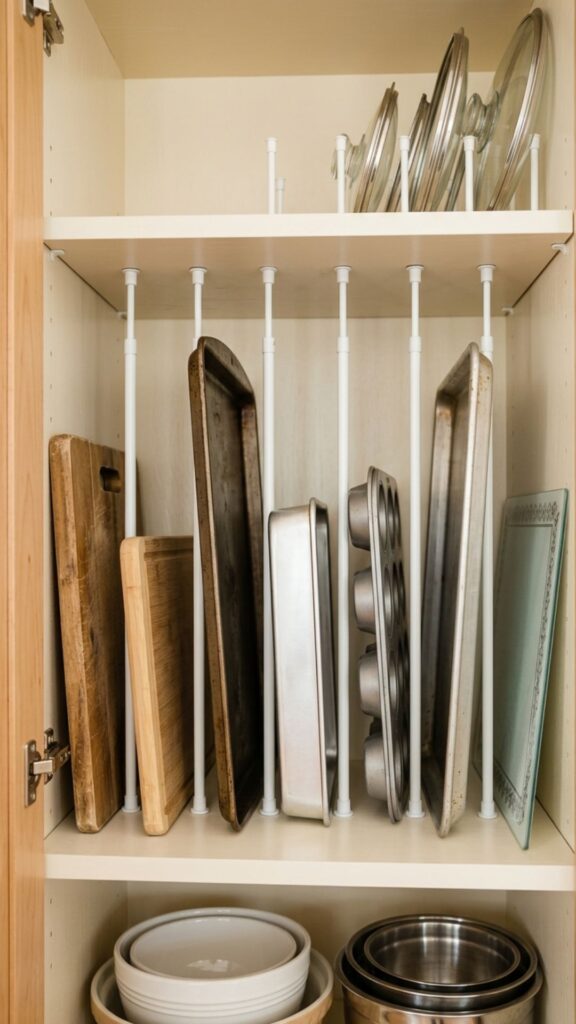
Tension rods placed vertically inside a cabinet create instant dividers for baking sheets, cutting boards, muffin tins, and lids. Instead of stacking everything in a messy pile, each item stands upright and can be grabbed individually.
A few tension rods cost just a couple of dollars and take seconds to install. It’s one of the cheapest and most effective kitchen extra storage ideas for organizing flat, awkward items.
11. Mount Spice Racks Inside Cabinet Doors
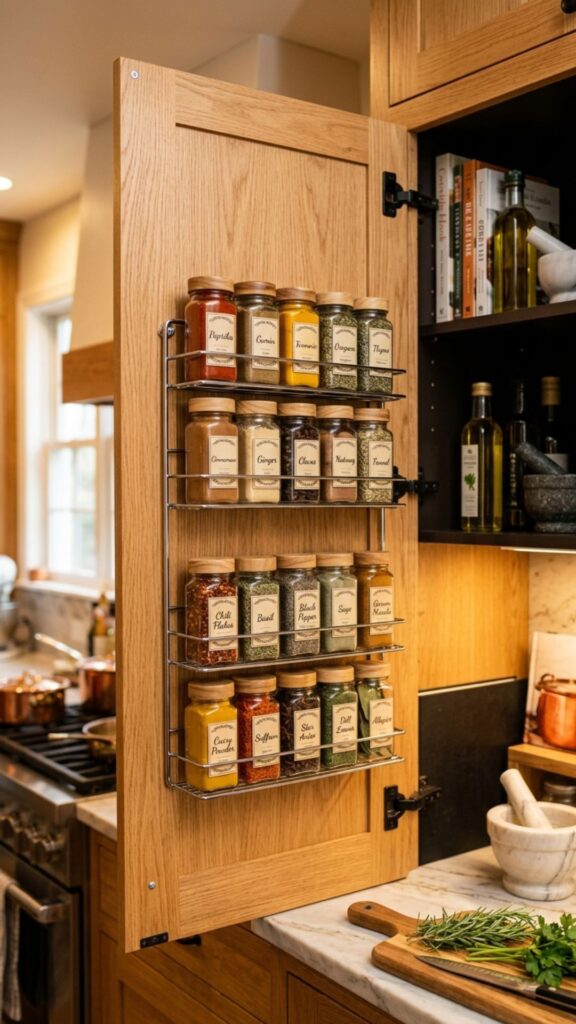
Small spice racks mounted on the inside face of a cabinet door keep your spices visible, organized, and completely off the counter or shelf. Tiered door-mount racks can hold 20 or more jars in a space that was previously unused.
Make sure jars fit within the depth of the door before the cabinet closes fully. Shallow half-ounce jars and standard 2-inch diameter jars both work well for most rack designs.
12. Use the Space Above Your Cabinets
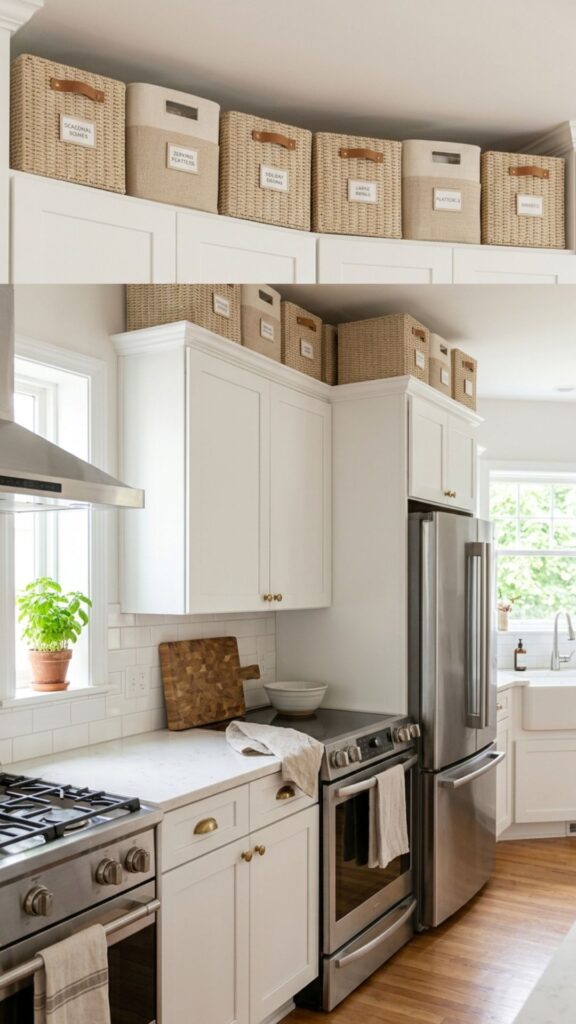
The gap between your upper cabinets and the ceiling is often ignored, but it can hold a surprising amount. Use it for items you reach for less often — large serving platters, seasonal bakeware, or decorative baskets with stored items inside.
Use matching baskets or bins to keep the area looking intentional rather than cluttered. Labeling the bins makes it easy to find what you need without pulling everything down.
13. Add a Rolling Pantry or Slim Pull-Out Cabinet
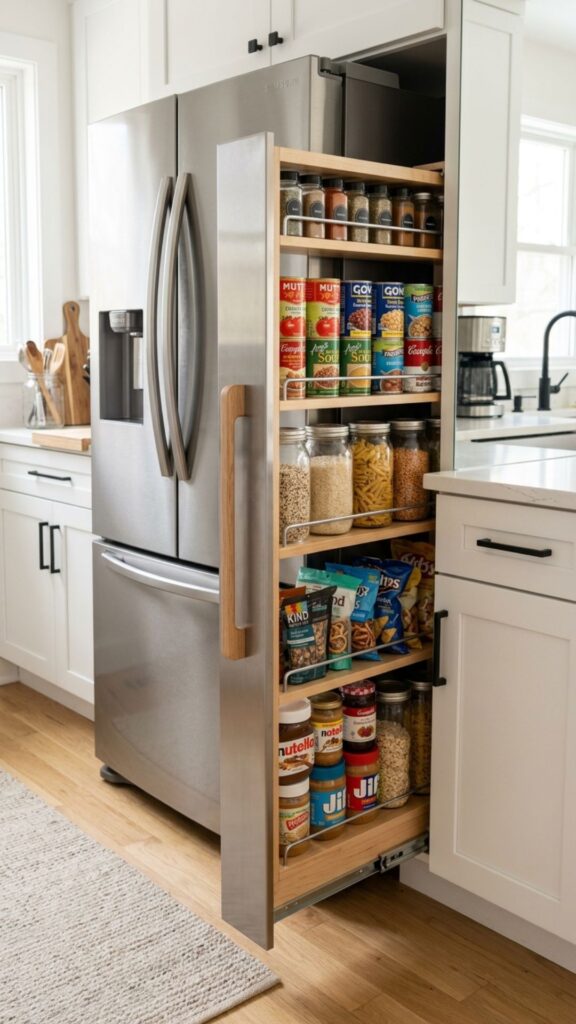
For kitchens with a narrow gap beside the refrigerator or between cabinets, a slim rolling pantry (sometimes called a “pull-out pantry” or “slim larder”) slides in and out to reveal multiple shelf levels of storage.
These units typically range from 4 to 9 inches wide and can hold canned goods, condiments, spice jars, or snack bags. It’s a clever use of dead space that most kitchens have but never use.
14. Hang a Bar Cart or Utility Cart
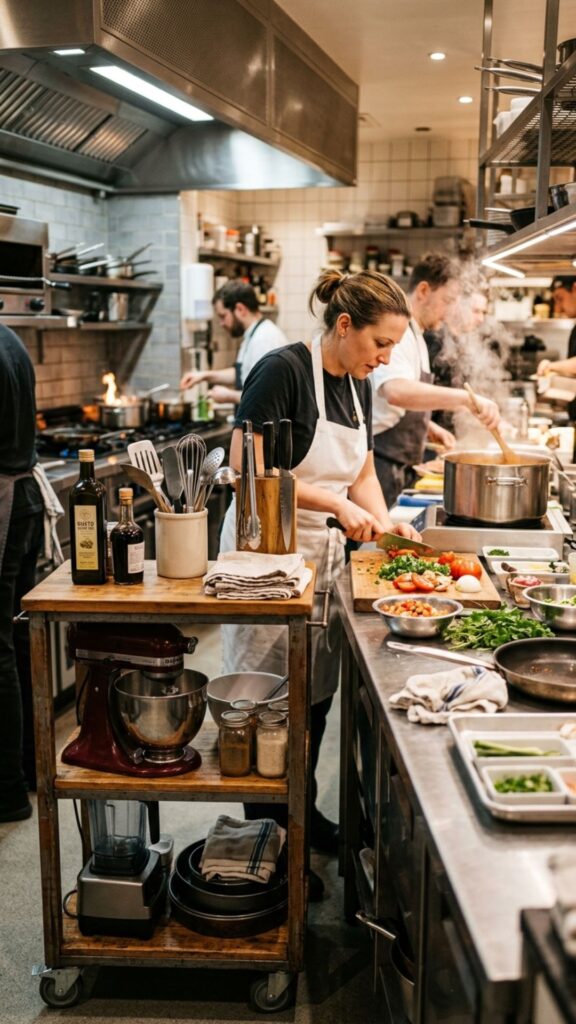
A bar cart or compact utility cart does double duty: extra counter space when you need it, and storage when you don’t. Position it near the prep area for easy access to oils, vinegars, and frequently used ingredients.
Many carts have a lower shelf for bulkier items and hooks on the sides for towels or utensils. Choose one with locking wheels so it stays put when you’re working.
15. Use Drawer Dividers for Utensils and Tools
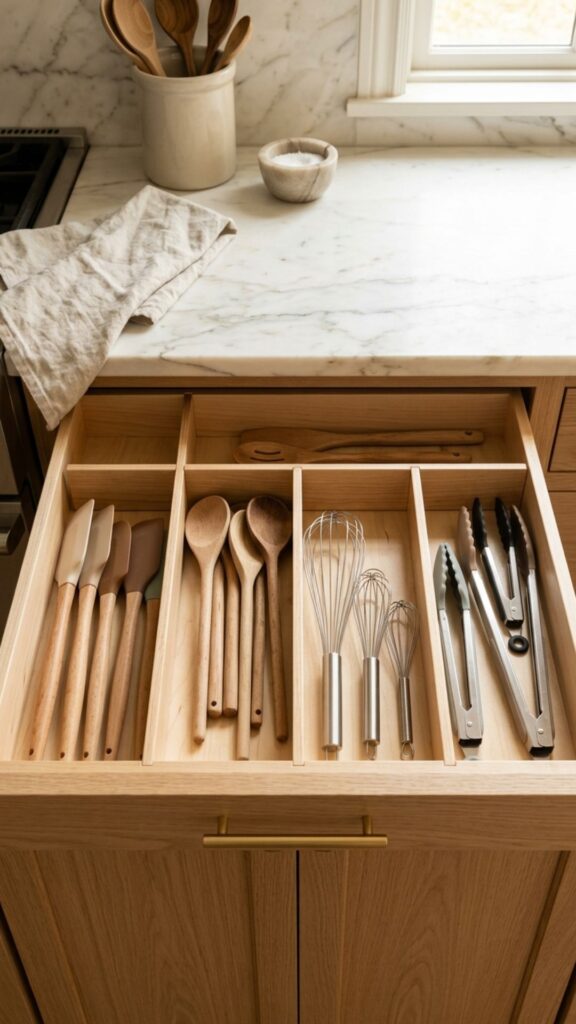
Most utensil drawers are a jumbled mess of overlapping tools. Adjustable drawer dividers let you create custom compartments for different categories — spatulas and wooden spoons in one section, whisks and tongs in another.
This makes it faster to find what you need and easier to keep the drawer organized long-term. Bamboo expandable dividers are a popular option because they fit a wide range of drawer sizes.
16. Mount Hooks Under Upper Cabinets
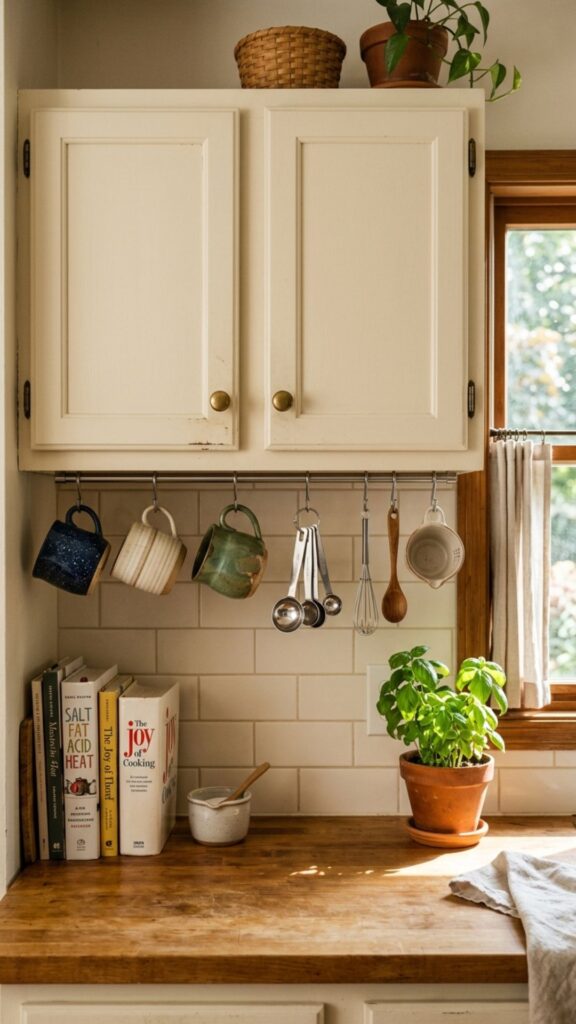
The underside of upper cabinets can hold small hooks for mugs, measuring spoons, or lightweight tools. This frees up shelf space while keeping everyday items within reach.
Use adhesive-mount hooks for a no-drill option, or screw-in cup hooks for a more permanent solution. Just make sure the hooks are rated for the weight of what you’re hanging — mugs can be heavier than they look.
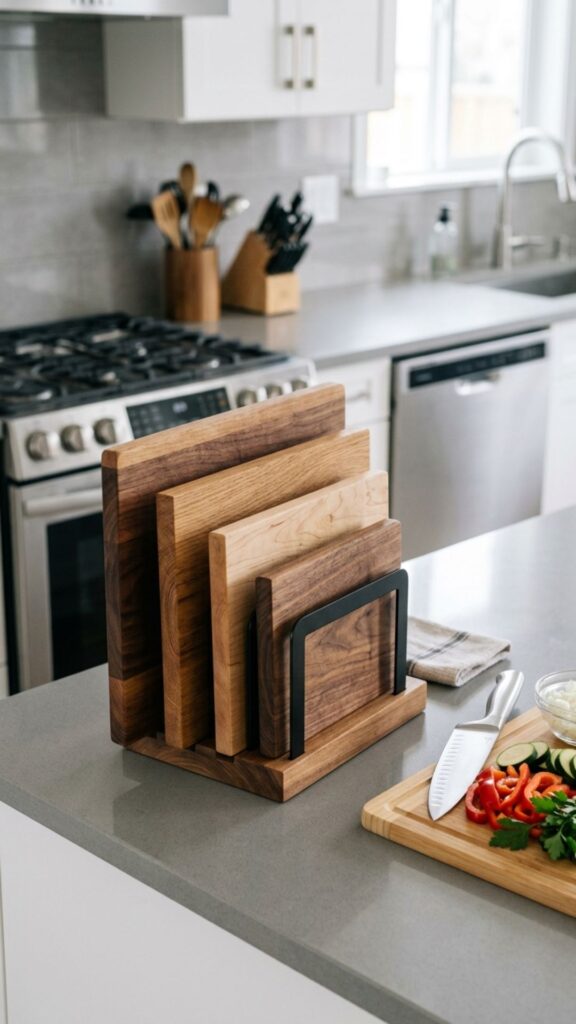
17. Store Cutting Boards in a Dedicated Slot
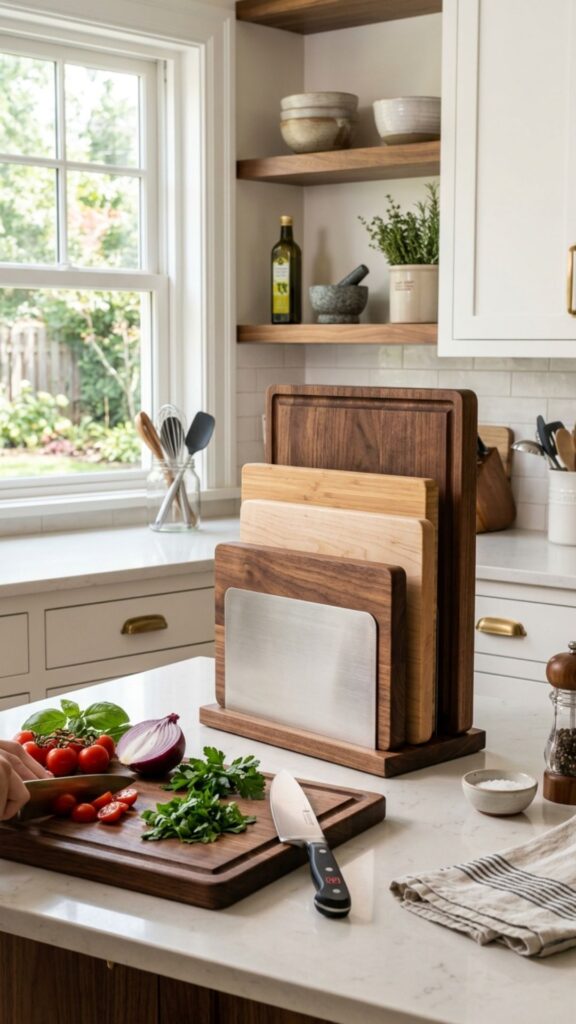
Rather than leaning cutting boards against the wall or stacking them flat in a drawer, use a dedicated upright holder. Countertop cutting board organizers keep two to four boards standing vertically, accessible and neatly spaced.
Alternatively, use a pull-out vertical divider inside a lower cabinet (see idea #10) to keep boards and baking sheets in one organized spot.
18. Use the Inside of Your Pantry Door Fully
If you have a full pantry door, maximize every inch of it. A full-length door organizer with adjustable shelves can hold a remarkable amount — canned goods, jars, boxed snacks, cooking oils, and more.
Some door-mounted systems hold up to 50 pounds and include clear bins so you can see contents at a glance. Measure the door width and confirm the shelves clear the pantry shelving when the door closes.
19. Organize Your Refrigerator With Stackable Bins
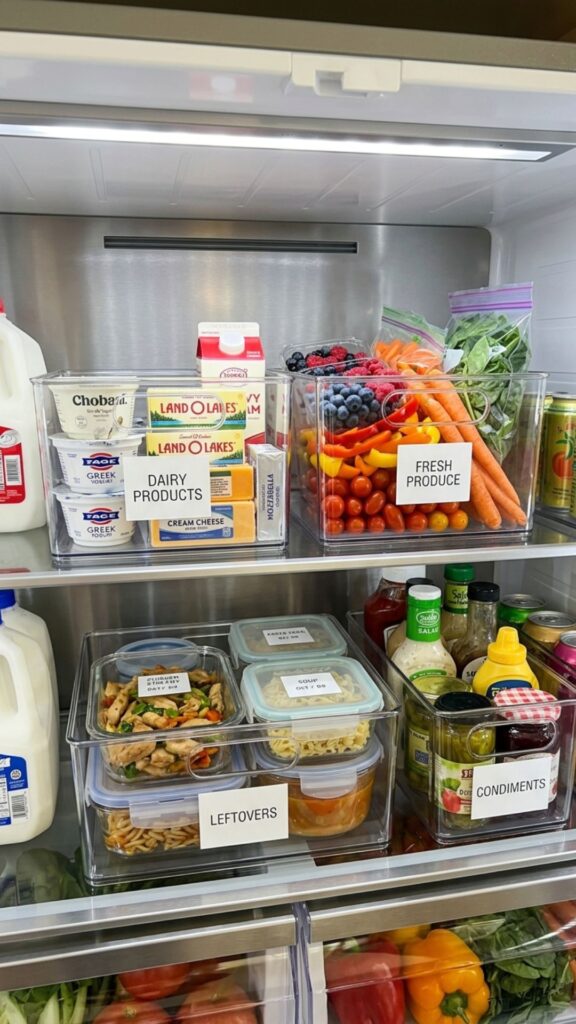
Extra storage isn’t only about cabinets. Stackable clear bins inside the refrigerator help you make full use of shelf space, prevent items from being hidden at the back, and reduce food waste.
Group like items together — dairy on one level, condiments in one bin, leftovers in another. Turntable organizers work well for the door shelves and deep back sections where jars tend to get lost.
20. Create a Dedicated Charging and Command Station Elsewhere
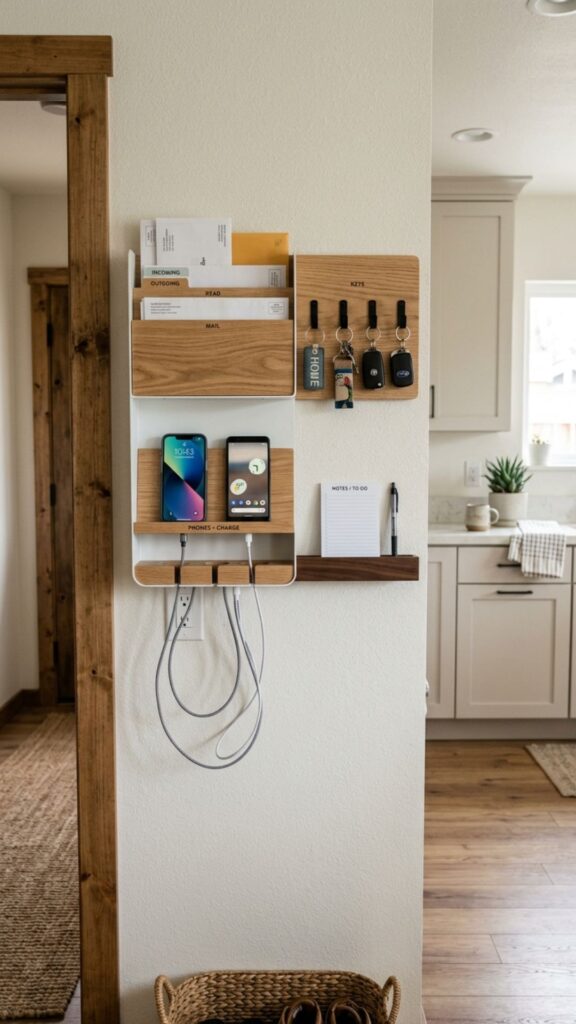
One underappreciated kitchen extra storage idea is actually removing things from the kitchen. Phones, keys, mail, and charging cables often end up on the counter, taking up space and creating clutter.
Moving these items to a small command station in a nearby hallway or mudroom frees up counter space you can dedicate to food prep or small appliances. It’s a simple habit shift that makes a meaningful difference.
Conclusion
You don’t need to spend thousands on a kitchen remodel to get more storage. From magnetic knife strips and pegboards to rolling pantries and ceiling pot racks, these 20 kitchen extra storage ideas give you practical, scalable options for any space and budget.
Start with two or three changes that address your biggest pain points — maybe that’s a lazy Susan for the corner cabinet or tension rod dividers for your bakeware. Small changes stack up fast, and within a weekend, your kitchen can feel like a completely different space.
Ready to get started? Pick the idea that fits your biggest frustration and tackle it this weekend. You’ll be surprised how much a single organizational upgrade can change the way you feel about your kitchen.
What is the easiest kitchen extra storage idea to implement on a budget?
Tension rods for vertical dividers, over-the-door organizers, and shelf risers are all under $15 and can be installed in minutes. These three alone can significantly increase your usable cabinet space without any tools or permanent changes.
How do I add storage to a small kitchen without making it feel smaller?
Focus on vertical space — walls, doors, and the area above cabinets — rather than adding more furniture on the floor. Open shelves, pegboards, and under-cabinet hooks keep items accessible without crowding the room visually.
Are pull-out organizers worth the investment?
Yes, especially for lower cabinets and corner spaces that are otherwise hard to use. A pull-out shelf or lazy Susan can double the effective storage capacity of a cabinet by making the full depth accessible. Prices range from $25 to $150 depending on size and quality.
How can I organize a deep pantry without losing items at the back?
Use tiered shelf risers, turntable organizers, and clear-front bins so every item is visible. Group similar items together and do a quick weekly scan to rotate older items to the front. Slim pull-out drawer inserts work especially well for very deep pantry shelves.
What’s the best way to organize kitchen cabinets for everyday cooking?
Store the items you use daily at eye level and within arm’s reach of where you use them — pots near the stove, prep tools near the cutting board. Keep less-used items in harder-to-reach spots like high shelves or the back of deep cabinets. Consistency matters more than perfection: a simple system you maintain beats a perfect one you abandon.