Your front porch is the first thing people notice, and concrete gives you a tough, affordable canvas to work with. The good news? You don’t need to pour a whole new slab to make it shine. With a few smart tweaks, that plain gray surface can become the standout feature of your home.
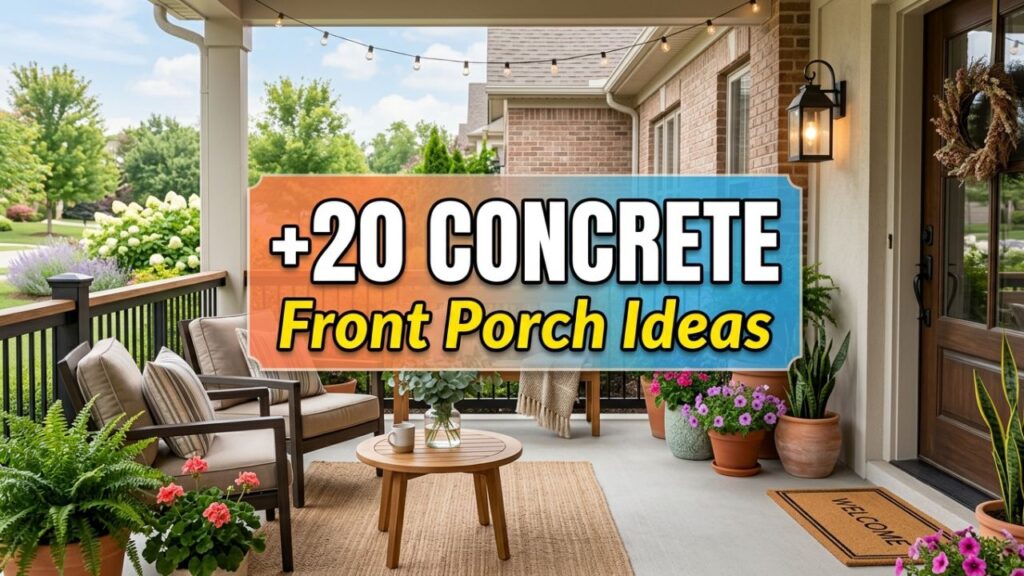
I’ve spent years helping homeowners refresh their entryways, and the biggest surprise for most people is how much impact small changes make.
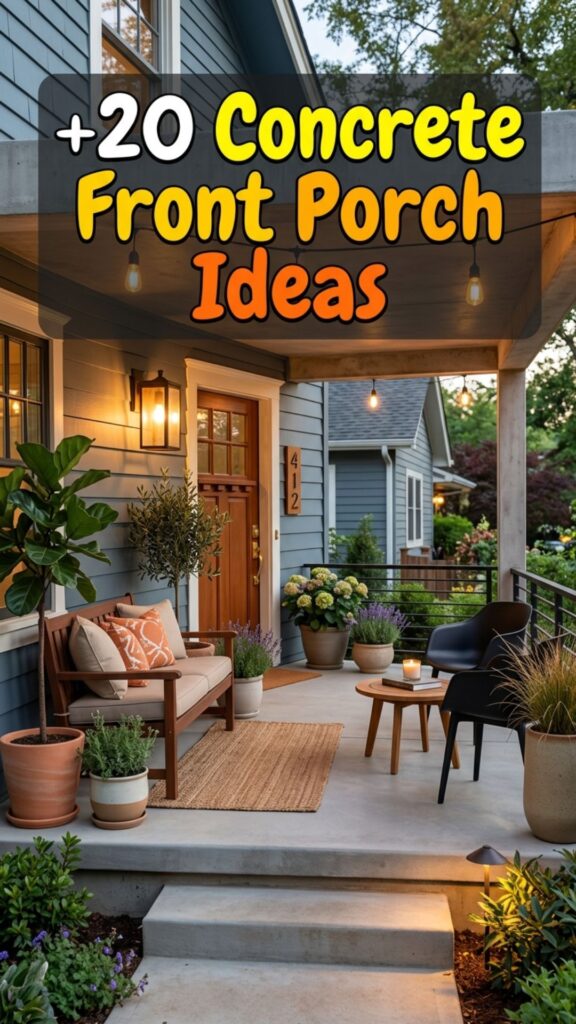
In this guide, you’ll get 20 practical front porch ideas concrete owners can actually use, from finishes and color to seating and lighting. By the end, you’ll know exactly where to start and which upgrades give you the most bang for your buck.
Key takeaways:
- Concrete is versatile, durable, and budget-friendly.
- Small updates like paint, planters, and lighting deliver fast results.
- You can DIY many of these or hire a pro for bigger jobs.
1. Resurface a Worn Slab
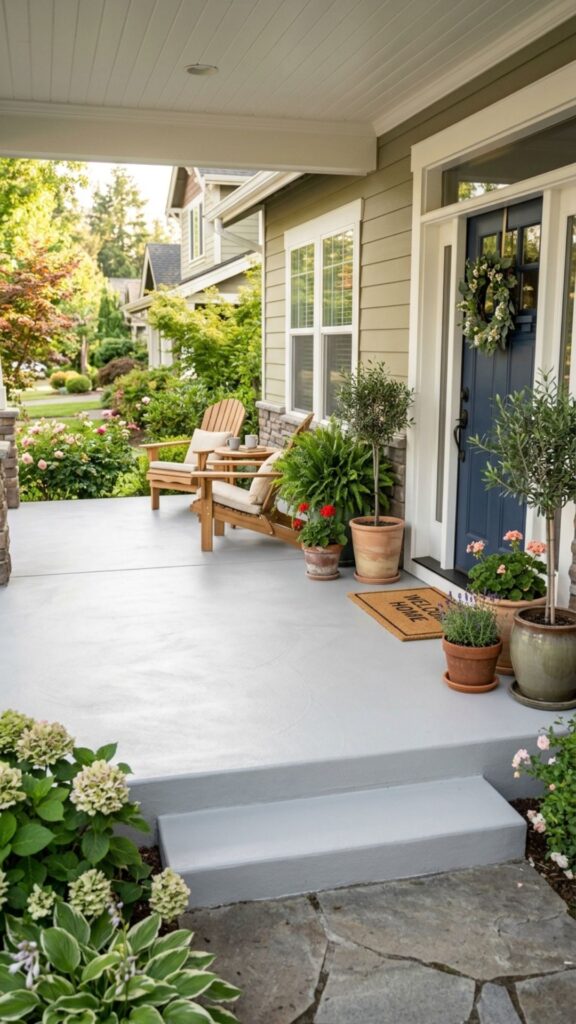
If your porch is cracked or faded, resurfacing is one of the best concrete front porch ideas for a fresh start. A thin overlay bonds to the old surface and hides years of wear without the cost of tearing out and repouring. Most overlays cure quickly and stand up to foot traffic and weather.
Before you resurface, clean the slab thoroughly and patch any deep cracks. A properly prepped base helps the new layer last. For a 100-square-foot porch, a DIY overlay kit runs far less than a full replacement, making this a smart pick for tight budgets.
2. Try a Stamped Concrete Finish
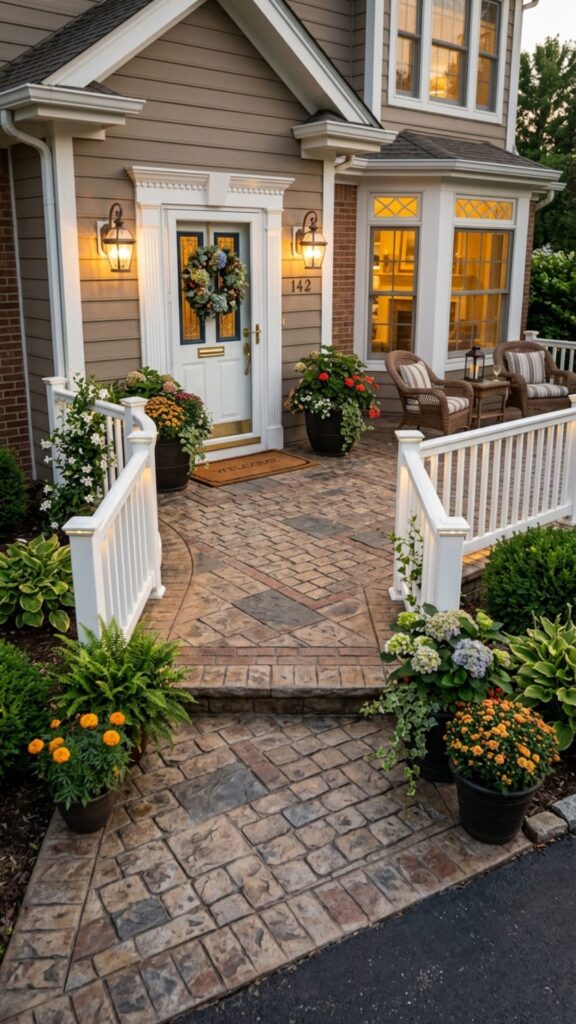
Stamped concrete mimics the look of brick, slate, or stone at a fraction of the price. Contractors press textured mats into fresh concrete, then color it to match your home’s palette. The result reads as high-end masonry from the curb.
This upgrade shines when you want character without the upkeep of real stone. Ask your installer for a sample panel first so you can see the pattern and color together. A sealed stamped surface can hold its look for years with just occasional cleaning.
3. Add a Bold Painted Design
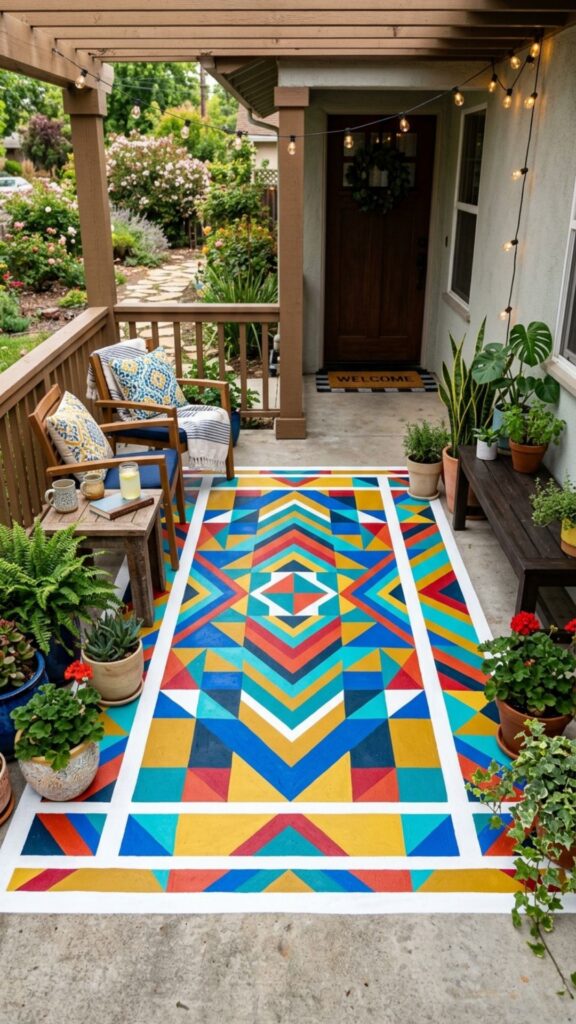
A coat of masonry paint is the cheapest way to transform a dull porch. You can go with a solid, welcoming shade or get creative with a painted “rug” that anchors your seating area. Geometric patterns and borders add personality without a single tool beyond a brush and tape.
Choose a paint made for concrete and foot traffic, and prime the surface first. Two thin coats beat one thick one for durability. Homeowners often tell me a weekend paint project changed how their whole entry feels.
4. Stain It for Rich, Natural Color
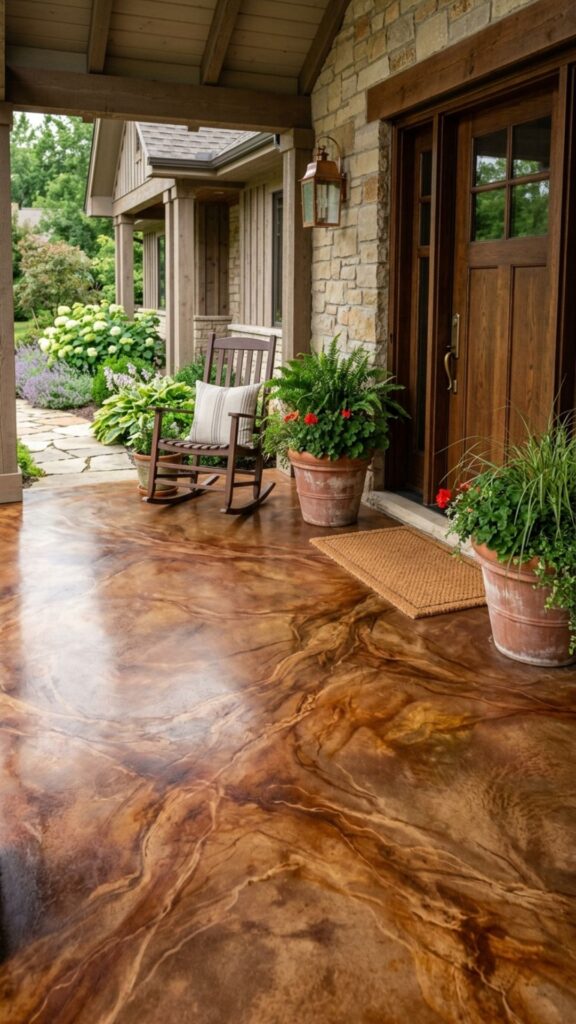
Acid or water-based stains soak into concrete to create depth you can’t get from paint. Instead of a flat coat, staining produces mottled, marble-like tones that look organic and expensive. Earthy browns and warm terracottas pair beautifully with brick and wood siding.
Stain works best on clean, unsealed concrete, so test a hidden corner before you commit. Because the color penetrates the surface, it won’t peel like paint can. Seal it afterward to lock in the shade and protect against moisture.
5. Install a Decorative Concrete Border
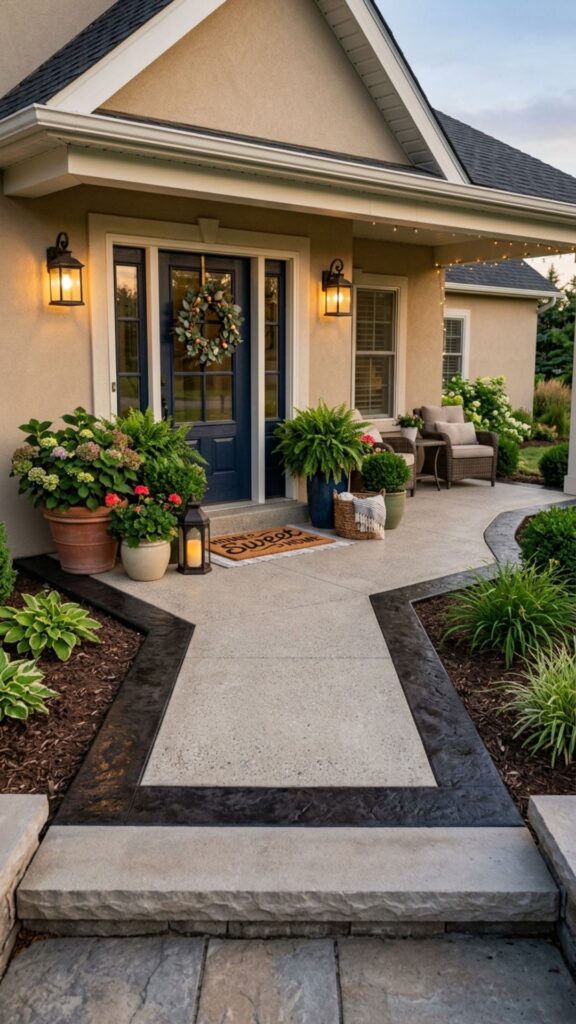
A contrasting border frames your porch and draws the eye toward your front door. You can create one with a darker stain, a stamped edge, or inlaid pavers set into the concrete. Even a simple painted line adds a polished, finished feel.
Borders also help visually separate the porch from surrounding walkways and landscaping. Keep the width proportional to your space, usually four to six inches for a clean look. This small detail signals care and makes the whole entry feel intentional.
6. Create a Faux Tile Pattern
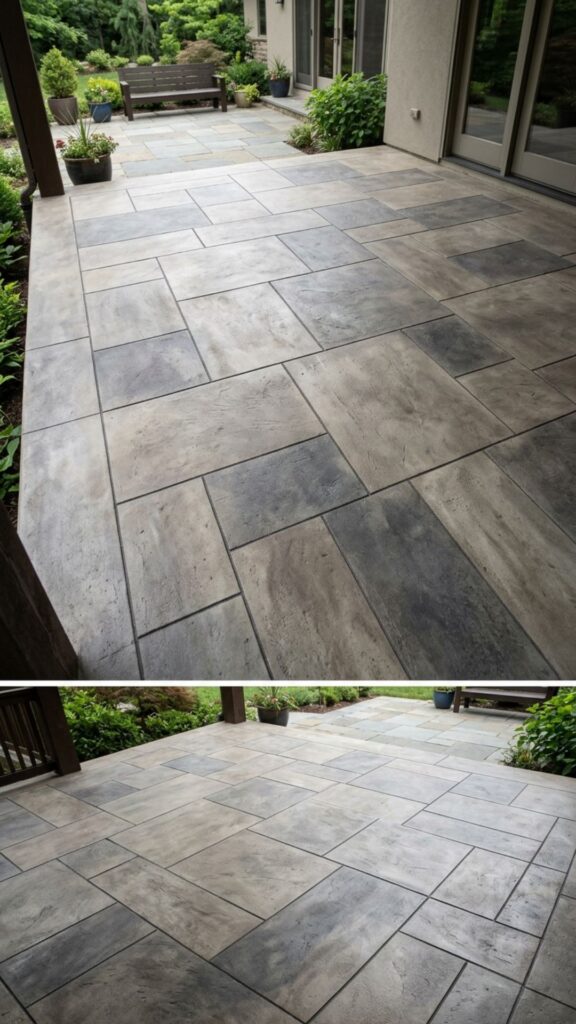
Scoring or engraving concrete lets you fake the look of large-format tile. A contractor uses a saw to cut clean grid lines, then stains or seals the sections. From a distance, guests will swear it’s real stone tile.
This idea works well for larger porches where a single flat surface feels empty. You control the grid size, so you can go with big modern squares or tight diamond patterns. The cut lines also help disguise minor surface imperfections.
7. Build In Concrete Planters
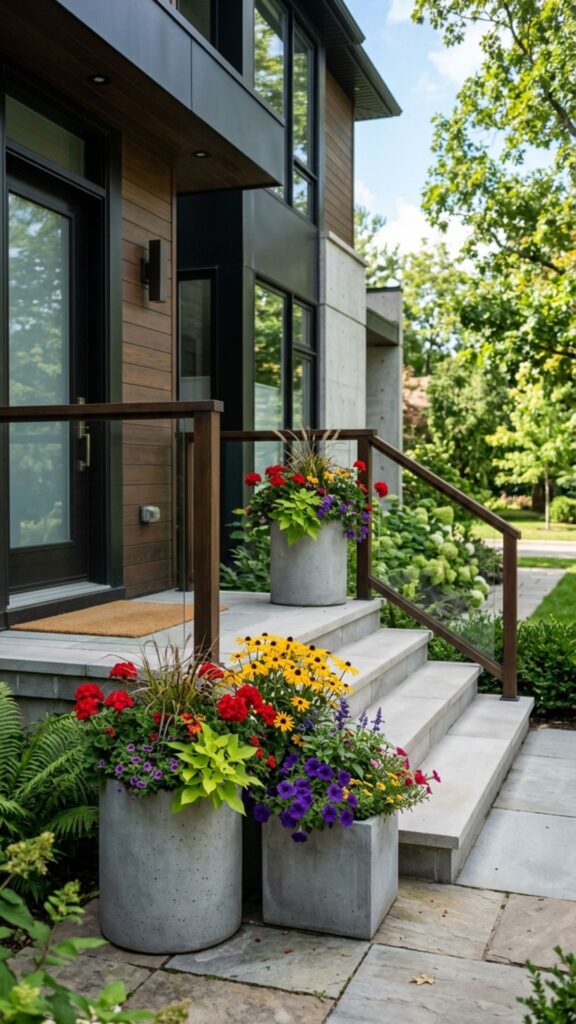
Permanent concrete planters flanking your steps make a strong, symmetrical statement. Their weight keeps them stable in wind, and their material ties right into your porch surface. Fill them with seasonal blooms or evergreen shrubs for year-round appeal.
If you’re handy, you can cast your own planters with a mold and quick-set mix. Otherwise, precast options come in dozens of shapes and sizes. Group planters in odd numbers for a natural, designed look rather than a stiff pair.
8. Add a Cozy Concrete Bench

A built-in or freestanding concrete bench turns your porch into a place to linger. It offers durable seating that won’t blow over or rot, and it doubles as a design feature. Soften it with weather-resistant cushions so it feels inviting rather than cold.
Position the bench where it makes sense, near the door for a spot to set down bags, or along a wall for morning coffee. Pair it with a small side table for function. Guests notice a porch that invites them to sit and stay a while.
9. Layer in an Outdoor Rug
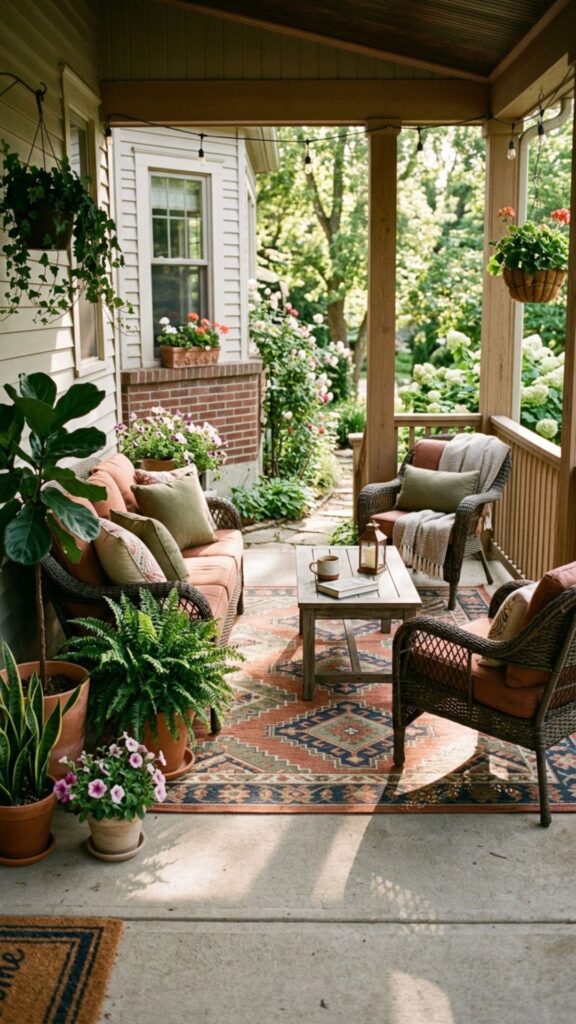
An outdoor rug instantly warms up bare concrete and defines your seating zone. Choose a woven polypropylene rug that resists rain, sun, and mildew. Bold patterns hide dirt and add color that pops against neutral gray.
Size matters here, so measure your space and pick a rug big enough to sit under your furniture. A rug that’s too small looks like an afterthought. Swap it seasonally to refresh the look without spending much.
10. Upgrade Your Porch Lighting
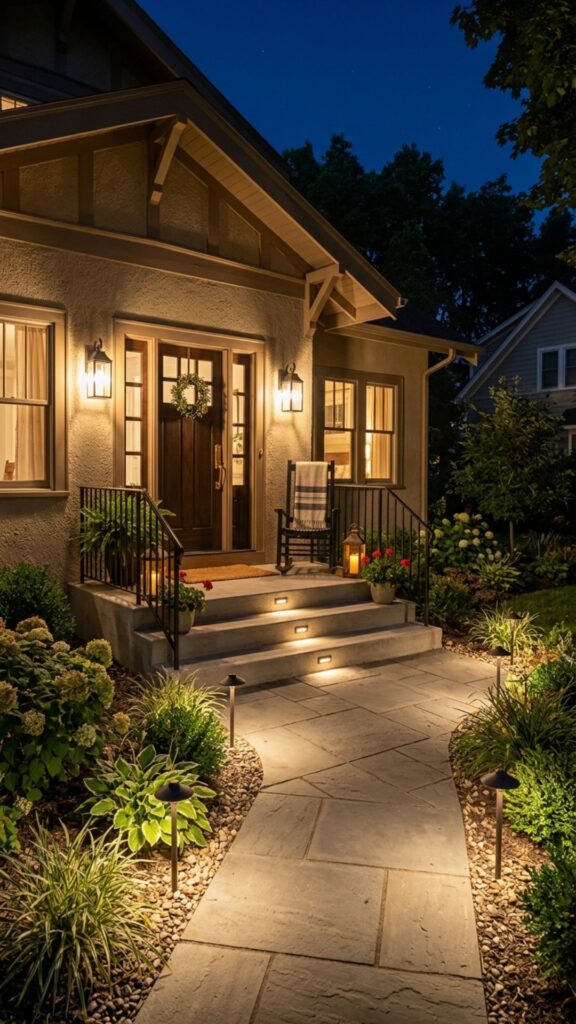
Good lighting makes concrete features glow after dark and boosts safety on steps. Wall sconces beside the door, path lights along the edge, and a statement pendant overhead each play a role. Layered lighting adds depth and welcomes guests home.
Warm white bulbs feel cozier than harsh cool tones. Solar path lights offer an easy, wire-free option for the porch perimeter. For a modern touch, recessed step lights set into the concrete create a subtle, high-end glow.
11. Polish for a Sleek Modern Look
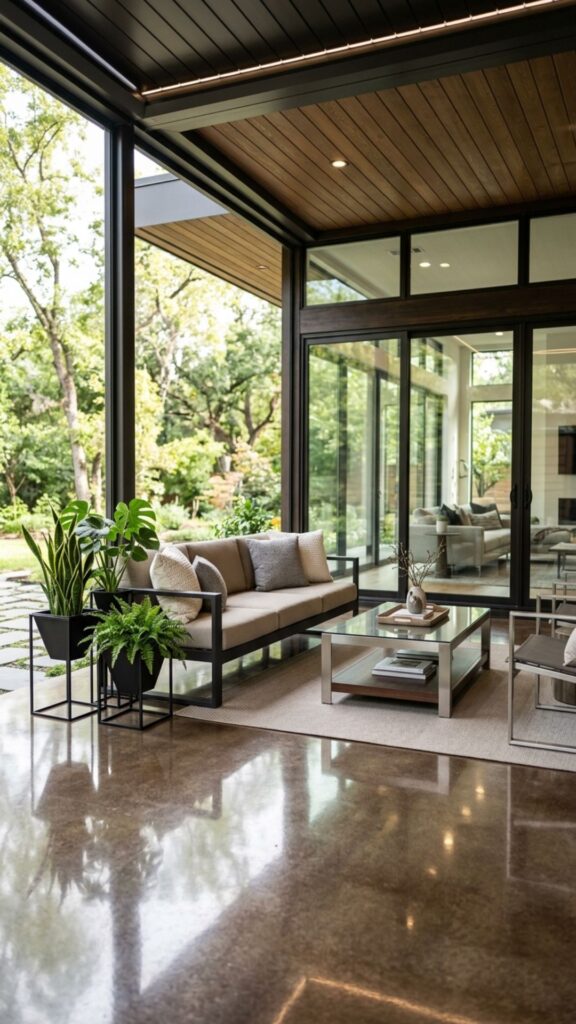
Polished concrete brings a smooth, reflective finish that suits contemporary homes. Machines grind and buff the surface until it shines, revealing the aggregate underneath for a speckled, terrazzo-like effect. It’s low-maintenance and surprisingly elegant.
This finish works best under a covered porch where it stays cleaner and drier. Pair it with minimalist furniture and clean lines to complete the modern vibe. A polished surface reflects your lighting at night, doubling the ambiance.
12. Add Texture with an Exposed Aggregate Finish
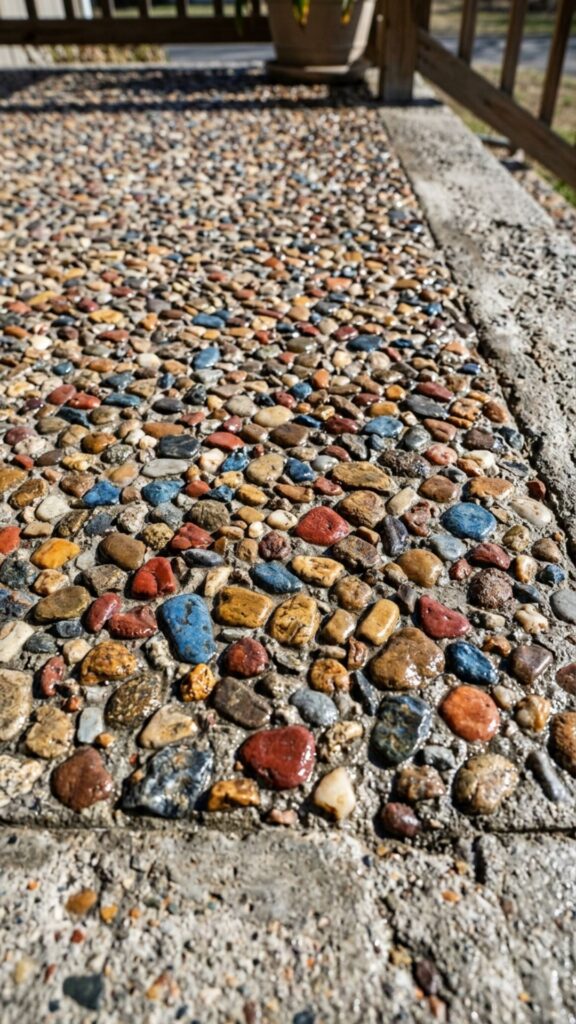
Exposed aggregate reveals the small stones in concrete for a naturally textured, slip-resistant surface. It’s practical for entryways because the rough finish grips underfoot in wet weather. The pebbled look also hides dirt and wear.
You can control the effect by choosing different aggregate sizes and colors. River rock gives a soft, rounded look, while crushed granite reads more rugged. Seal it to deepen the colors and make cleaning easier.
13. Frame the Steps with Greenery
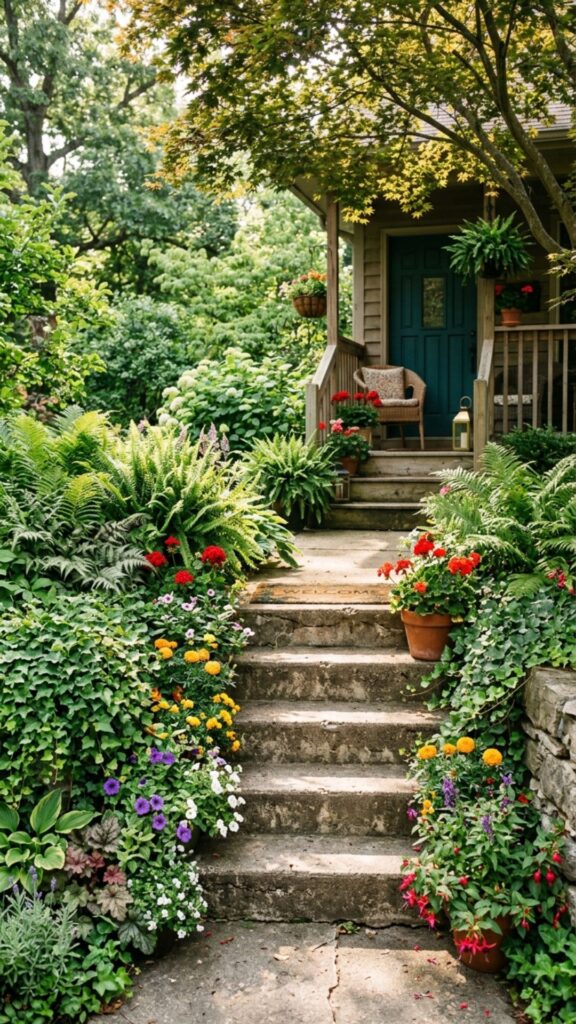
Softening hard concrete steps with plants creates instant charm. Line the edges with potted ferns, trailing ivy, or flowering annuals to add life and color. Greenery bridges the gap between your porch and yard for a cohesive look.
Stick with plants suited to your light conditions and climate so they thrive. Cascading varieties spilling down the steps feel lush and established. Rotate seasonal color, like mums in fall and pansies in spring, to keep things fresh.
14. Install a Concrete Address Feature
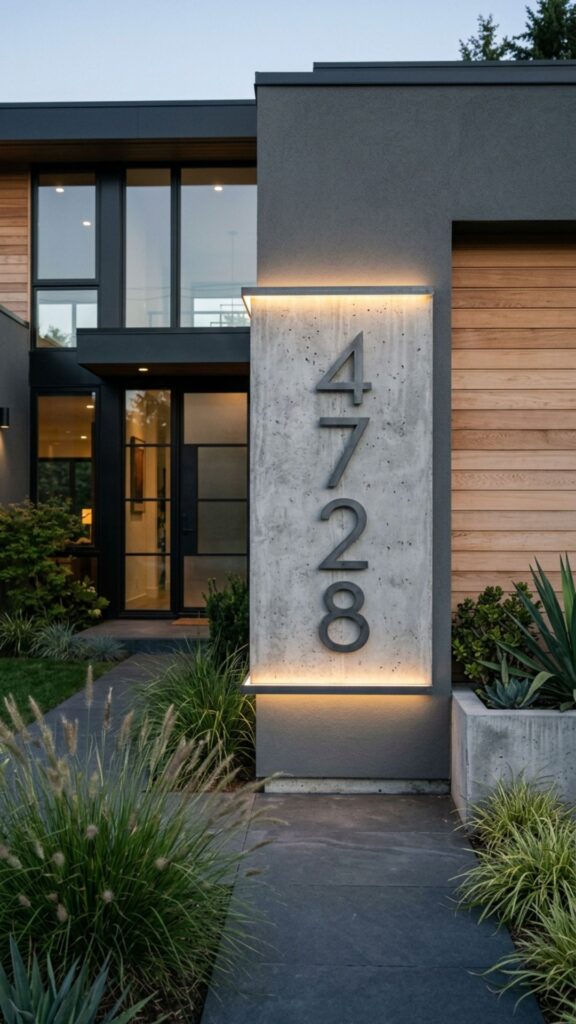
A custom concrete house number panel makes a memorable first impression. Cast numbers into a slab or mount metal digits on a concrete backdrop for contrast and durability. It’s a small detail that reads as thoughtful, custom design.
Place it where it’s easy to see from the street, and light it for nighttime visibility. Larger numbers help delivery drivers and guests find you fast. This project blends form and function beautifully.
15. Create a Two-Tone Color Scheme
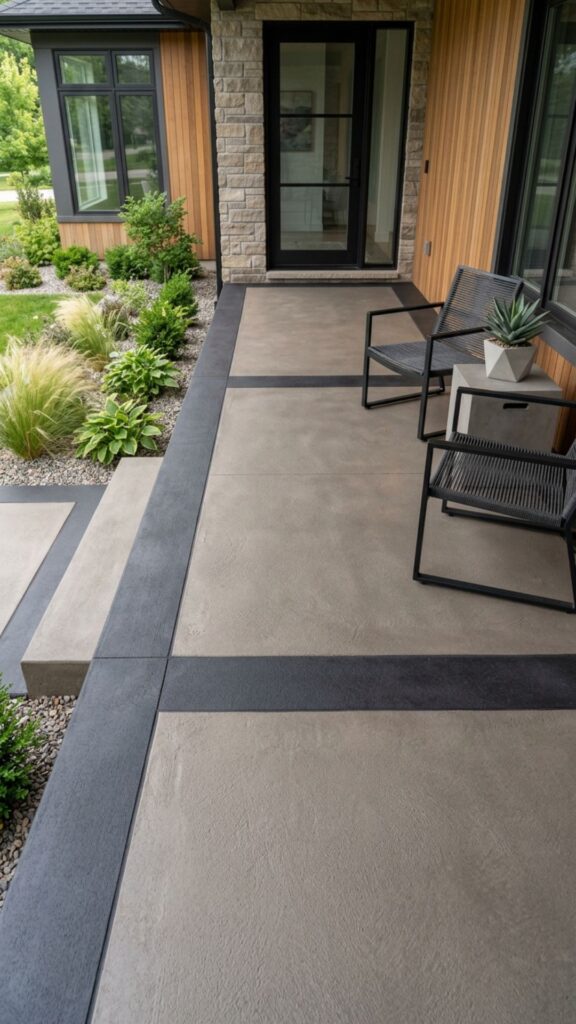
Combining two concrete colors adds dimension and visual interest. Pair a light main surface with a darker border or use contrasting shades for scored sections. The layered effect keeps a large slab from feeling flat.
Pick tones that complement your siding and trim rather than compete with them. Neutrals like charcoal and warm gray offer timeless appeal. Test your color combo in a small area before committing to the full porch.
16. Add a Water Feature
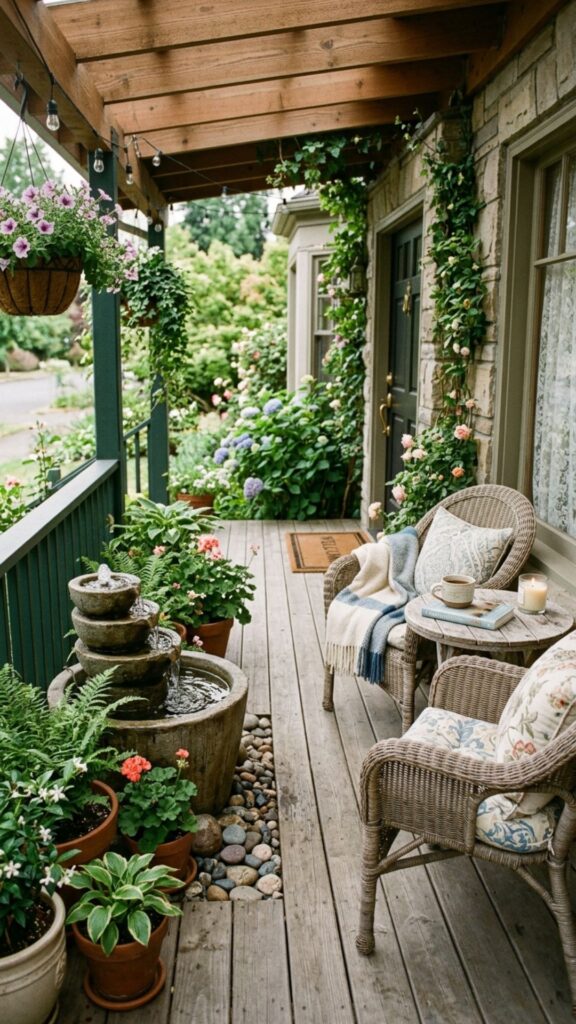
A small concrete fountain or bubbling basin brings soothing sound to your entry. The gentle trickle masks street noise and creates a calm, welcoming atmosphere. Concrete’s weight keeps these features stable and long-lasting.
Choose a self-contained, recirculating design to keep maintenance simple. Position it where the sound carries to your seating area. Even a compact fountain tucked in a corner adds an unexpected touch of luxury.
17. Use Concrete Pavers for a Custom Path
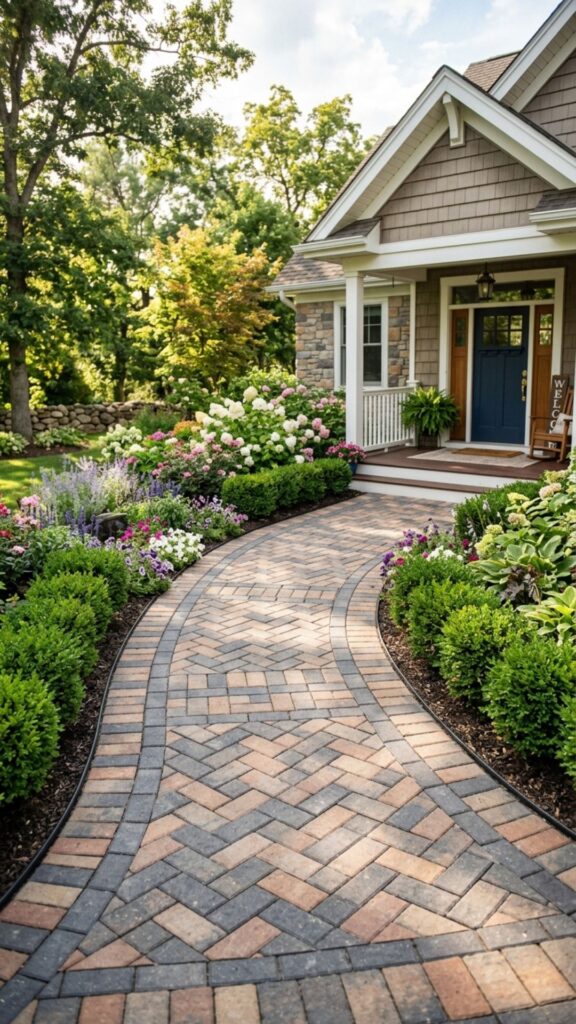
Individual pavers let you extend your porch’s style into the walkway. Arrange them in a pattern, herringbone, basketweave, or offset grid, for a designer finish. Gaps filled with gravel or moss soften the transition to your landscaping.
Pavers are forgiving because you can lift and reset any that shift over time. Match their color to your porch surface for a seamless flow. This idea guides guests naturally toward your door.
18. Add a Sealed Glossy Finish
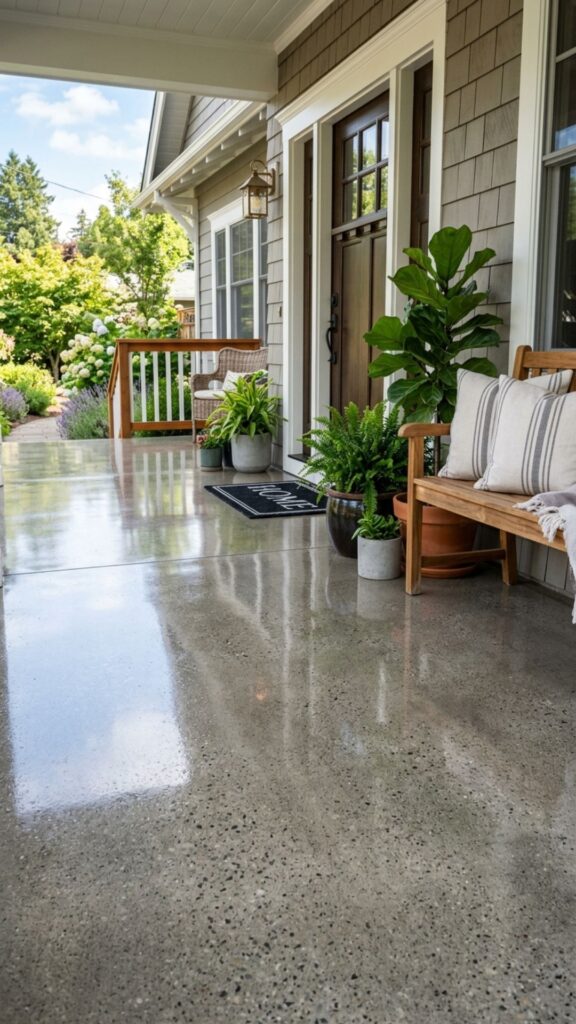
A clear sealer protects concrete while giving it a subtle sheen that makes colors pop. Sealing guards against stains, moisture, and UV fading, extending the life of any finish underneath. It’s one of the easiest upgrades to DIY.
Choose between a matte, satin, or high-gloss sealer based on the look you want. Reapply every couple of years to maintain protection. A freshly sealed porch looks cleaner and more vibrant almost instantly.
19. Warm It Up with Wood Accents
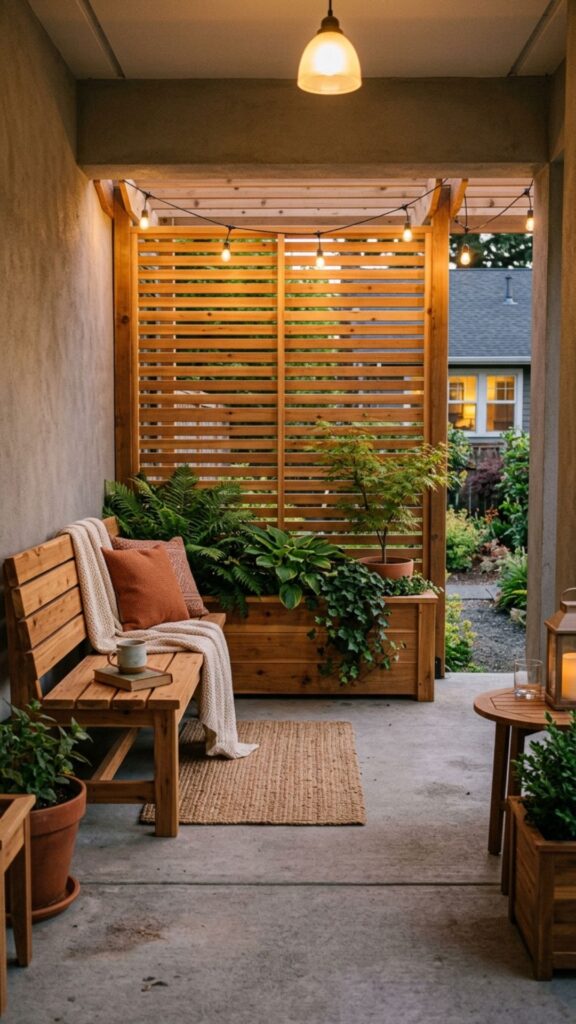
Mixing wood with concrete balances hard and soft, cool and warm. Add a wood bench, planter box, or slatted screen to bring natural texture to your porch. The contrast makes both materials look more intentional.
Use sealed or naturally weather-resistant wood like cedar to handle the elements. Even a few wood accents shift a stark concrete porch toward cozy and inviting. This blend suits farmhouse, modern, and transitional styles alike.
20. Style with Seasonal Decor
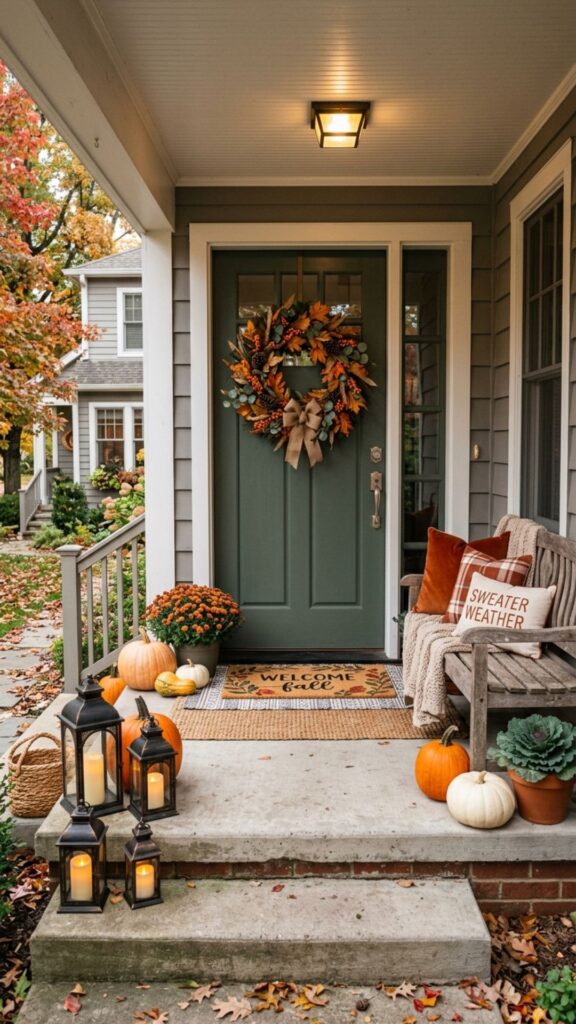
Finishing touches keep your porch feeling fresh year-round. A seasonal wreath, layered doormats, lanterns, and throw pillows dress up any concrete surface. These low-cost swaps let you refresh the look whenever you like.
Group decor in clusters at different heights for a curated feel. A tray of candles, a stack of books, or a woven basket adds warmth and personality. The concrete provides the sturdy foundation; the styling brings it to life.
Bring Your Front Porch to Life
Concrete gives you a durable, budget-friendly base for a welcoming entry, and these 20 ideas prove how far a little effort can go. Whether you resurface a tired slab, add a stamped finish, or simply layer in planters and lighting, each upgrade builds real curb appeal. Start with one or two projects that fit your budget, then build from there.
Ready to get started? Pick the idea that excites you most, gather your supplies, and tackle it this weekend. For bigger projects like stamping or polishing, get quotes from a couple of local concrete pros to compare options. Your dream porch is closer than you think.
How much does it cost to update a concrete front porch?
Costs vary widely by project. Simple updates like painting or staining can cost under $100 in materials, while resurfacing runs roughly $3 to $10 per square foot. Stamped or polished finishes done by a pro typically cost $8 to $18 per square foot.
Can I paint or stain a concrete porch myself?
Yes. Painting and staining concrete are both beginner-friendly DIY projects. Clean and prep the surface, apply a concrete-specific product in thin coats, and seal it when done for lasting results.
What is the most durable finish for a concrete porch?
Exposed aggregate and stamped concrete are among the most durable and slip-resistant finishes. Sealing any concrete surface adds extra protection against moisture, stains, and UV damage.
How do I keep my concrete porch from cracking?
Prevent cracks by sealing the surface, keeping water from pooling, and patching small cracks early before they spread. Proper drainage and a quality sealer are your best defenses.
What's the fastest way to boost porch curb appeal?
The quickest wins are a fresh coat of paint, new lighting, potted plants, and seasonal decor. These low-cost updates transform a plain concrete porch in a single weekend.