A kitchen island does a lot of heavy lifting. It’s where you chop vegetables, help kids with homework, and pour wine for friends who wander in while you cook. So when you top that island with marble, you’re not just adding a work surface. You’re adding the piece everyone looks at first.
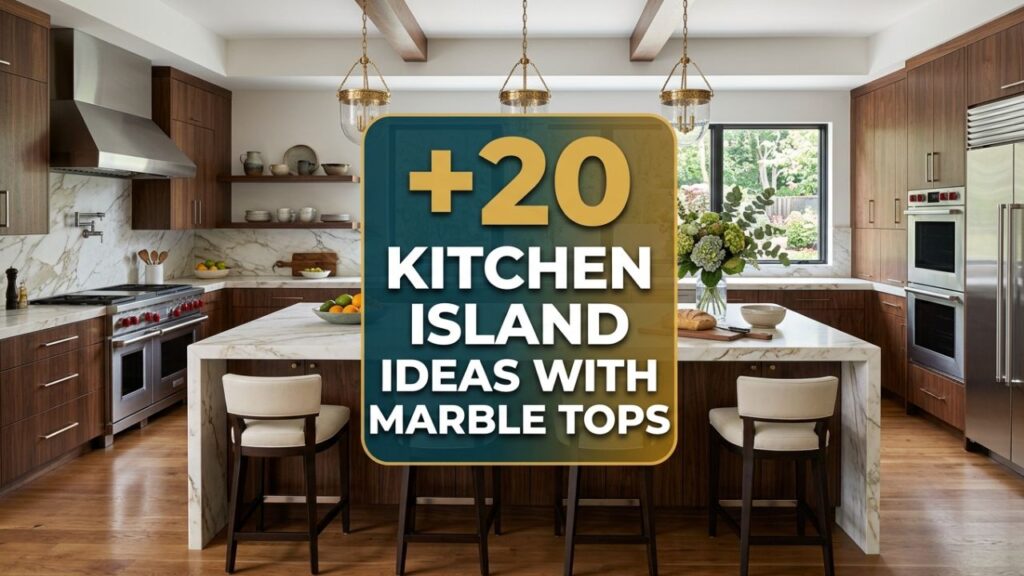
Marble has a way of making a kitchen feel finished. The soft veining, the cool touch, the slight glow under pendant lights, it all reads as quiet luxury. But marble also gives you room to play. You can go bright and airy, dark and moody, or somewhere in between.
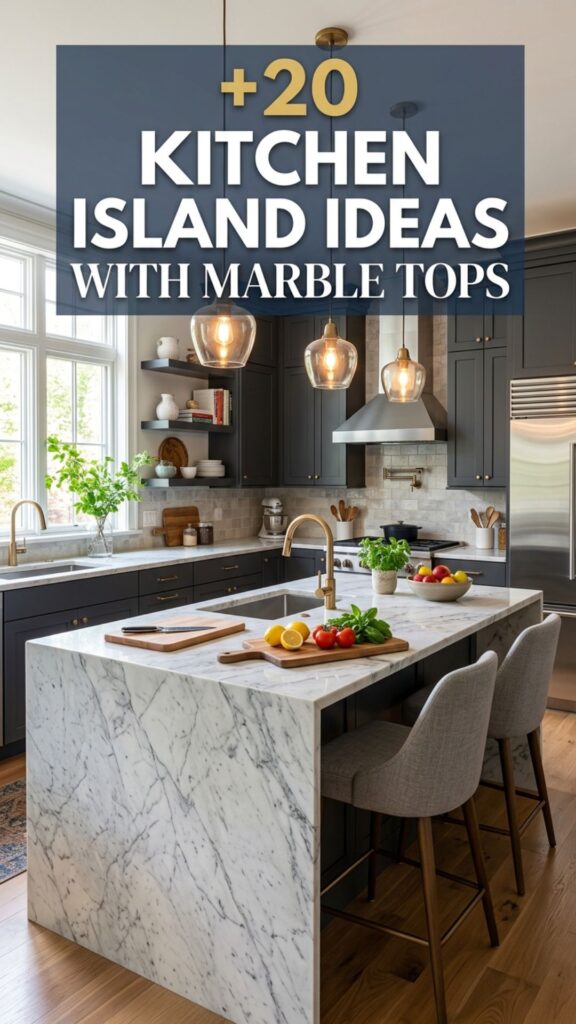
I’ve spent years helping homeowners plan kitchens, and the island is almost always where people get stuck. Below, you’ll find 20 kitchen island ideas with marble top surfaces to spark your own plans. Each one comes with practical notes on what works, what to watch for, and how to make it your own. Let’s dig in.
1. Classic Carrara White for Timeless Appeal
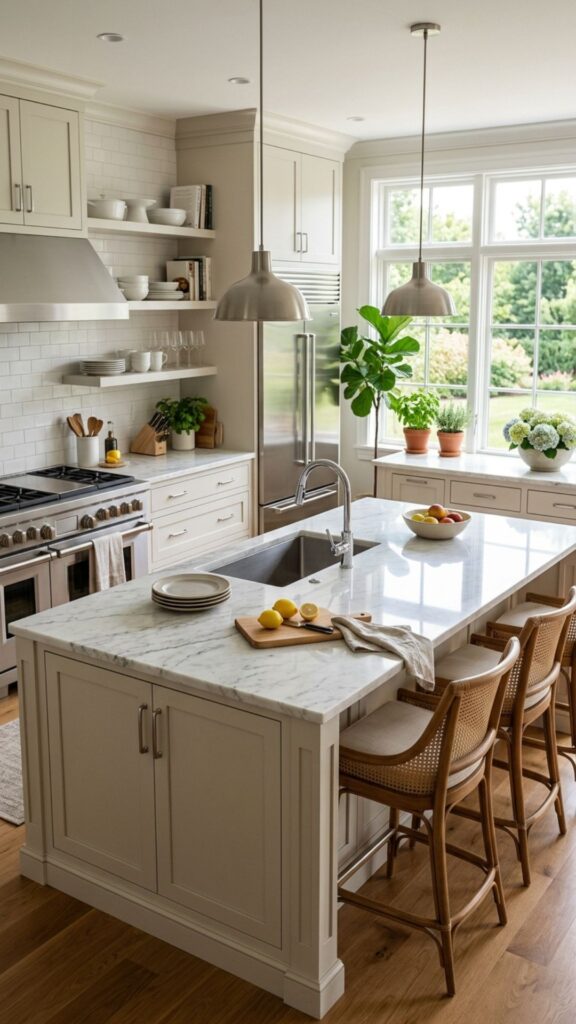
Carrara marble is the one most people picture when they hear “marble.” It has a soft white or light-gray background with fine, feathery gray veins. On an island, it feels calm and never goes out of style, which is exactly why designers reach for it again and again.
Pair Carrara with white or pale gray cabinets for a bright, open look, or set it against navy or forest-green base cabinets for contrast. Because the veining is subtle, it plays well with busy backsplashes and patterned floors without fighting for attention.
2. Dramatic Calacatta With Bold Veining
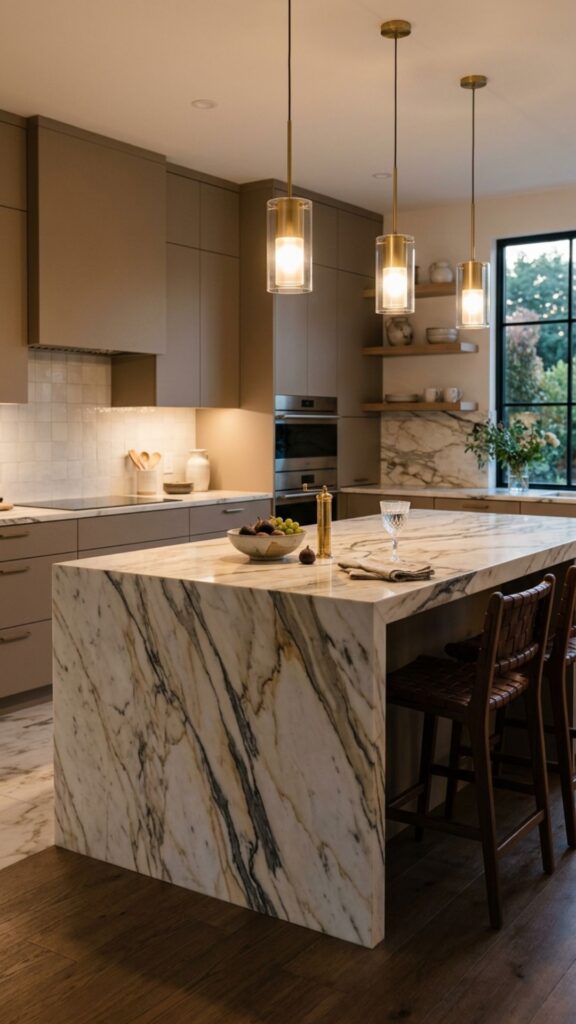
If Carrara feels too quiet, Calacatta turns up the drama. It has a whiter background and thicker, more striking gray or gold veins that stretch across the slab like brushstrokes. One large island in Calacatta can become the centerpiece of the whole room.
Because each slab is different, ask to see the actual stone before you buy. Position the island so the boldest veining faces the main sightline, usually the entry to the kitchen. Keep surrounding finishes simple so the marble stays the star.
3. The Waterfall Edge for a Modern Statement
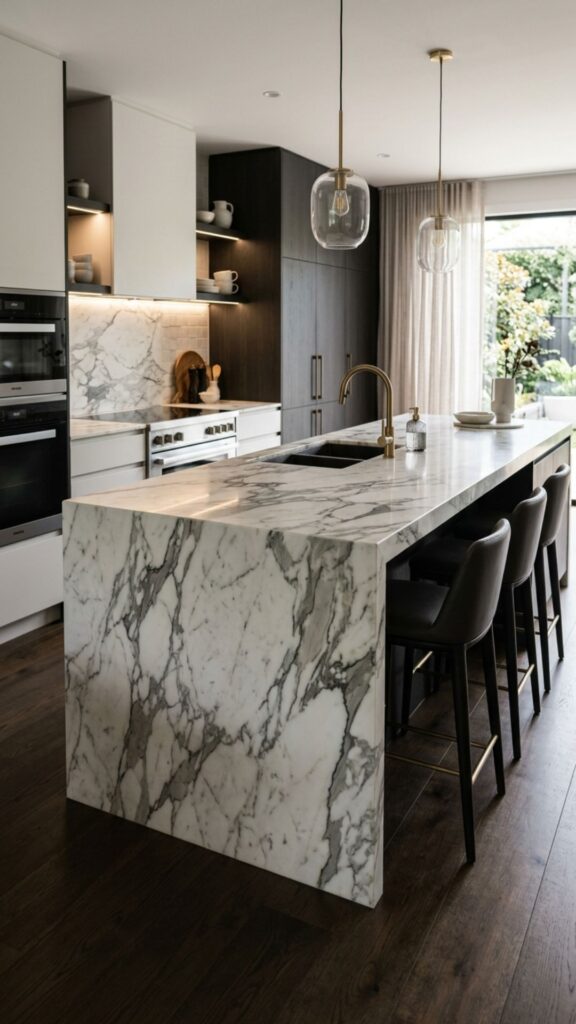
A waterfall edge is when the marble runs down the sides of the island to the floor, wrapping the ends like a curtain of stone. It gives a clean, contemporary feel and shows off the veining from top to bottom. This look pairs beautifully with handleless cabinets and flat, sleek fronts.
The trick with waterfall edges is matching the veins where the top meets the sides, called a “book-matched” seam. A skilled fabricator can line these up so the pattern flows around the corner. It costs more, but the result looks seamless and high-end.
4. Moody Black Marble for Depth and Drama
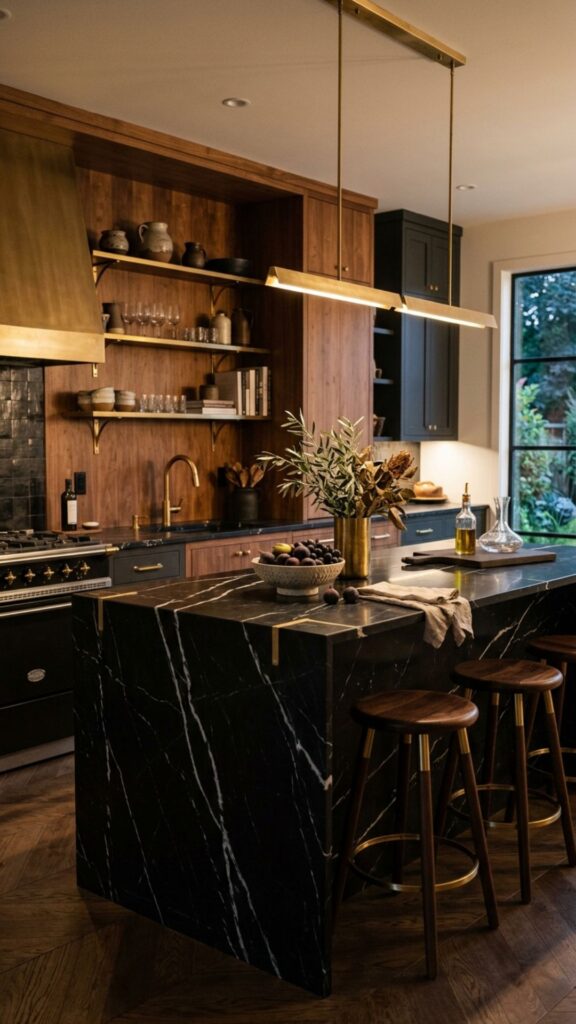
Black marble, like Nero Marquina, brings serious depth to a kitchen. Its inky background and crisp white veins feel bold and elegant at once. Set against light cabinets or warm wood, a black marble island grounds the whole space.
This surface shows crumbs and water spots more than lighter stone, so keep a soft cloth handy. In return, you get an island that feels custom and confident. Add brass or gold hardware nearby to warm up all that dark stone.
5. Warm Beige and Cream Tones for Cozy Kitchens
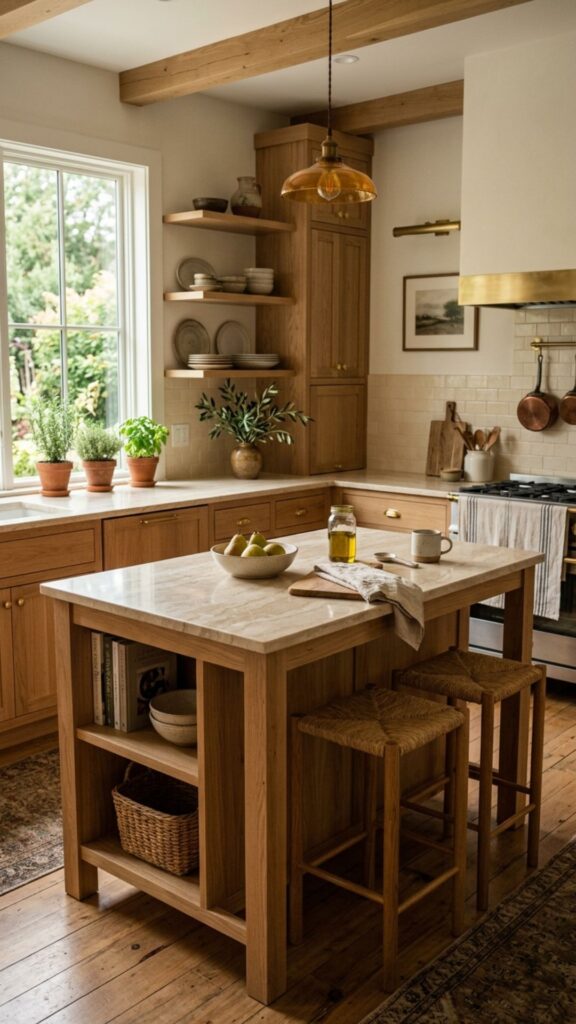
Not every marble is stark white. Cream and beige varieties, such as Crema Marfil, bring a softer, warmer mood. These tones flatter kitchens with natural wood, terracotta floors, or earthy paint colors.
A beige marble island feels welcoming rather than showy. It hides light stains a little better than pure white, too. If you love a farmhouse or Mediterranean style, this is a smart choice that keeps the room feeling relaxed and lived-in.
6. Two-Tone Islands That Break the Rules
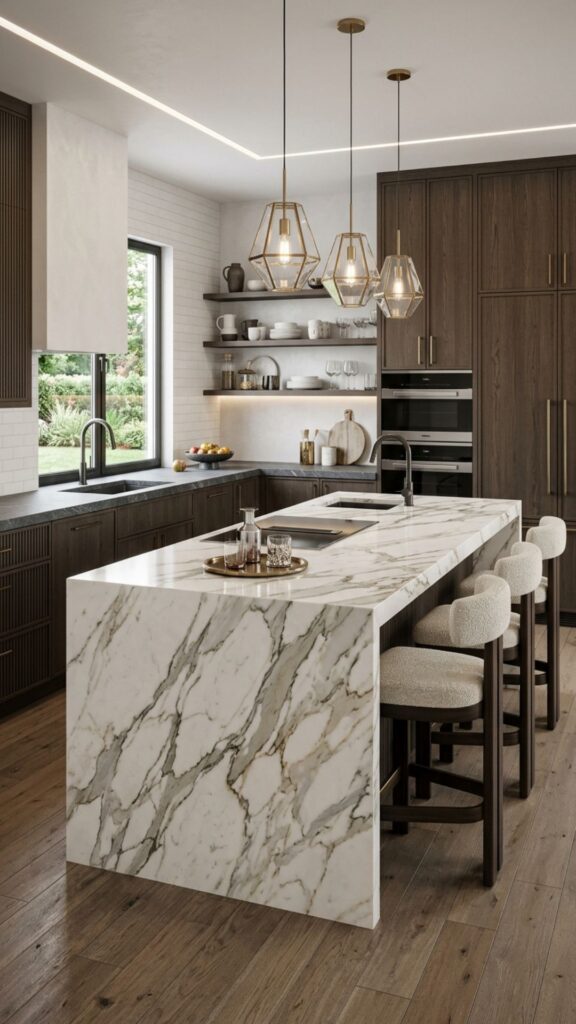
Who says your island has to match your counters? A two-tone design, where the island stone differs from the perimeter, adds interest and lets you splurge on a smaller amount of premium marble. Think white perimeter counters with a bold Calacatta island, or the reverse.
This approach also helps define zones in an open kitchen. The contrasting island tells guests where the gathering happens. Keep one shared element, like a repeated vein color or metal finish, so the two surfaces still feel connected.
7. Marble With a Honed, Matte Finish
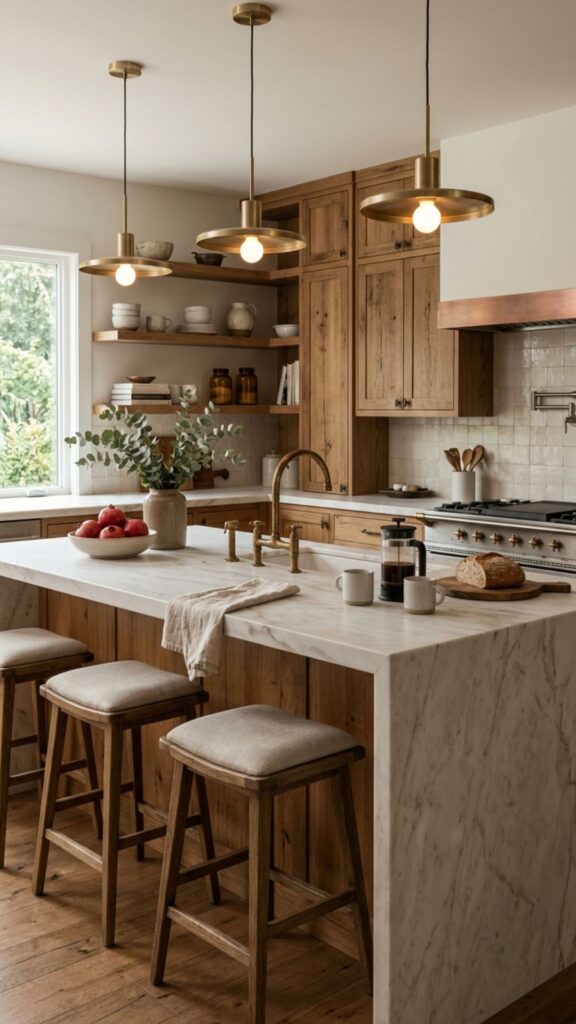
Polished marble shines, but honed marble has a soft, matte surface with almost no glare. It feels velvety under your hand and gives a more understated, natural look. Many homeowners prefer it for a relaxed, modern-rustic kitchen.
Honed marble hides etching, those dull marks left by acidic spills, better than polished stone. That makes it a practical pick for busy cooks. Just know it can absorb stains a touch faster, so sealing it well matters.
8. Oversized Islands for Open-Plan Living
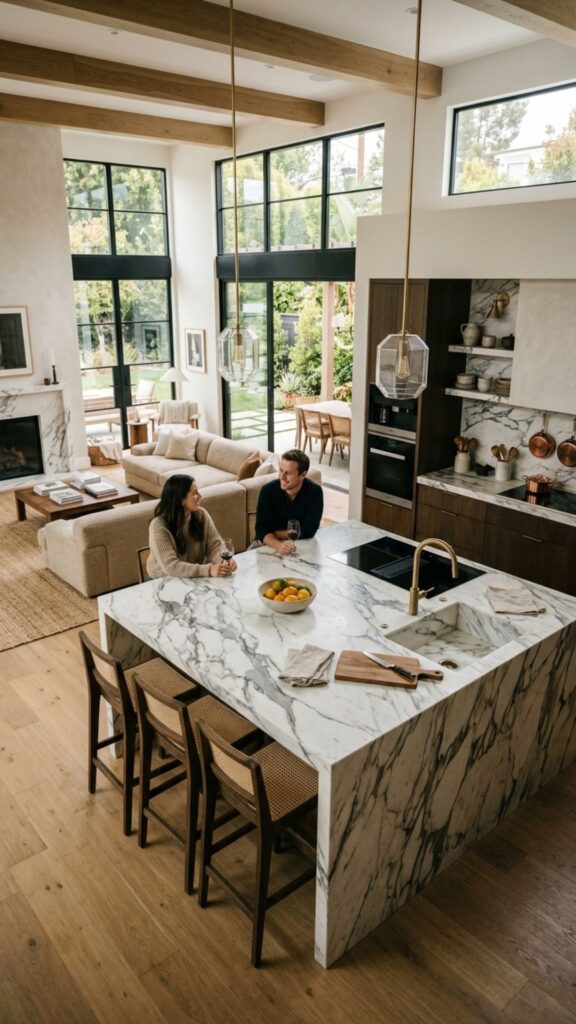
In big open-plan spaces, a small island looks lost. An oversized marble island, sometimes eight feet or longer, fills the room and gives you space to prep, dine, and gather all at once. The large surface really lets dramatic veining shine.
Plan for two or more slabs and discuss seam placement with your fabricator early. A well-hidden seam keeps the look clean. Add seating along one side and a prep sink on the other to make the size truly useful.
9. Marble Island With Built-In Seating
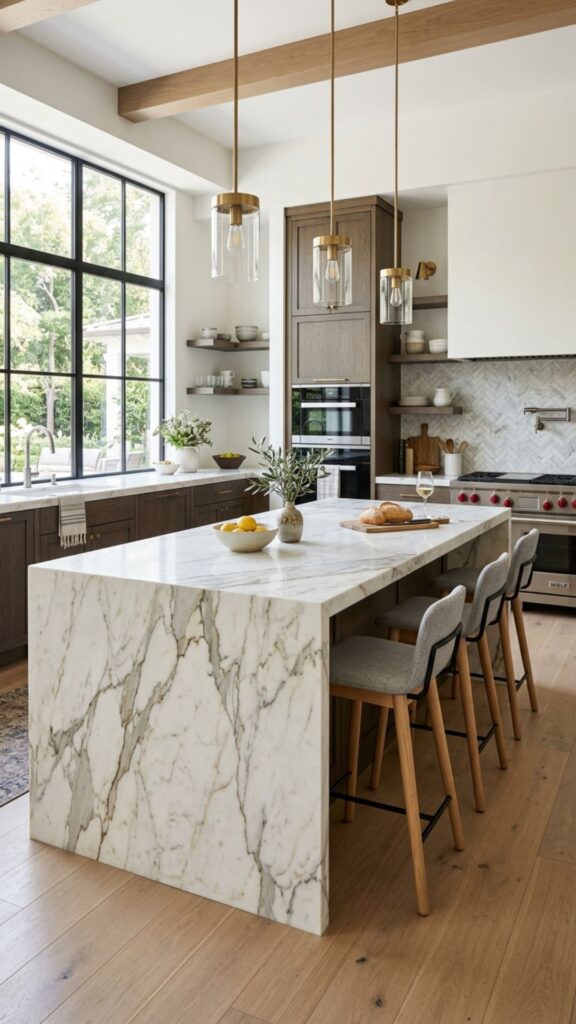
Turning part of your island into a dining spot makes it work harder. Extend the marble top past the cabinets to create an overhang, then tuck stools underneath. It’s perfect for quick breakfasts and casual chats.
For comfortable seating, allow about 12 inches of overhang and 24 inches of width per stool. Support longer overhangs with hidden steel brackets so the marble doesn’t crack under weight. Now your island is a table, workspace, and showpiece in one.
10. Veined Marble Paired With Warm Wood
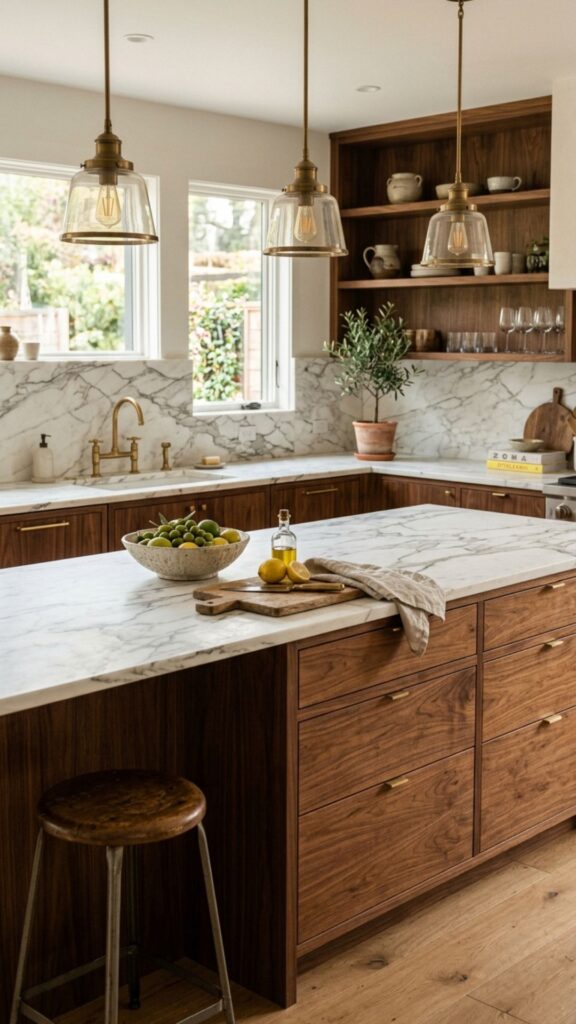
Marble and wood are a classic pairing for good reason. The cool, smooth stone balances the warmth and texture of timber. A white marble top over oak or walnut cabinets feels both fresh and grounded.
Choose wood tones that echo any warm veins in the marble, like golden Calacatta with honey oak. This repetition ties the two materials together. The result feels curated rather than accidental, and it never feels cold.
11. Minimalist Marble for a Sleek Look
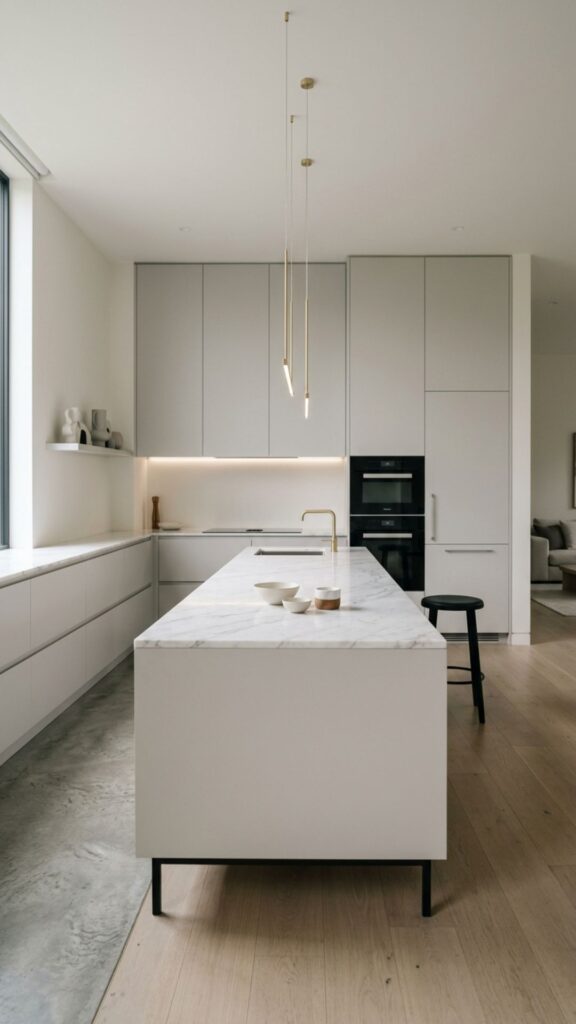
If you love clean lines, let the marble do the talking. Pair a slim marble top with flat, handleless cabinets in a single color. Skip busy details so the eye rests on the stone’s natural pattern.
A thin profile edge, around three-quarters of an inch, keeps the look light and modern. Hide storage behind push-to-open doors and keep countertops clear. In a minimalist kitchen, the marble becomes quiet art.
12. Marble Island With a Statement Sink
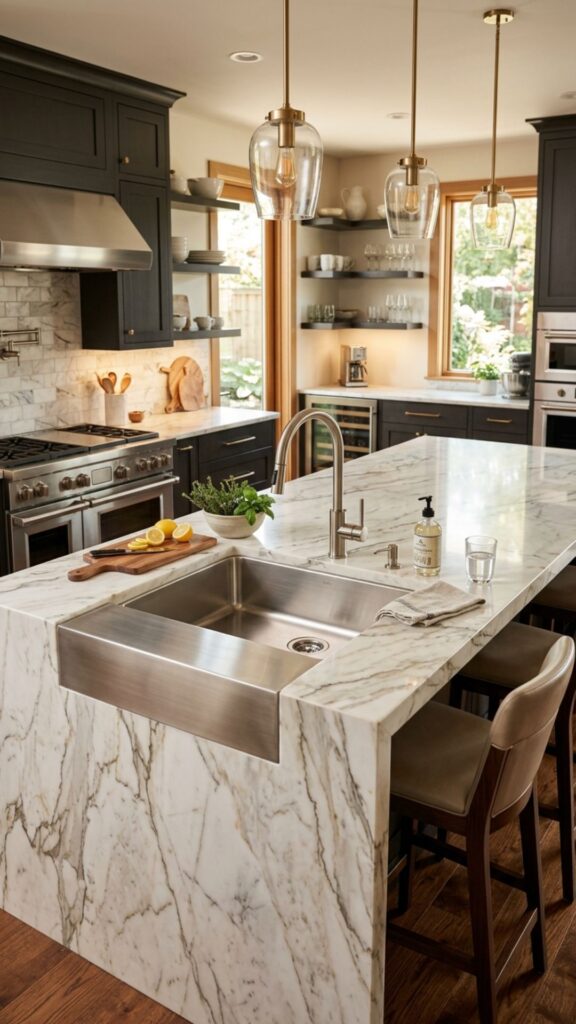
Adding a sink to your island makes cooking flow better and keeps you facing the room while you work. A farmhouse apron sink in white ceramic looks stunning against marble, while a sleek undermount keeps things streamlined.
Seal the stone carefully around the sink, since this area sees constant water and the occasional acidic splash from lemons or wine. Wipe spills quickly and reseal as needed. Done right, this setup is as practical as it is pretty.
13. Bold Colored Marble for Adventurous Spaces
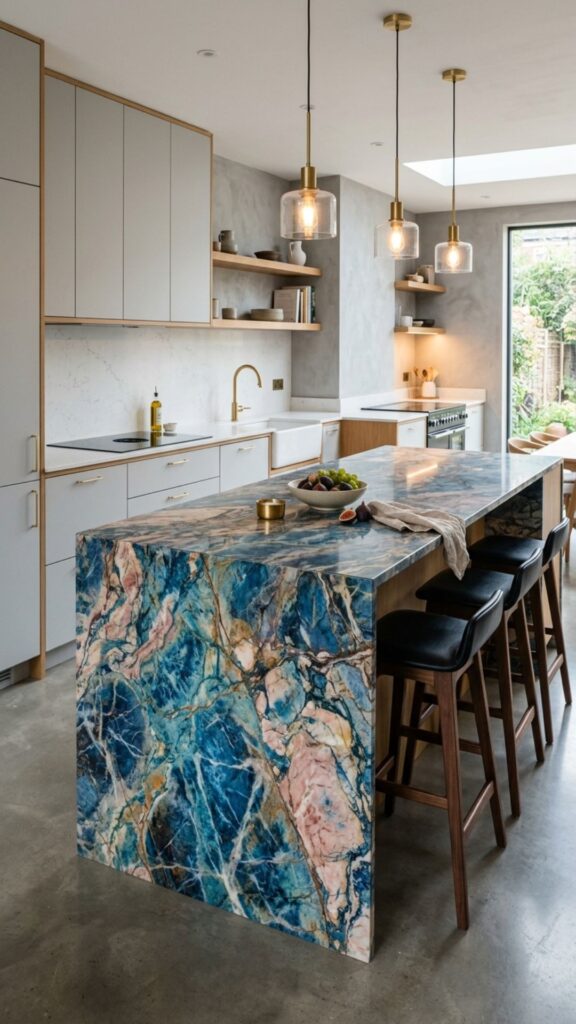
Marble isn’t only white and gray. Green marbles like Verde Alpi, warm rose varieties, and even deep blue stones bring real personality. A colored marble island turns your kitchen into something unforgettable.
Because the color is so strong, keep the rest of the palette calm. Neutral cabinets and simple hardware let the island breathe. If you’re nervous, start with a bolder island and stick to safe choices everywhere else.
14. Marble Island With Open Shelving
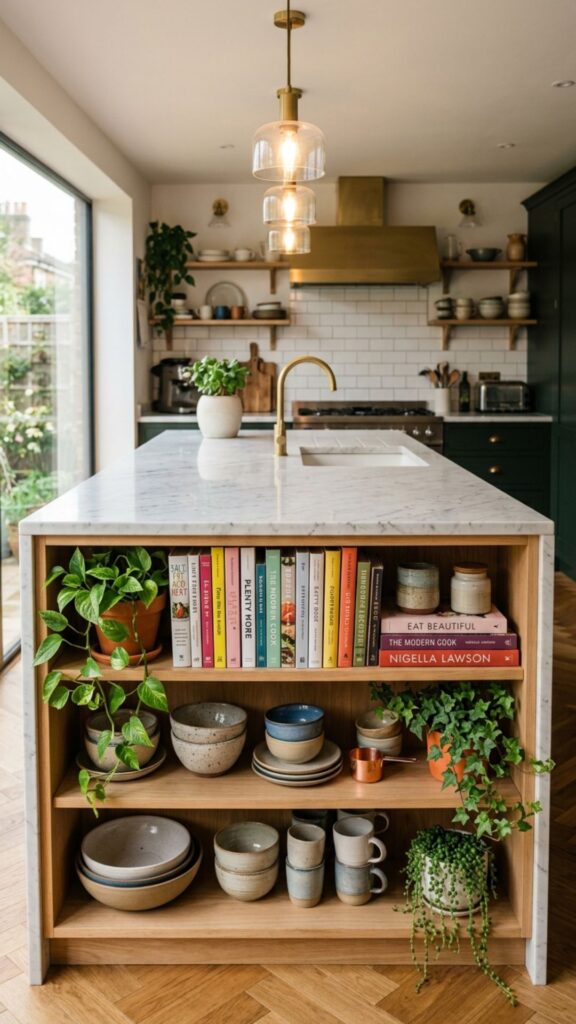
Open shelves built into the side or end of your island add storage and a spot to style cookbooks, bowls, or greenery. Against a marble top, wood or metal shelving adds welcome texture and warmth.
Use the shelves for things you reach for often, like everyday plates or a fruit basket. Keep them tidy, since open storage shows everything. This idea works especially well when the island faces a living area and both sides are on display.
15. Thick Slab Edges for a Substantial Feel
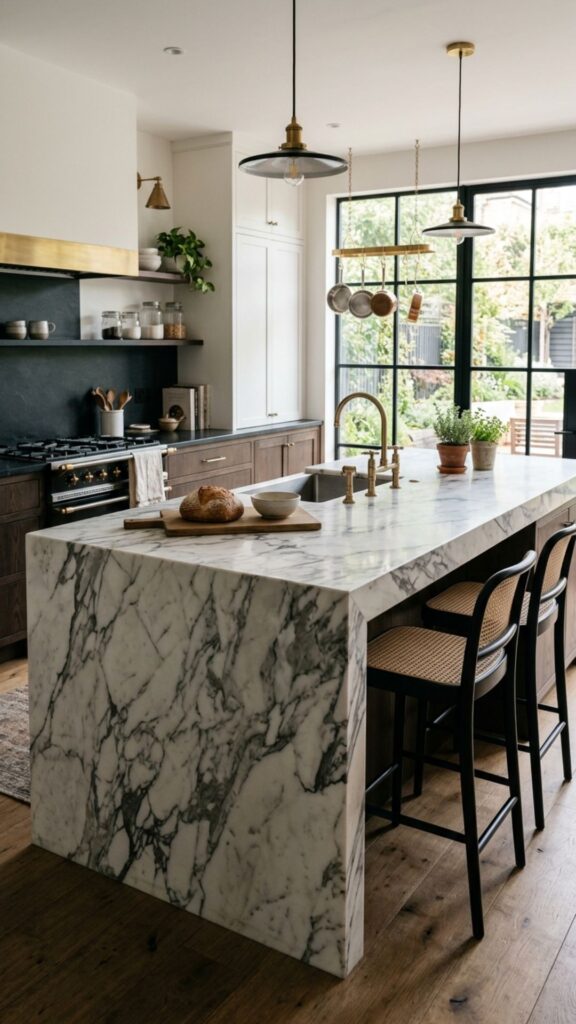
A chunky, thick edge gives your island weight and presence. A mitered edge, where two pieces of stone join to look like one solid block, can make a three-quarter-inch slab appear several inches thick without the full cost.
This heftier look suits transitional and modern kitchens alike. It feels solid and grounded, almost architectural. Pair it with sturdy cabinets and substantial hardware so the proportions feel right.
16. Marble Island Under Statement Lighting
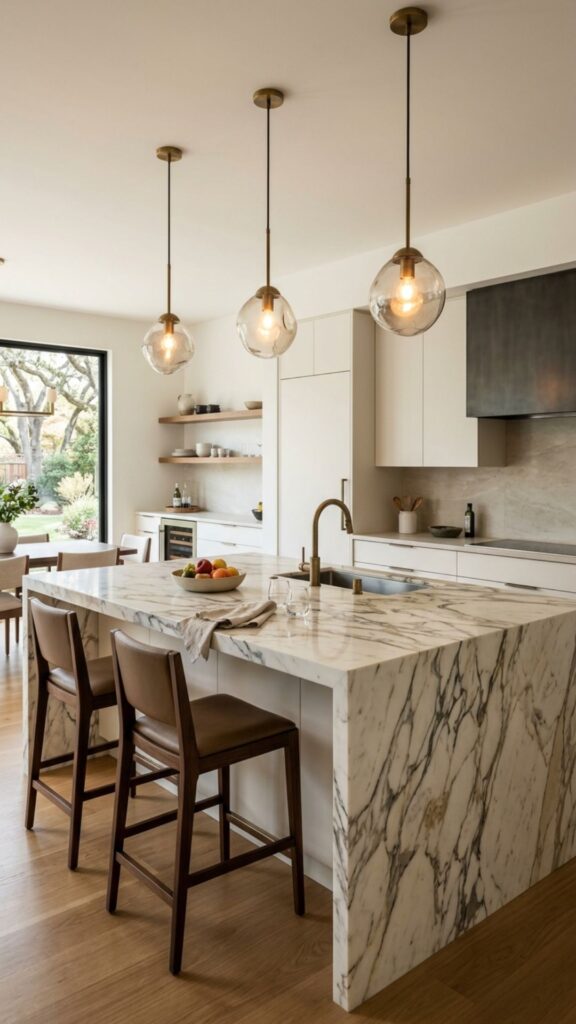
Great lighting turns a good island into a great one. Hang a row of pendants or a bold linear fixture above your marble to highlight the veining and warm the surface at night. Light bounces beautifully off polished stone.
Choose fixtures that suit your style, sculptural glass for modern rooms, or classic lanterns for traditional ones. Hang them about 30 to 36 inches above the counter. The right glow makes the marble look even richer after dark.
17. Compact Marble Islands for Small Kitchens
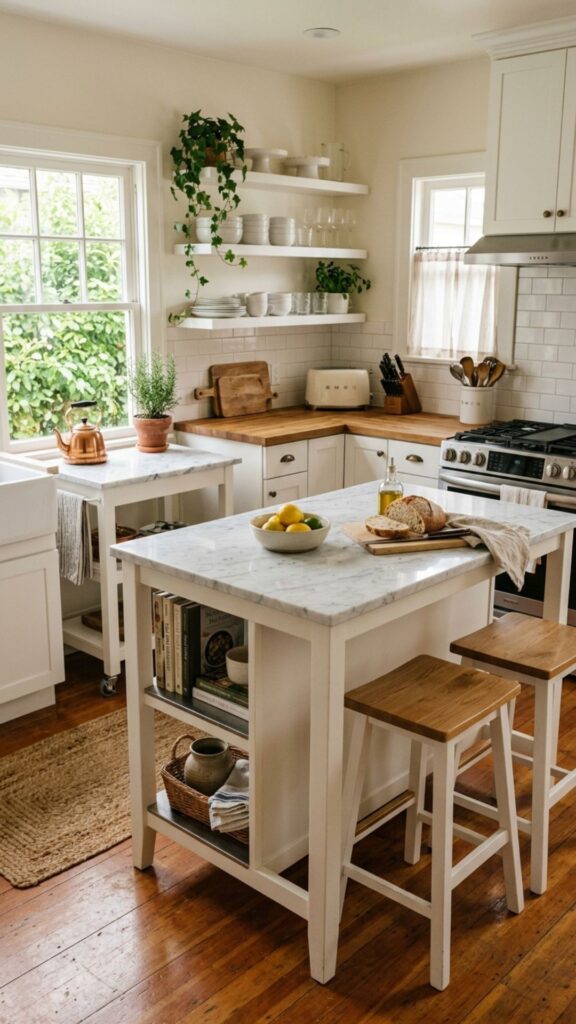
You don’t need a huge kitchen to enjoy marble. A compact island, even a small rolling cart with a marble top, brings luxury to tight spaces. It offers extra prep room and a touch of elegance without crowding the floor.
In small kitchens, a light Carrara top helps the space feel bigger and brighter. Keep at least 36 inches of walkway around the island so you can move freely. Sometimes a little marble goes a long way.
18. Marble Island With Contrasting Base Cabinets
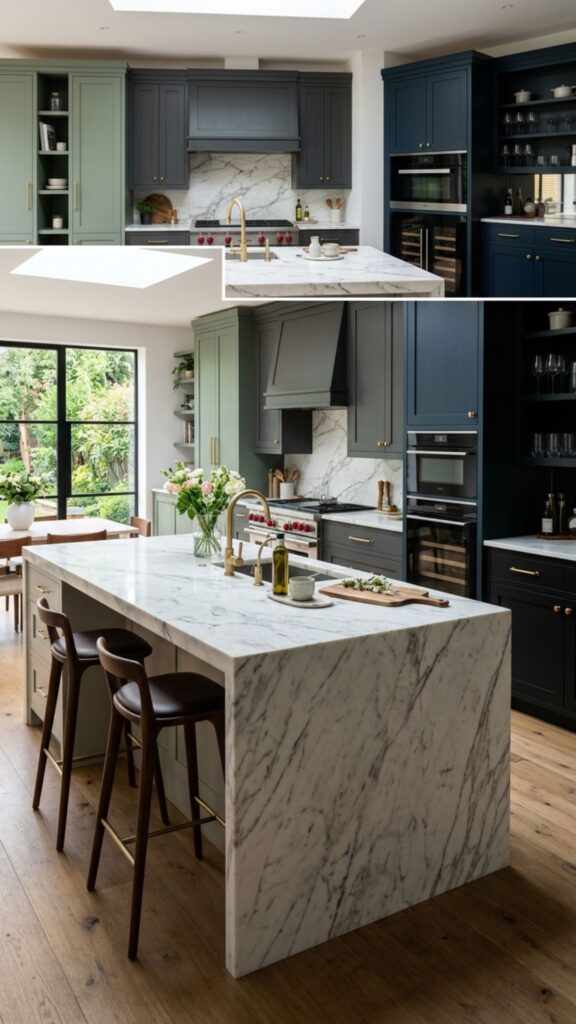
A painted base in a rich color makes white marble pop. Deep blue, charcoal, sage, or even black cabinets under a bright top create a striking, tailored look. The contrast feels intentional and modern.
Pull a hint of the marble’s veining into your cabinet color for harmony. For example, gray veins pair naturally with charcoal cabinets. This combination looks especially sharp with brass or matte-black hardware.
19. Bookmatched Marble for Mirror-Image Drama
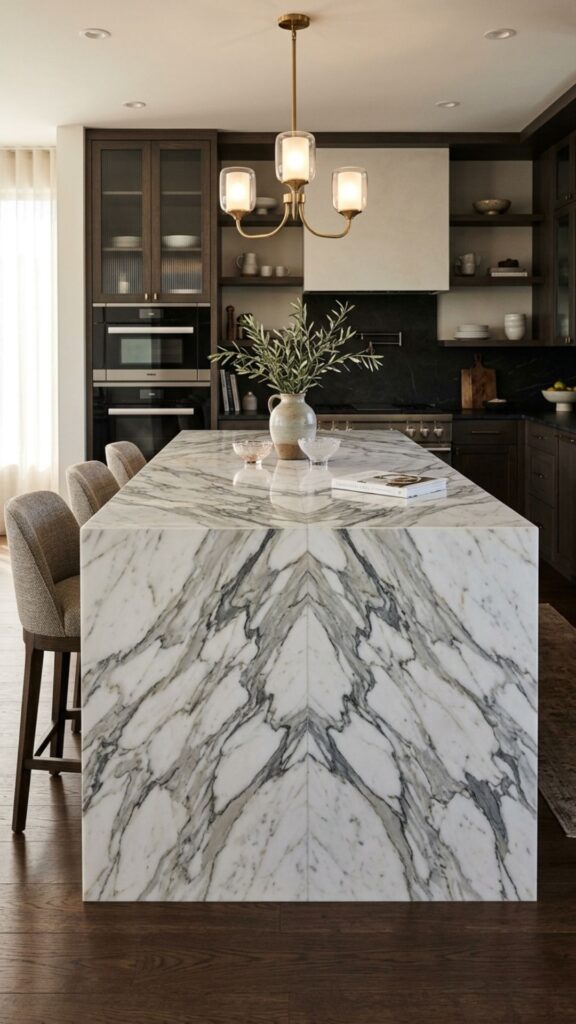
Bookmatching takes two slabs cut from the same block and opens them like a book, so the veining mirrors itself. On a large island top or a waterfall edge, this creates a bold, symmetrical pattern that looks like fine art.
This technique needs careful planning and an experienced fabricator, so budget for both time and skill. When it comes together, the effect is breathtaking. It’s one of the most memorable ways to use dramatic marble.
20. Mixed-Material Islands for Practical Luxury
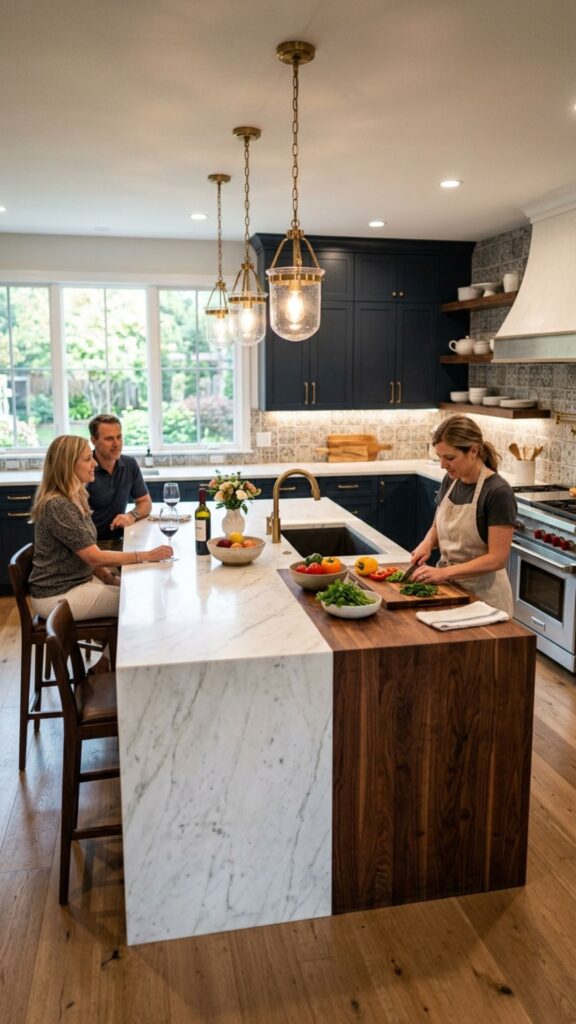
You can enjoy marble’s beauty while keeping a hardworking surface for messy tasks. Some homeowners use marble on the main island and add a butcher-block or quartz section for chopping and hot pans. It blends good looks with everyday function.
This mixed approach suits busy families who love marble but worry about wear. The wood or quartz zone takes the daily beating, while the marble stays pristine for entertaining. It’s the best of both worlds.
Bringing Your Marble Island to Life
Marble gives your kitchen island a look that feels both timeless and personal. From the soft calm of Carrara to the drama of a bookmatched waterfall edge, there’s a style here for every home and budget. The key is choosing a design that fits how you actually cook, gather, and live.
Here’s your quick game plan:
- Pick your mood first: bright and airy, warm and cozy, or dark and dramatic.
- See the real slab before buying, since no two pieces of marble are alike.
- Plan for care: seal the stone, wipe spills fast, and choose honed finishes if you worry about etching.
- Match your budget with smart tricks like mitered edges or a smaller premium island.
Ready to start? Save the ideas that spoke to you, take measurements of your space, and bring your favorites to a local fabricator or designer. They can help you find the perfect slab and turn your dream island into the heart of your home.
Is marble a good choice for a kitchen island?
Yes, marble is a good choice for a kitchen island if you’re prepared for basic care. It’s beautiful, heat-resistant, and adds real value to your home. Because it’s a natural stone that can stain and etch, seal it regularly and wipe up acidic spills quickly to keep it looking its best.
How much does a marble kitchen island top cost?
Marble island tops typically cost between $40 and $200 per square foot installed, depending on the type of marble and edge details. Common Carrara sits at the lower end, while premium Calacatta and bookmatched slabs cost more. Fabrication, seams, and waterfall edges add to the final price.
Does marble stain and scratch easily on a kitchen island?
Marble can stain and etch more easily than granite or quartz because it’s porous and reacts to acids like lemon, wine, and vinegar. Sealing the stone and cleaning spills right away greatly reduces this risk. A honed, matte finish also hides small marks better than a polished surface.
What color marble is best for a kitchen island?
The best marble color depends on your style. White Carrara suits almost any kitchen and stays timeless, Calacatta adds bold drama, and black or green marble makes a striking statement. Choose a color that complements your cabinets and the amount of natural light in your space.
How do I clean and maintain a marble island top?
Clean marble daily with a soft cloth and warm water or a pH-neutral stone cleaner. Avoid acidic or abrasive products, since they can dull the surface. Reseal the stone every 6 to 12 months, and blot spills immediately to prevent staining.