Your kitchen island does more than hold a fruit bowl. It sets the mood for the whole room. And if you crave a space that feels calm, uncluttered, and quietly beautiful, Japandi is the style to reach for.
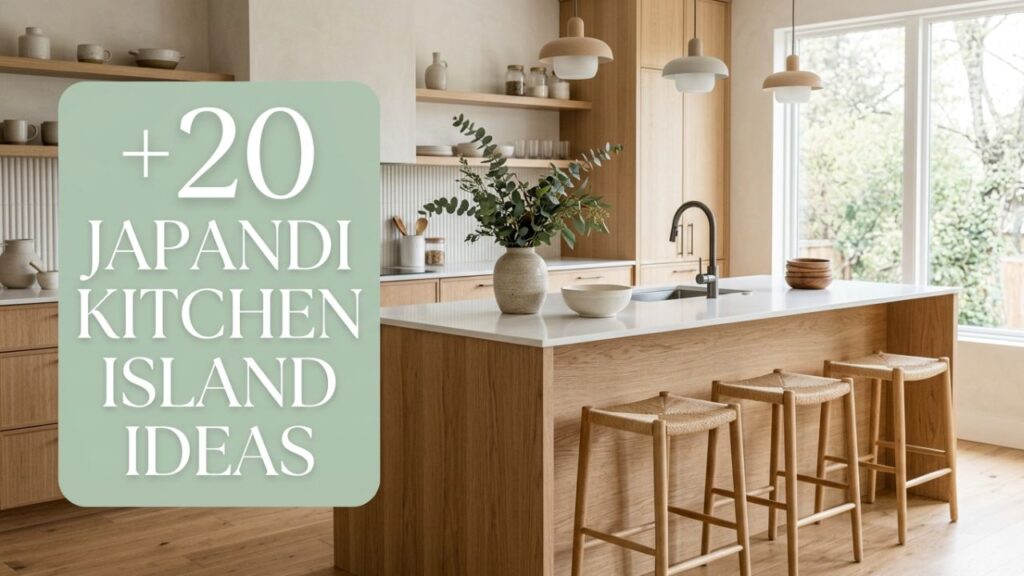
Japandi blends Japanese minimalism with Scandinavian coziness. The result feels warm but never busy, simple but never cold. In this guide, you’ll find 20 kitchen island ideas japandi lovers return to again and again. You’ll learn how to pick materials, colors, shapes, and small details that pull the whole look together.
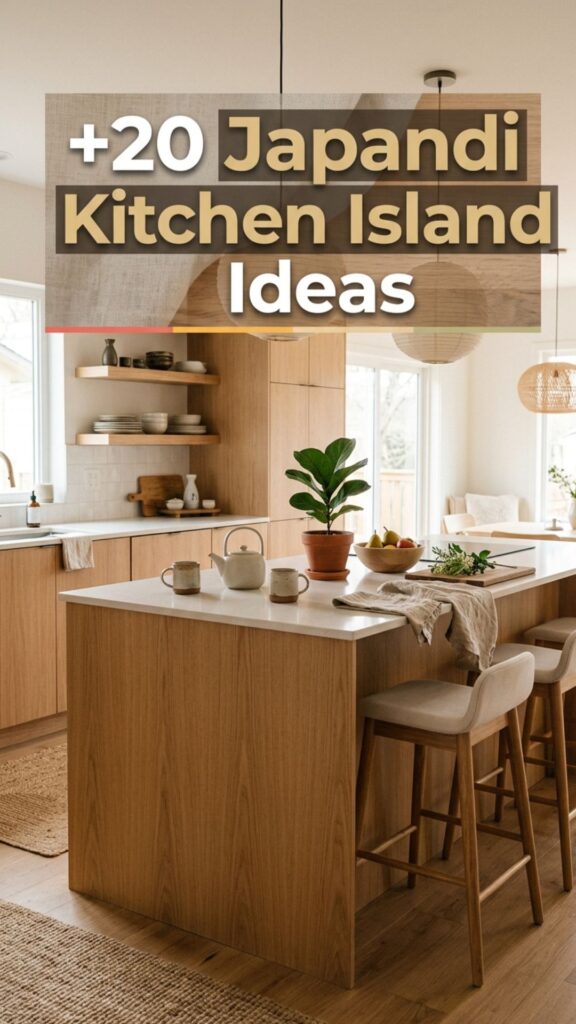
Here’s what you’ll walk away with:
- Practical island designs you can actually build or buy
- Material and color pairings that feel authentic to the style
- Small styling tricks that keep things minimal, not empty
Let’s get into it.
1. Choose a Warm Wood Base
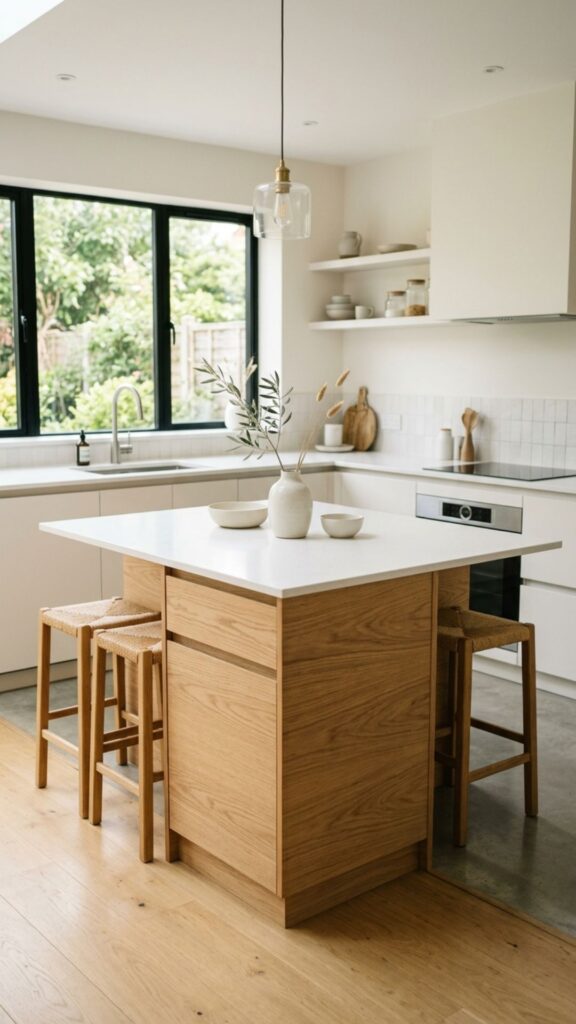
Wood is the heart of Japandi design. A light oak or ash island base brings warmth without shouting for attention. The grain adds gentle texture, so you don’t need loud colors or busy patterns to make the piece feel alive.
If you want a little more depth, try a mid-tone walnut. Keep the finish matte rather than glossy. A soft, oiled surface feels honest and tactile, which is exactly the mood Japandi rooms aim for.
2. Pair a Stone Top With a Wood Body
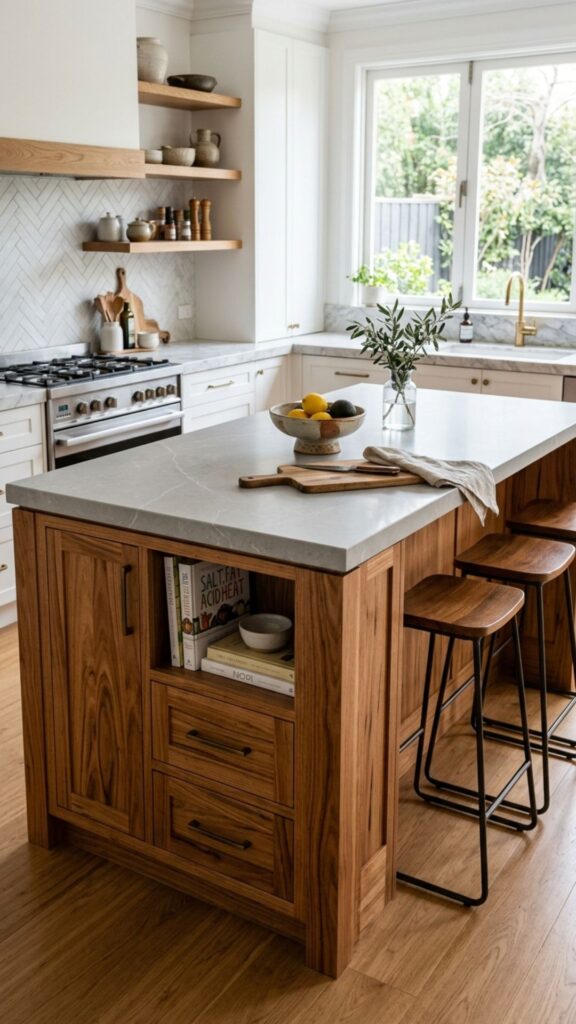
A pale stone countertop over a wooden base creates beautiful contrast. Think soft gray quartz, honed marble, or a matte sintered surface. The stone feels clean and durable, while the wood underneath keeps things grounded.
This combo works because it balances two textures without clutter. Keep the countertop edges simple and squared off. Fussy profiles fight against the calm you’re trying to build.
3. Go for a Waterfall Edge in Muted Tones
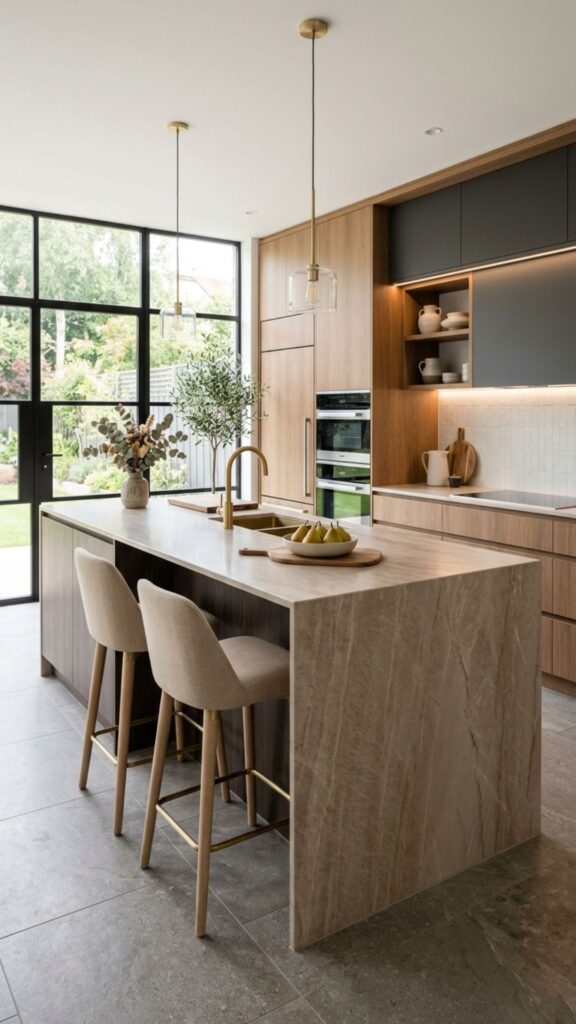
A waterfall edge, where the counter flows down the sides, looks sleek and modern. In Japandi kitchens, it works best in muted grays, warm whites, or soft taupe. The unbroken line feels intentional and quiet.
This design hides messy cabinet edges and gives the island a sculptural feel. Pair it with a barely-there handle system so nothing interrupts the smooth surface.
4. Keep Cabinet Fronts Flat and Handleless
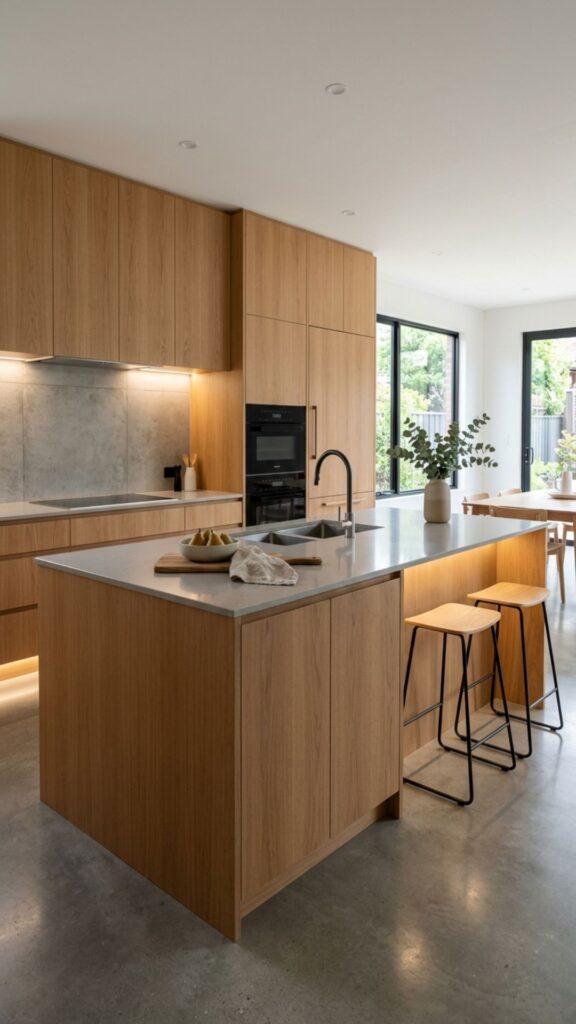
Handleless cabinets are a Japandi signature. Flat, push-to-open fronts remove visual noise and give the island a seamless look. Your eye glides across the surface with nothing to snag on.
If you prefer a handle, choose a slim recessed groove or a thin leather pull. These small touches keep function without breaking the minimal flow.
5. Add a Single Pendant for Soft Focus
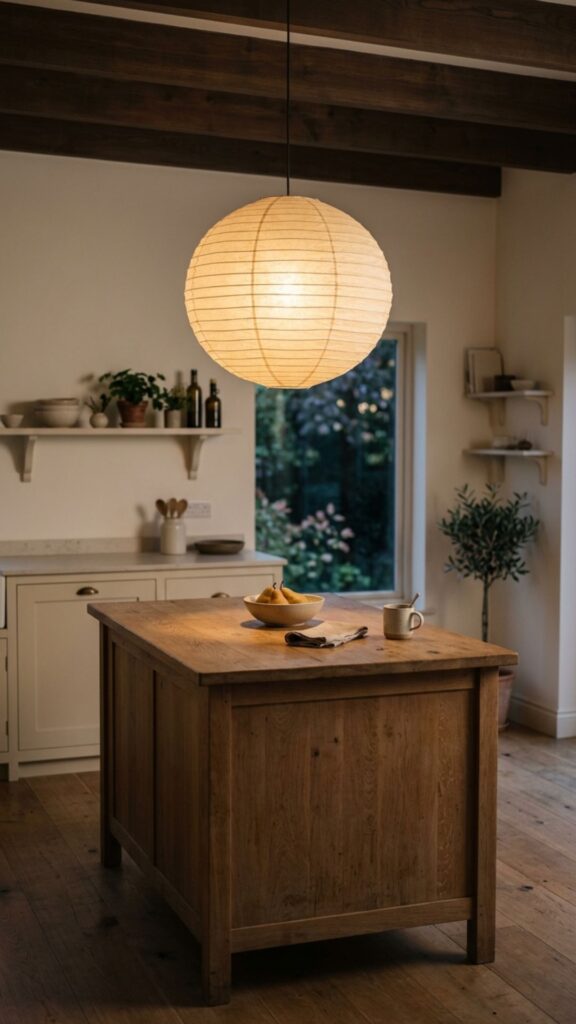
Lighting shapes mood. A single oversized pendant, made from paper, rattan, or matte metal, casts a soft glow over your island. It becomes a quiet focal point rather than a flashy centerpiece.
Warm bulbs matter here. Aim for a cozy 2700K color temperature. That gentle amber light makes wood tones glow and keeps the whole space feeling relaxed.
6. Try a Freestanding Butcher Block
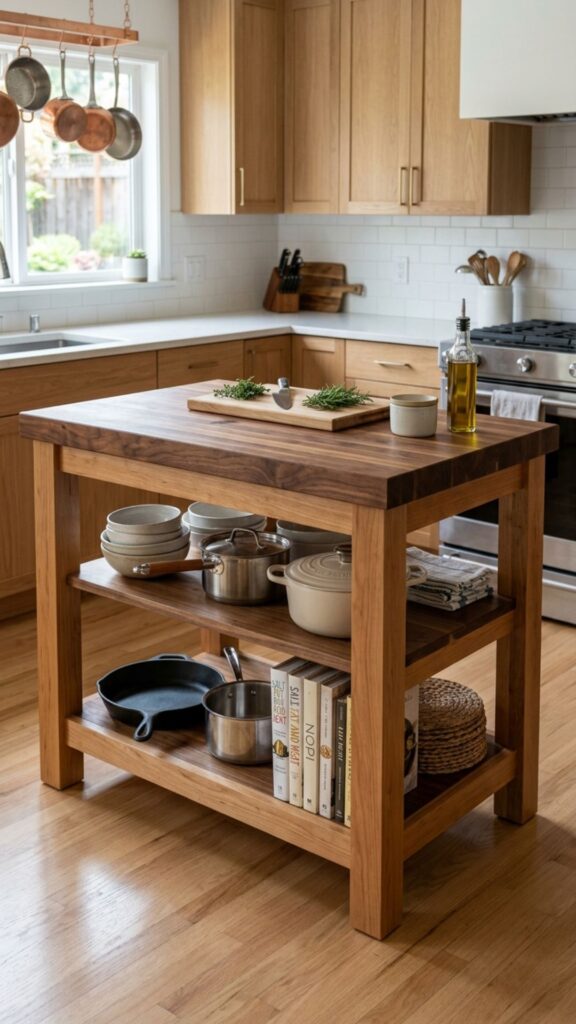
A freestanding butcher block island feels practical and honest. The thick wood top invites daily use, and the open design keeps the room breathing. It suits smaller kitchens where a bulky built-in would feel heavy.
Choose a piece with clean legs and no ornate detail. A little open shelving underneath gives you room for baskets or a few well-loved pots.
7. Mix Black Accents Sparingly
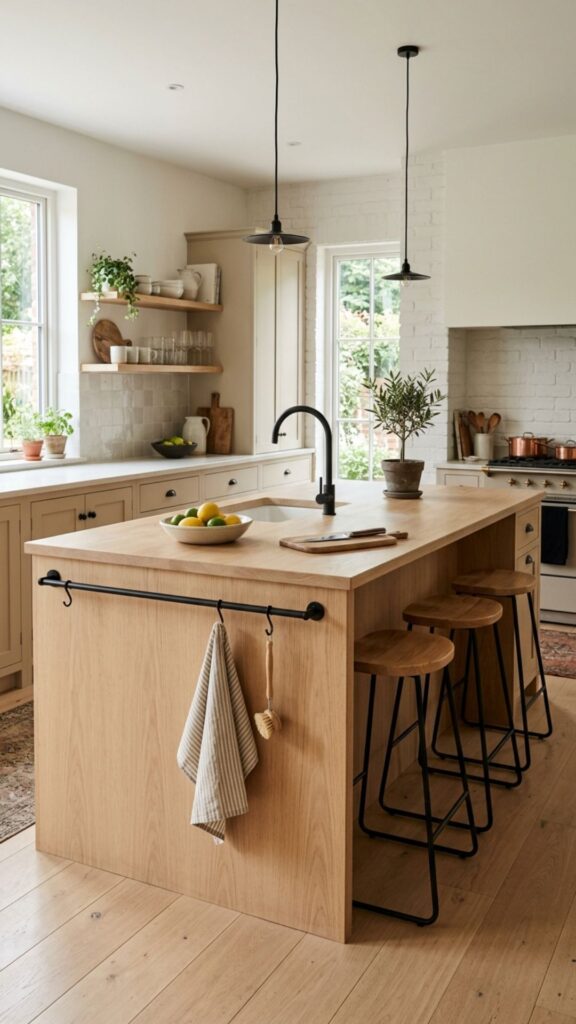
A touch of black adds quiet drama. Think matte black faucets, thin metal shelf brackets, or a slim base rail. Used sparingly, black grounds the lighter woods and neutrals around it.
The key word is restraint. One or two black elements sharpen the look. Too many, and you lose the airy calm that defines the style.
8. Build in Open Shelving for Everyday Items
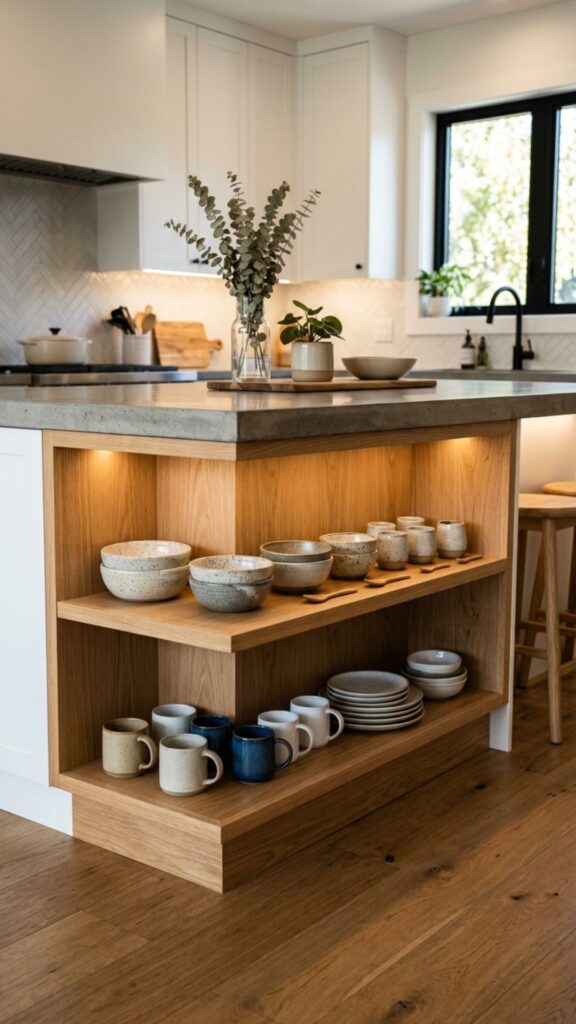
Open shelving keeps your favorite bowls and cups within reach. In Japandi kitchens, these shelves double as display space for a few carefully chosen pieces. The trick is to leave breathing room around each item.
Stick to natural materials like ceramic, wood, or stoneware. A cluttered shelf ruins the effect, so store everyday clutter behind closed doors and reserve the open space for beauty.
9. Use a Rounded or Curved Edge
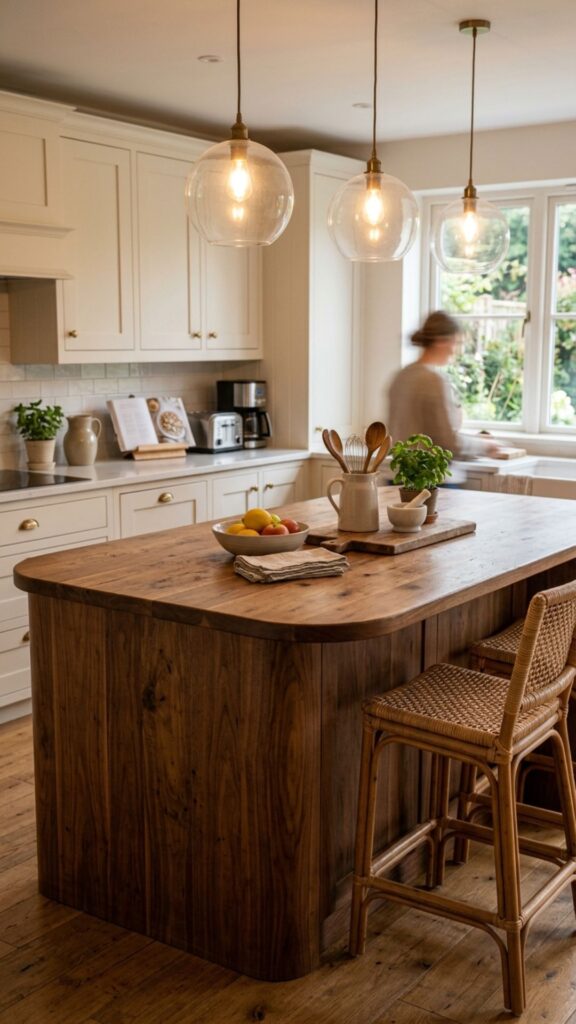
Soft curves feel gentle and welcoming. A rounded island corner or a curved end panel softens the room and makes it safer for busy households with kids. It’s a small shift that changes the whole feel.
Curves also echo the organic shapes found in nature, a theme both Japanese and Scandinavian design love. Pair a curved island with round pendant lights to carry the motif through.
10. Layer Natural Textures
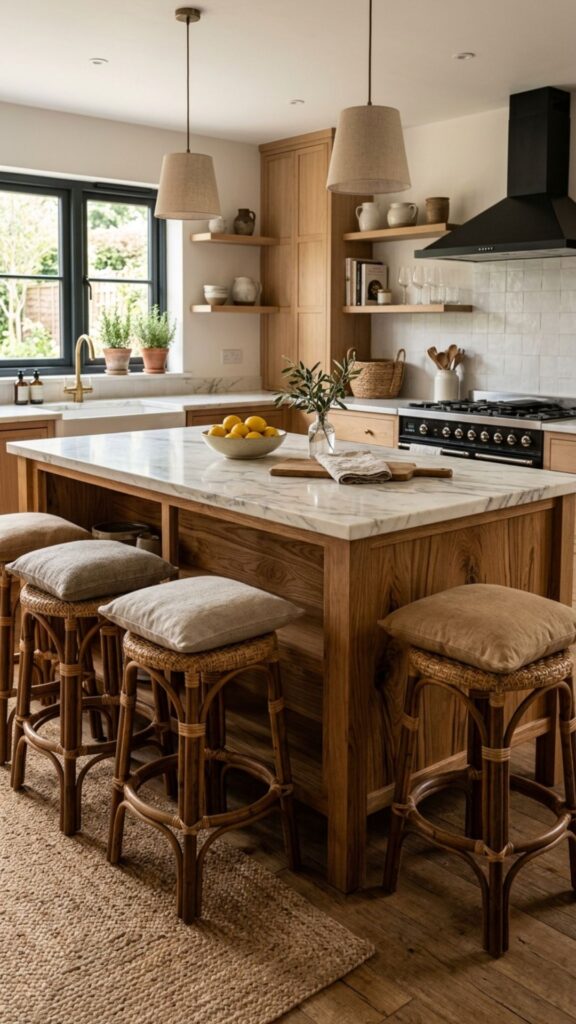
Texture is how minimal spaces stay interesting. Combine smooth stone, grainy wood, woven rattan, and soft linen stools around your island. Each surface catches light differently and adds depth.
You don’t need color to create richness. When you layer natural textures thoughtfully, the space feels full of life while staying beautifully simple.
11. Add a Sunken Sink for Clean Lines
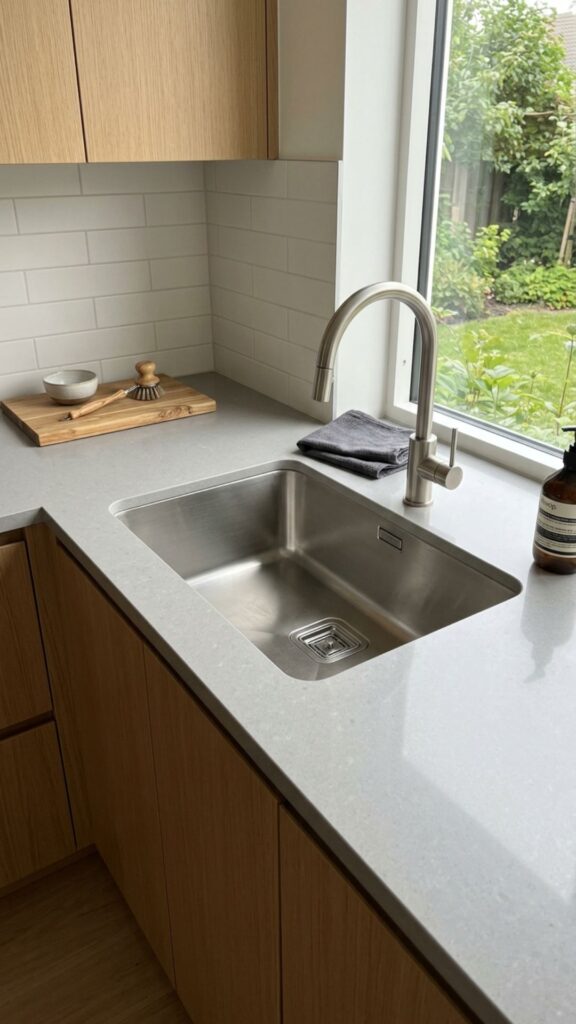
An undermount or integrated sink keeps your island surface smooth and easy to wipe down. No raised rim means no visual break. This small detail supports the seamless look Japandi kitchens rely on.
Choose a fireclay or matte composite sink in a neutral shade. Skip shiny stainless if you want a softer, more organic feel across the whole island.
12. Include a Small Seating Nook
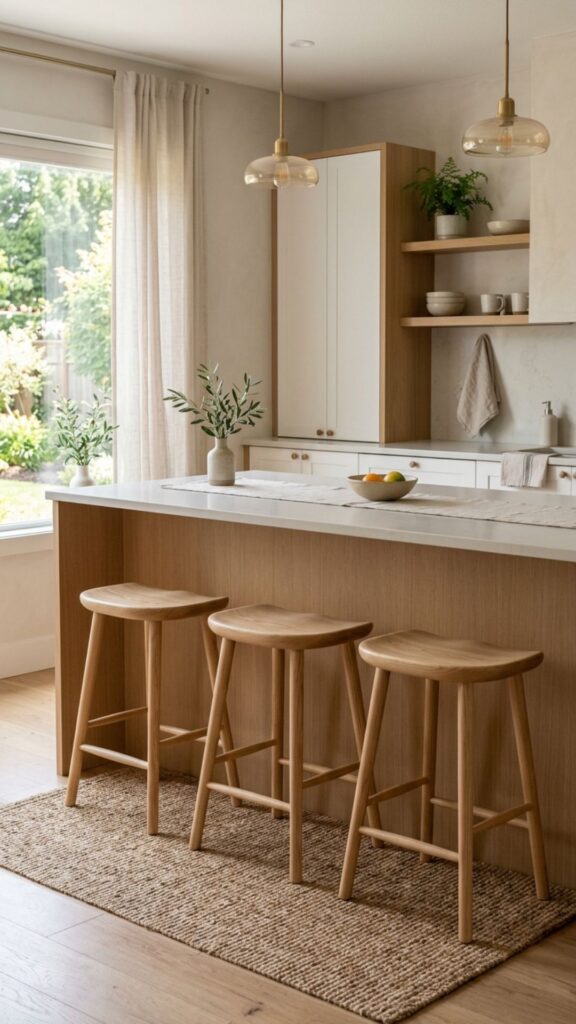
Add two or three simple stools for casual meals and morning coffee. Wooden stools with rounded seats or low backs fit the aesthetic perfectly. They invite people to gather without crowding the space.
Keep the stools tucked under the counter when not in use. That clean tuck maintains the open, uncluttered floor plan that makes small kitchens feel bigger.
13. Choose a Neutral, Earthy Color Palette
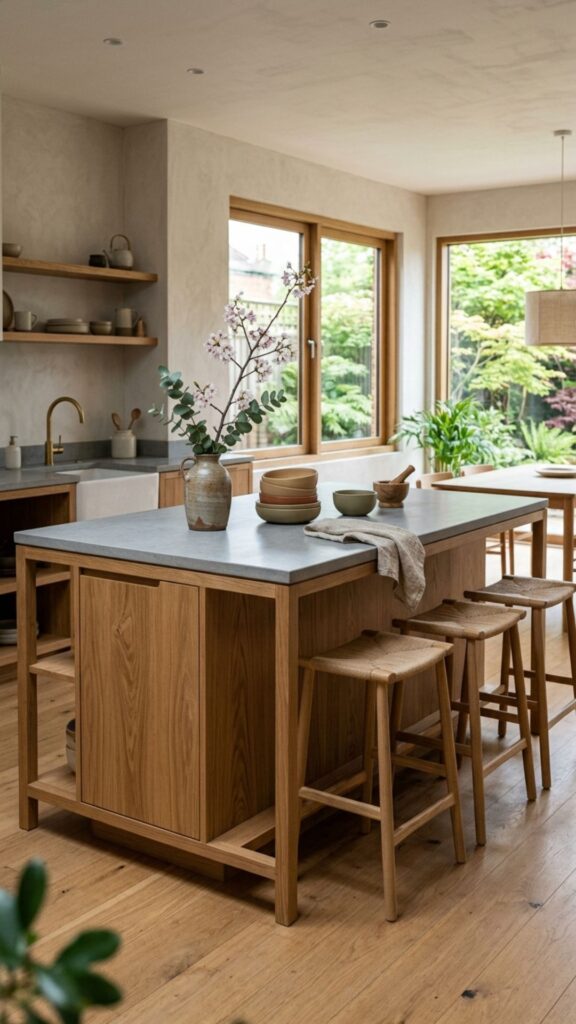
Color sets the emotional tone. Japandi leans on warm neutrals like oatmeal, clay, soft gray, and muted greige. These earthy shades feel grounded and calm, never sterile or flat.
Build your palette around three colors max. A wood base, a stone top, and one accent shade give you plenty of range while keeping the look cohesive and quiet.
14. Add Hidden Storage to Reduce Clutter
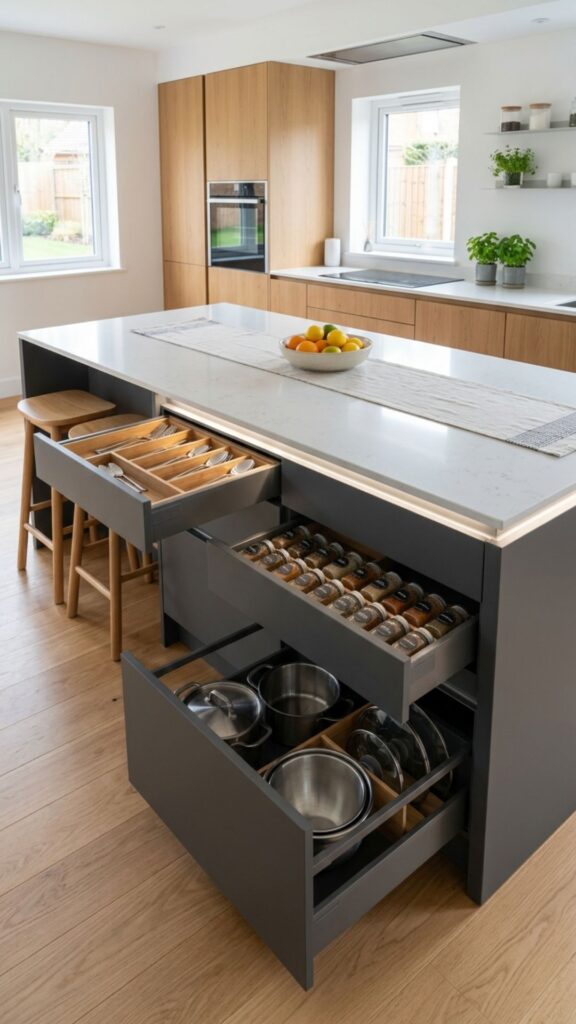
Clutter is the enemy of calm. Build deep drawers, pull-out bins, and clever dividers into your island. When everything has a home, your countertops stay clear and your mind feels lighter.
Smart storage is where function meets beauty. Soft-close drawers and organized inserts make daily cooking smoother, so you enjoy the space instead of fighting it.
15. Try a Two-Tier Design
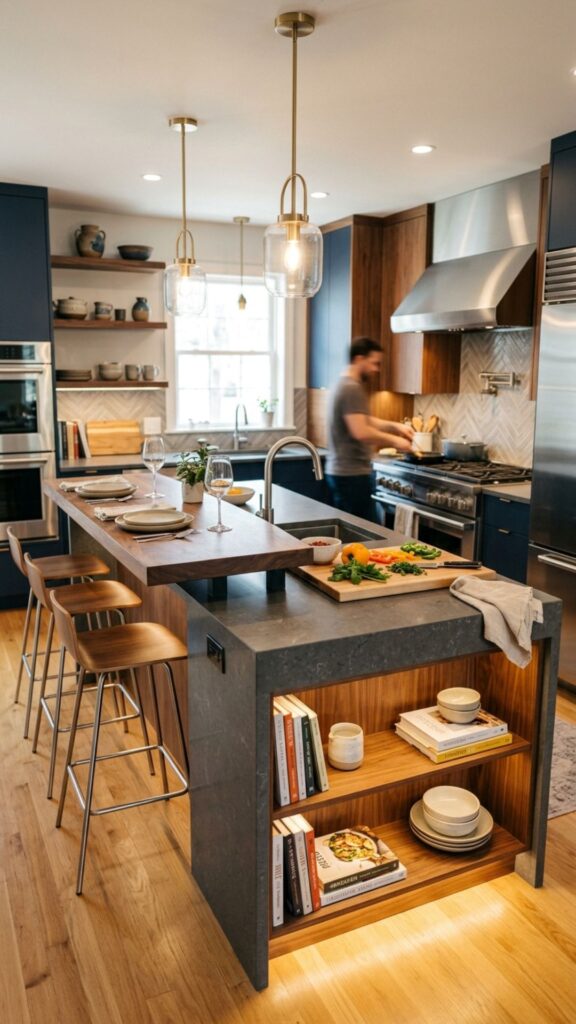
A two-tier island separates prep space from dining space. The lower level handles chopping and cooking, while a slightly raised counter offers a spot to eat or work. It’s practical without adding visual weight.
Keep both tiers in matching or complementary materials. A wood top for dining and a stone surface for prep is a pairing that looks intentional and works hard.
16. Bring in a Living Element
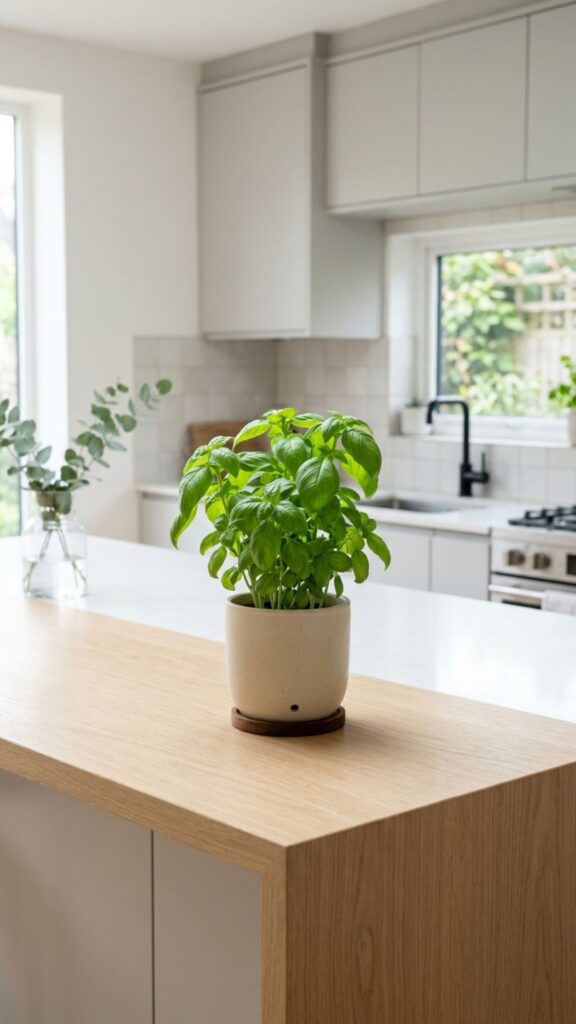
A small potted herb, a single stem in a ceramic vase, or a low bonsai adds life to your island. Nature is central to Japandi, and one green touch softens all the clean lines around it.
Keep it minimal. One thoughtful plant does more than a crowded row. Choose a simple matte pot in a neutral tone so the greenery stays the star.
17. Match the Island Flooring for Continuity
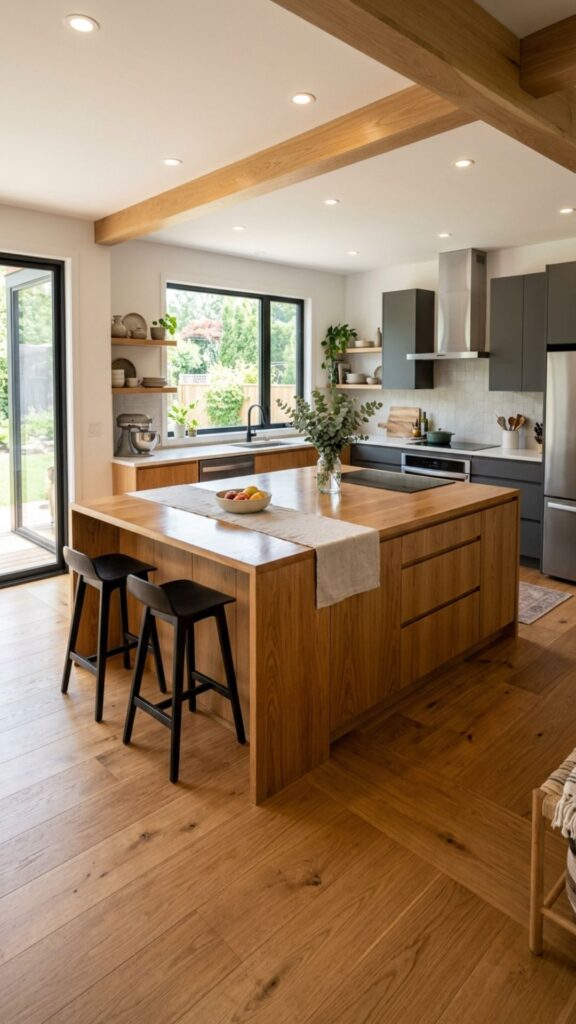
Let your flooring flow right up to and under the island. Continuous wood or large stone tiles make the room feel bigger and more unified. Breaks in flooring chop up the space and add visual noise.
If your island sits on a different material, keep the transition clean and simple. Continuity is a quiet trick that makes the whole kitchen feel considered.
18. Use Slatted Wood Panels
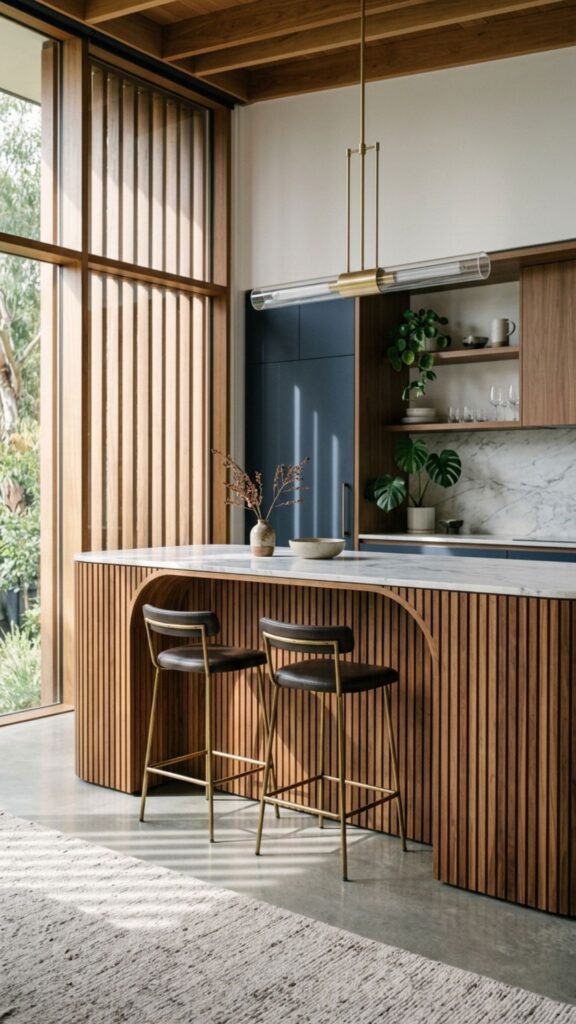
Slatted wood panels on the island’s side add gentle rhythm and texture. The repeating lines feel calm and structured, a nod to traditional Japanese screens. They catch light in soft, changing ways.
This detail works beautifully on the seating side of an island. It turns a plain panel into a subtle design feature without breaking the minimalist rule.
19. Keep Hardware Minimal and Refined
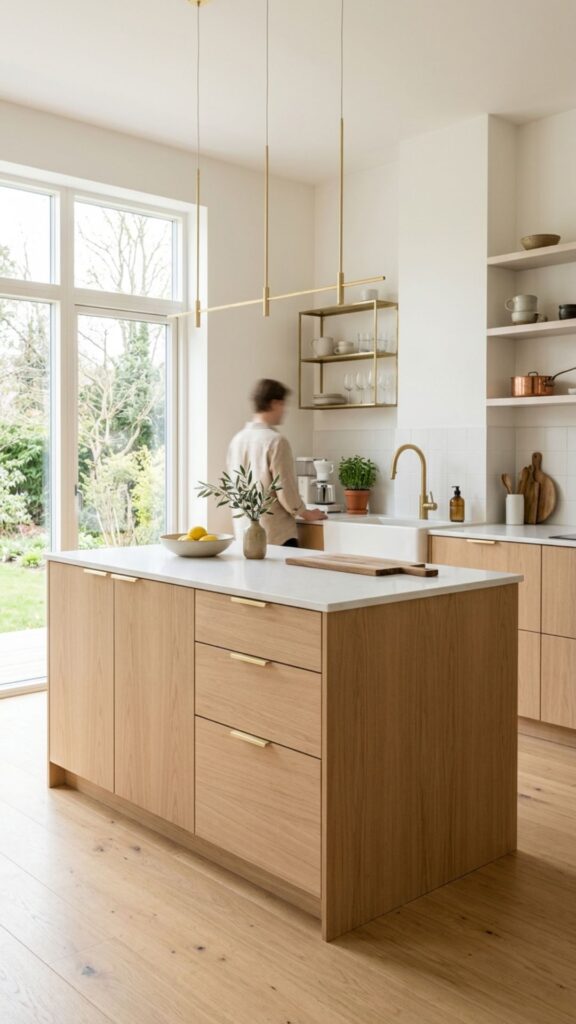
When you do use hardware, choose pieces that feel intentional. Slim brass pulls, leather tabs, or thin black bars all suit the style. The finish should be matte or brushed, never overly shiny.
Consistency matters more than the metal itself. Match your island hardware to your faucet and other fixtures so the whole kitchen reads as one calm, connected space.
20. Leave Room to Breathe
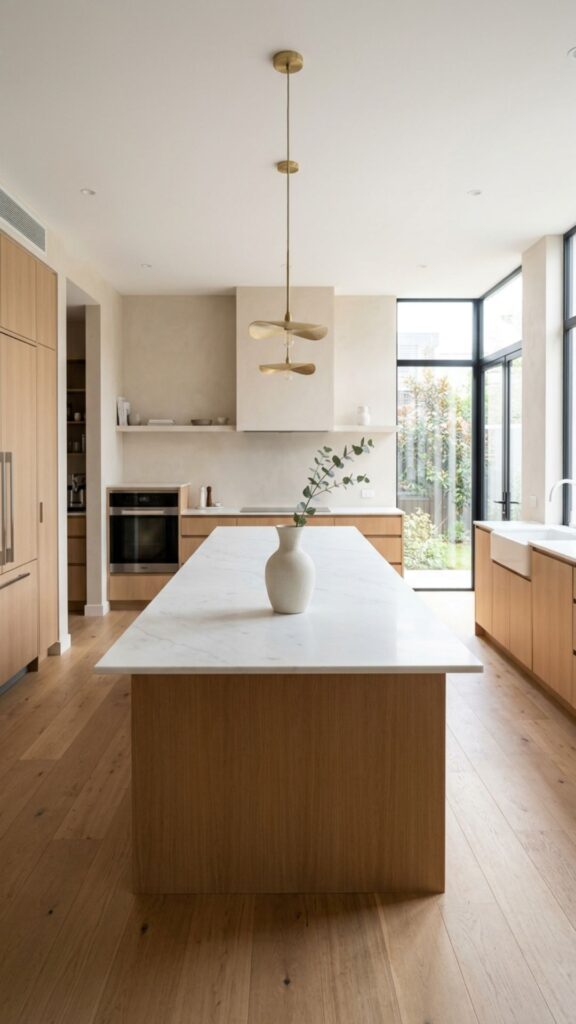
The most important idea is space itself. Don’t overfill your island or crowd the area around it. Empty surfaces and open floor give the eye somewhere to rest, which is the whole point of Japandi.
Aim for clear counters, a few beautiful objects, and plenty of walking room. When you leave room to breathe, everything else you’ve added finally gets to shine.
Conclusion: Build Your Calm, Minimalist Kitchen
A great Japandi island balances warmth and simplicity. It uses natural materials, quiet colors, and smart storage to create a space that feels both useful and peaceful.
Here’s your quick recap:
- Start with a warm wood base and a simple stone top
- Keep cabinet fronts flat and hardware minimal
- Layer natural textures and add one living element
- Above all, leave open space so the room can breathe
Ready to start? Pick two or three ideas from this list that fit your space and budget. Sketch a rough plan, gather a few material samples, and see how they feel in your own light. Small, thoughtful choices are how a calm, minimalist kitchen comes to life.
What is a Japandi kitchen island?
A Japandi kitchen island blends Japanese minimalism with Scandinavian warmth. It uses natural wood, muted colors, clean lines, and hidden storage to create a calm, functional, and clutter-free centerpiece for the kitchen.
What materials work best for a Japandi island?
Warm woods like oak, ash, and walnut work best, paired with matte stone or composite countertops. Natural touches such as rattan, linen, and ceramic add texture while keeping the look simple and organic.
What colors suit a Japandi kitchen island?
Earthy neutrals suit Japandi kitchens best. Think oatmeal, soft gray, clay, and warm greige. Small black accents can add contrast, but the overall palette should stay muted and calm.
Do Japandi islands work in small kitchens?
Yes. A freestanding butcher block or a slim island with hidden storage fits small kitchens well. Keep the design open underneath and the countertops clear to help the space feel larger and airier.
How do I keep a Japandi island looking minimal?
Use hidden storage to hide clutter, keep counters mostly clear, and display only a few natural objects. Flat cabinet fronts, minimal hardware, and open floor space all help maintain the calm, minimal feel.