Adding a range to your island changes everything. Suddenly you need a hood, and that hood becomes the visual anchor of the whole room. Get it right, and your kitchen feels finished and intentional. Get it wrong, and it hangs there like an afterthought, blocking sightlines and swallowing headroom.
I’ve spent years helping homeowners work through this exact problem, and the good news is that a hood over an island can be the single best design decision you make.
Below, you’ll find 20 kitchen island ideas with a hood that pull double duty: they clear the air and steal the show. You’ll also learn how to size a hood correctly, where to place it, and how to avoid the mistakes that make islands feel cramped. Let’s dig in.
1. The Sculptural Plaster Hood
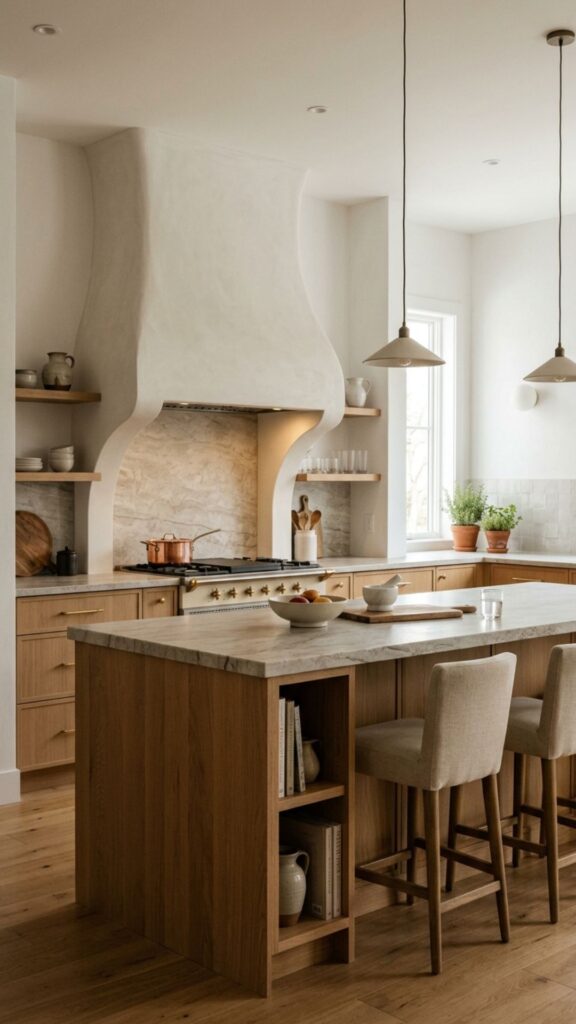
A smooth plaster hood reads more like art than appliance. Its seamless curves catch light softly, and because there are no visible seams or hardware, it feels custom and calm. This works beautifully in Mediterranean, Spanish, and modern organic kitchens where texture matters more than shine.
The trick is scale. A plaster hood needs enough mass to feel deliberate, so don’t skimp on height or depth. Pair it with warm wood cabinetry and a stone countertop, and it becomes the quiet centerpiece everyone notices without quite knowing why.
2. Industrial Stainless Steel Statement
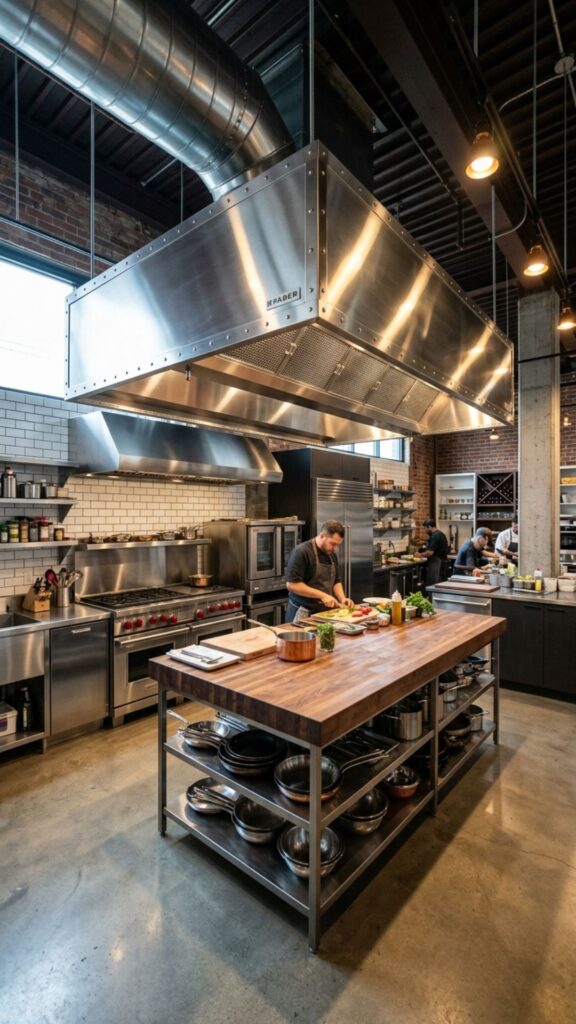
Nothing says “serious cooking” like a broad stainless steel hood. It’s easy to clean, plays well with commercial-style ranges, and reflects light to brighten the space. Home cooks who actually sear, sauté, and simmer tend to love the durability.
To keep it from feeling cold, surround it with warmer materials. Butcher block, brass pulls, or a brick backsplash softens the metal and adds contrast. A stainless hood over a butcher-block island is a timeless pairing that never looks dated.
3. Reclaimed Wood Box Hood
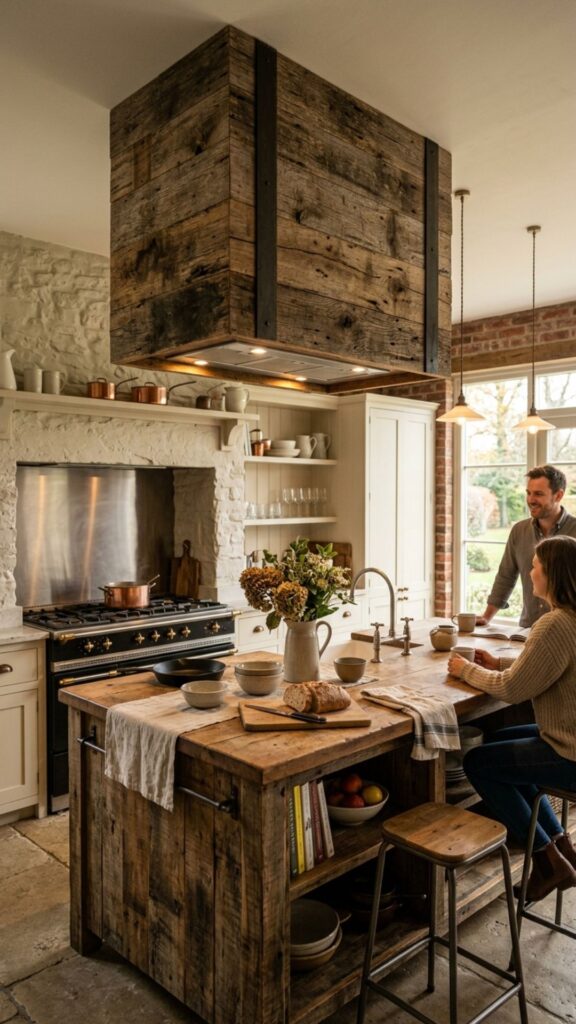
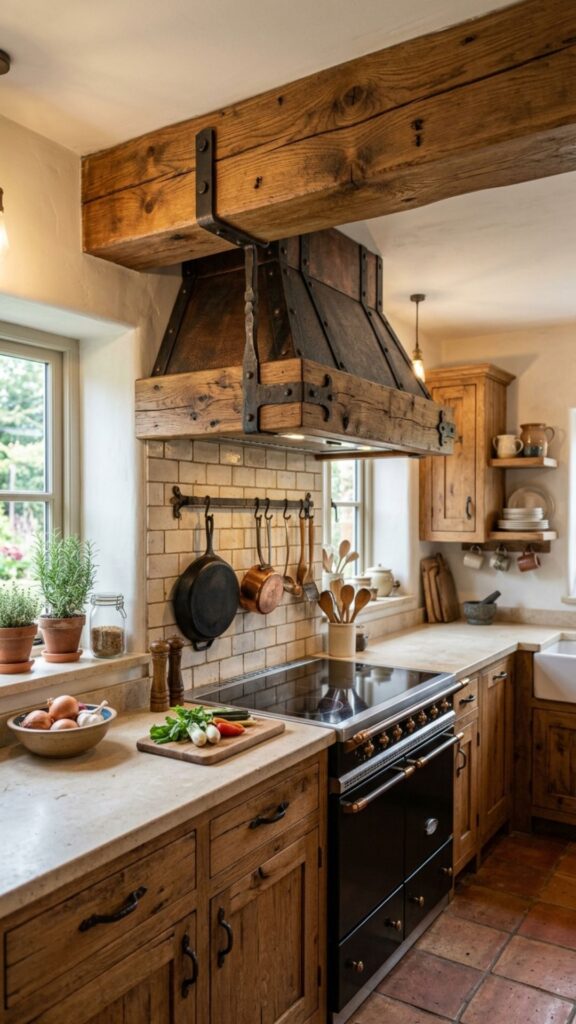
Wrapping your hood in reclaimed timber brings instant warmth and character. Weathered barn wood or salvaged beams add history to a new build, and the grain gives your eye something to enjoy. This suits farmhouse, rustic, and transitional kitchens especially well.
Because wood sits near heat and steam, use a proper liner insert inside the wood shell. This keeps the timber protected while the ventilation does its job. The result feels handmade rather than manufactured, which is exactly the point.
4. Minimalist Flush Ceiling Vent
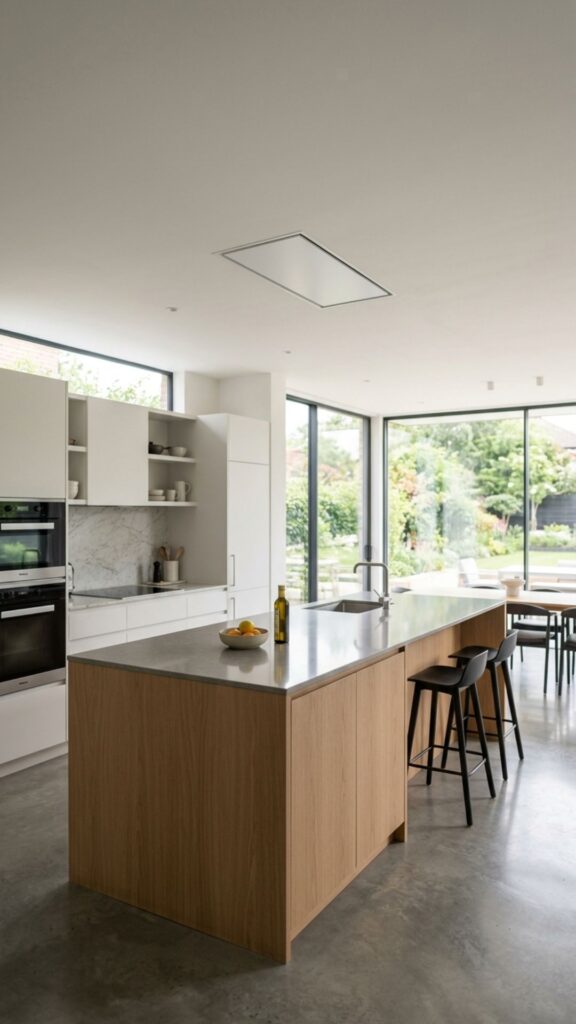
If you love clean lines, hide the hood entirely. A flush ceiling vent or recessed downdraft keeps your sightlines completely open, which is a gift in open-plan spaces. Nothing interrupts the view across the room.
This approach demands solid ductwork planning, so involve your contractor early. Ceiling-mounted units need enough power to capture rising smoke and steam without a visible canopy. When done right, guests won’t even realize the ventilation is there.
5. Black Matte Modern Hood
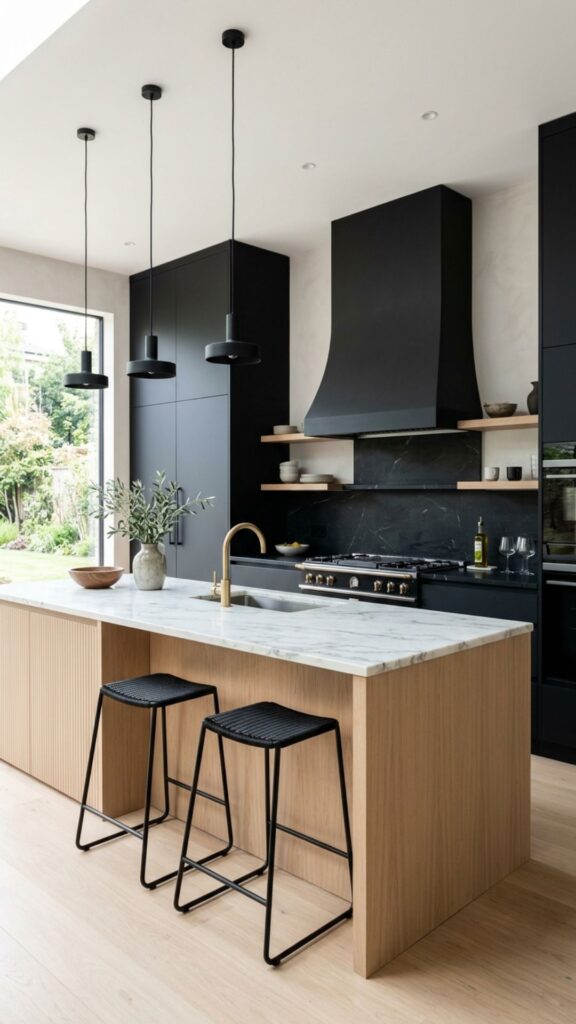
A matte black hood delivers drama with restraint. It grounds a light kitchen, adds depth, and pairs effortlessly with brass, marble, or pale oak. The non-reflective finish hides fingerprints better than glossy alternatives, too.
Use it as a bold contrast against white cabinetry or lean into moody design with dark walls. Either way, black creates a strong focal point that anchors the island and signals confident, contemporary taste.
6. Copper Statement Canopy
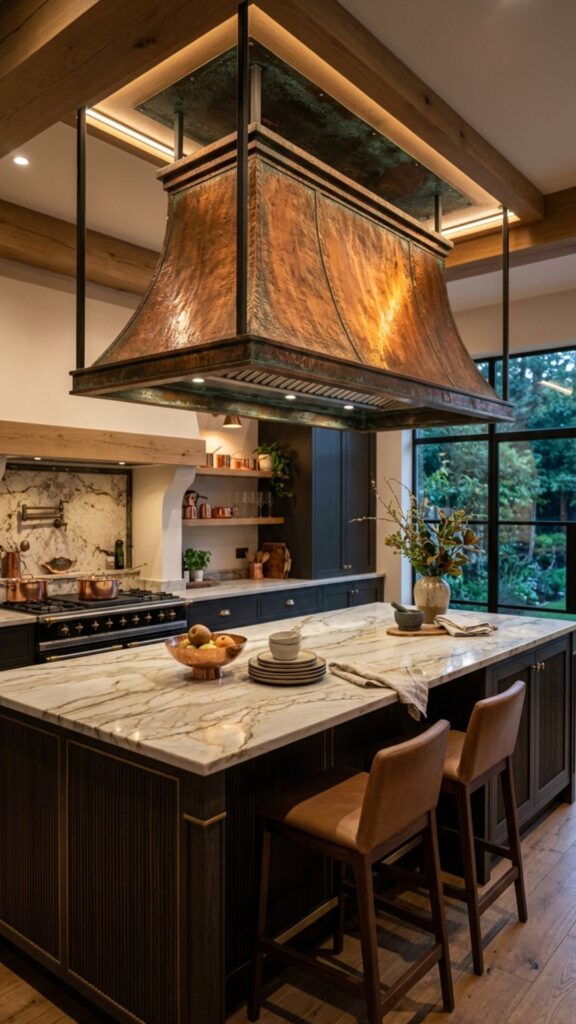
Copper ages into a living finish, developing a rich patina over time. A copper hood glows warmly under kitchen lighting and instantly becomes the room’s jewel. It suits classic, French country, and eclectic styles.
Yes, copper asks for occasional care if you want to keep it bright, or you can let it darken naturally. Both routes look gorgeous. Just balance the warmth with cooler tones nearby, like gray stone or crisp white cabinetry, so the metal feels intentional.
7. Framed Glass and Metal Hood
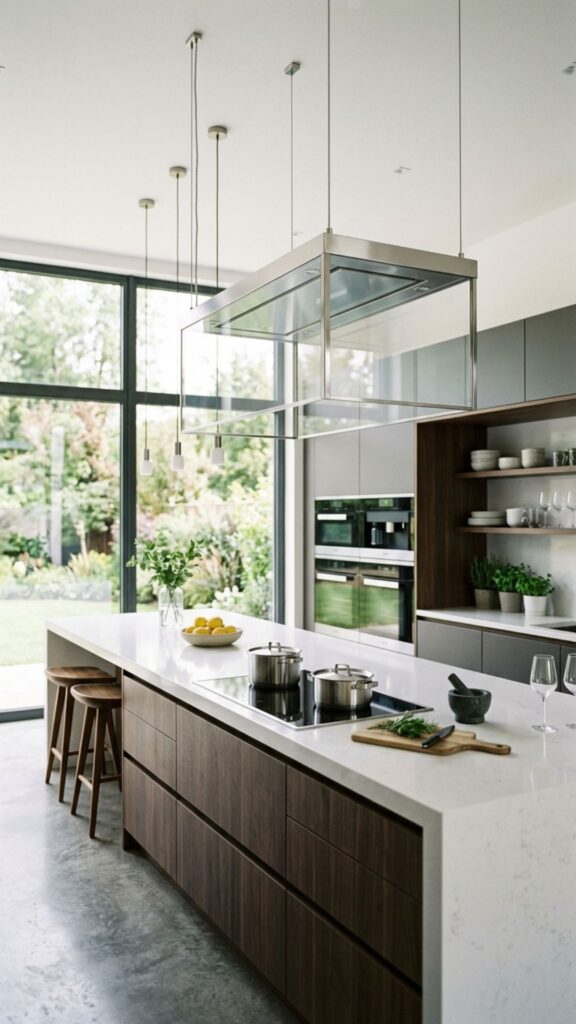
A slim glass-and-metal hood keeps things light and airy. The transparent panels let light pass through, so the hood never feels bulky. This is a smart pick for smaller kitchens where a heavy canopy would overwhelm.
The thin frame gives you structure without weight, and it pairs nicely with modern and industrial schemes. If your island sits under a window or near a bright wall, glass keeps everything feeling open and unobstructed.
8. Two-Tone Wood and Metal Combo
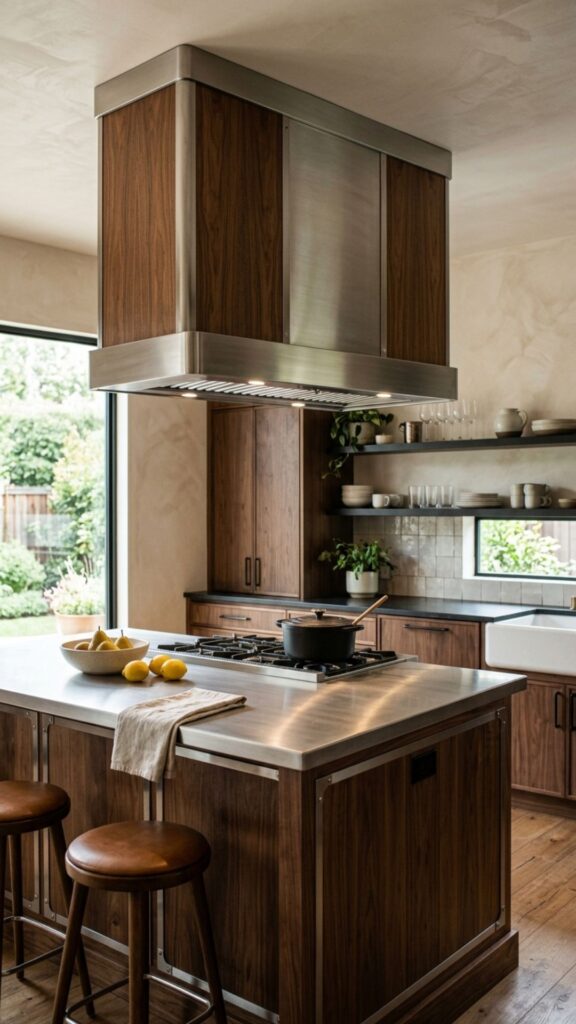
Mixing materials on one hood adds instant interest. Think a wood-wrapped base with a metal band, or a metal shell trimmed with timber straps. This layered look feels custom and expensive, even on a modest budget.
Repeat those two materials elsewhere in the kitchen to tie the room together. If your island legs are wood and your faucet is brushed brass, echo both on the hood. Cohesion is what makes the whole thing sing.
9. Curved Statement Hood
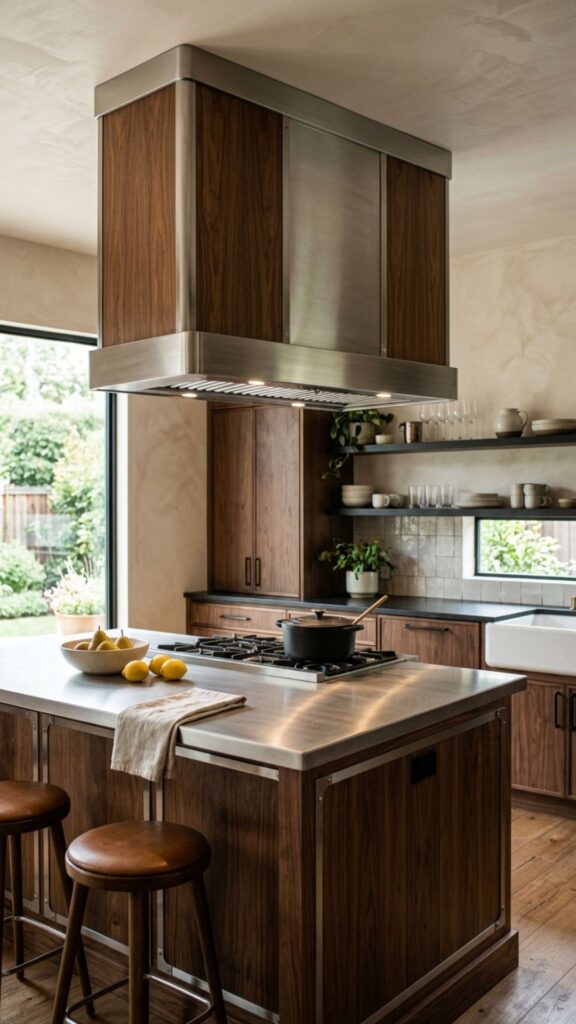
A curved or rounded hood softens the hard angles most kitchens carry. The gentle shape draws the eye upward and adds a sculptural quality that flat boxes can’t match. It works well in transitional and modern organic spaces.
Curves also help visually in tight rooms because they feel less bulky than square canopies. Finish it in plaster, wood, or painted MDF depending on your palette. The soft silhouette keeps the space feeling relaxed and inviting.
10. Tiled Feature Hood
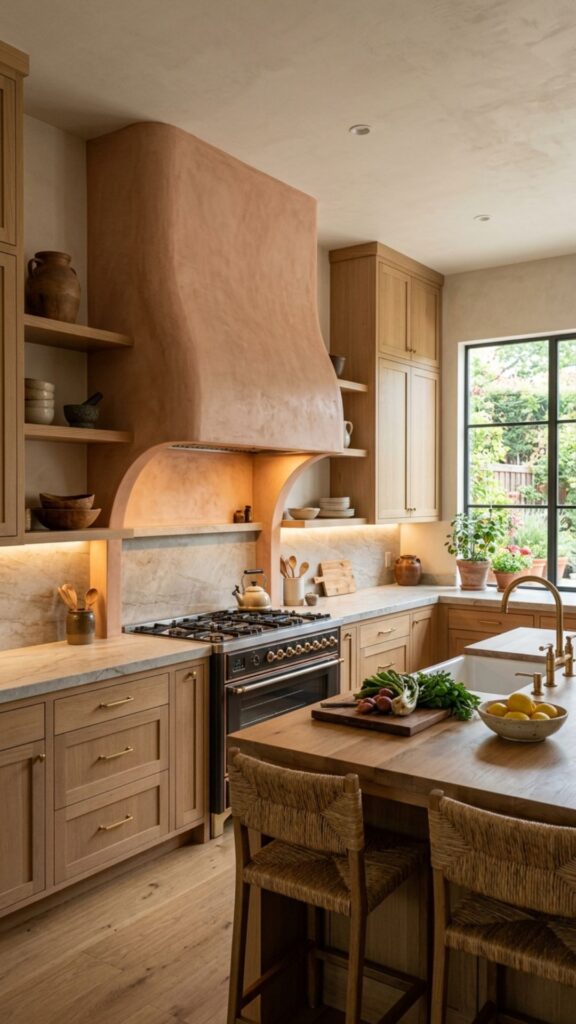
Cladding your hood in tile turns ventilation into a mosaic moment. Zellige, subway, or hand-painted tiles add color, texture, and personality. This is one of the most affordable ways to make a hood feel bespoke.
Match the tile to your backsplash for continuity, or go bold with a contrasting pattern. Either way, sealed tile handles heat and moisture well, making it practical as well as pretty. It’s a favorite among homeowners who want character on a budget.
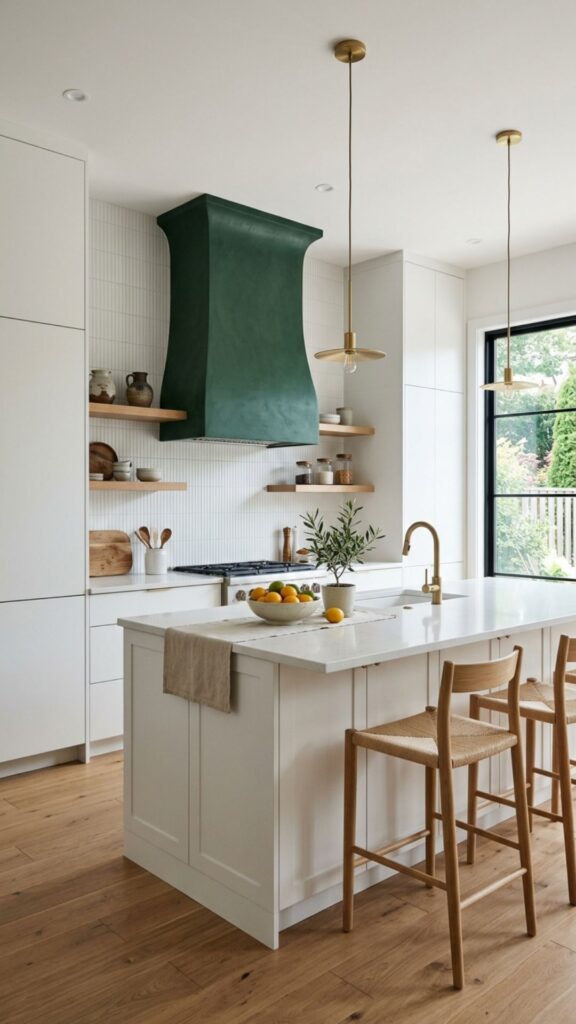
11. Painted Statement Color Hood
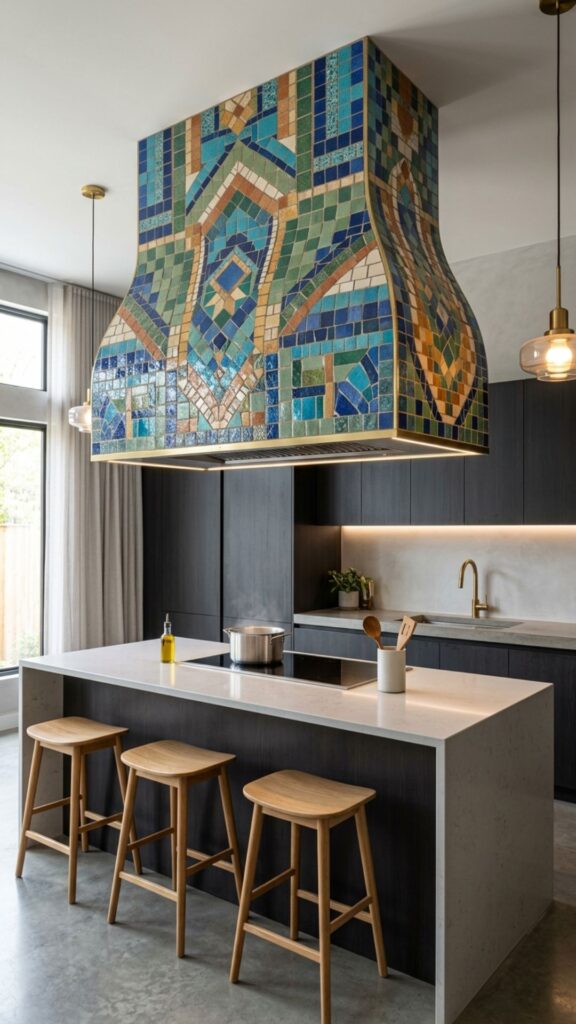
Skip neutral and paint your hood a saturated hue. Deep green, navy, or terracotta transforms a plain canopy into a deliberate focal point. This budget-friendly move packs serious visual punch.
Pull the color from another element in your kitchen, like your lower cabinets or bar stools, so it feels planned rather than random. A durable, washable paint finish holds up to cooking splatter and keeps the color looking fresh for years.
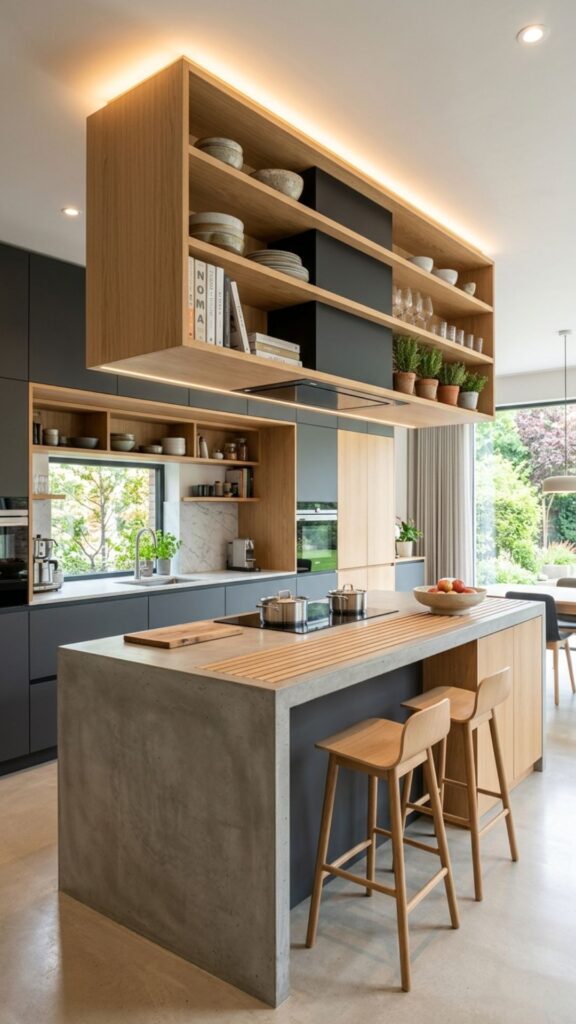
12. Slim Insert Under a Cabinet Bridge
Not every island needs a towering canopy. A slim insert tucked beneath a suspended cabinet bridge hides the hardware while adding storage above. This clever solution suits compact kitchens and open layouts alike.
The cabinet bridge frames the cooking zone and keeps sightlines mostly clear. You gain shelving for glassware or cookbooks, plus quiet, effective ventilation below. It’s a practical answer for anyone short on both space and wall cabinets.
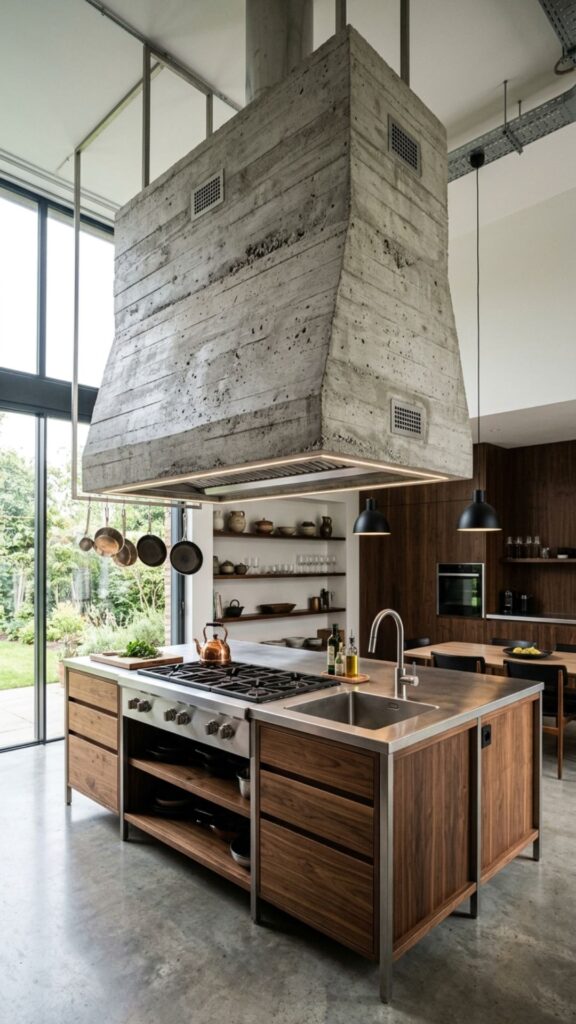
13. Concrete Industrial Hood
Concrete brings raw, architectural weight to a kitchen. A concrete hood feels grounded and modern, and its subtle texture adds depth without color. It pairs naturally with steel, wood, and stone.
Because concrete is heavy, confirm your structure can support it and use a proper insert inside. The payoff is a hood that looks like it belongs in a design magazine. It suits loft, industrial, and minimalist kitchens with confidence.
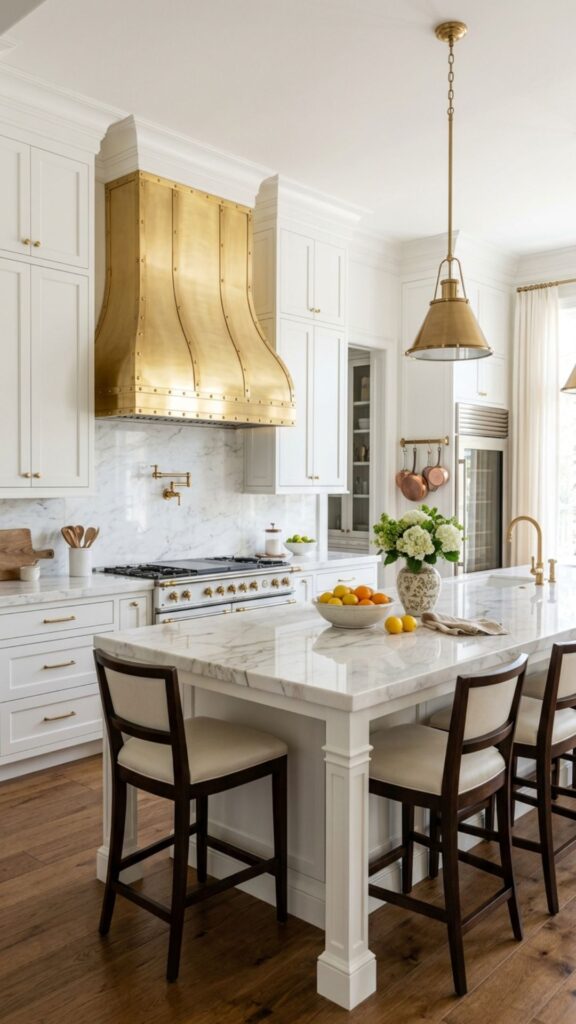
14. Brass or Gold Accented Hood
A touch of brass elevates any hood from functional to luxurious. Add slim metal straps, rivets, or a full brass canopy for maximum glamour. Warm metals have surged in popularity for good reason.
Keep the rest of your finishes calm so the brass reads as the star. Marble counters, white cabinetry, and simple hardware let the metal shine. This look works especially well in classic and glam kitchens where a little sparkle belongs.
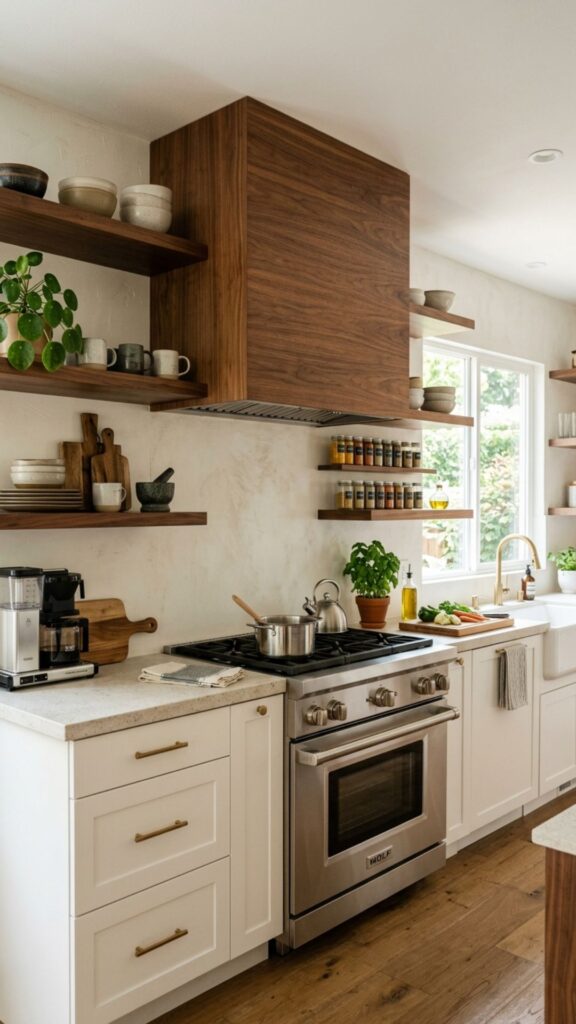
15. Wood-Wrapped With Integrated Shelving
Extend your hood surround into open shelving on either side. This blends ventilation with storage and display, giving you room for spices, plants, or ceramics. The hood stops being a standalone object and becomes part of a larger feature wall.
Style those shelves simply, with a few well-chosen pieces rather than clutter. The combination feels intentional and lived-in. It’s a smart way to make a hood earn its place in a busy family kitchen.
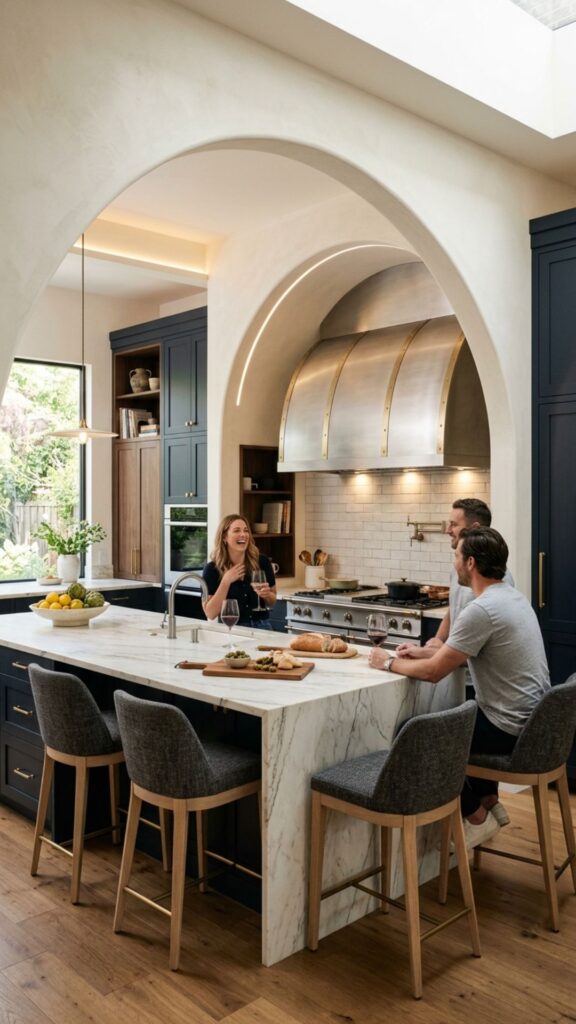
16. Barrel Vault Statement Hood
For a truly architectural look, set your hood within a barrel-vaulted or arched niche. The curved recess frames the canopy beautifully and adds old-world charm. This suits larger kitchens with the ceiling height to pull it off.
Finish the vault in plaster or brick to enhance the effect. It takes planning and a skilled builder, but the drama is unmatched. If you want a hood that feels like a permanent architectural feature, this is it.
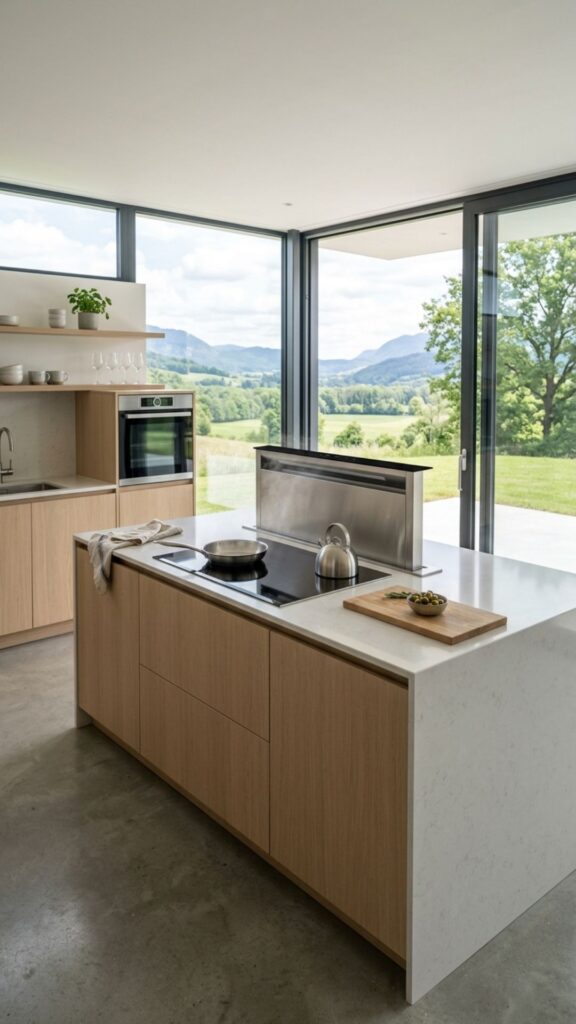
17. Sleek Downdraft for Zero Canopy
A downdraft vent rises from the countertop when you cook and disappears when you don’t. It’s the ultimate solution for keeping views totally open, especially in island layouts facing a living space. No canopy, no interruption.
Downdrafts work best with lower-profile cooking and require under-floor or cabinet ducting. They’re not as powerful as large overhead hoods, so match one to your cooking habits. For light-to-moderate cooks who prize clean lines, it’s ideal.
18. Rustic Beam-Mounted Hood
Anchor your hood to a chunky exposed beam for instant character. The beam adds structure and warmth while framing the ventilation below. This look thrives in farmhouse, cottage, and rustic kitchens.
Pair aged wood with wrought-iron details for an authentic feel. The beam also helps visually connect the island to a beamed ceiling if you have one. It’s a cozy, grounded choice that makes a kitchen feel established.
19. All-White Seamless Hood
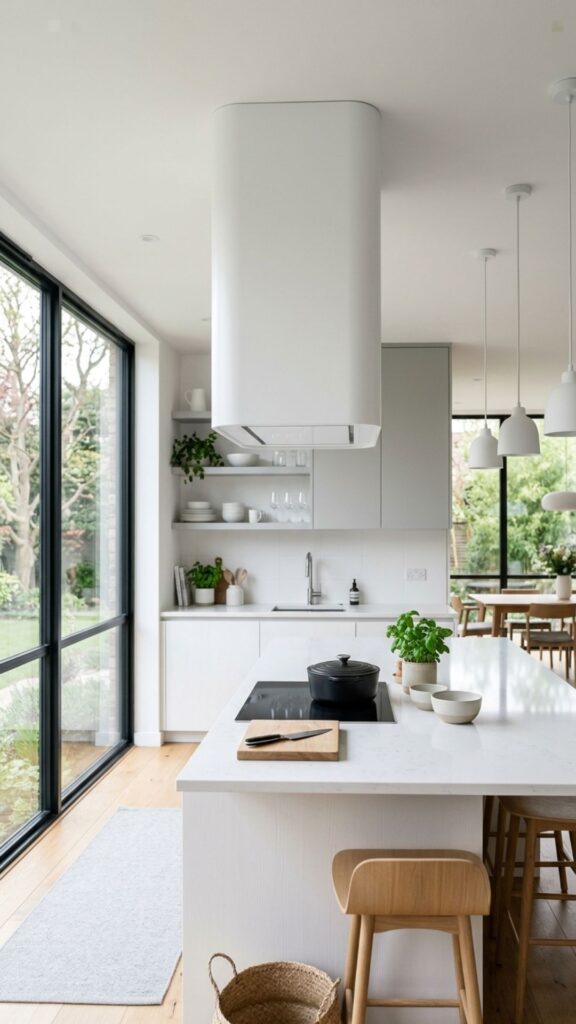
A crisp white hood melts into a white kitchen for a serene, cohesive look. When the canopy matches the cabinetry and walls, the space feels calm and expansive. This is the quiet choice for lovers of clean, bright rooms.
Add subtle interest through shape or trim so the hood doesn’t vanish entirely. A gentle curve or a slim reveal line gives the eye something to catch. The effect is fresh, timeless, and easy to keep looking sharp.
20. Statement Lighting Integrated Hood
Combine your hood with dramatic pendant lighting for a layered focal point. Hang two or three fixtures beside the canopy so light and ventilation work together. The pairing frames your island as the heart of the room.
Choose pendants that complement the hood’s finish, echoing its metal or color. Good task lighting also makes cooking safer and prep easier. This combination proves that a hood, done well, can carry the entire kitchen’s design.
Bringing Your Kitchen Island Hood to Life
A hood over your island is far more than a ventilation requirement. It’s the design opportunity most homeowners overlook. Whether you lean toward a sculptural plaster canopy, a bold black statement, or a hidden downdraft, the right choice balances style, scale, and function. The best kitchen island ideas with a hood always start with how you actually cook and how you want the room to feel.
Here’s your single next step: measure your island, note your ceiling height, and pick two styles above that fit your budget and cooking habits. Bring those to a kitchen designer or contractor to confirm sizing and ventilation power. That one conversation will save you money and headaches, and it moves you from browsing ideas to building the kitchen you’ll love for years.
What size hood do I need for a kitchen island?
Your island hood should be as wide as your cooktop, and ideally a few inches wider on each side. For a 36-inch range, choose a 42-inch hood to capture rising steam and smoke effectively. Bigger cooktops need proportionally larger canopies.
How high should a hood be above a kitchen island?
Mount an island hood 30 to 36 inches above the cooktop surface. This range clears the air efficiently while keeping the hood out of your line of sight and away from bumped heads. Always check your manufacturer’s specifications, since some models vary.
Do I really need a hood over my island cooktop?
Yes, in most cases. A hood removes smoke, grease, moisture, and cooking odors that would otherwise settle on your cabinets and walls. Island cooktops especially benefit because there’s no adjacent wall to help contain airflow.
Can I use a downdraft instead of an overhead hood?
You can, and downdrafts are excellent for keeping sightlines open. However, they capture less than powerful overhead hoods, so they suit light-to-moderate cooking best. Match the ventilation type to how heavily you cook.
What's the most budget-friendly island hood idea?
Tiled and painted statement hoods deliver high impact for low cost. Both let you personalize a basic insert with color or texture, giving you a custom look without the price of specialty materials or extensive fabrication.