A cluttered kitchen entryway doesn’t just look messy — it slows everything down. When people move in and out of the kitchen carrying groceries, dishes, or coffee mugs, a poorly designed transition zone creates bottlenecks that make an already busy space feel chaotic.
The good news? Small, intentional changes to your kitchen entryway can completely transform how your household moves through the space. Whether you’re working with a narrow galley-style opening or a wide open-plan layout, the right combination of layout tweaks and kitchen essentials can make traffic flow feel almost effortless.

In this post, you’ll find 20 actionable kitchen entryway ideas that cover storage, layout, lighting, and design. Each one is practical, budget-conscious, and easy to adapt to different home styles.
Quick takeaways:
- A clear entry path reduces congestion and daily frustration
- Smart storage near the entryway keeps kitchen essentials within easy reach
- Lighting and visual cues guide natural movement through the space
- Small design changes can have a big impact on how your kitchen functions
Why Your Kitchen Entryway Matters
The kitchen entryway is one of the hardest-working zones in any home. It’s where groceries come in, kids drop their bags, and everyone passes through multiple times a day. Yet it’s often the last area people think to optimize.
When this space is disorganized, it creates friction — physical and mental. People stop, reroute, and pile things wherever they find room. Over time, that clutter compounds and the kitchen becomes harder to use.
A well-designed kitchen entryway, stocked with the right kitchen essentials and organized with clear pathways, turns chaos into flow.
20 Kitchen Entryway Ideas to Improve Traffic Flow
1. Widen the Entry Path
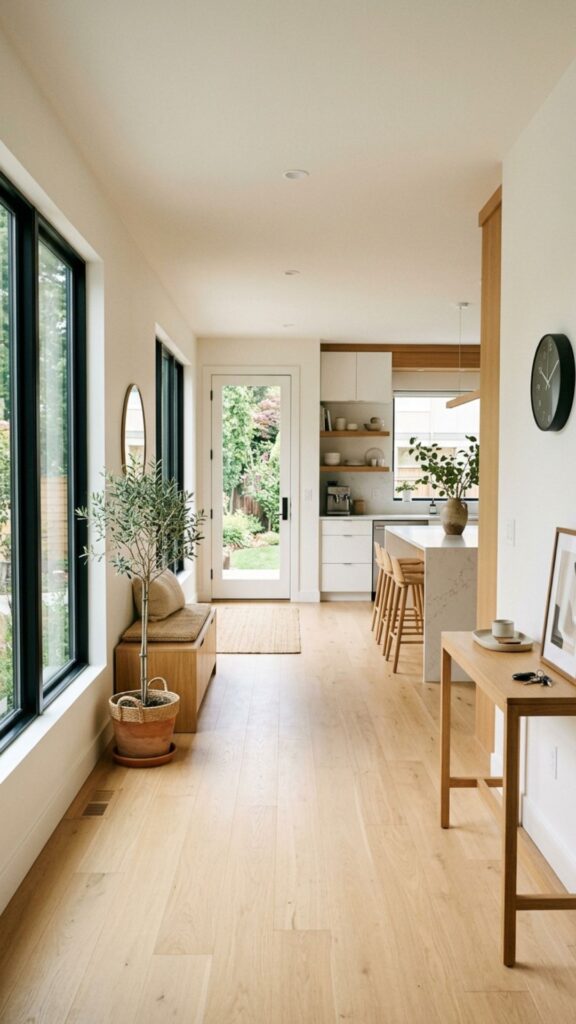
If your kitchen doorway or entry point feels tight, consider removing unnecessary furniture or cabinetry that encroaches on the walkway. Even 6–12 extra inches of clearance can make a noticeable difference in how freely people move through the space.
2. Add a Drop Zone Near the Entry
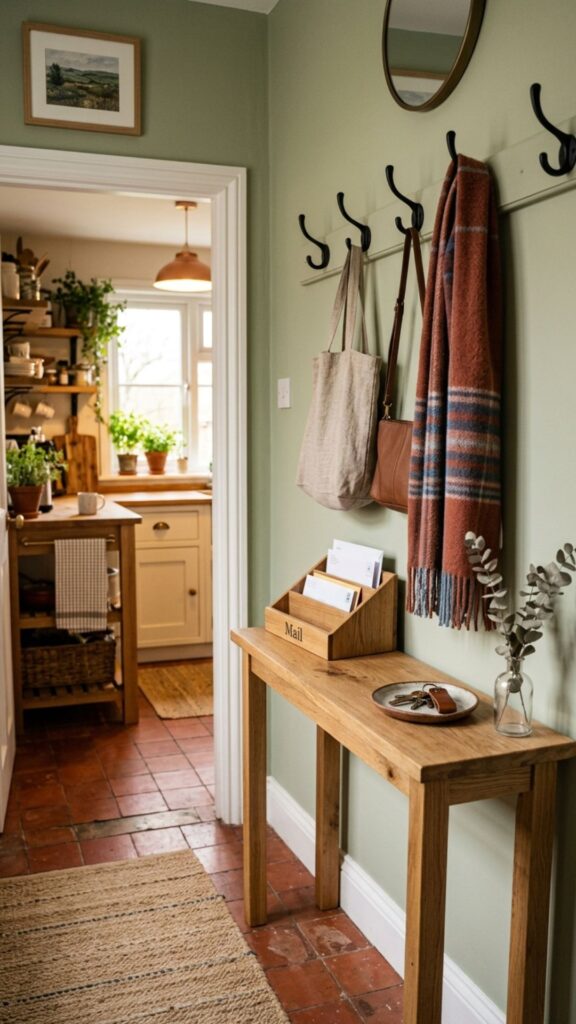
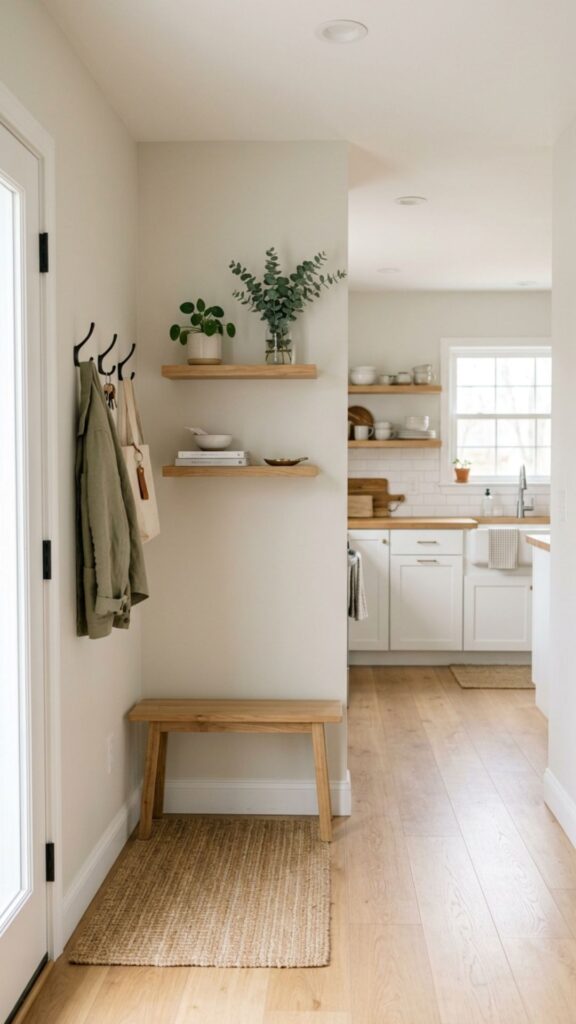
A small shelf, hook rack, or narrow console table just inside the kitchen entry gives people a place to set things down without blocking the walkway. This keeps bags, keys, and mail from piling up on countertops.
3. Install a Wall-Mounted Organizer
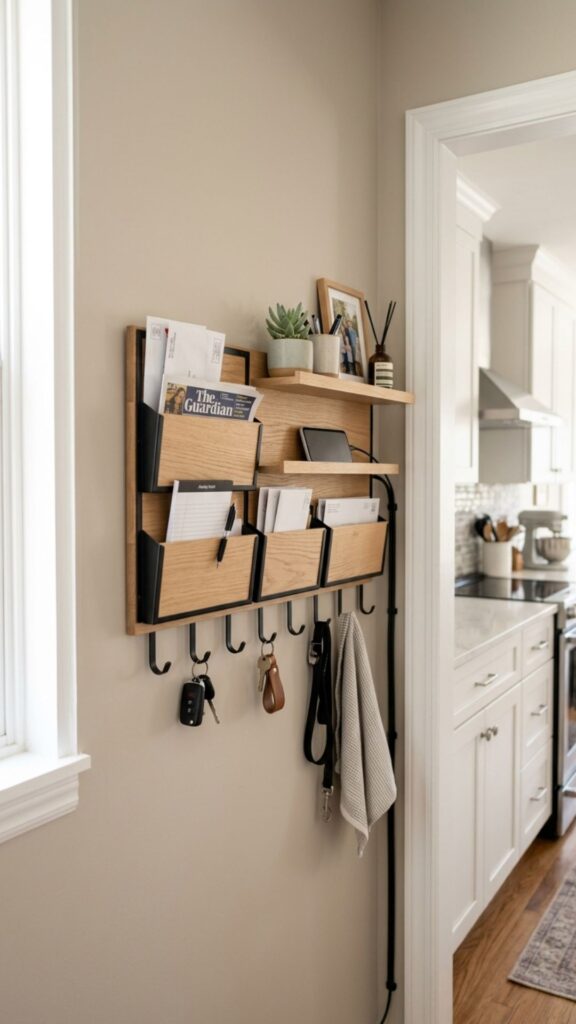
Wall-mounted organizers free up floor space while keeping everyday kitchen essentials — like mail, charging cables, or small tools — neatly contained. Look for options with hooks, pockets, and a small shelf to maximize vertical space.
4. Use a Narrow Bench with Built-In Storage
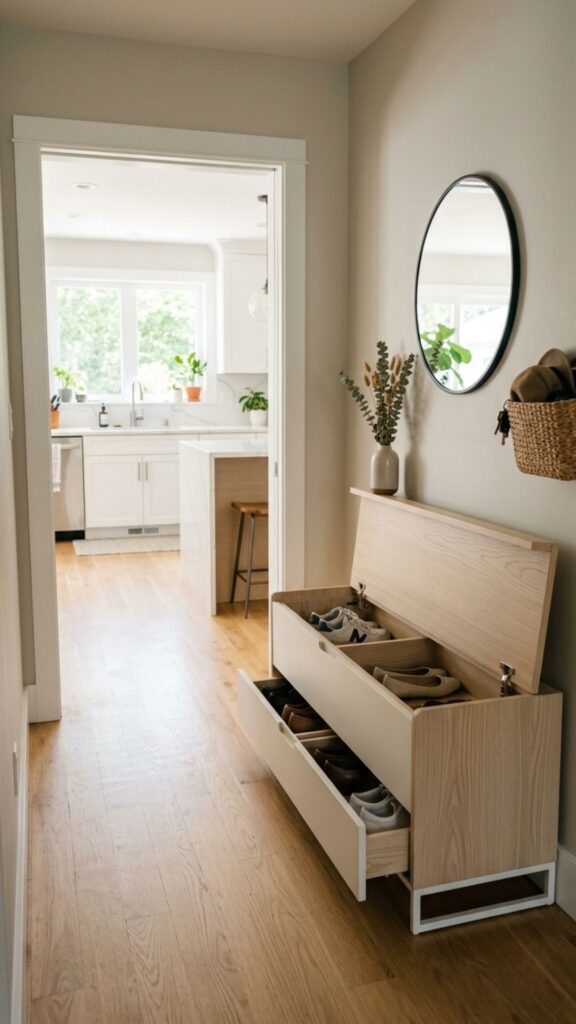
A slim storage bench near the kitchen entry serves double duty: it gives people somewhere to sit when swapping shoes and provides hidden storage underneath. Choose a bench no deeper than 14–16 inches to keep the pathway clear.
5. Hang Hooks at Multiple Heights
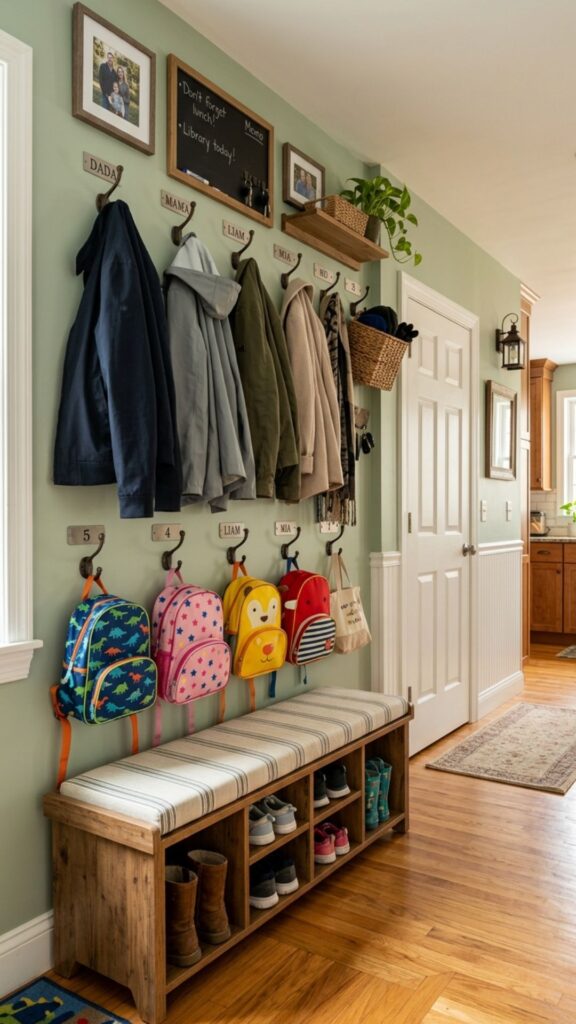
A row of hooks near the entryway sounds simple, but the height matters. Install hooks at adult height for bags and coats, and add a lower row for kids. This small detail reduces congestion because everyone can reach their own items quickly.
6. Define the Entry Zone with Flooring
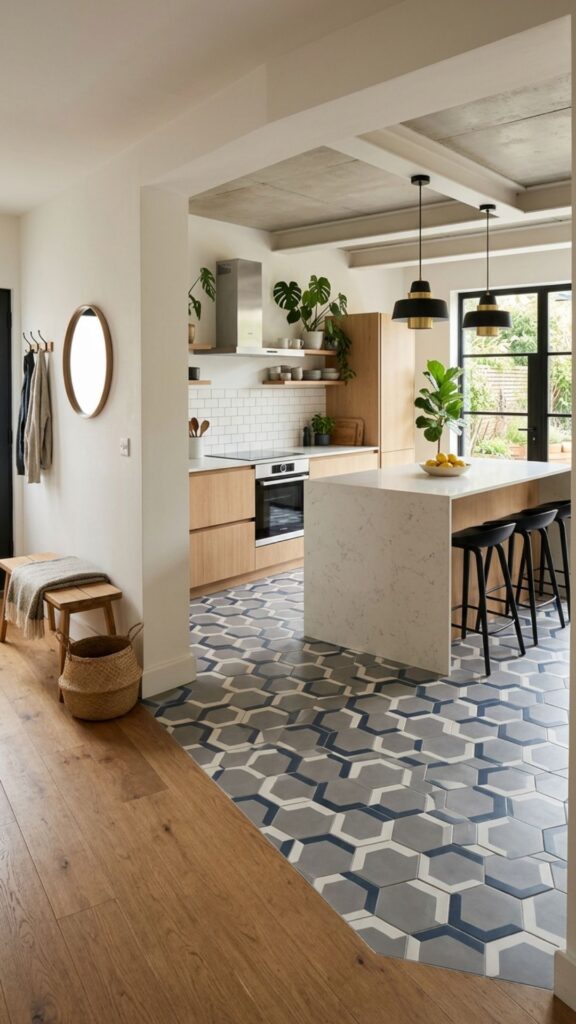
Using a different flooring material or a durable area rug to mark the entryway creates a visual boundary that subconsciously guides foot traffic. It also protects your kitchen flooring from the heaviest wear.
7. Keep a Designated Grocery Drop Spot
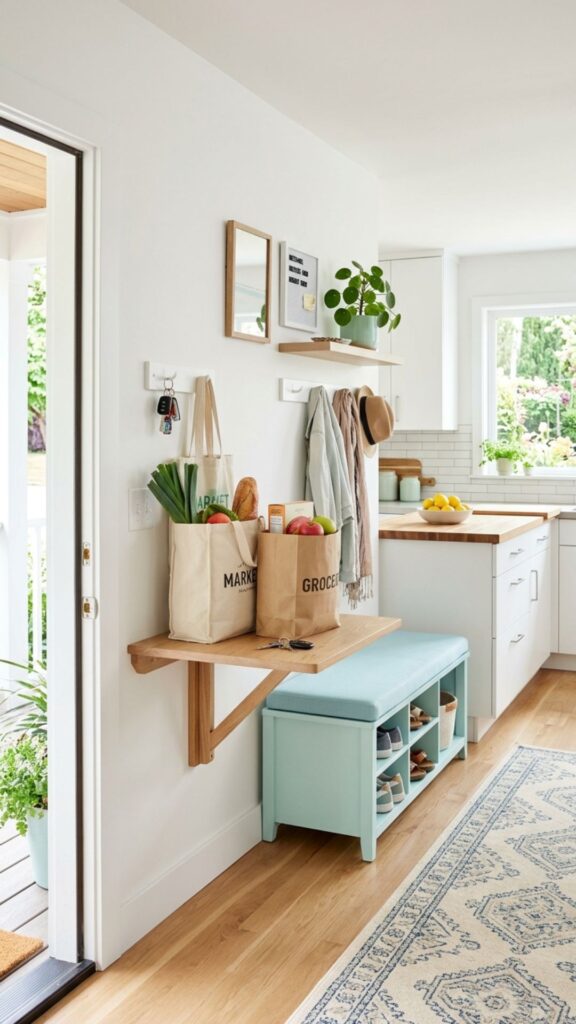
One of the most overlooked kitchen essentials for an entryway is a dedicated surface for grocery bags. A pull-out counter, a fold-down shelf, or even a sturdy stool near the entry gives people a place to set bags while they sort items — instead of blocking the entire walkway.
8. Improve Entryway Lighting
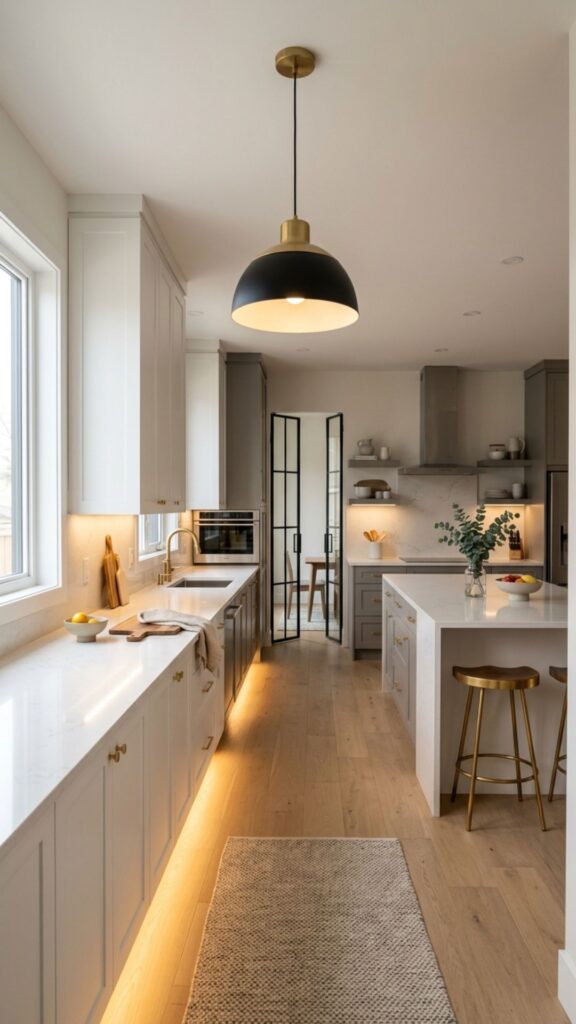
Poor lighting makes people hesitant and slow. Add a pendant light, under-cabinet lighting, or a motion-activated light near the kitchen entry to keep the area bright and welcoming. Good lighting naturally encourages faster, more confident movement.
9. Remove Doors That Swing Into the Path
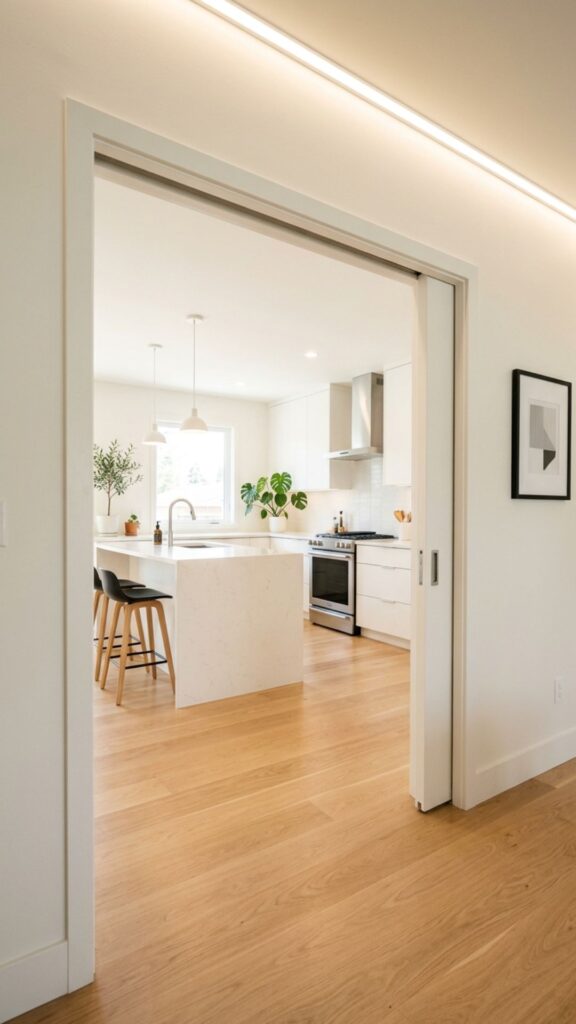
If your kitchen has a door that swings into the entryway, consider replacing it with a sliding door, a pocket door, or simply removing it altogether if the layout allows. Swing doors create constant obstacles in high-traffic zones.
10. Create a One-Way Traffic Pattern
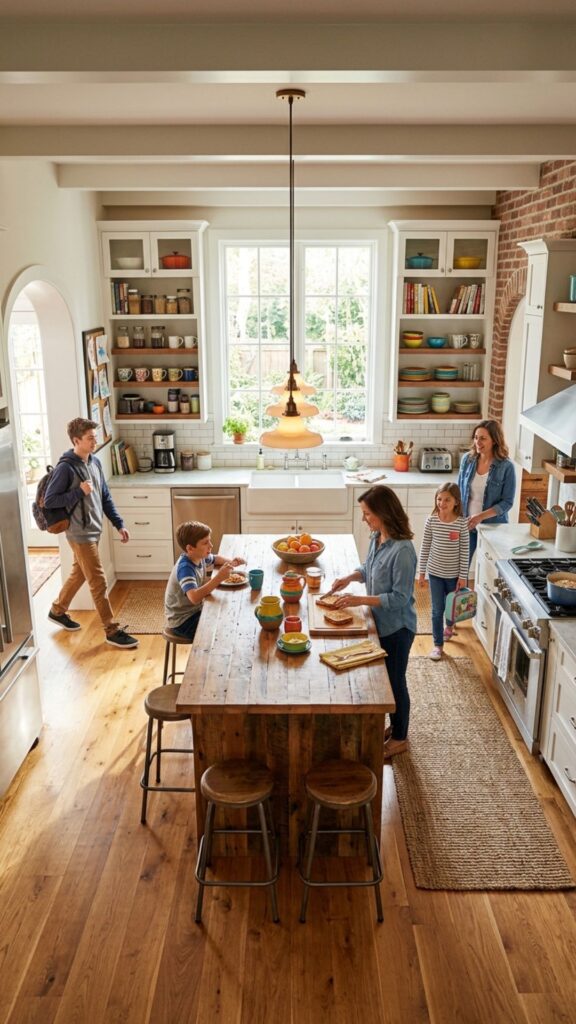
In larger kitchens with multiple entry points, designate one side for entry and one for exit. Use visual cues like rug placement, furniture positioning, or even a subtle sign to guide this. It sounds formal, but it genuinely reduces collisions during busy meal times.
11. Add Open Shelving for Quick-Access Items
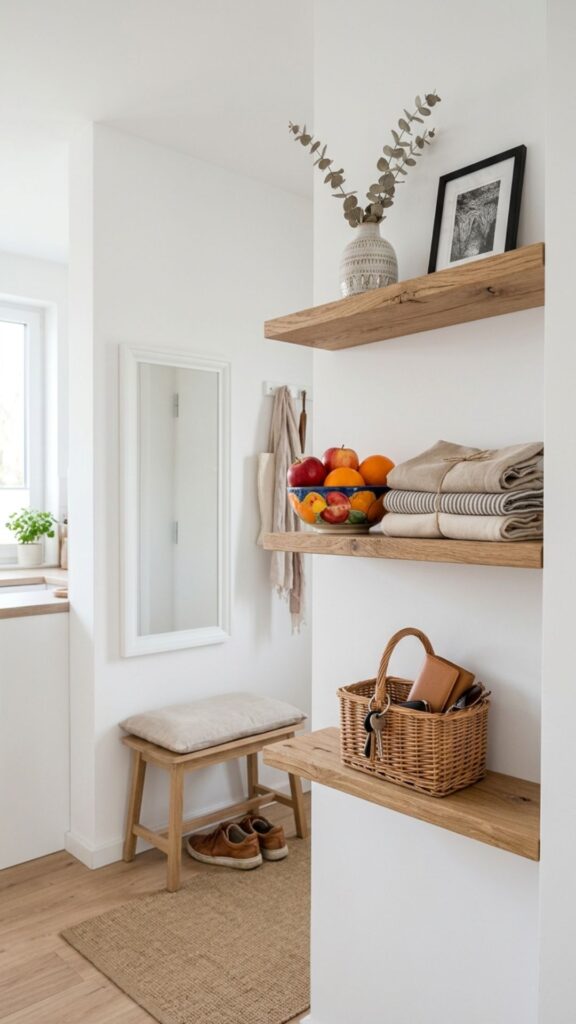
What to Store on Entryway Shelves
Open shelving near the kitchen entry works well for items you grab daily — reusable bags, a fruit bowl, cookbooks, or a small basket of kitchen essentials like hand lotion and a notepad. Keep it edited: one to two items per shelf prevents the visual clutter that slows people down.
12. Use Cabinet Colors to Guide the Eye
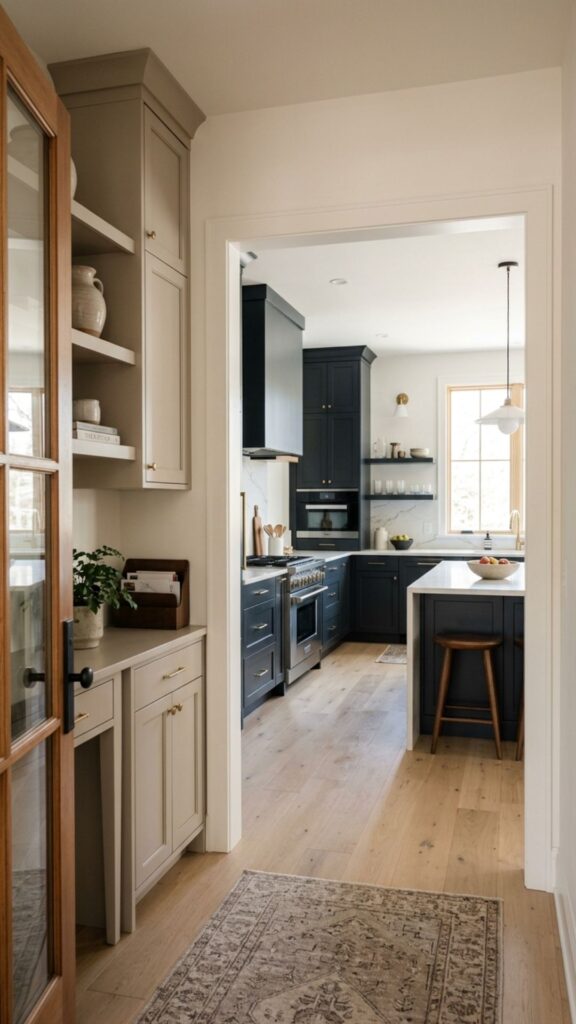
Paint or finish the cabinetry near the kitchen entry in a slightly lighter tone than the rest of the kitchen. This subtle contrast draws the eye inward and naturally guides people into the space rather than hesitating at the threshold.
13. Place a Slim Trash or Recycling Bin Near the Entry
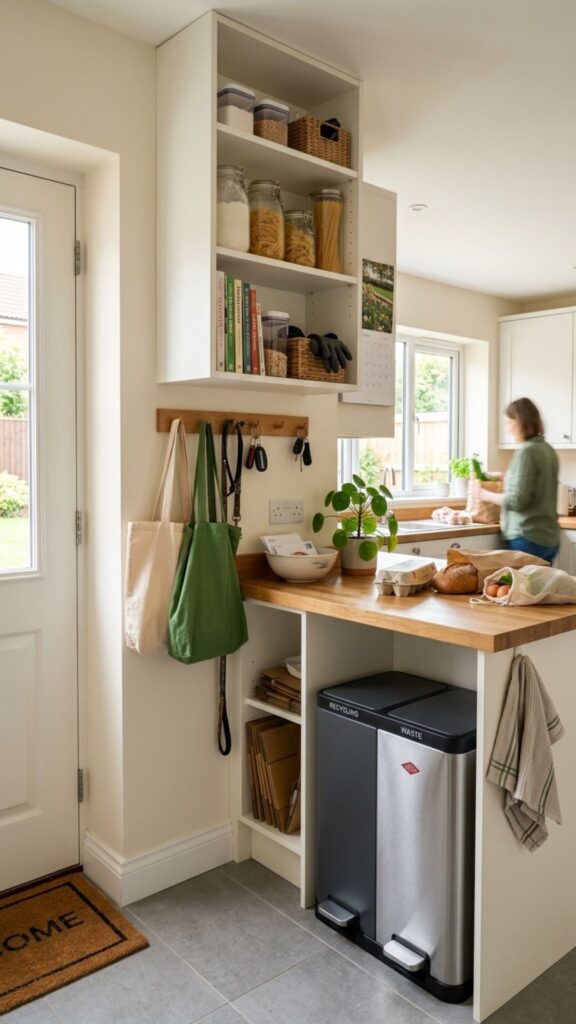
A compact recycling bin near the kitchen entryway cuts down on the trips people make across the kitchen to dispose of packaging from groceries. It keeps traffic concentrated at the entry rather than spreading throughout the kitchen unnecessarily.
14. Install a Pegboard for Flexible Storage
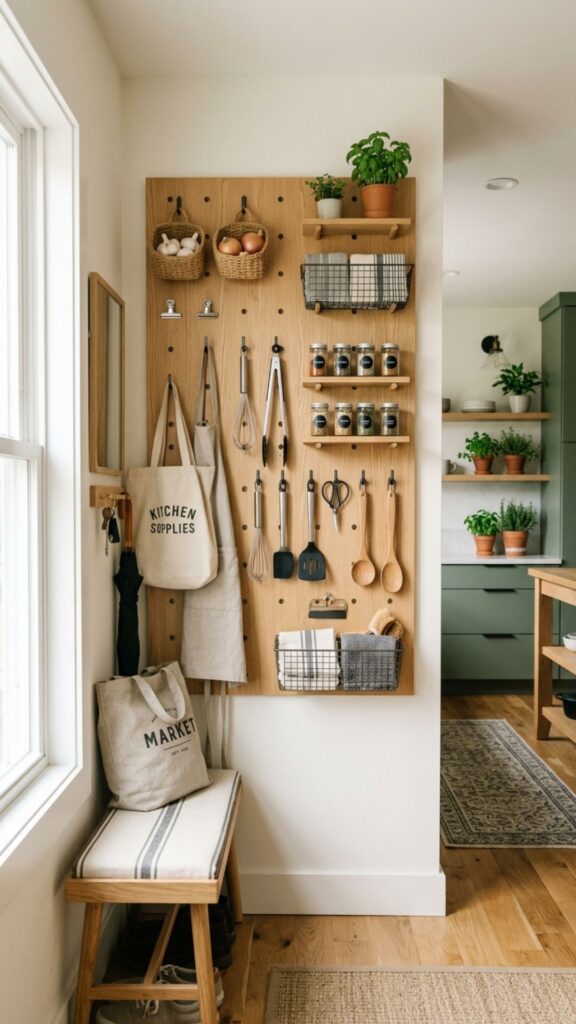
Pegboards are one of the most adaptable kitchen essentials for entryway organization. You can hang bags, small tools, baskets, and hooks in whatever configuration works best for your family. They’re easy to rearrange as your needs change.
15. Add a Step Stool That Stores Flat
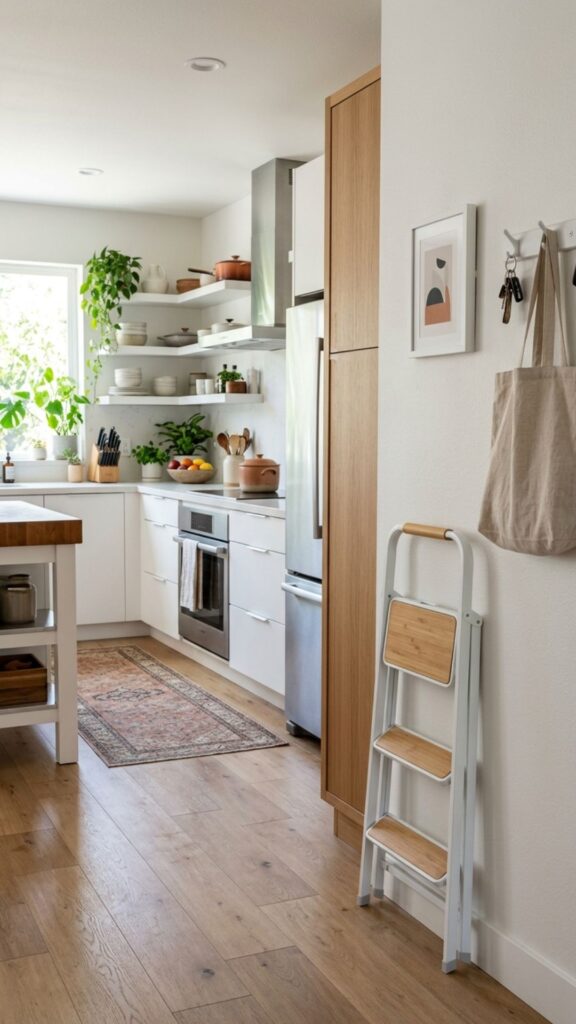
A fold-flat step stool near the kitchen entry is a surprisingly useful item for households with kids or short adults who need access to upper cabinets. Storing it flat against the wall means it never blocks the pathway until it’s needed.
16. Position Your Refrigerator Strategically
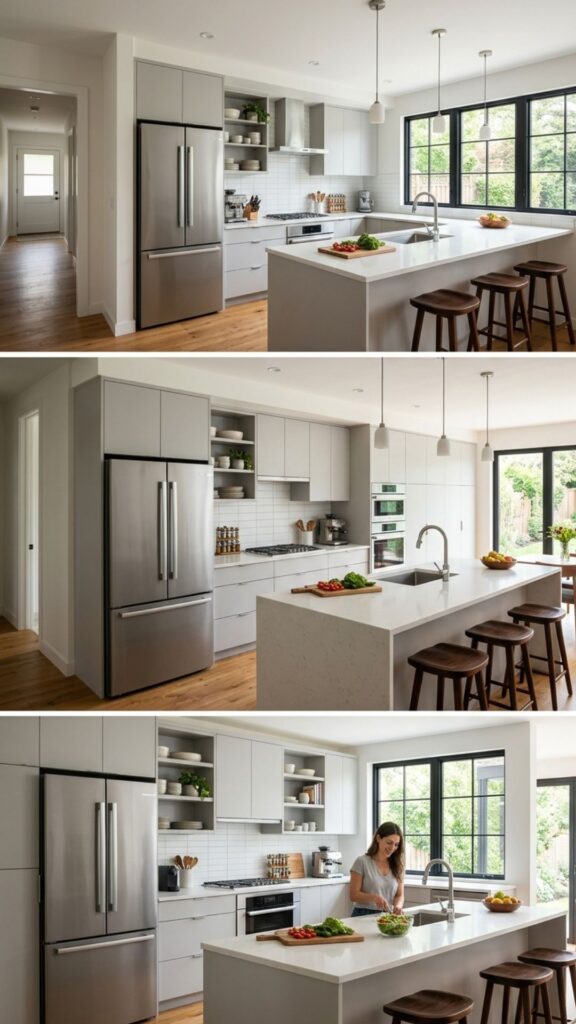
Why Refrigerator Placement Affects Traffic Flow
If you’re renovating or planning a kitchen layout, place the refrigerator near the entryway rather than deep inside the kitchen. This way, people grabbing drinks or dropping off groceries don’t need to walk through the entire kitchen, reducing unnecessary foot traffic and congestion at the cooking zone.
17. Use a Command Center on the Entry Wall
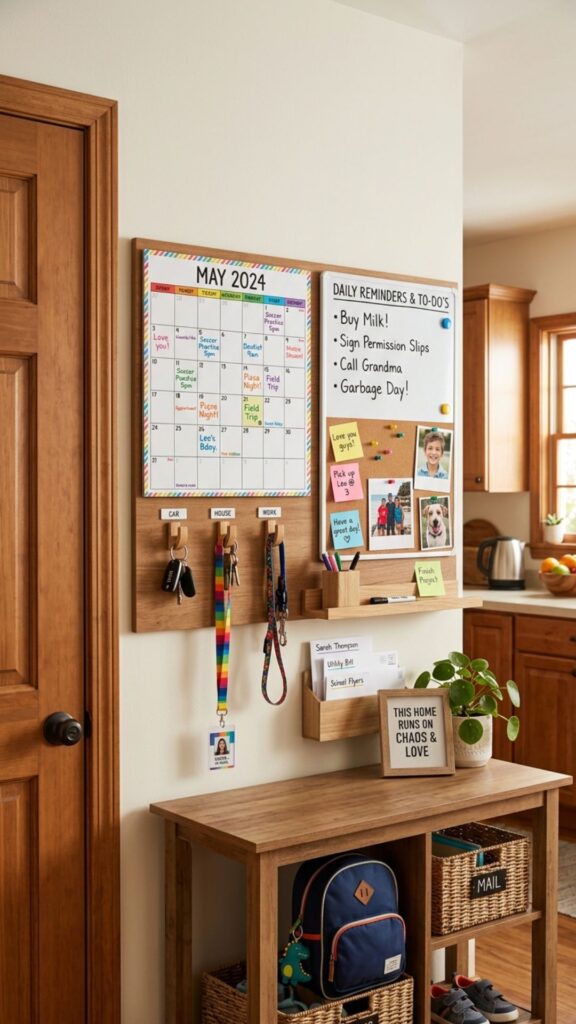
A small command center — a combination of a calendar, a chalkboard or whiteboard, and a few hooks — near the kitchen entry keeps household communication in one place. When everyone knows where to look for notes and reminders, they spend less time wandering the kitchen searching for information.
18. Add a Soft-Close Door or Barrier
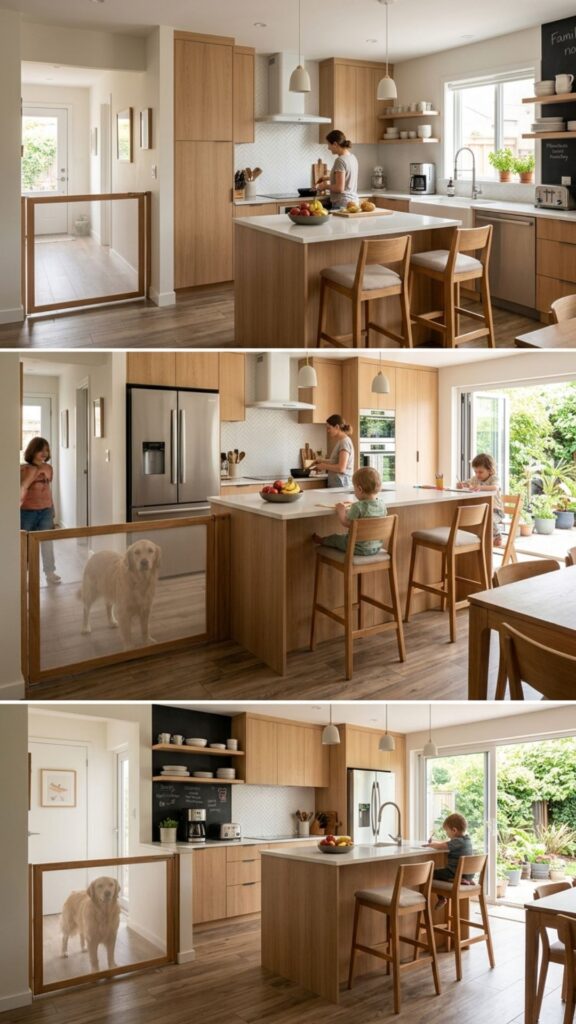
In open-plan homes, a soft-close gate, curtain, or partial divider near the kitchen entry can help manage traffic, especially during cooking when you don’t want kids or pets rushing through. It’s a practical solution that doesn’t require structural changes.
19. Keep Cleaning Supplies Accessible Near the Entry
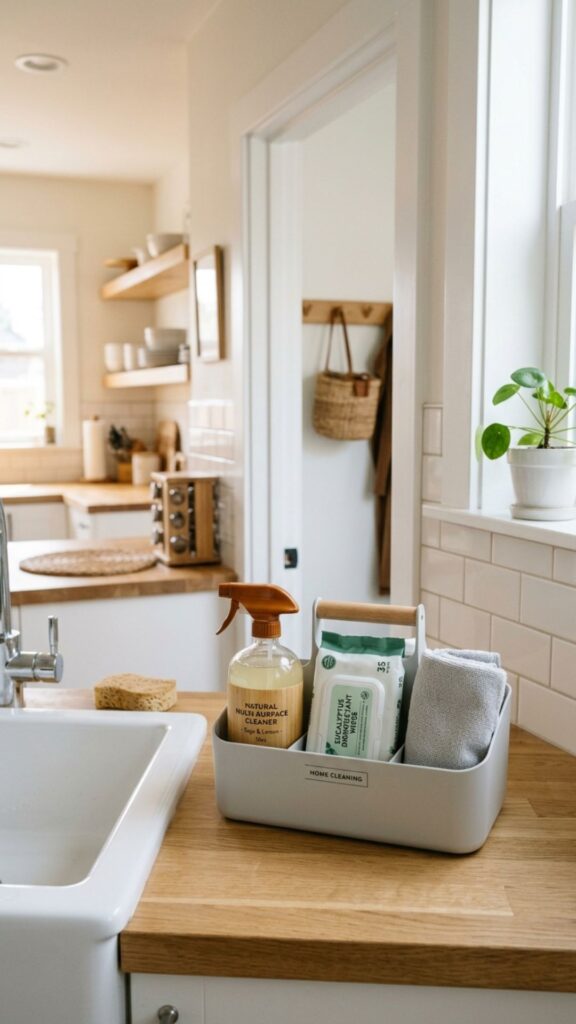
Stashing a small caddy of cleaning essentials — a hand towel, a spray bottle, and a few wipes — near the kitchen entry makes it easy to wipe up spills without trekking to a back cabinet. This keeps people from leaving muddy shoes or sticky hands unaddressed, which in turn keeps the entryway cleaner and clearer.
20. Evaluate and Declutter Regularly
Even the best-designed kitchen entryway will slow down if it collects clutter. Build a five-minute weekly habit of clearing the entry zone. Remove items that don’t belong, restock anything that’s been used up, and check that pathways are fully clear. Consistent maintenance is what keeps traffic flowing smoothly long-term.
Conclusion
Your kitchen entryway sets the tone for how the entire kitchen functions. When it’s clear, organized, and stocked with the right kitchen essentials, everything from the morning rush to the evening grocery run becomes noticeably easier.
You don’t need a full renovation to see results. Start with one or two ideas from this list — a drop zone, better lighting, or a wall-mounted organizer — and build from there. Small changes made consistently add up to a kitchen that genuinely works for your lifestyle.
Ready to improve your kitchen entryway? Pick one idea from this list and implement it this week. Once you see how much smoother your kitchen traffic flows, you’ll be motivated to tackle the next one.
What is the most important kitchen entryway feature for traffic flow?
The single most impactful feature is a clear, unobstructed pathway. A minimum clearance of 36–42 inches is recommended for kitchen walkways. After that, a designated drop zone — somewhere to set items without blocking the path — makes the biggest functional difference.
How do I organize a small kitchen entryway?
Focus on vertical storage. Wall-mounted hooks, pegboards, and narrow shelving keep the floor clear while maximizing the space you have. Choose furniture with dual purposes, like a storage bench or a fold-down shelf, and commit to a strict “one in, one out” rule to prevent clutter from building up.
Which kitchen essentials should I keep near the entryway?
The best items to keep near the kitchen entry are things you use during arrival or departure: reusable grocery bags, a fruit bowl, hand towels, small cleaning supplies, and a notepad or calendar. Avoid storing items there that belong deeper in the kitchen, as this encourages unnecessary traffic through the entry zone.
Can kitchen entryway changes help in a rental home?
Absolutely. Most of the ideas in this list — hooks, rugs, pegboards, organizers, and drop zones — require no permanent changes. Command hooks, freestanding shelving, and removable wall organizers are all renter-friendly options that can be taken down when you move.