A granite island can turn an ordinary kitchen into the kind of space people actually want to hang out in. It handles hot pans, resists scratches, and looks expensive without trying too hard.
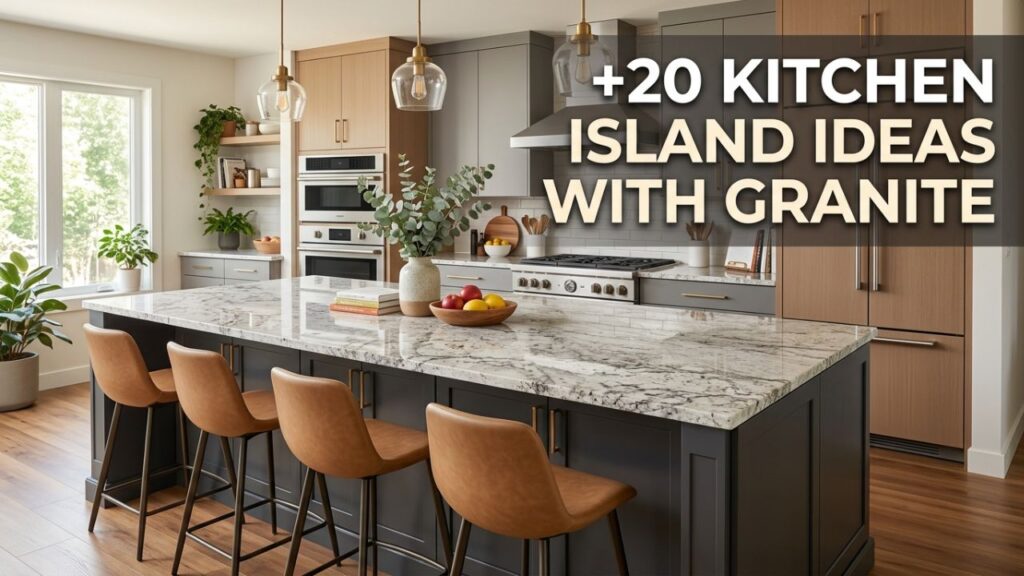
After years of helping homeowners plan remodels, I’ve seen how the right island transforms a room’s whole feel.
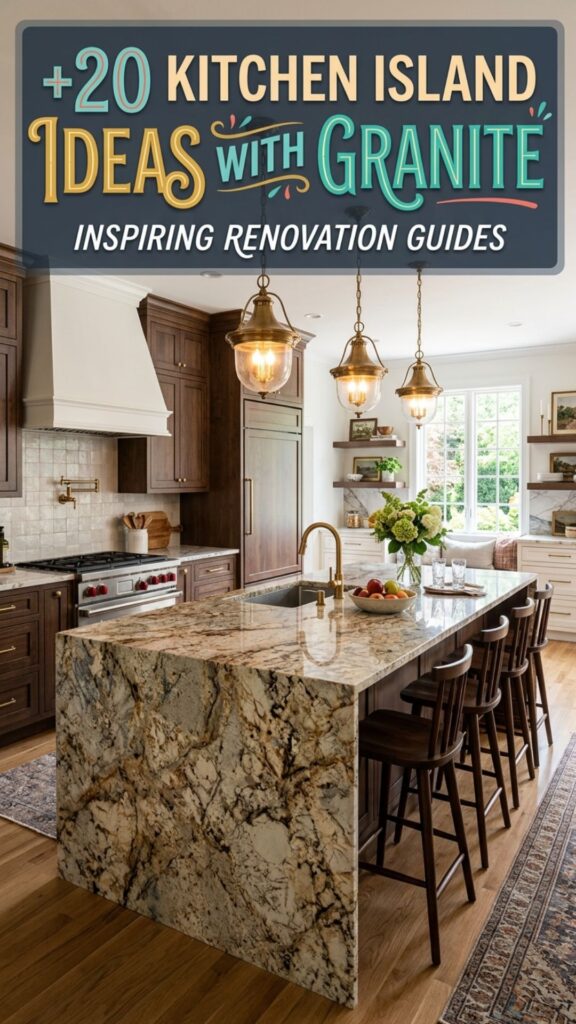
In this guide, you’ll find 20 kitchen island ideas granite fans keep coming back to. You’ll learn which edge styles suit busy families, how color choices change the mood of a room, and how to pair granite with cabinets, lighting, and seating. Whether you’re building new or upgrading, there’s something here to steal.
1. Go Bold With Dramatic Veined Granite
Nothing grabs attention like a slab with wild, sweeping veins. Stones like Blue Bahia or Van Gogh granite look almost like abstract paintings, and each one is unique. When you put a bold slab on an island, it becomes the star of the room and everything else can stay simple.
Pair heavily veined granite with plain shaker cabinets in white or soft gray. That way the stone does the talking. I usually tell clients to view the actual slab in person before buying, since photos rarely capture the movement and depth you get with these dramatic pieces.
2. Create a Waterfall Edge for Modern Appeal
A waterfall edge is when the granite runs down the sides of the island to the floor, like a frozen sheet of stone. It’s clean, contemporary, and shows off the slab from top to bottom. This look works beautifully in open-concept homes where the island is visible from the living area.
Because a waterfall edge uses more material, expect to pay more for both the stone and the fabrication. To keep costs sensible, choose a granite with a continuous pattern so the veins flow naturally around the corner. That seamless wrap is what makes the whole thing feel high-end.
3. Mix Black Granite With Warm Wood Cabinets
Deep black granite, like Absolute Black or Black Galaxy, brings instant drama. Set it against warm walnut or oak cabinets, and you get a balance of moody and cozy. The contrast feels rich without being cold, which is why designers reach for it so often.
Black granite hides everyday crumbs and water spots better than lighter stones, making it a smart pick for families. Add brass or matte gold hardware to pull warmth from the wood into the metal accents. The result reads as luxurious but still livable.
4. Add a Built-In Breakfast Bar Overhang
Extend your granite slab about 12 to 15 inches past the cabinets, and you’ve got instant seating. A breakfast bar overhang gives kids a spot for homework and guests a place to perch while you cook. It’s one of the most practical upgrades you can make.
For overhangs longer than 12 inches, add support brackets or steel rods so the granite doesn’t crack under weight. I’ve seen too many islands sag because this step got skipped. A good fabricator will build in hidden supports that keep the clean look intact.
5. Choose White Granite for a Bright, Airy Kitchen
White granite such as Colonial White or Alaska White brightens a room and pairs with almost any color scheme. Unlike solid white quartz, it has natural specks and subtle veining that add depth. This keeps the island from feeling flat or sterile.
White granite works especially well in smaller kitchens where you want to bounce light around. Combine it with navy or sage green cabinets for a fresh, current look. Just remember to seal lighter stones regularly, since they can show stains more than darker options.
6. Install a Two-Tier Island for Function and Style
A two-tier island keeps your prep zone separate from your seating area. The lower level handles chopping and cleanup, while the raised bar hides messes from guests sitting nearby. It’s a smart layout for people who love to entertain.
You can play with the design by using the same granite on both levels or mixing two coordinating stones. The raised section also creates a natural spot for pendant lights. This setup gives you clear zones without needing walls or dividers.
7. Pair Granite With a Farmhouse Apron Sink
Dropping a deep apron-front sink into a granite island gives you a rustic-meets-luxury vibe. The heavy stone frames the sink and makes the whole feature feel intentional. This combo suits both traditional and transitional kitchens.
Granite stands up to the constant splashing and heavy pots that come with a farmhouse sink. Go with a honed finish if you want a softer, matte look that hides water marks. Add a gooseneck faucet in a warm metal to finish the scene.
8. Use a Leathered Finish for a Soft Touch
Most people picture glossy granite, but a leathered finish changes everything. It has a slightly textured, matte surface that feels warm under your hand. This finish hides fingerprints and smudges far better than polished stone.
Leathered granite looks stunning on darker slabs, where it brings out subtle depth and color. It’s a favorite for homeowners who want something less shiny and more organic. Ask your fabricator for a sample so you can feel the texture before committing.
9. Match Granite Island to a Full Backsplash
Carrying your island granite up the wall as a backsplash creates a seamless, gallery-like look. It ties the whole kitchen together and makes the space feel custom. This is a designer trick that instantly raises the perceived value of a room.
If a full slab backsplash stretches your budget, use it behind the range only and keep the rest simple. The eye still reads the connection, but you spend less. Continuous stone is a small detail that people always notice.
10. Try Exotic Granite Colors Like Blue or Green
Beyond the usual grays and blacks, granite comes in blues, greens, and deep reds. Stones like Emerald Pearl or Azul Aran add personality you won’t find in mass-produced surfaces. These exotic colors make your island a true conversation piece.
Because these stones are so eye-catching, keep the surrounding elements neutral. Let the island own the spotlight. These slabs can cost more and take longer to source, so plan your timeline with a bit of cushion.
11. Design a Curved Island for Better Flow
A curved or rounded island softens a kitchen and improves traffic flow. Sharp corners can be a hazard in busy homes, especially with kids around. A gentle curve invites people to gather and move around freely.
Curved granite takes extra skill to fabricate, so choose an experienced stone shop. The seams need to be nearly invisible for the curve to look right. When done well, a rounded island feels custom and welcoming.
12. Combine Granite With Under-Counter Lighting
LED strip lighting tucked beneath a granite overhang creates a soft glow that highlights the stone’s texture. It’s a small addition that makes a big difference at night. The light catches the crystals and veins, giving the island a subtle sparkle.
Warm-toned LEDs flatter most granite colors and make the space feel cozy. Put them on a dimmer so you can shift from bright prep light to gentle mood lighting. This trick works in nearly every kitchen style.
13. Add Open Shelving to Your Granite Island
Built-in open shelves on the end or side of an island give you a spot for cookbooks, baskets, or a few plants. They break up the solid mass of cabinets and add a personal touch. This works well when you want display space without upper cabinets.
Keep the shelves tidy, since they’re always on view. Style them with a mix of function and decoration, like a stack of white bowls next to a wooden cutting board. Granite up top and warm wood shelves below make a lovely pairing.
14. Install a Cooktop for a Cooking Command Center
Placing a cooktop in your granite island turns it into the heart of the kitchen. You can cook while facing your guests instead of staring at a wall. Granite handles the heat and cleans up easily after spills.
You’ll need proper ventilation, either a downdraft system or an overhead hood. Plan the electrical or gas lines early in your remodel. This setup rewards anyone who cooks a lot and loves company.
15. Go Monochrome for a Sleek, Cohesive Look
Match your granite island to cabinets and floors in the same color family for a smooth, modern feel. An all-gray or all-white palette looks calm and intentional. This approach makes even a large kitchen feel serene.
To keep a monochrome scheme from feeling boring, vary your textures. Mix a polished granite with matte cabinets and a slightly different floor tone. Layering shades of one color adds richness without clutter.
16. Pair Speckled Granite With Simple Cabinets
Speckled stones like Baltic Brown or Santa Cecilia are busy on their own, so they shine against plain cabinetry. The tiny flecks of color add warmth and hide crumbs and coffee rings. This is a forgiving choice for real family life.
These granites also tend to be more budget-friendly since they’re widely available. Pair them with cream or light wood cabinets to let the specks pop. It’s an affordable way to get a warm, welcoming kitchen.
17. Create a Double Island With Matching Granite
If your kitchen is large enough, two islands double your prep space and seating. Use the same granite on both to keep the look unified. One island can handle cooking while the other becomes a gathering spot.
This layout works best in open floor plans with plenty of room to walk between the islands. Space them at least 42 inches apart so traffic flows freely. Two matching granite tops make a grand, hotel-like statement.
18. Add a Wine Fridge or Beverage Station
Build a beverage zone into your island with a wine fridge, a small sink, or open glass storage. Guests can help themselves while you focus on the food. Granite makes the perfect surface for pouring and mixing drinks.
Position the beverage station on the side facing your living area, away from the main cooking zone. This keeps the flow smooth during parties. It’s a feature that makes entertaining feel effortless.
19. Use Thick Slab Granite for a Substantial Feel
A thicker granite edge, around 2 to 3 inches, gives an island serious presence. It feels solid, expensive, and grounded. Fabricators create this look by laminating two slabs or choosing a thicker cut.
This chunky profile suits both modern and traditional kitchens. It pairs especially well with large islands, where a thin edge might look flimsy. The extra depth is a subtle detail that signals quality.
20. Finish With Statement Pendant Lighting
The right pendant lights turn a granite island into a focal point. Oversized glass globes, woven rattan, or sleek metal fixtures all add character. Lighting is often the finishing touch that pulls a kitchen together.
Hang pendants about 30 to 36 inches above the countertop so they light the surface without blocking sightlines. Match the metal finish to your hardware for a polished result. Good lighting makes even a modest island feel designer-made.
Bringing Your Granite Island to Life
A granite island is one of the smartest investments you can make in your kitchen. It’s tough, timeless, and endlessly customizable. From bold veining and waterfall edges to cozy breakfast bars and beverage stations, these kitchen island ideas granite lovers rely on prove there’s a style for every home and budget.
Start by picking the one idea that excited you most, then visit a local stone yard to see real slabs in person. Take photos of your cabinets and lighting so you can compare. Ready to build the kitchen you’ve been dreaming about? Talk to a trusted fabricator this week and get your project moving.
How much does a granite kitchen island cost?
A granite island top typically costs between $2,000 and $4,500, depending on the stone type, size, and edge style. Exotic colors and waterfall edges push the price higher, while common speckled granites keep costs down.
Is granite a good choice for a kitchen island?
Yes. Granite resists heat, scratches, and daily wear, making it ideal for busy kitchens. It’s a natural stone, so each slab is unique, and with regular sealing it can last for decades.
What color granite is best for a kitchen island?
The best color depends on your cabinets and lighting. White and light granites brighten small kitchens, black granite hides messes and adds drama, and exotic blues or greens create a bold focal point.
Do granite islands need to be sealed?
Most granite should be sealed once or twice a year to prevent stains and moisture damage. Lighter stones usually need sealing more often than darker, denser ones. A quick water-drop test tells you when it’s time.
Can you put a sink or cooktop in a granite island?
Absolutely. Granite handles both well, but you’ll need proper plumbing for a sink and ventilation for a cooktop. Plan these features early in your remodel so the fabricator can cut the openings precisely.