Concrete has quietly become one of the most exciting materials in kitchen design. It’s tough, it looks incredible, and it fits almost any style you throw at it.
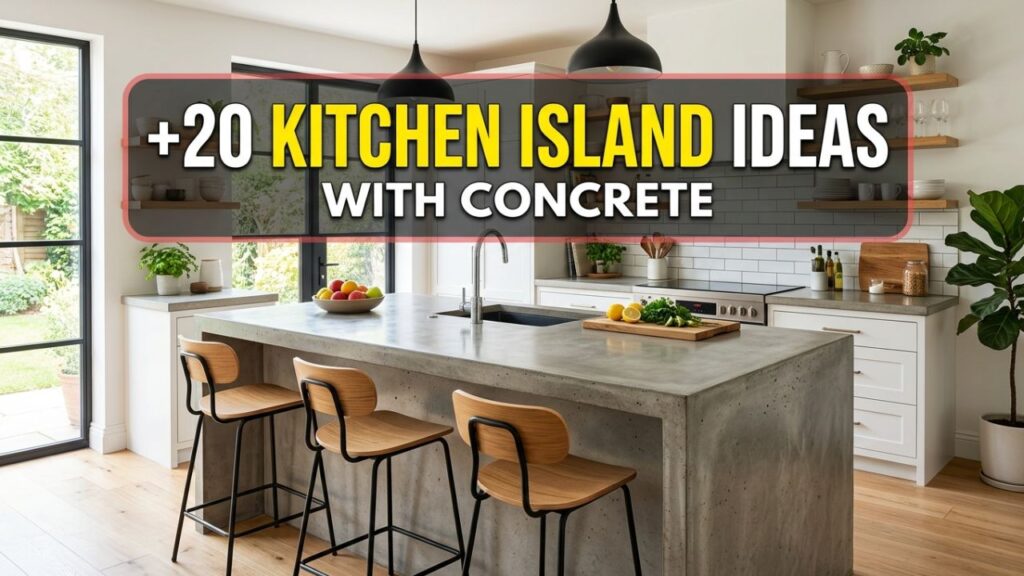
I’ve spent years working alongside builders and designers, and I keep seeing the same thing: once people touch a well-finished concrete surface, they’re hooked.
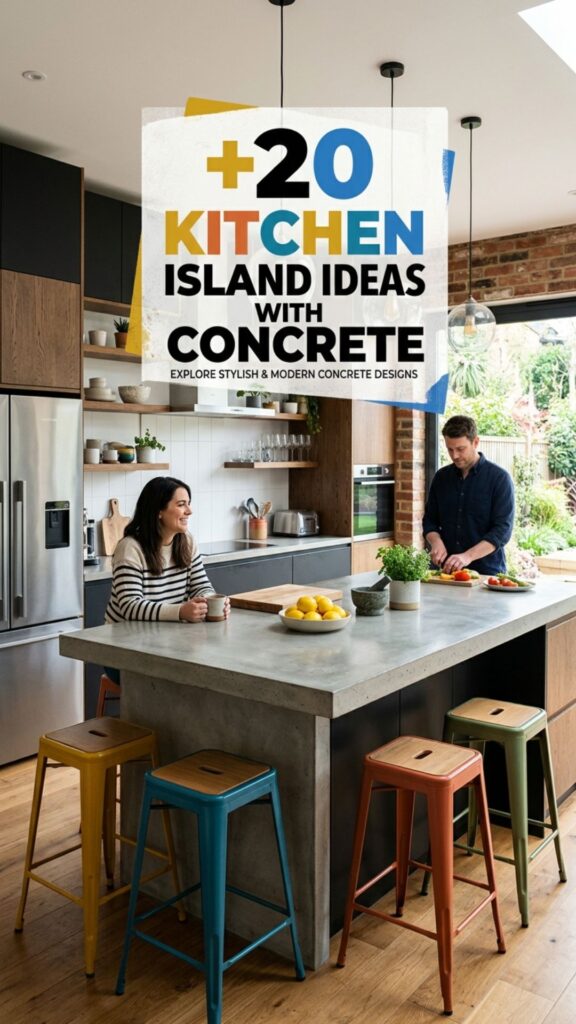
If you love the raw, honest beauty of concrete, your kitchen island is the perfect place to show it off. Below you’ll find 20 kitchen island ideas concrete fans can steal, whether you want something sleek and modern or warm and rustic. I’ll walk you through the looks, the practical details, and a few things I’ve learned the hard way. Let’s dig in.
1. Polished Concrete Countertop for a Smooth, Modern Look
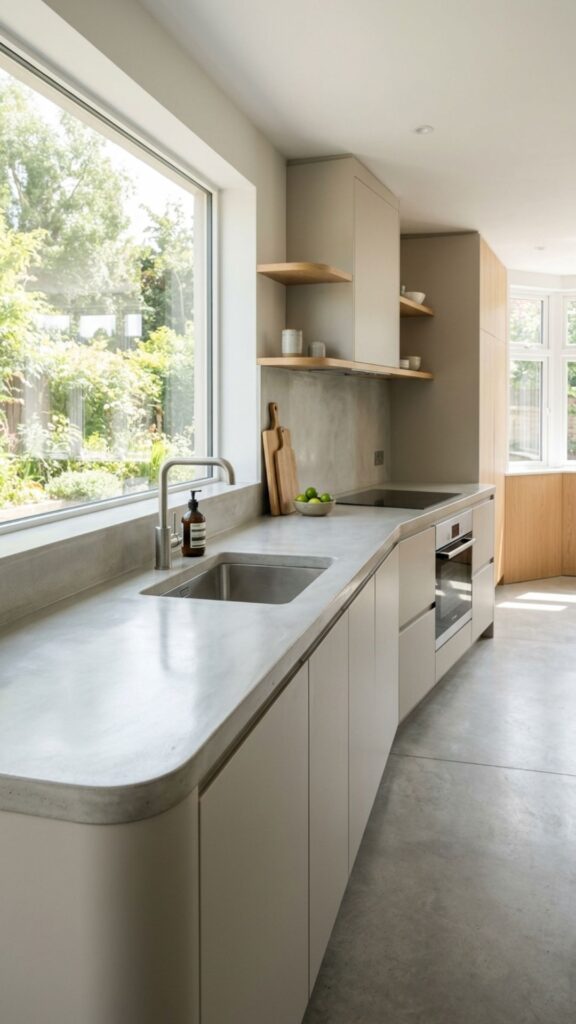
A polished concrete top is where most people start, and for good reason. The surface feels almost like stone, with a soft sheen that catches the light. It works beautifully in minimalist kitchens where you want clean lines without a lot of fuss.
The trick is in the sealing. A good penetrating sealer keeps stains out and makes daily cleanup easy. I always tell homeowners to reseal every couple of years, since a well-maintained top can look fresh for decades.
2. Waterfall Edge Island That Flows to the Floor
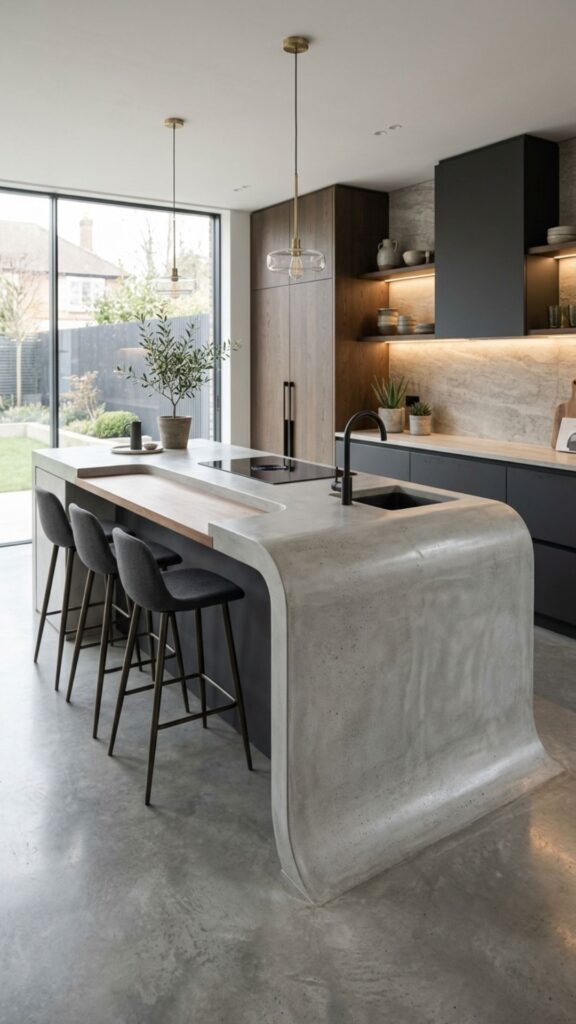
The waterfall edge wraps the concrete down the sides of your island, creating one continuous slab. It’s a showstopper. The material seems to pour from the counter to the floor, and it instantly makes the island feel like a piece of sculpture.
This design does need careful planning. The seams have to line up so the piece reads as one solid form. If you’re working with a fabricator, ask to see samples of their edge joints before you commit.
3. Board-Formed Concrete for Rustic Texture
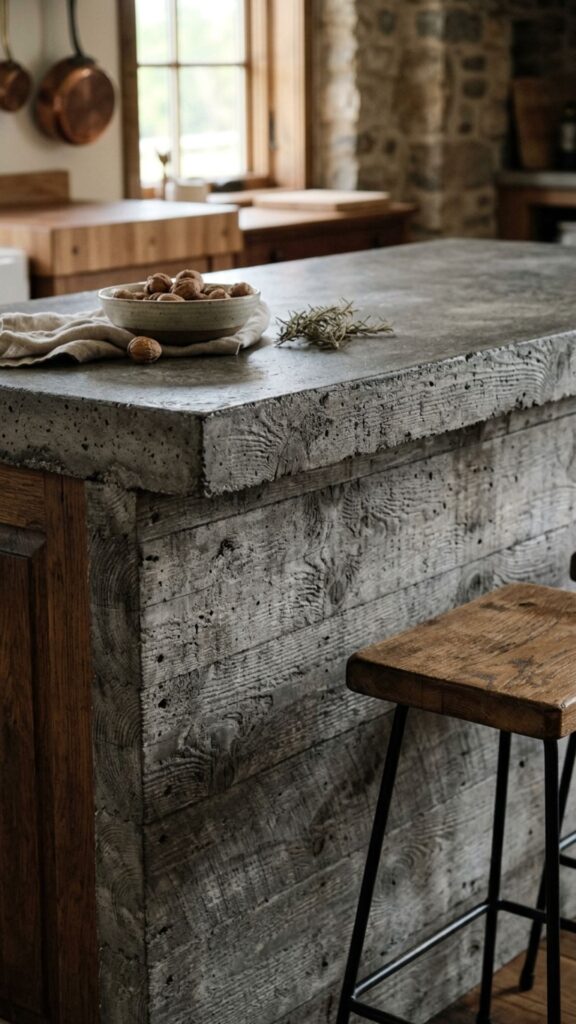
Board-formed concrete carries the imprint of wooden planks used during the pour. The result is a surface full of wood grain and knots, frozen in stone. It brings warmth to a material people often think of as cold.
I love this for farmhouse and industrial kitchens alike. Pair it with reclaimed timber shelving and you’ve got a space that feels grounded and lived in. Every island turns out slightly different, so yours will be one of a kind.
4. Concrete Island With a Butcher Block Insert
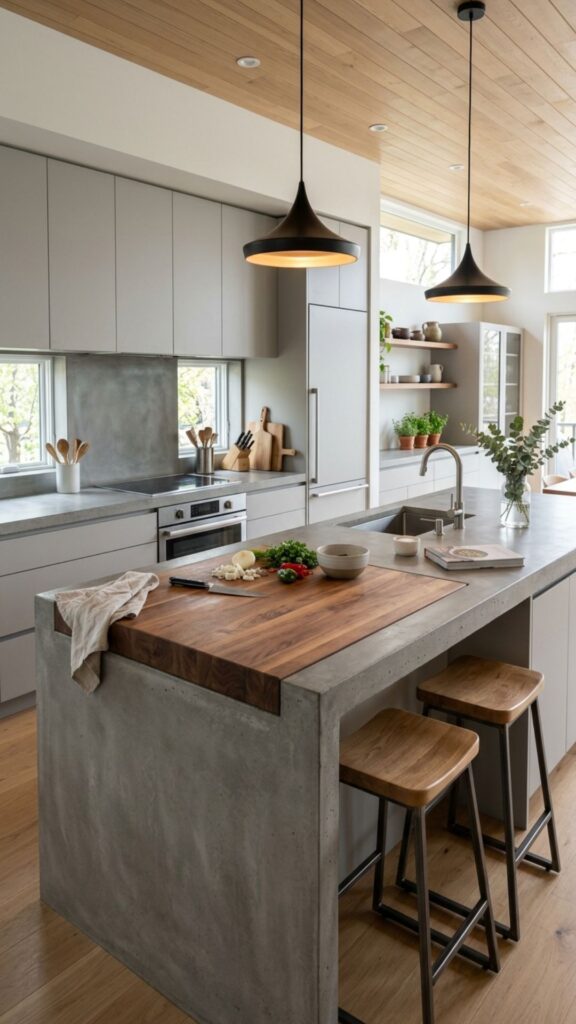
Mixing concrete with wood gives you the best of both worlds. Keep the bulk of your island in concrete, then set a butcher block section into one end for chopping. The contrast of hard stone and soft wood is genuinely lovely.
This layout is also practical. You get a durable prep zone that won’t dull your knives, plus the easy-clean surface of concrete everywhere else. It’s a favorite among home cooks who actually use their kitchens.
5. White Concrete for a Bright, Airy Feel
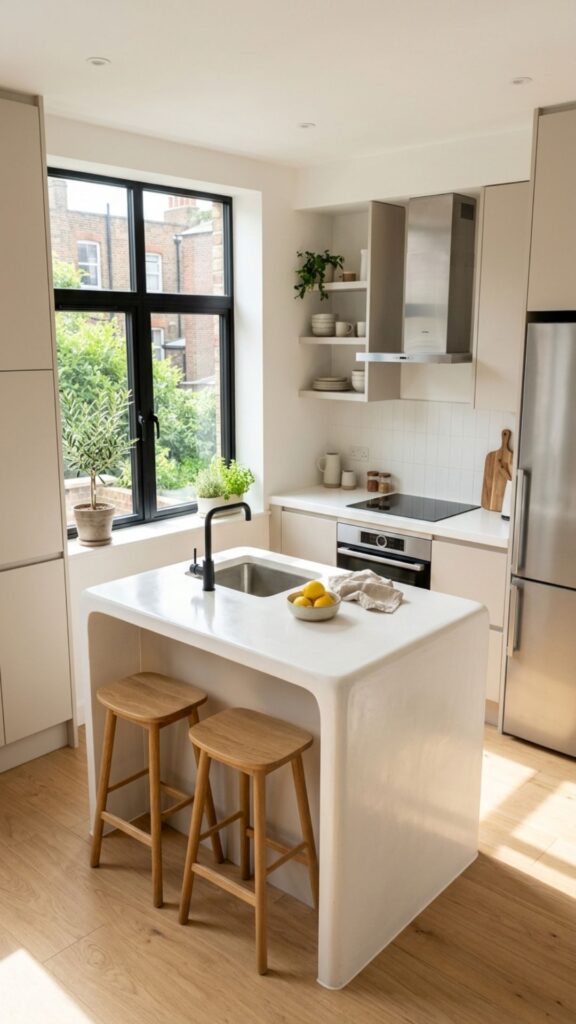
Concrete doesn’t have to be gray. White pigment mixed into the batch gives you a soft, chalky tone that opens up smaller spaces. It’s a smart pick if your kitchen feels a little dark or cramped.
Keep in mind that lighter concrete shows stains more readily, so sealing matters even more here. I usually recommend a high-quality sealer and a quick wipe-down habit to keep the surface looking crisp.
6. Charcoal Concrete for Bold Drama
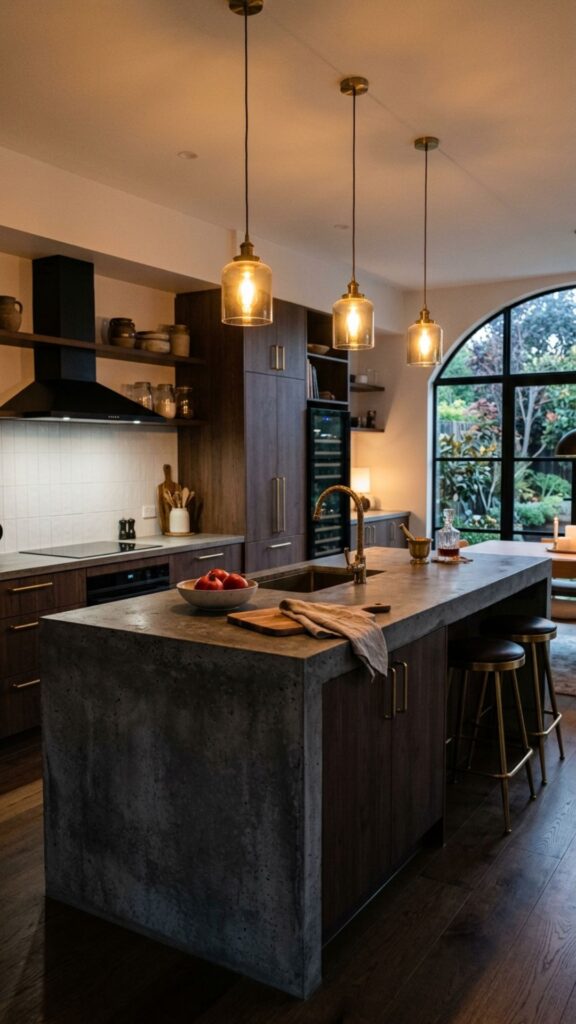
On the other end of the scale, charcoal and near-black concrete make a strong statement. The deep tone feels moody and modern, especially under warm pendant lighting. It anchors an open-plan kitchen with real presence.
To keep the dark surface from feeling heavy, balance it with lighter cabinets or brass hardware. That contrast keeps things feeling intentional rather than gloomy.
7. Rounded Concrete Island for Soft Curves
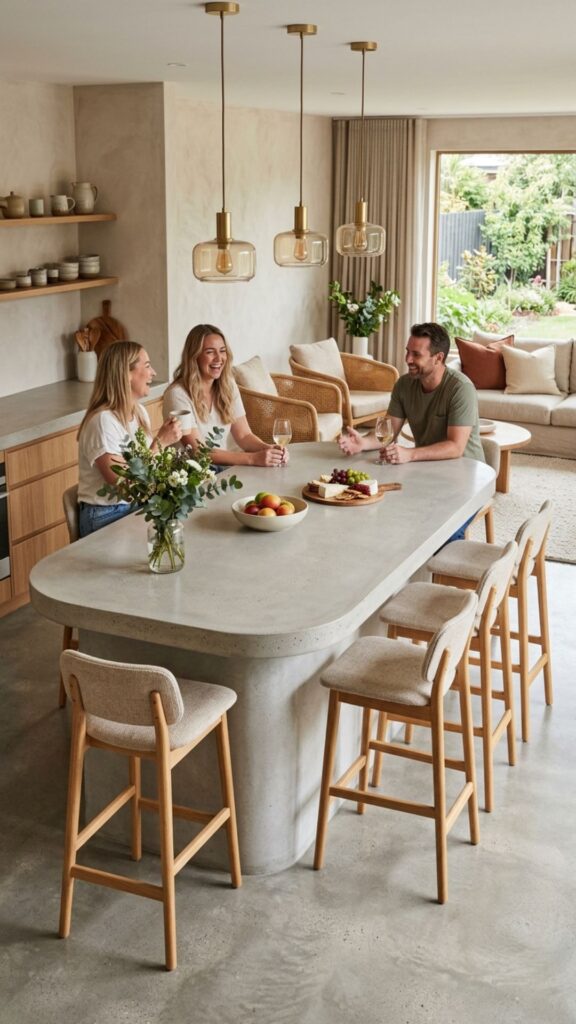
Straight edges are common, but a curved concrete island feels fresh. Rounded corners soften the room and make it easier to move around, which is great for busy family kitchens with kids running past.
Curves are trickier to form, so this is a job for an experienced fabricator. The extra effort pays off, though. A curved island becomes the natural gathering spot in any home.
8. Concrete Island With Integrated Sink
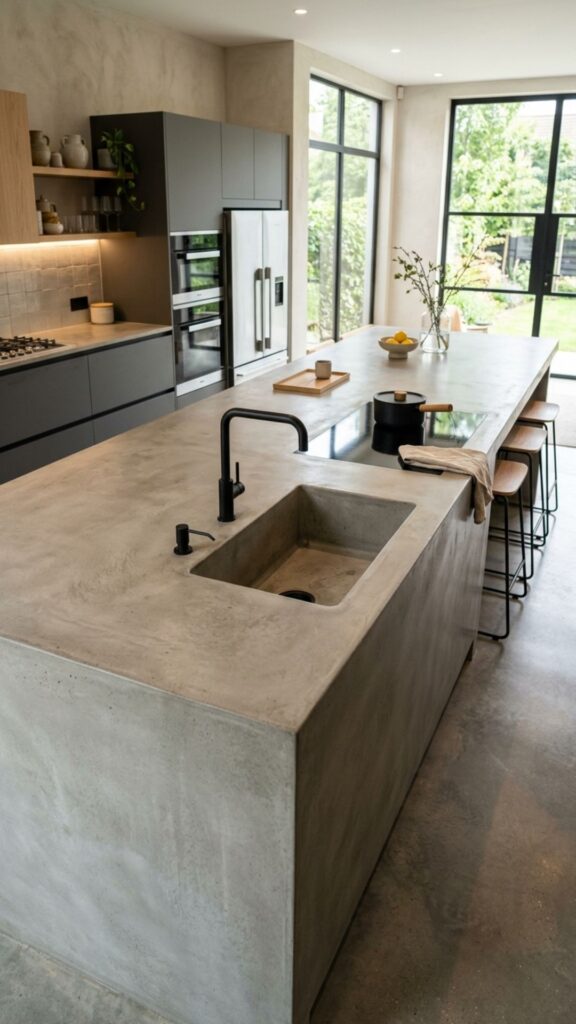
Casting the sink right into the concrete top removes seams entirely. Water flows straight into a molded basin with no crevices to trap grime. It looks seamless and stays cleaner over time.
This is one of my favorite kitchen island ideas concrete offers that other materials simply can’t match. Just plan the slope carefully so water drains properly toward the plug.
9. Terrazzo-Style Concrete With Embedded Chips
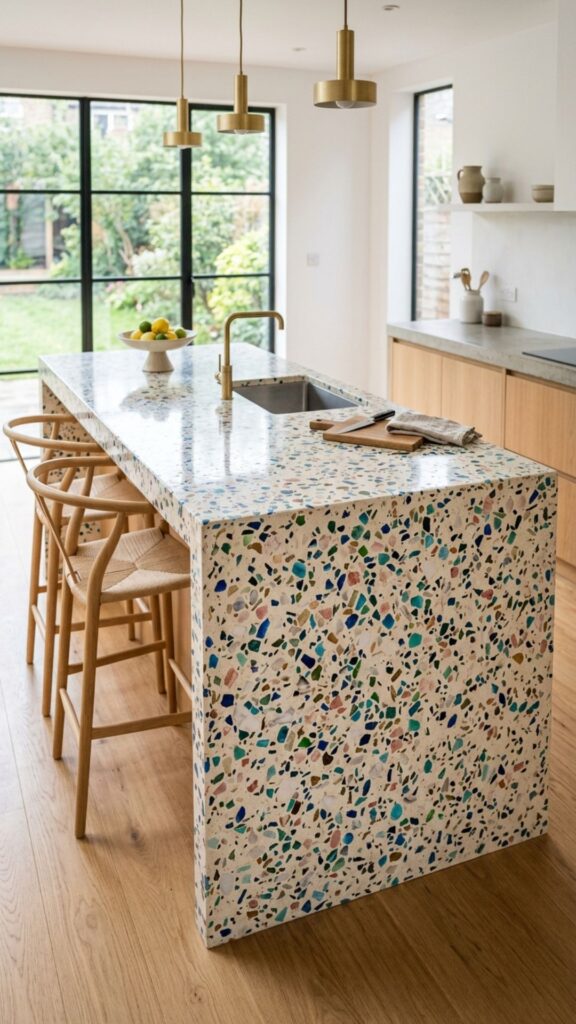
Fold bits of glass, marble, or recycled stone into the mix and you get a terrazzo effect. Each fleck adds color and sparkle, turning a plain slab into something playful and unique.
You can go subtle with tonal chips or bold with bright color. I’ve seen kitchens where leftover tile scraps were embedded for a personal touch. It’s a fun way to make the island truly yours.
10. Floating Concrete Island With Hidden Base
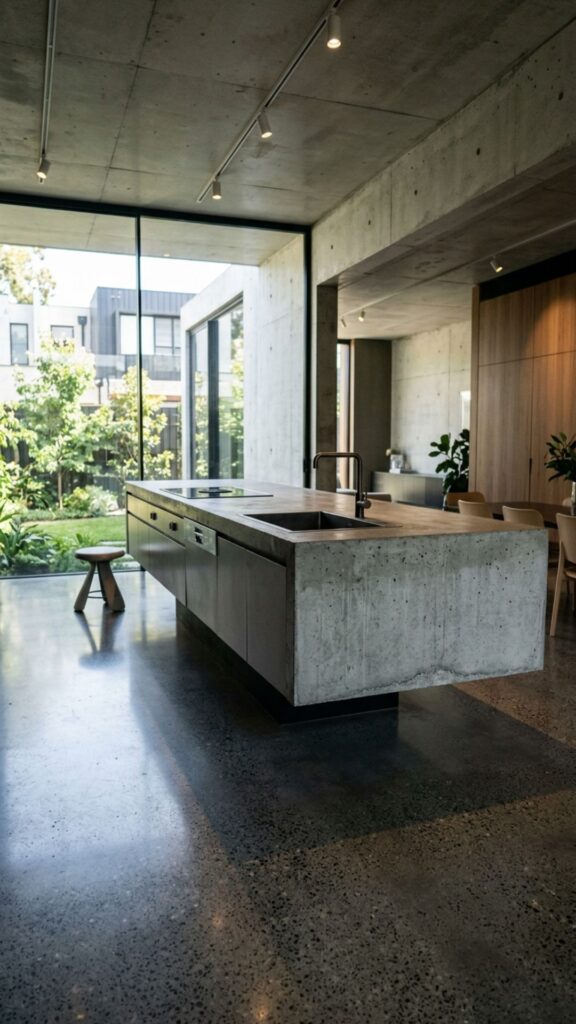
A floating island appears to hover, thanks to a recessed or hidden support base. The heavy concrete top seems to defy gravity, which is a striking trick in a modern space.
Structurally, this needs a solid steel frame underneath. Don’t skimp here. The illusion only works when the engineering is done right and the top stays rock steady.
11. Concrete and Steel Industrial Island
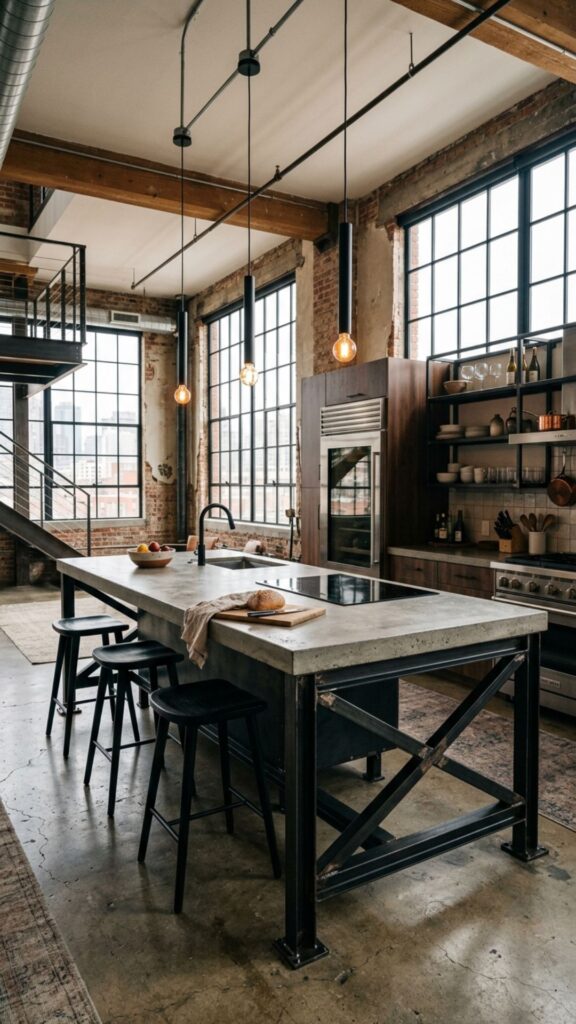
Raw concrete paired with exposed steel legs is industrial design at its best. The look nods to old factories and lofts, all honest materials and no pretense. It suits city apartments and converted warehouses beautifully.
Steel and concrete both age with character. A few marks and a bit of patina only add to the story. If you like design that feels authentic, this combination is hard to beat.
12. Two-Tier Concrete Island for Seating
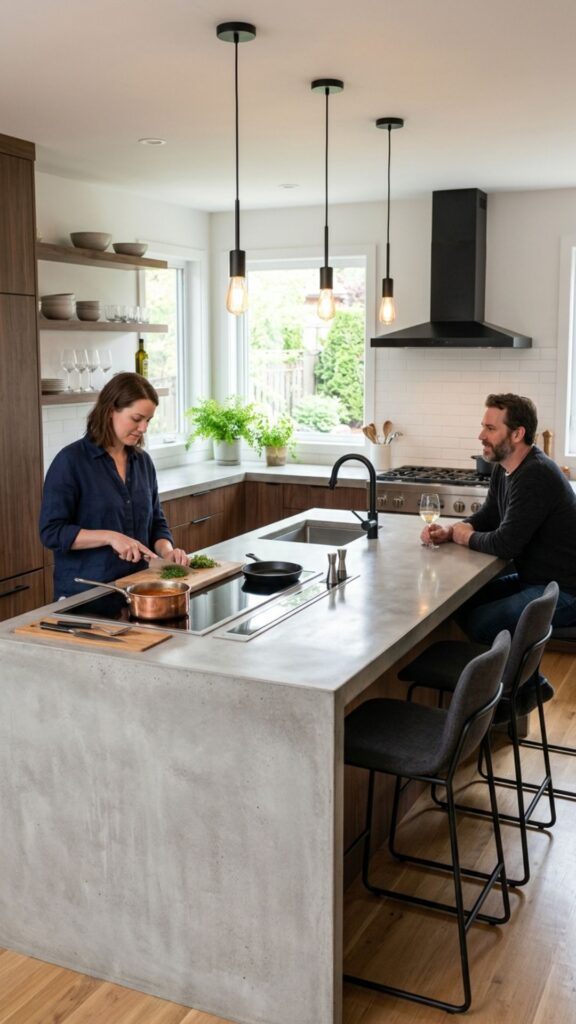
A raised second tier gives you a bar-height ledge for stools while keeping a lower prep surface behind it. The step also hides kitchen mess from guests sitting on the other side.
Concrete handles this split-level design well because it can be cast to any shape. I often suggest this for people who love to entertain while they cook.
13. Concrete Island With Waterfall Seating Overhang
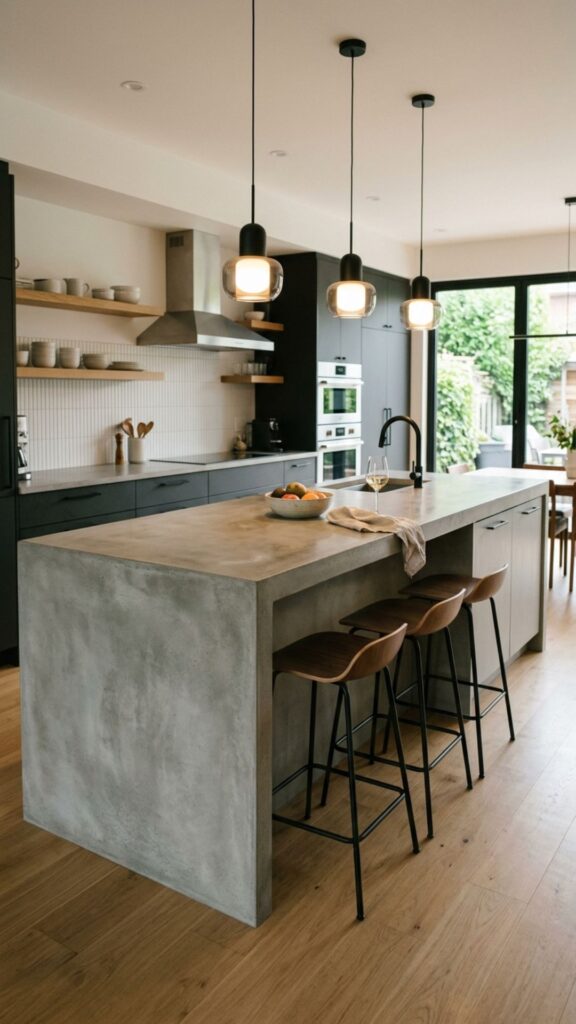
Extend the concrete top past the base to create a knee space for stools. The overhang keeps the clean look going while making room for casual dining right at the island.
Support is key with a long overhang. Steel brackets tucked underneath carry the weight so the concrete won’t crack. Ask your installer about the maximum safe span for your slab thickness.
14. Pigmented Concrete in Warm Earth Tones
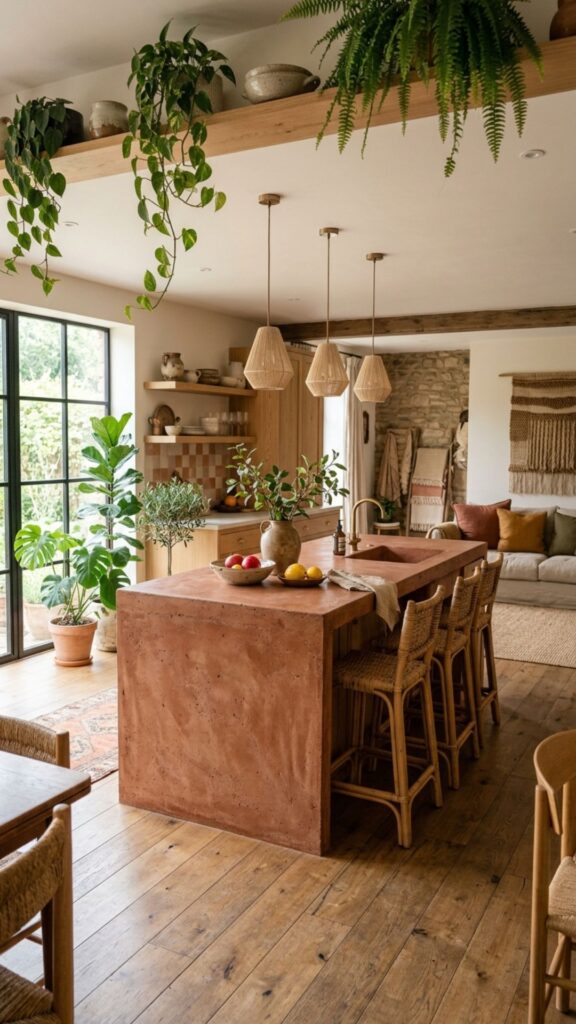
Beyond gray, concrete takes pigment in gorgeous earthy shades. Think soft terracotta, warm sand, or muted olive. These tones bring a natural, organic feel that pairs wonderfully with plants and wood.
Earth-toned concrete suits Mediterranean and desert-inspired kitchens especially well. It’s a way to enjoy the durability of concrete while adding a splash of color that feels calm and grounded.
15. Concrete Island With Built-In Wine Storage
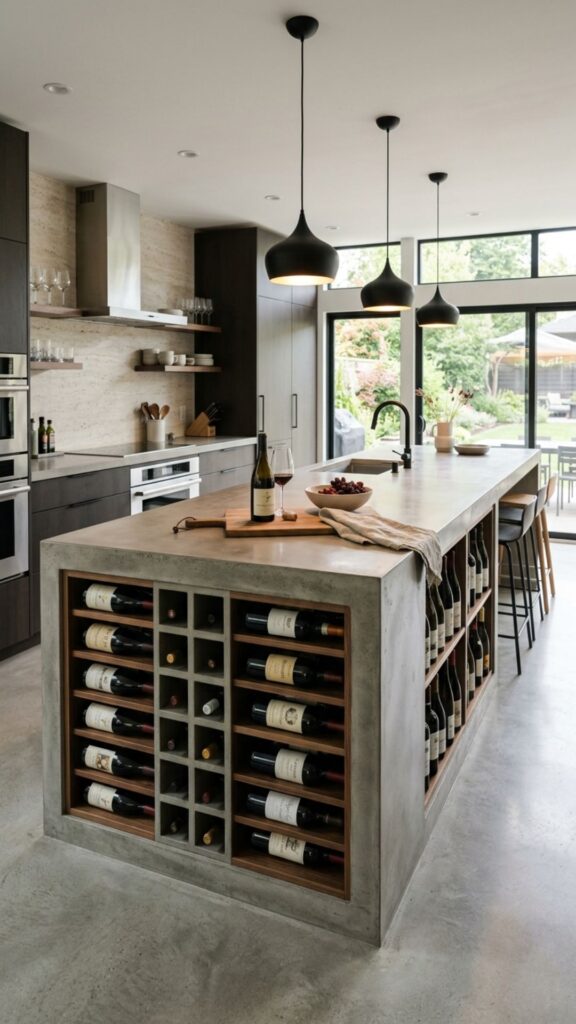
Cast cubbies or slots into the base of your island for wine bottles, and you’ve got style plus function. The bottles become part of the design, adding color and interest to a solid form.
I’ve seen this done with simple round openings or full angled racks. Either way, it turns dead space into a feature. Just keep the storage away from the oven so your wine stays cool.
16. Micro-Cement Overlay on an Existing Island
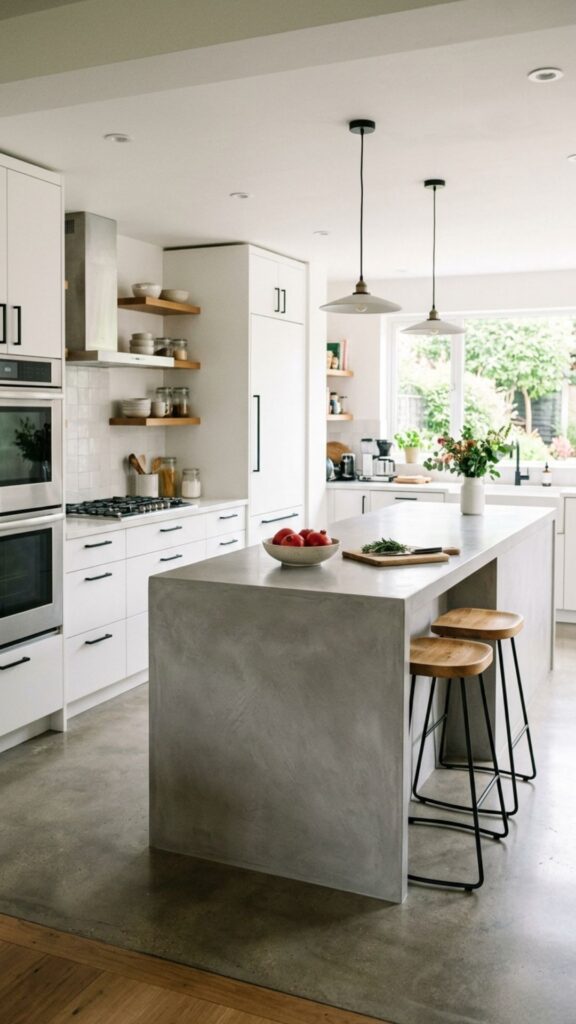
Not ready for a full concrete pour? A micro-cement overlay coats your current island in a thin layer of concrete-like finish. It’s lighter, faster, and gentler on your budget.
This option is great for renters or quick refreshes. The finish is thinner than a solid slab, so treat it a little more gently, but the look is remarkably close to the real thing.
17. Concrete Island With Exposed Aggregate
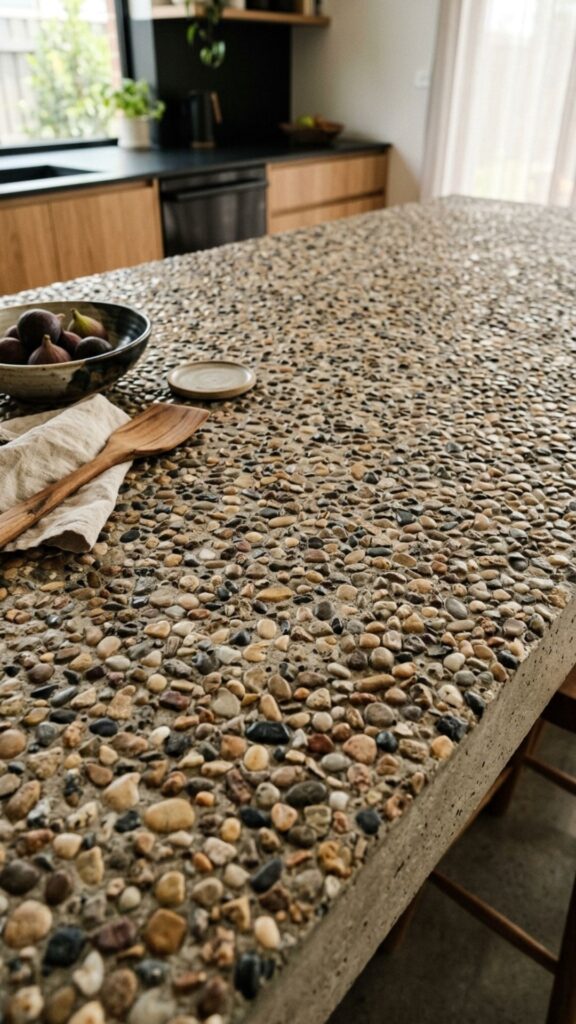
Grinding down the surface reveals the stones inside the mix, giving a speckled, textured finish. Exposed aggregate has a slightly rough, natural feel that’s full of visual interest.
This finish hides small marks and scratches well, which makes it practical for high-traffic kitchens. It’s a smart pick if you want character without babying the surface.
18. Minimalist Concrete Cube Island
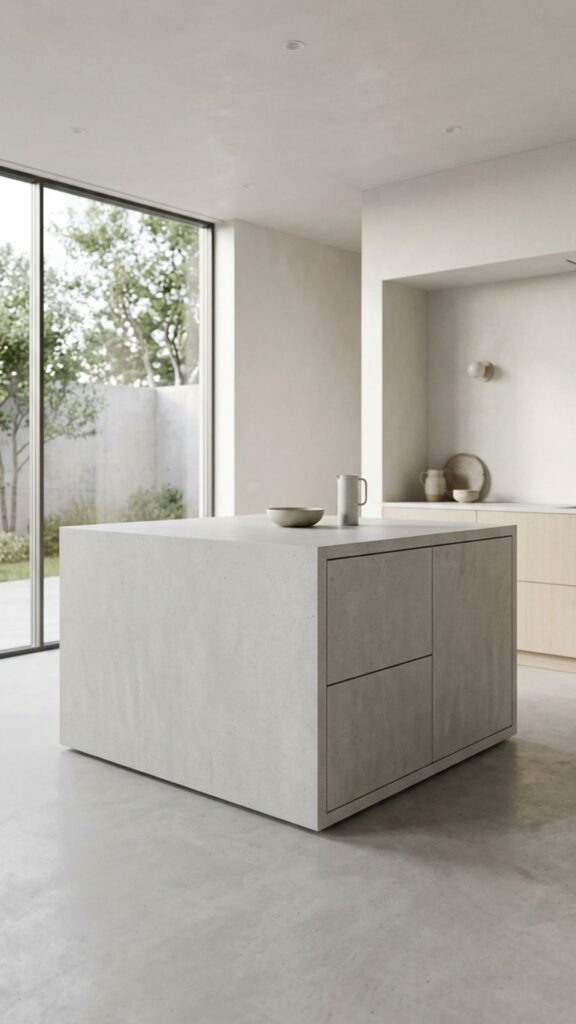
Sometimes the simplest idea wins. A solid concrete cube with clean, sharp edges and no visible hardware is pure modern minimalism. It becomes a quiet anchor in the room.
Hidden storage keeps the clean look intact. Push-to-open drawers and integrated appliances mean nothing interrupts those crisp lines. Less really is more here.
19. Concrete Island With Integrated Cooktop
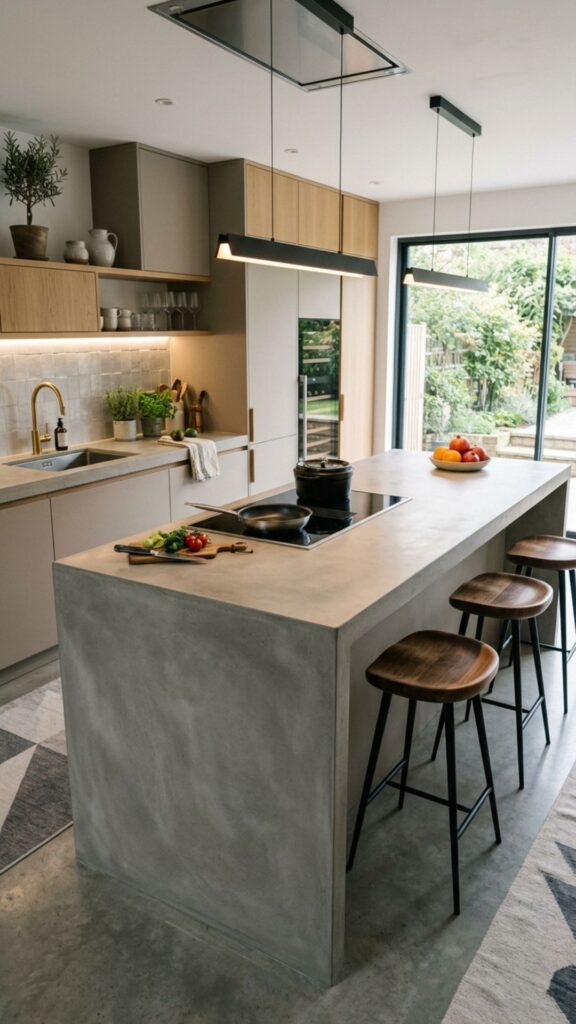
Casting a cooktop directly into the concrete surface creates a seamless cooking station. The heat-resistant material handles a gas or induction top with no trouble at all.
Always leave proper clearance around the burners and confirm your slab is sealed correctly. Done right, this setup looks sleek and keeps your prep and cooking zones in one tidy spot.
20. Concrete Island With Live-Edge Wood Top
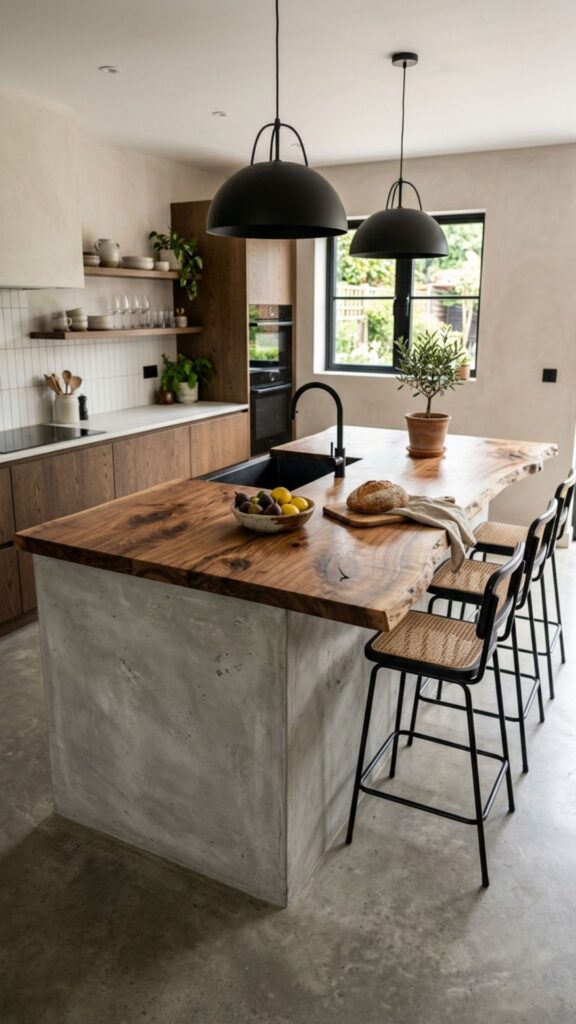
Combine a concrete base with a live-edge wood counter for a striking mix of textures. The natural edge of the timber softens the solid concrete beneath it, blending industrial and organic in one piece.
This pairing works beautifully in homes that want warmth alongside strength. The wood brings life and grain, while the concrete keeps everything feeling sturdy and modern. It’s a combination I never get tired of seeing.
Bringing Your Concrete Island to Life
Concrete gives you freedom that few other materials can match. You can shape it, color it, texture it, and build features right into it. From polished tops to board-formed rustic charm, these kitchen island ideas concrete lovers gravitate toward all share one thing: honest, durable beauty that lasts.
The best next step is to gather a few favorites from this list and talk to a local fabricator who has real concrete experience. Ask to see their past work, request material samples, and share the looks you love. Ready to start planning? Save the ideas that spoke to you and book a consultation so you can turn your dream island into a solid reality.
Are concrete kitchen islands durable?
Yes. Concrete is extremely durable and can last for decades when properly sealed. It resists heat, scratches, and daily wear, making it a strong choice for busy kitchens. Regular sealing every one to three years keeps it looking its best.
How much does a concrete kitchen island cost?
Costs vary widely, but expect roughly $65 to $135 per square foot for a custom concrete countertop, including labor. Complex features like waterfall edges, integrated sinks, or curves will raise the price. A micro-cement overlay is a cheaper alternative.
Do concrete islands stain easily?
Unsealed concrete is porous and can stain from acids like wine, lemon, or coffee. A quality sealer solves this by creating a protective barrier. Wipe up spills quickly and reseal on schedule to keep the surface clean.
Is a concrete island too heavy for my floor?
Concrete is heavy, so most solid slabs need a reinforced base and, sometimes, extra floor support. A professional installer will assess your structure before installation. For lighter options, consider a micro-cement overlay instead.
Can I install a concrete island myself?
DIY kits exist, but casting concrete well takes skill and the right tools. Mistakes in mixing, curing, or sealing are hard to fix. For a lasting result, I recommend hiring an experienced fabricator, especially for large or detailed designs.