There’s something about a butcher block island that instantly makes a kitchen feel warmer. The wood grain, the natural tones, the way it softens all those hard edges from stainless steel and stone.
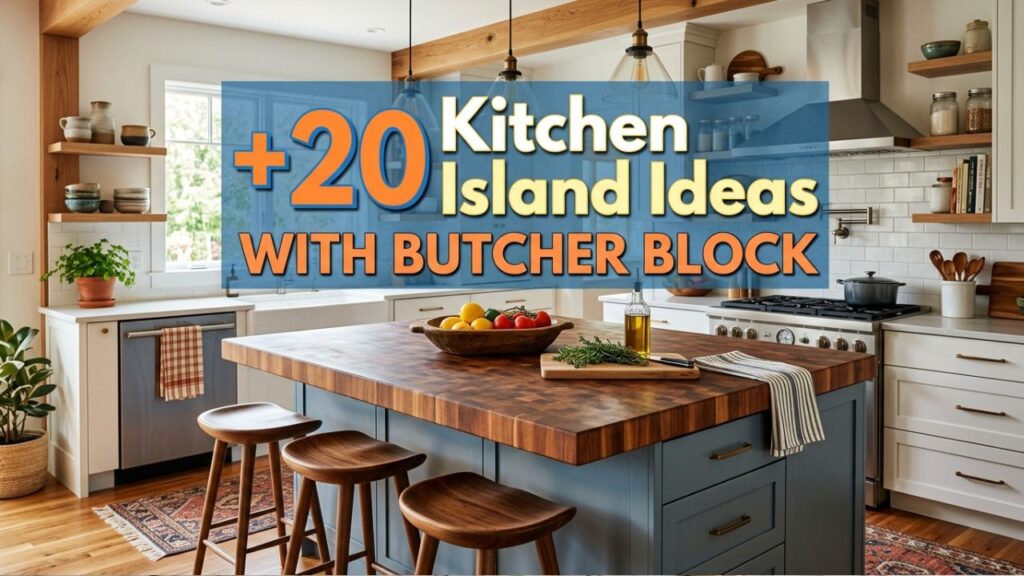
After years of helping homeowners plan kitchen remodels, I’ve seen butcher block go from a budget-friendly backup to a genuine design centerpiece.
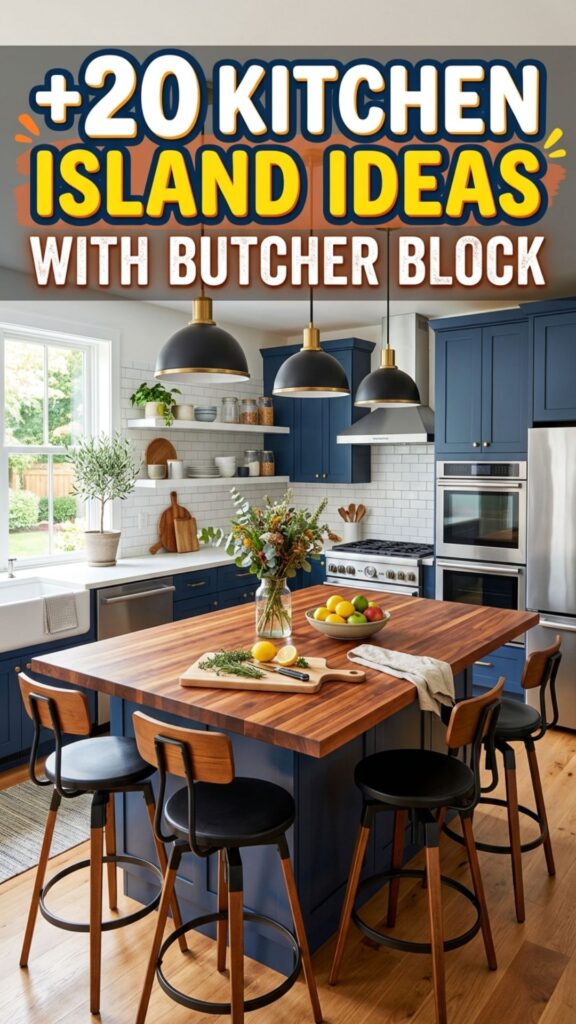
If you’re weighing your options, you’re in the right place. Below you’ll find 20 kitchen island ideas with butcher block countertops, each with practical tips you can actually use. Whether you cook every night or just want a gathering spot for coffee and homework, there’s a look here for you. Let’s dig in.
1. The Classic Farmhouse Island

Farmhouse style and butcher block go together like biscuits and gravy. Pair a thick maple top with a painted base in soft white or sage green, and you’ve got a look that feels timeless. Add a farmhouse sink nearby, some bin pulls, and open lower shelving for baskets. The warm wood keeps the whole scene from feeling too cold or precious.
To make it work, choose a countertop at least 1.5 inches thick so it reads substantial. I usually recommend an oil finish here rather than polyurethane, since the matte look suits the rustic vibe. Reoil it every few months and it’ll only get better with age.
2. Two-Tone Contrast Island
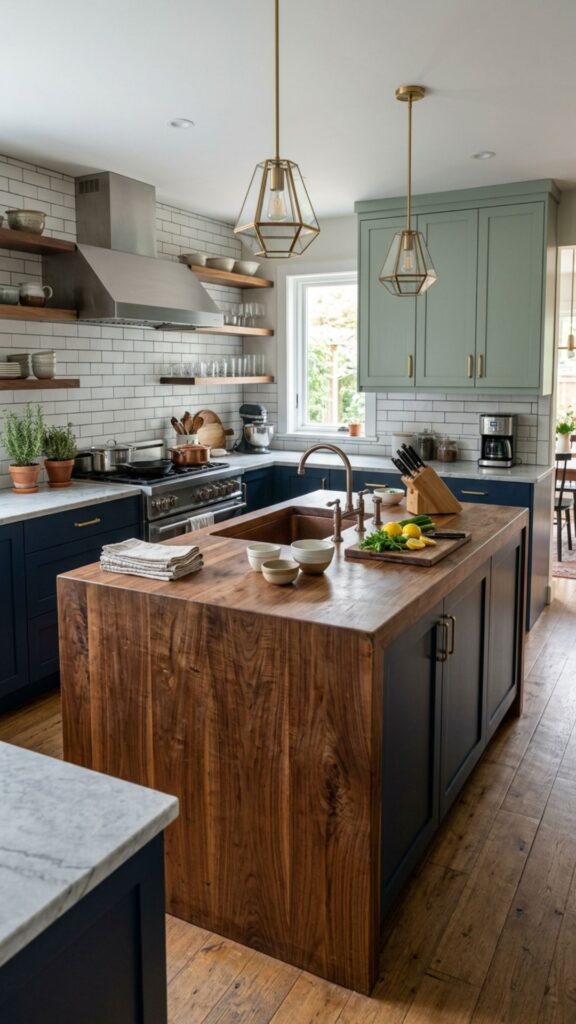
Want your island to stand out from the rest of the kitchen? Go two-tone. Keep your perimeter counters in a cool stone like quartz or granite, then let the island wear butcher block. That contrast draws the eye and gives the room a designed, intentional feel.
This approach also lets you use the wood where it makes the most sense: as a spot for chopping, kneading, and prepping. Just seal any seams near the sink well, and keep a cutting board handy for heavy knife work so the surface stays smooth longer.
3. Waterfall Butcher Block Island
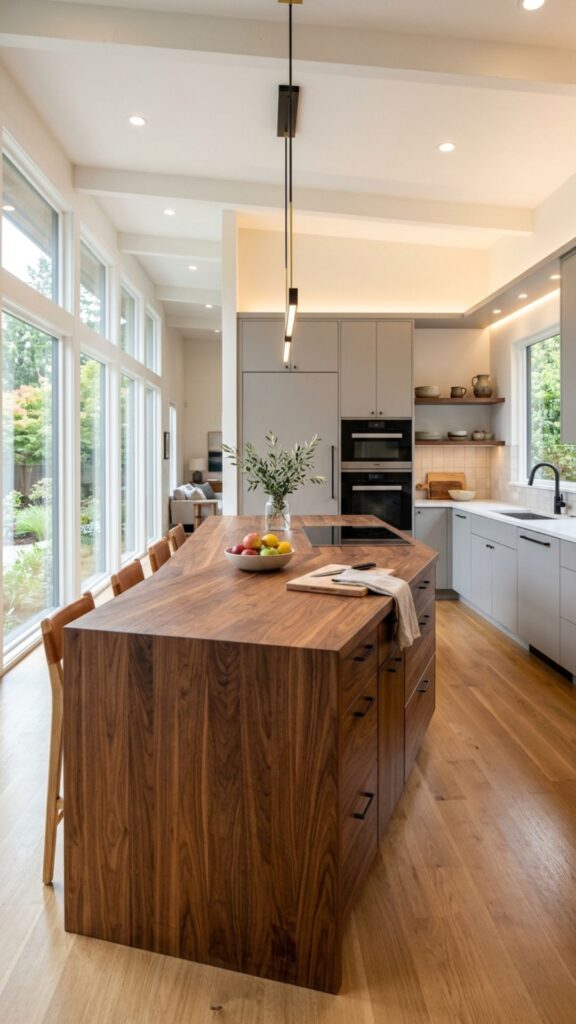
The waterfall edge, where the countertop flows down the sides to the floor, isn’t just for marble. Butcher block pulls it off beautifully, showing off that gorgeous end grain along the vertical drop. It’s modern, clean, and a real conversation starter.
Because the grain direction changes at the corner, ask your fabricator about a mitered joint for a seamless look. This detail costs more, but the payoff is huge. It’s the kind of feature that makes guests run their hands along the wood.
4. Small Kitchen Rolling Cart Island
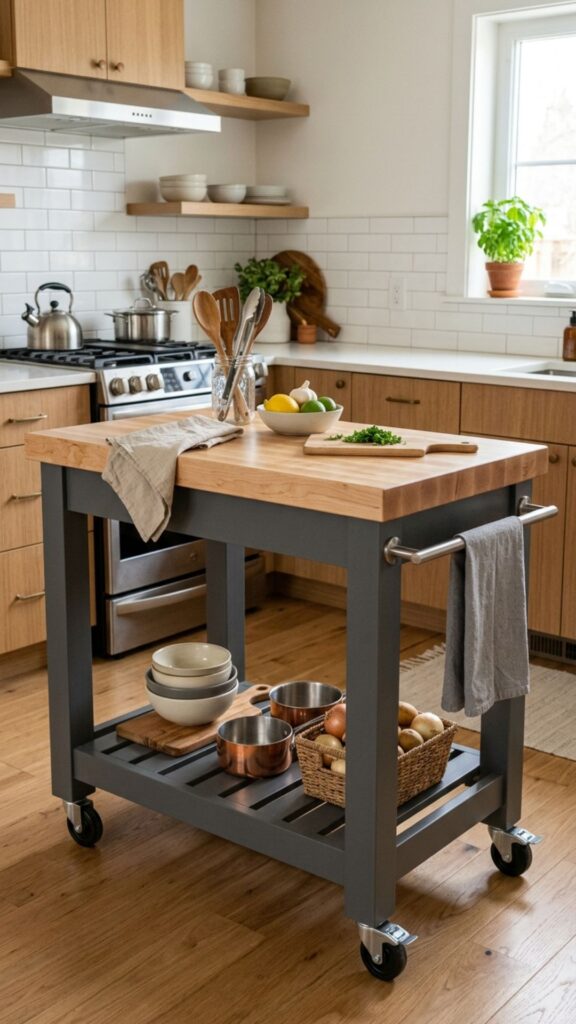
Not every kitchen has room for a built-in island. A rolling butcher block cart gives you extra prep space and storage without the commitment. Roll it to the counter when you’re cooking, then tuck it against the wall when you need the floor back.
Look for a cart with locking casters, a lower shelf, and maybe a towel bar. The wood top handles real chopping, and the mobility makes it perfect for apartments or tight galley kitchens. It’s one of the most flexible options on this list.
5. Oversized Entertainer’s Island
If you love hosting, size up. A large butcher block island can anchor an open-plan kitchen and give you room to spread out appetizers, drinks, and serving platters. The warm wood invites people to lean in and stay a while.
For big islands, plan for support. Spans longer than four feet often need corbels or extra bracing underneath. Talk to your installer early so the counter feels rock-solid, not bouncy, when people pile plates on one end.
6. Butcher Block With Built-In Seating
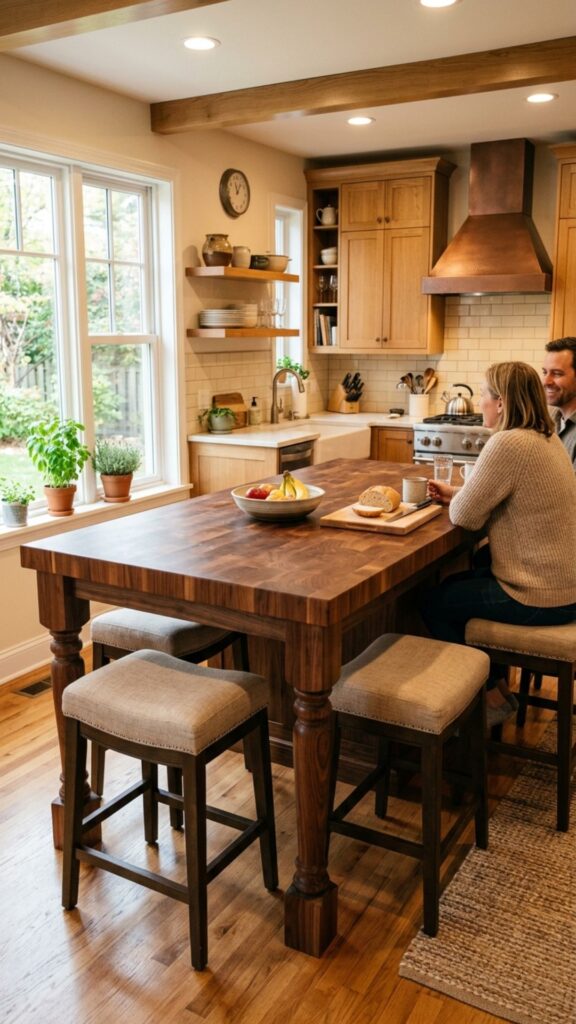
Turn your island into a hangout by adding an overhang for stools. A 12-inch overhang gives knees enough room to slide under comfortably. The soft wood edge feels nicer against arms than sharp stone, which is a small detail your family will appreciate every day.
Pick counter-height or bar-height stools depending on your island’s dimensions. I like leaving a little breathing room, roughly 24 inches per seat, so nobody’s bumping elbows during breakfast.
7. Rustic Reclaimed Wood Island
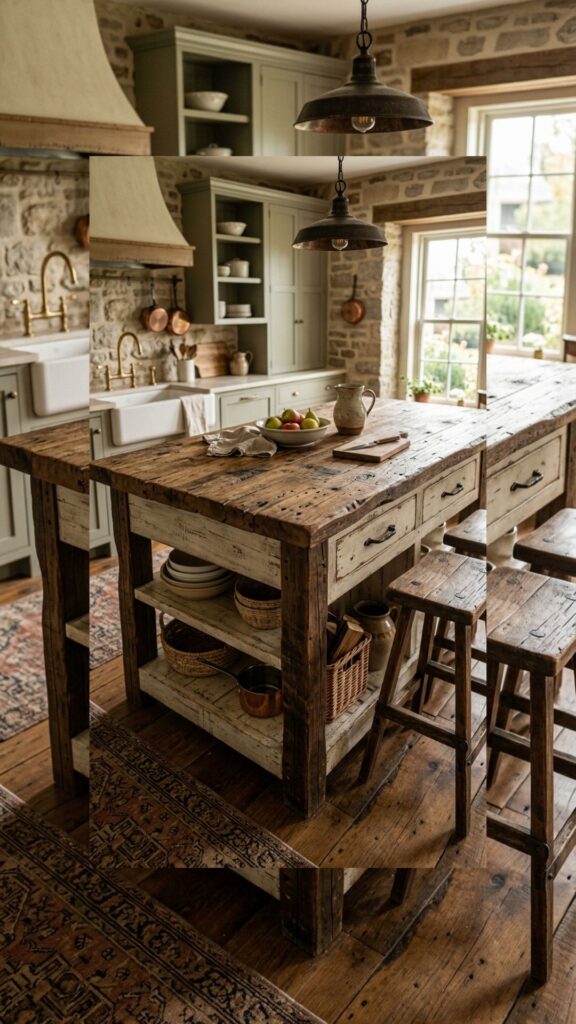
Reclaimed wood brings history and character no new slab can match. Salvaged barn wood or old factory maple carries knots, nail holes, and a patina that tells a story. It’s a sustainable choice, too, since you’re giving old material new life.
Have reclaimed wood professionally kiln-dried and sealed before installation. This kills pests and stabilizes moisture so your counter won’t warp. Done right, a reclaimed top becomes the heart of the kitchen and a genuine talking point.
8. Modern Minimalist Island
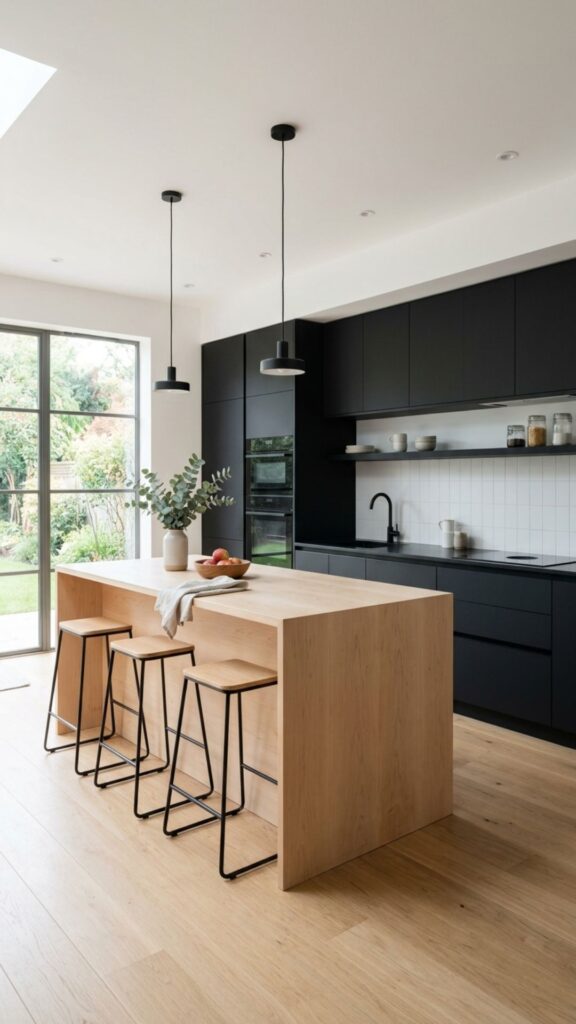
Butcher block isn’t only for cottages. Pair a clean-lined light maple or birch top with flat-panel cabinets in matte black or crisp white, and you get a warm modern look. The wood softens the sharp geometry so the space feels livable, not sterile.
Keep hardware minimal or go handleless with push-to-open drawers. Let the grain be the star. A satin finish photographs well and wipes clean, which suits the pared-back aesthetic.
9. Butcher Block Baking Station
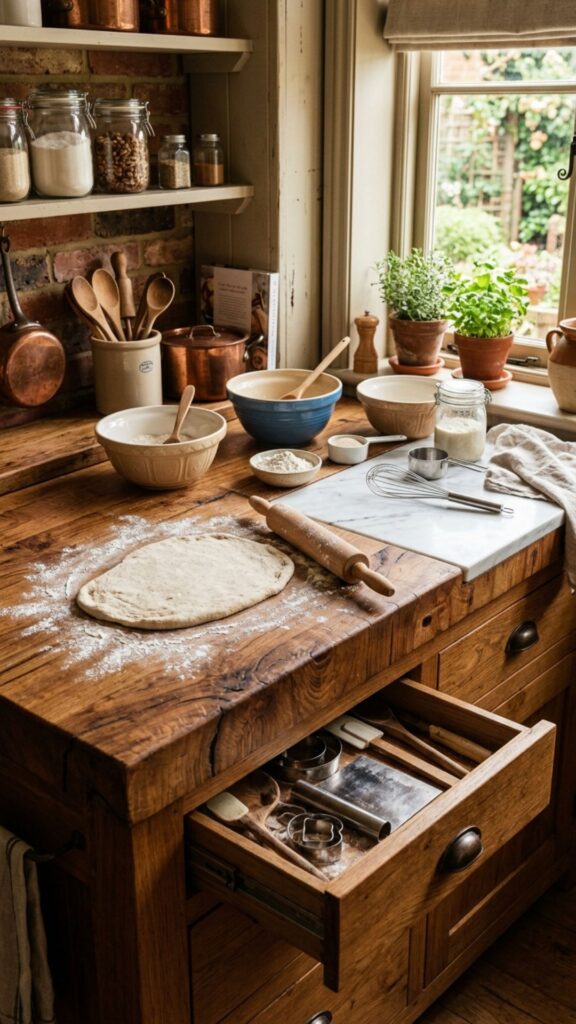
Bakers, this one’s for you. Wood is naturally gentle on dough, and a dedicated butcher block baking zone makes rolling and kneading a joy. Set it at a slightly lower height, around 32 inches, so you can lean into the work without straining your back.
Add a marble insert nearby for pastry if you like, plus deep drawers for flour bins, sheet pans, and mixing bowls. Keep this surface finished with a food-safe mineral oil and beeswax blend so it stays smooth and clean.
10. Industrial Style Island
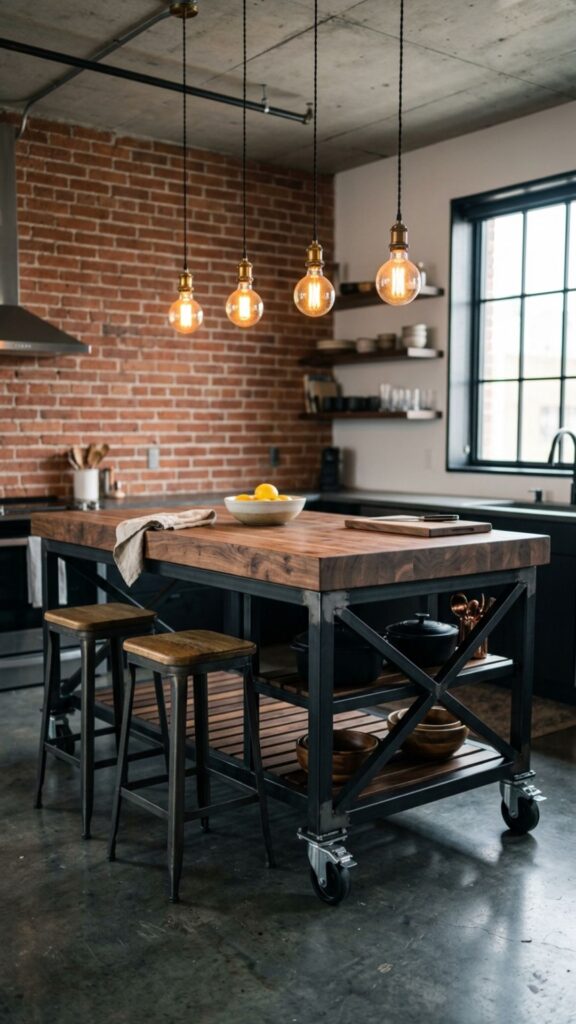
Mix warm wood with raw metal for an industrial edge. A chunky butcher block top on a black steel base gives you that warehouse-loft feel while keeping things practical. Exposed brackets and pipe details add authenticity.
Balance the coolness of metal with plenty of wood thickness, three inches or more looks great here. Toss in some Edison-bulb pendants overhead and you’ve nailed the aesthetic without trying too hard.
11. Butcher Block With Integrated Sink
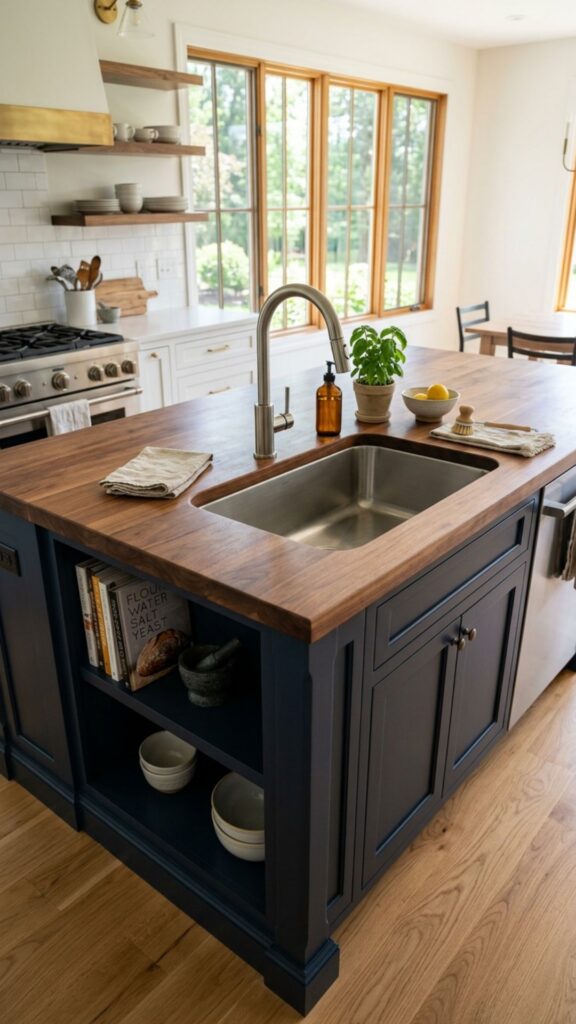
Placing a sink in a butcher block island is doable, but it needs care. Wood and constant water don’t naturally get along, so proper sealing is everything. Many homeowners choose an undermount sink with a heavy marine-grade finish around the basin.
Wipe up standing water promptly and reseal the area more often than the rest of the top. If you’re nervous about maintenance, an epoxy or polyurethane finish holds up better near water than oil does. It’s a trade-off between look and longevity.
12. Double-Tier Island
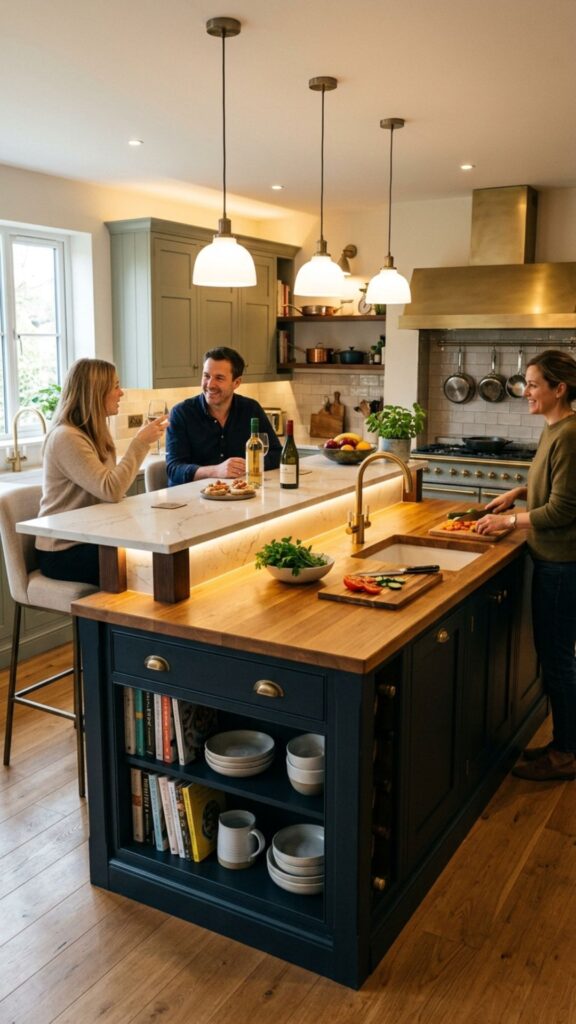
A two-level island splits work zones from social zones. Keep the lower tier as your butcher block prep surface and raise the back tier for seating and serving. The raised bar also hides messy dishes from guests, which is a quiet win at dinner parties.
This layout works especially well in open kitchens where the island faces the living room. The wood prep level stays functional while the upper counter, often stone, handles drinks and elbows.
13. Butcher Block With Open Shelving
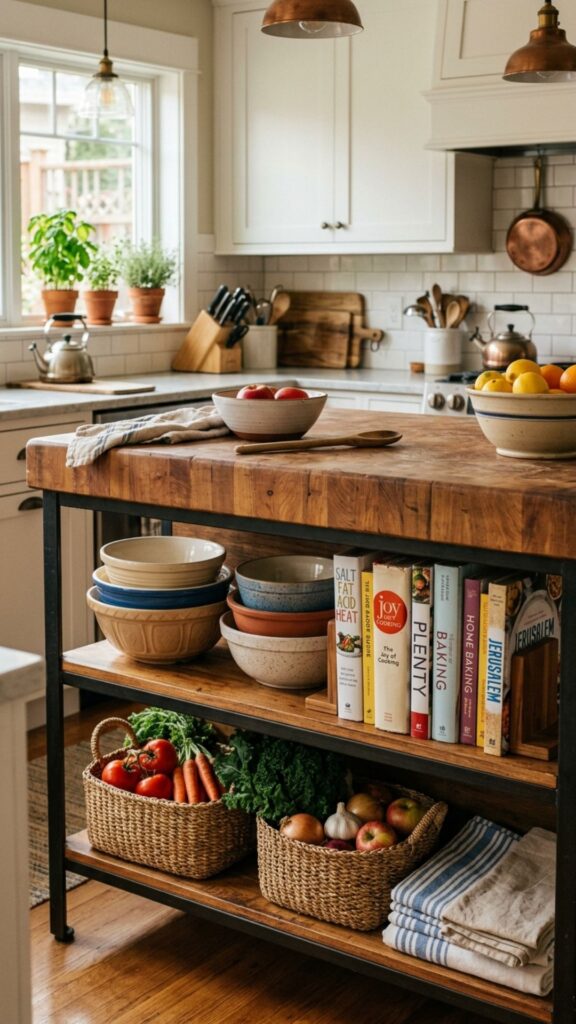
Open shelving under your island keeps everyday items within reach and shows off pretty cookware or woven baskets. Combined with a warm wood top, the effect is airy and welcoming. It’s a great way to break up bulky cabinetry.
Style the shelves with things you actually use, like mixing bowls, cookbooks, or a stack of linen napkins. Keep clutter down so it looks curated. The butcher block ties everything together with its natural tone.
14. Colorful Painted Base Island
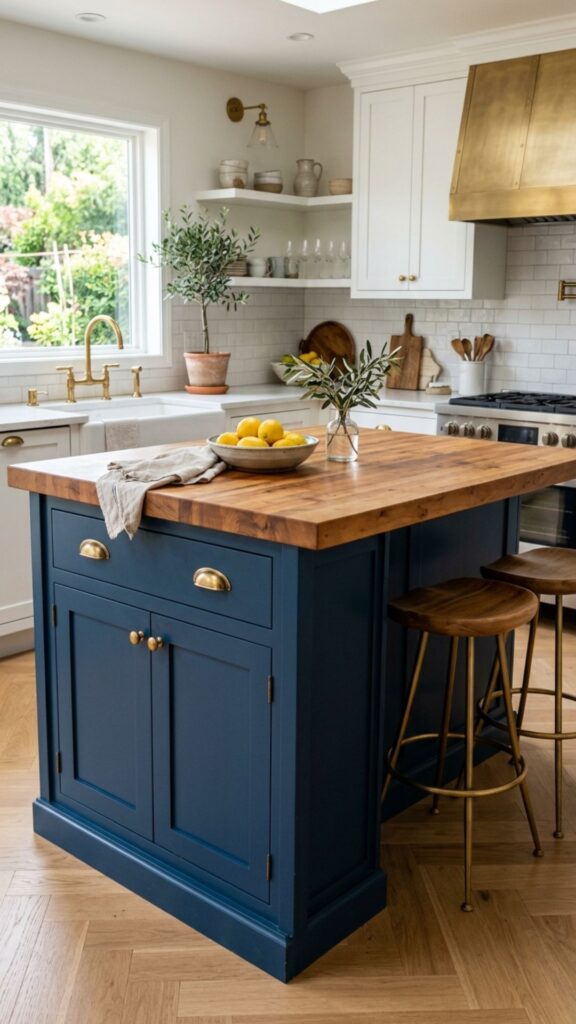
Let your island show some personality with a bold painted base. Deep navy, forest green, or even a punchy mustard pairs beautifully with honey-toned wood. The butcher block keeps daring colors feeling grounded and homey rather than loud.
Use a durable cabinet-grade paint or ask your painter for a lacquered finish that resists chips. Since the base takes the color spotlight, keep hardware simple in brass or matte black to complete the look.
15. Compact Prep Island for Tight Spaces
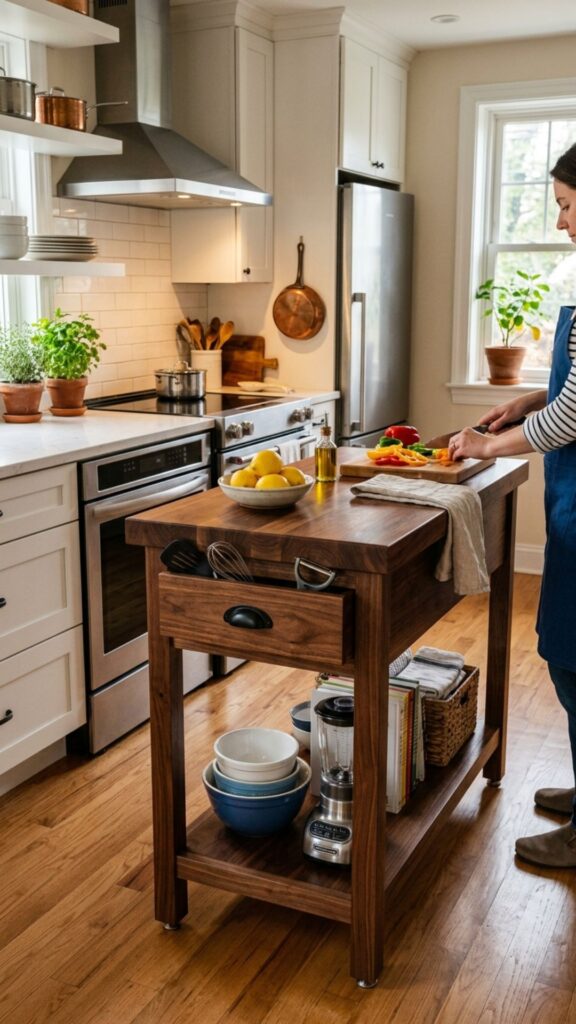
Even a modest island earns its keep. A compact butcher block prep island, maybe three feet wide, fits smaller kitchens while still giving you a solid work surface. Squeeze a drawer and a shelf underneath for tools you reach for daily.
Position it to keep the classic work triangle between stove, sink, and fridge intact. A little wood surface in the middle makes cooking flow so much smoother, and it’s forgiving on dropped knives.
16. Butcher Block With Wine Storage
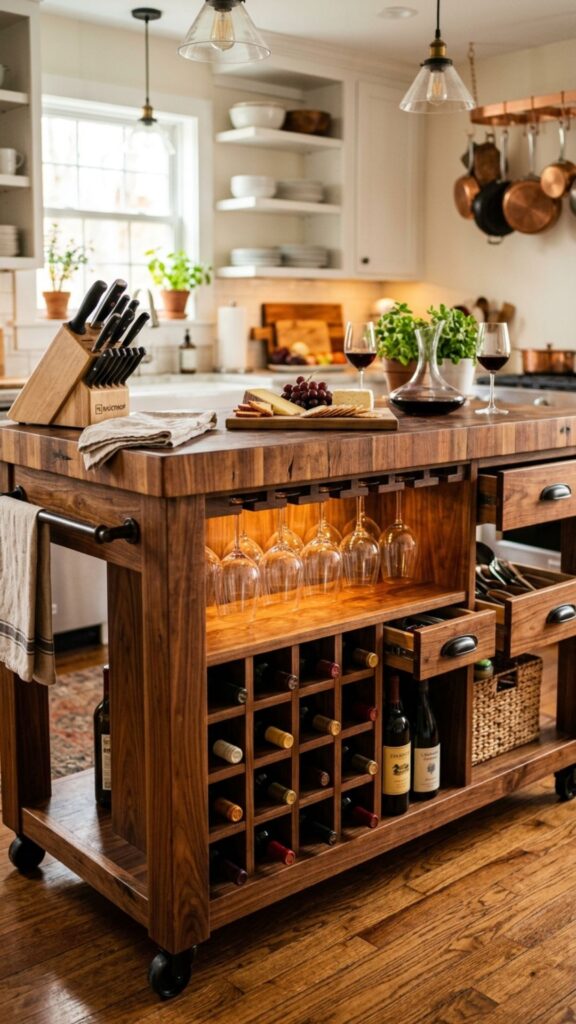
Built-in wine racks turn an island into a mini entertaining hub. Slot a cubby-style rack into the end of the base, top it with warm wood, and you’ve got a stylish spot for bottles and stemware. It’s convenient and looks intentional.
Keep the wine section away from the oven and dishwasher, since heat and vibration aren’t good for storage. A small under-counter wine fridge is another route if you have the space and budget.
17. Coastal Cottage Island
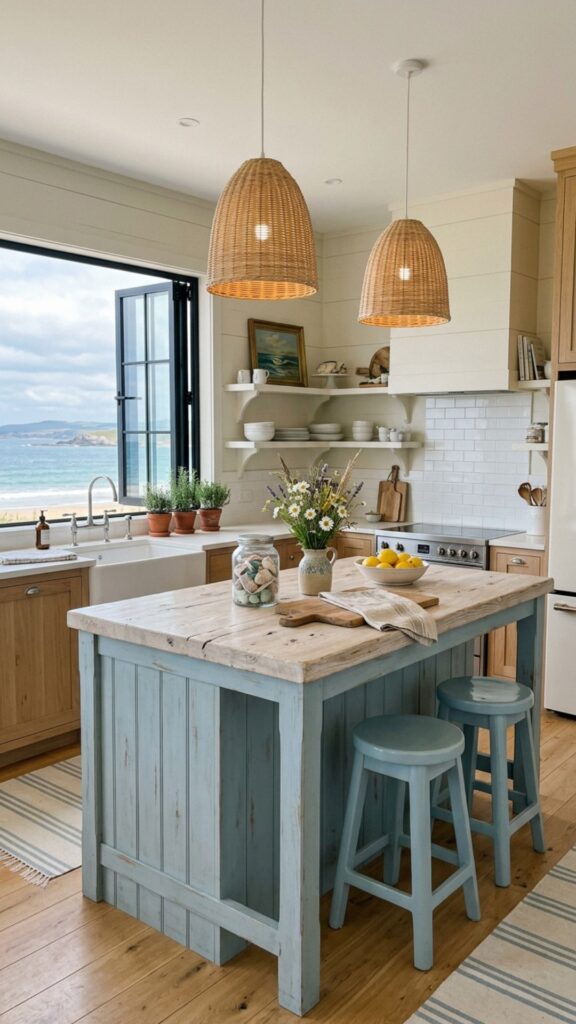
For a breezy coastal feel, pair light bleached butcher block with a pale blue or soft gray base. The washed-out wood tones evoke driftwood and sand, giving your kitchen a relaxed, seaside calm. It’s cheerful without being themey.
Choose lighter wood species like ash or white oak for this look, and finish with a matte sealer. Add woven pendant lights and a few ceramic accessories to complete the vibe.
18. Butcher Block Island With Pot Rack
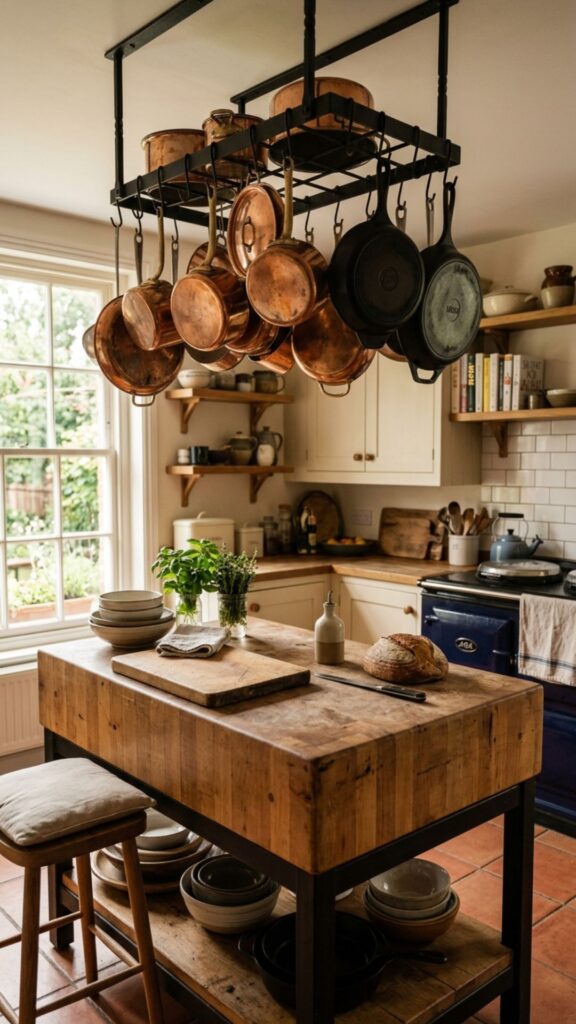
Hang a pot rack above your island and free up cabinet space while adding character. Copper or cast-iron pans dangling over warm wood create a lived-in, chef’s-kitchen feeling. Everything you need stays within arm’s reach.
Make sure the rack is anchored into ceiling joists to hold real weight. Center it over the island so pans don’t hover over walkways or heads. It’s practical and looks fantastic.
19. Green Kitchen Statement Island
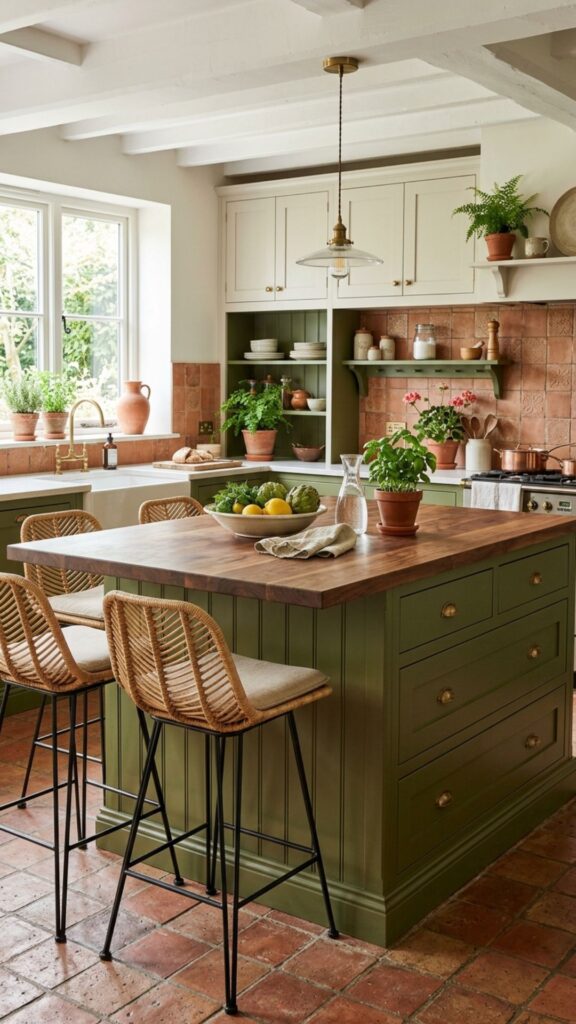
Green cabinetry is having a real moment, and butcher block is its best friend. A sage, olive, or emerald island base topped with warm wood feels fresh yet cozy. The pairing works in modern and traditional kitchens alike.
Balance the green with natural materials elsewhere, like woven stools or terracotta pots. The wood countertop bridges everything so the color feels considered rather than trendy.
20. Butcher Block With Hidden Charging Station
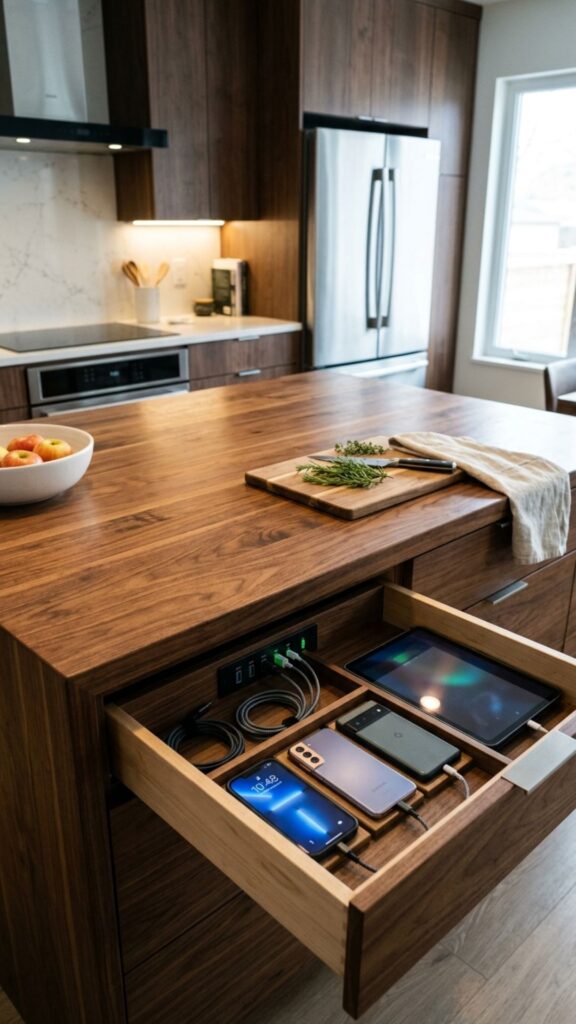
A modern family kitchen benefits from a built-in charging drawer. Tuck outlets and USB ports inside a drawer beneath your butcher block top so phones and tablets charge out of sight. It keeps the counter clean and clutter-free.
Have an electrician install the outlet safely and up to code. Line the drawer with a rubber mat to protect devices. Small touches like this make daily life smoother and keep your beautiful wood surface uncluttered.
Conclusion
Butcher block brings warmth, function, and real character to any kitchen island, and as you’ve seen, the possibilities stretch well beyond the basics. From rolling carts in tiny apartments to grand entertainer’s islands with waterfall edges, there’s a butcher block idea to fit your space, your cooking style, and your budget. The best part? Wood ages gracefully, so your island only gets better over time.
Ready to bring one of these kitchen island ideas with butcher blocks to life? Start by measuring your space, picking a wood species you love, and deciding how you’ll use the surface most. Then talk to a trusted fabricator or contractor about finishes and support. Your dream island is closer than you think, so grab a tape measure and start planning today.
Are butcher block countertops good for kitchen islands?
Yes. Butcher block countertops are durable, warm, and great for food prep. With regular oiling and prompt cleanup of spills, they hold up well for years and develop a beautiful patina over time.
How do I maintain a butcher block island?
Wipe it down after each use, oil it with food-safe mineral oil every one to three months, and avoid standing water. Sand out deep scratches and reseal as needed. This simple routine keeps the wood healthy and smooth.
Can I put a sink in a butcher block island?
You can, but it requires careful sealing to protect the wood from constant moisture. Many homeowners choose a marine-grade or polyurethane finish around the basin and wipe up water quickly to prevent damage.
How thick should a butcher block island top be?
Most kitchen island tops range from 1.5 to 3 inches thick. Thicker tops look more substantial and handle heavy use better, while 1.5 inches works fine for lighter prep and smaller islands.
Is butcher block cheaper than granite or quartz?
Generally, yes. Butcher block often costs less per square foot than granite or quartz, which makes it a popular choice for budget-conscious remodels without sacrificing style or function.