A vegetable garden should feed you, but it should also give you a reason to sit down and enjoy the space you built. After years of planning gardens for myself and helping friends redo their own backyards, I’ve learned that one simple addition changes everything: a bench. It turns a working plot into a place you actually want to spend time.
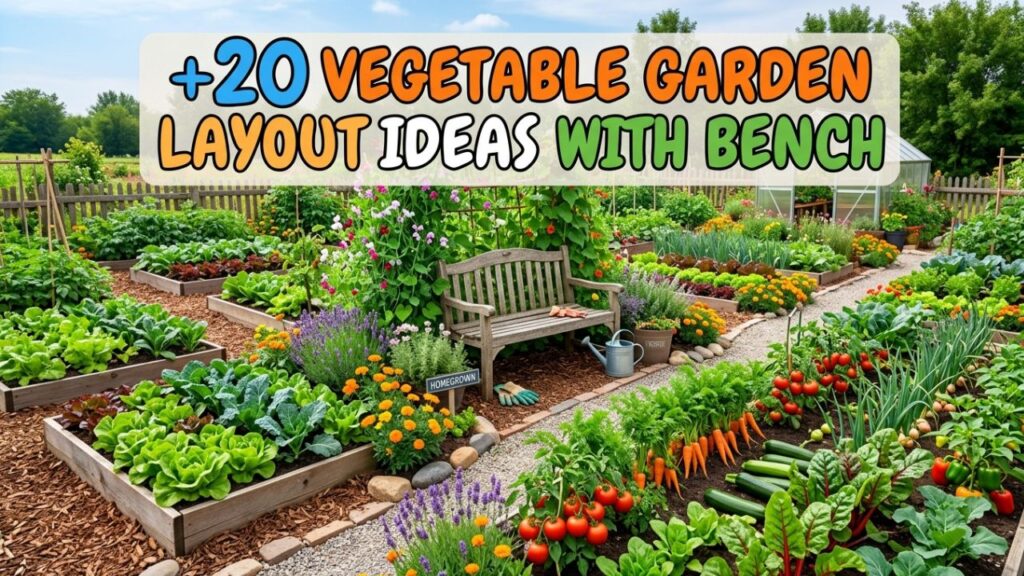
In this guide, you’ll find 20 creative vegetable garden ideas layout with bench options that work for tiny patios, sprawling backyards, and everything in between.
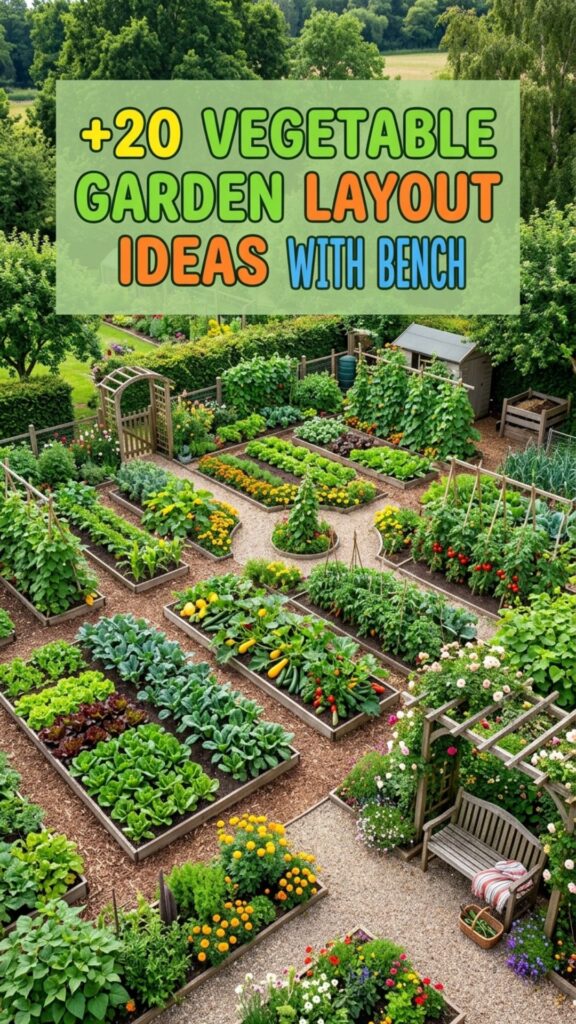
Each idea includes practical tips so you can pick the design that fits your space, your budget, and the way you like to garden. Let’s dig in.
1. The Central Bench Hub
Place a bench right in the middle of your garden and let raised beds radiate out from it like spokes on a wheel. This layout keeps every plant within arm’s reach, so you can prune, harvest, and weed without trampling your rows. I’ve used this design in a small suburban yard, and it made daily maintenance feel effortless.
The bench becomes both a rest stop and a staging area. Set your basket, tools, or morning coffee on it while you work. Because everything centers around one point, this layout also creates a natural focal point that makes even a modest garden look intentional and polished.
2. Perimeter Bench Border
Line the outer edge of your vegetable garden with a long bench that doubles as a boundary. This works beautifully in rectangular yards where you want to separate the growing space from the lawn. The bench frames your beds and gives visitors a clear place to sit and admire the view.
Build the bench slightly taller than your lowest crops so you get an unobstructed sightline across the garden. I recommend cedar or treated pine for durability. Add a few weatherproof cushions, and you’ve got a spot that feels more like an outdoor living room than a chore zone.
3. Bench Beneath a Trellis Arch
Position a bench under a wooden or metal arch covered in climbing beans, cucumbers, or peas. As the vines grow, they create a shady canopy that keeps you cool during summer harvests. This is one of my favorite space-saving tricks because it grows food and provides shelter at the same time.
The vertical growth also frees up ground space for other crops. Sitting under a leafy arch, watching bees work the flowers above you, is one of the quiet joys of gardening. Just make sure the arch is anchored securely, since a heavy vine crop adds real weight.
4. Raised Bed Bench Combo
Attach a bench directly to the side of a raised bed so the two share a wall. This clever design saves materials and creates a seamless look. You can sit on the bench and tend the bed right beside you without bending or kneeling on the ground.
This layout is a gift for anyone with back or knee trouble. I built one for an older relative who had stopped gardening because of joint pain, and it brought her right back to it. Use sturdy joints and treated lumber, and the bench will hold up for years.
5. Corner Nook Garden
Tuck a bench into a shady corner and surround it with container vegetables and herbs. Corners often go unused, so this idea reclaims dead space and turns it into a cozy retreat. Terracotta pots of basil, cherry tomatoes, and lettuce work well here.
The enclosed feeling of a corner nook makes it perfect for reading or morning coffee. Add a small side table and a trailing plant on a shelf above, and you’ll have a private green escape that feels tucked away from the world.
6. Herb Spiral With Seating
Create a spiral herb bed and place a bench at its base so you can enjoy the fragrance up close. Herb spirals let you grow sun-loving plants at the top and moisture-loving ones near the bottom. It’s an efficient way to pack variety into a small footprint.
Sitting beside a spiral of rosemary, thyme, and mint is a treat for the senses. Brush your hand across the leaves and the scent fills the air. This layout works especially well near a kitchen door, so herbs stay within a quick step of the stove.
7. Cottage Garden With a Rustic Bench
Mix vegetables, flowers, and herbs together in loose, informal beds, then add a weathered wooden bench for that classic cottage feel. This relaxed style skips rigid rows in favor of a charming, lived-in look. Marigolds beside your tomatoes even help repel pests.
A rustic bench, maybe one with peeling paint or reclaimed boards, adds instant character. I love how this layout invites you to slow down. It feels less like a garden you manage and more like one you live inside.
8. Vertical Garden Wall With Bench
Build a bench against a wall covered in vertical planters or pocket gardens. This is ideal for small patios and balconies where ground space is scarce. Grow leafy greens, strawberries, and herbs in the wall pockets above the seat.
The bench anchors the display and gives you a place to rest while you harvest. This layout proves you don’t need a big yard to grow real food. A sunny wall and a sturdy bench are all it takes to get started.
9. Keyhole Garden Design
A keyhole garden is a round raised bed with a notch cut into one side for easy access. Place a bench at the mouth of that notch so you can sit and reach the entire bed. This traditional design keeps soil rich thanks to a central composting basket.
The circular shape uses space efficiently and looks striking. From your bench, you can tend the whole bed without stepping on the soil. It’s a smart, sustainable choice that rewards you with healthy plants and easy harvests.
10. Potager Garden With Focal Bench
A potager blends beauty and utility by arranging vegetables in ornamental patterns. Set a decorative bench at the end of a central path as the garden’s crowning feature. Geometric beds of colorful chard, kale, and peppers make the space a work of art.
The bench draws the eye and gives the whole garden a sense of purpose. This layout takes more planning, but the payoff is a garden that looks as good as it tastes. Symmetry and repetition are your friends here.
11. Bench Alongside a Pathway
Run a gravel or stone path through your beds and place a bench halfway along it. This gives you a natural pause point to sit and take in the garden from a new angle. Paths also keep your feet clean and your soil compact-free.
A mid-path bench is perfect for gardens you like to stroll through. I always tell people that if you build a place to sit, you’ll spend more time noticing what your plants need. This layout encourages exactly that habit.
12. Kitchen Garden Right Outside the Door
Set up compact raised beds just steps from your back door and add a bench for quick breaks between cooking and picking. This layout keeps your most-used veggies close, so grabbing fresh herbs mid-recipe is easy.
The bench doubles as a landing spot for baskets and harvested produce. When your garden is this convenient, you use it far more often. It’s the layout I recommend most for busy families who want fresh food without a long walk.
13. Tiered Hillside Beds With a Bench Landing
If your yard slopes, build terraced beds down the hill and add a bench on a flat landing partway down. Terracing prevents erosion and creates level growing surfaces. The bench gives you a resting point and a great view of the whole slope.
Working a hillside can be tiring, so a well-placed seat matters. I’ve seen tricky sloped yards transformed into productive, beautiful gardens with this approach. Retaining walls made of stone or timber add lasting structure.
14. Shade Garden Reading Bench
Not every corner gets full sun, so use shadier spots for crops like lettuce, spinach, and kale, then add a bench for reading or relaxing. Leafy greens actually appreciate a break from harsh afternoon light, especially in hot climates.
This layout makes the most of a spot you might otherwise write off. A comfortable bench under a tree, surrounded by cool greens, becomes a refuge on warm days. Pair it with a small lantern for evening use.
15. Container Garden Patio With Bench
Turn a patio into a productive garden using pots of every size, and center the arrangement around a solid bench. Containers let you move plants to chase the sun and are perfect for renters who can’t dig into the ground.
The bench ties the whole patio together and offers a spot to pot up new seedlings. Group containers by height for visual interest. This flexible layout proves that a full harvest is possible on hard surfaces.
16. Enclosed Fenced Garden With Built-In Bench
Surround your vegetable plot with a low fence to keep out rabbits and deer, and build a bench right into one section of it. The fence protects your crops while the bench gives you a place to plan your next planting.
A built-in bench feels permanent and intentional. I’ve found that fenced gardens with seating become gathering spots for the whole family. Kids love having a designated place to sit while they help pick beans.
17. Mandala Garden With Central Seat
A mandala garden arranges beds in a circular, symmetrical pattern inspired by nature. Place a bench or stool at the center so you can rotate and reach every section. The flowing paths make maintenance intuitive and pleasant.
This design is as meditative as it is productive. Sitting in the middle of a mandala bed, surrounded by growing food, feels genuinely peaceful. It takes planning to lay out, but the result is unforgettable.
18. Backyard Garden With Bench Swing
Swap a standard bench for a swinging bench suspended from a sturdy frame at the garden’s edge. The gentle motion adds a playful, relaxing touch. Face it toward your beds so you can watch your garden grow while you unwind.
A swing bench becomes the favorite seat in any yard. Anchor the frame deep in the ground for safety and add weatherproof cushions. This layout blends the comfort of a porch with the productivity of a garden.
19. Square Foot Garden With End Bench
Divide raised beds into one-foot squares and plant a different crop in each, then cap the layout with a bench at one end. Square foot gardening maximizes yield in minimal space and keeps planting organized and simple.
The end bench gives you a clear workstation and a resting spot. This is a fantastic layout for beginners because the grid takes the guesswork out of spacing. I still use this method for salad greens every spring.
20. Wildlife-Friendly Garden With Observation Bench
Mix vegetables with pollinator flowers and native plants, then add a bench positioned for quiet wildlife watching. Bees, butterflies, and birds boost pollination and bring your garden to life. A companion border of zinnias and sunflowers does wonders.
Your observation bench becomes a front-row seat to a busy little ecosystem. Supporting pollinators isn’t just good for the planet; it directly improves your harvest. This layout rewards you with more food and more beauty.
Conclusion
Adding a bench to your vegetable garden is one of the simplest ways to make the space more useful and more enjoyable. Whether you choose a central hub, a shady reading nook, or a swinging seat, the right layout invites you to slow down and truly connect with what you grow. Any of these 20 vegetable garden ideas layout with bench designs can be adapted to your yard, your climate, and your style.
Ready to build your own? Start by sketching your space, picking the layout that excites you most, and choosing durable materials that will last for seasons to come. Grab a notebook, head outside, and start planning today. Your future self, sitting on that bench with a basket of fresh produce, will thank you.
Where should I place a bench in my vegetable garden?
Place your bench where you’ll get the best view of your beds, ideally in partial shade for comfort. Central locations offer easy access to all your plants, while edge or corner spots create a cozy retreat. Choose a spot that stays dry and stable year-round.
What is the best material for a garden bench?
Cedar and teak are the top choices because they resist rot and weather naturally. Treated pine is a budget-friendly option that lasts for years with proper sealing. Avoid untreated softwoods, which break down quickly when exposed to soil and rain.
How much space do I need for a vegetable garden with a bench?
You can fit a garden and bench into as little as a small patio or balcony using containers and a compact seat. For raised beds with a built-in bench, plan for at least a 10-by-10-foot area to allow comfortable movement and healthy plant spacing.
Can I add a bench to an existing vegetable garden?
Yes, absolutely. Look for an underused corner, the end of a path, or a spot along a fence. A freestanding bench requires no construction, so you can reposition it as your garden grows and your needs change.
Do benches attract pests to the garden?
A clean, well-maintained bench does not attract pests. Just avoid leaving food scraps or standing water nearby. Keeping the area tidy and choosing rot-resistant materials will keep both pests and decay away.