Few things sting quite like walking out to your garden and finding your tomatoes half-eaten by rabbits or your lettuce trampled by the neighbor’s dog. I’ve been there, and after years of testing barriers, borders, and full-on enclosures, I can tell you a good fence changes everything.
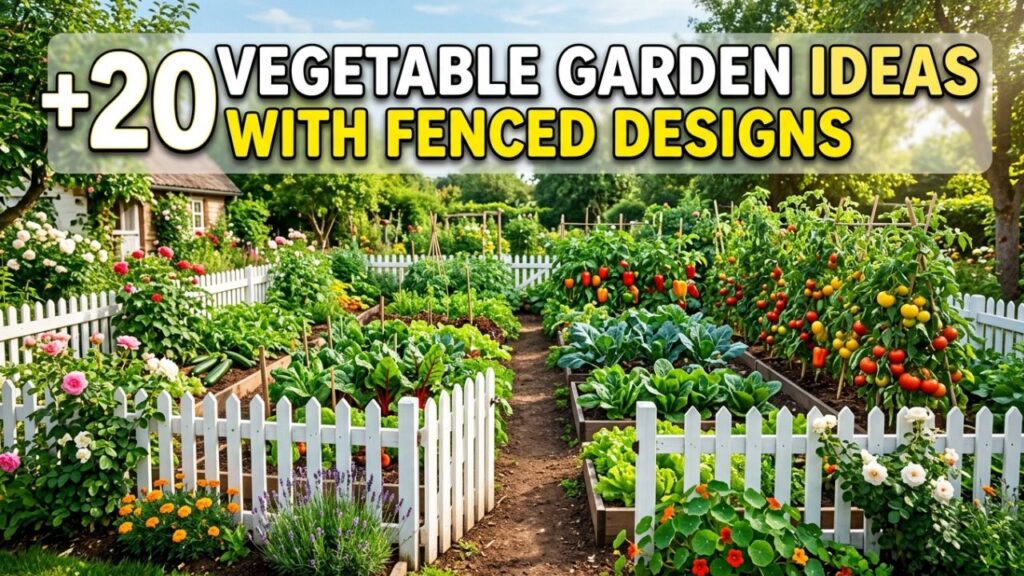
The right setup keeps hungry critters out, defines your space, and honestly makes the whole plot look intentional instead of thrown together. In this guide, you’ll find 20 vegetable garden ideas fenced for real protection, each one practical enough to try this season.
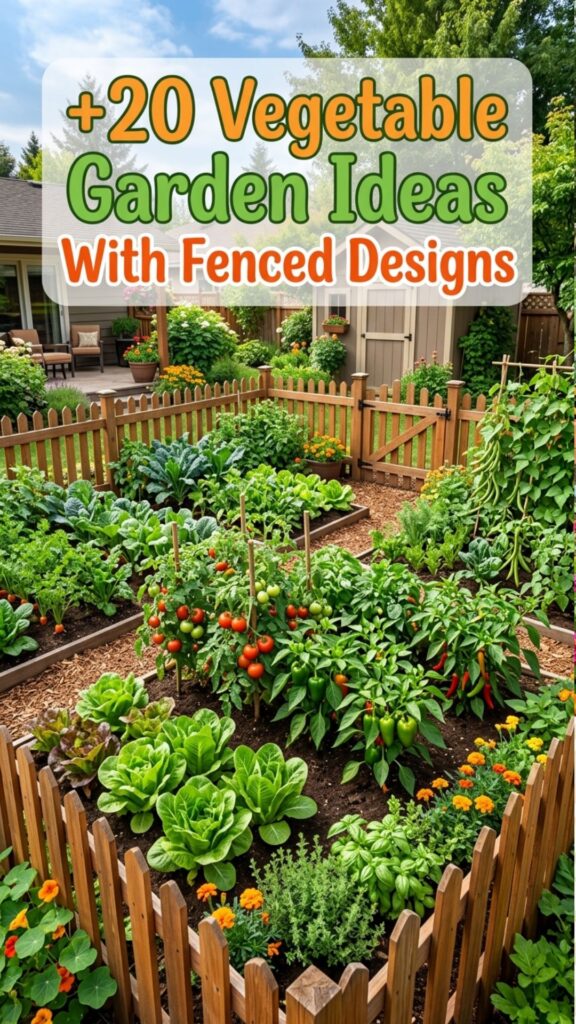
Here’s what you’ll walk away with:
- Fence designs that actually stop common garden pests
- Budget-friendly and stylish options for any yard size
- Practical tips based on what works in real gardens
Let’s dig in.
1. Classic Picket Fence Border
A white picket fence is more than a pretty face. Standing around three to four feet tall, it blocks rabbits and smaller animals while framing your beds with charm. Space the pickets close together, no more than two inches apart, so small paws can’t squeeze through.
I’ve used cedar pickets in my own backyard because they resist rot without much fuss. Paint them or leave them natural, then pair with a simple gate for easy access. This design suits cottage-style gardens and works well when you want protection without walling off the view.
2. Raised Bed With Integrated Fencing
Combine raised beds and fencing into one clean structure. Build your bed frames from untreated lumber, then attach vertical posts at the corners to support wire or mesh panels. This lifts your soil off the ground and adds a barrier in a single build.
The bonus here is drainage and warmth. Raised soil heats faster in spring, and the attached fence keeps burrowing animals from tunneling in. Add hardware cloth along the bottom edge for extra defense against voles and gophers.
3. Chicken Wire Perimeter
Chicken wire is the workhorse of garden fencing. It’s cheap, flexible, and easy to install around posts spaced every six to eight feet. For best results, bury the bottom six inches underground to stop diggers from sneaking under.
One trick I always share: bend the top few inches outward at an angle. Rabbits and raccoons struggle to climb over a floppy, angled edge. This design won’t win beauty contests, but it delivers reliable protection on a tight budget.
4. Deer-Proof Tall Mesh Fence
Deer can clear a four-foot fence without breaking stride, so if they roam your area, go tall. An eight-foot mesh fence made from heavy-duty polypropylene keeps them out while staying nearly invisible from a distance.
I recommend black mesh because it blends into the landscape and won’t distract from your plants. Anchor it to sturdy posts and keep the mesh taut. For gardens near woodlands, this is often the only design that truly works against determined deer.
5. Woven Willow Living Fence
Want something that grows with your garden? A woven willow fence uses living branches that root and thicken over time. Weave freshly cut willow whips through upright stakes, and they’ll sprout into a dense, natural barrier.
This rustic option adds a storybook feel and improves each season as it fills in. It works best in moist climates where willow thrives. Trim it a couple times a year to keep the shape tidy and the growth under control.
6. Galvanized Hardware Cloth Enclosure
For serious pest problems, hardware cloth is your friend. This rigid metal mesh, usually with quarter-inch openings, blocks everything from mice to squirrels. Wrap it fully around a frame, including the top, if you’re battling climbers.
I built a small enclosure like this to protect strawberries, and the difference was night and day. The mesh lasts for years and resists chewing. It costs more than chicken wire, but the durability pays off over time.
7. Cattle Panel Arch Garden
Cattle panels bend into beautiful arches that double as fencing and trellises. Attach two panels along parallel bed edges, then curve them together overhead to form a tunnel. Vining crops like beans and cucumbers climb right up.
The rigid steel keeps larger animals at bay while giving your garden a striking, functional shape. Walk through the arch to harvest shaded produce below. It’s one of my favorite ideas for combining beauty and protection in a small footprint.
8. Bamboo Screen Fence
Bamboo brings a warm, natural look and stands up surprisingly well outdoors. Use thick bamboo poles lashed together, or buy rolled bamboo screening to attach to a post frame. It creates a solid visual barrier and blocks small animals.
This design shines in Asian-inspired or tropical gardens. Seal the bamboo with a protective oil to extend its life, since untreated bamboo weathers faster. It’s affordable, renewable, and easy to work with using basic tools.
9. Recycled Pallet Fence
Free wooden pallets make a fantastic budget fence. Stand them upright, secure them to posts, and you’ve got an instant rustic barrier. Line the gaps with mesh if you need to block smaller critters.
I love this idea for gardeners who want function without spending much. Sand rough edges and add a coat of outdoor sealant so the wood lasts. Just check that your pallets are heat-treated (look for an HT stamp) rather than chemically treated.
10. Wrought Iron Decorative Fence
For elegance that lasts decades, wrought iron is hard to beat. Its ornamental bars deter larger animals and add timeless structure to formal gardens. Pair it with mesh backing if you need to stop rabbits between the bars.
This design costs more upfront, but it rarely needs replacing. I’ve seen wrought iron fences hold up beautifully for generations. It’s a worthwhile investment when you want your vegetable garden ideas fenced with lasting style.
11. Split Rail With Wire Backing
Split rail fencing gives a country charm, though the wide gaps let animals through on their own. Fix that by stapling welded wire mesh to the back of the rails. Now you get rustic looks plus real protection.
This combination works great for larger rural plots. The rails provide structure, and the hidden wire does the heavy lifting. Use pressure-treated posts sunk deep so the fence stays sturdy through wind and weather.
12. Vertical Garden Fence
Turn your fence into growing space. Attach planters, pockets, or trellised netting to a solid fence panel, and grow herbs or trailing vegetables right on the barrier itself. You save ground space and add another layer of greenery.
This idea suits small yards and urban gardens where every inch counts. The fence protects your main beds while the vertical planting boosts your harvest. Just make sure the structure can hold the weight of soil and water.
13. Stone and Wire Gabion Fence
Gabion fences use wire cages filled with rocks, creating a solid, permanent barrier. They look modern, block animals completely, and retain heat that benefits nearby plants. No animal is chewing through stone.
I’ve admired these in xeriscaped gardens where they double as retaining walls. They require some labor to fill, but once built, they last practically forever. Use local stone to keep costs down and the look natural.
14. Electric Fence for Persistent Pests
When raccoons and deer just won’t quit, a low-voltage electric fence sends a harmless but memorable zap. A couple of strands at strategic heights train animals to stay away fast. Solar-powered chargers make setup easy anywhere.
Use this design responsibly and check local rules first. I’ve seen it save gardens that nothing else could. Keep the wires clear of tall grass so the current stays strong, and mark the fence so people know it’s live.
15. Trellis-Topped Privacy Fence
Add a lattice trellis on top of a solid fence for extra height and climbing support. This combo blocks nosy neighbors, keeps deer guessing, and gives peas or squash a place to climb. It’s protection and privacy rolled into one.
The trellis softens a tall fence’s look with greenery. I like painting the lattice a contrasting color for a polished finish. It works especially well along property lines where you want both function and a bit of seclusion.
16. Fold-Down Access Fence
Frequent harvesters, this one’s for you. Build fence panels with hinges so sections fold down for easy reach into your beds. When closed, they protect; when open, they let you tend crops without walking around.
This clever design saves your back and speeds up harvest time. Use lightweight cedar frames with mesh so panels are easy to lift. Add simple latches to lock them shut and keep animals out overnight.
17. Modern Slatted Horizontal Fence
Horizontal slat fences bring a sleek, contemporary edge to any garden. Space the boards with small gaps for airflow while keeping the barrier tight enough to deter animals. Stain them a rich tone for a designer finish.
This design pairs beautifully with raised beds and clean geometric layouts. I’ve used it to frame a kitchen garden near a patio, and it looked more like outdoor furniture than fencing. It’s proof protection can be stylish.
18. Netting Cage for Berries and Greens
Birds love your berries as much as you do. A netting cage built over a light frame keeps them out while letting sun and rain through. Drape fine bird netting over PVC or metal hoops and secure the edges to the ground.
I use these every summer to protect blueberries and tender greens. The netting comes off easily for harvest and stores flat in the off-season. It’s an inexpensive fix for one of the most frustrating garden problems.
19. Corrugated Metal Panel Fence
Corrugated metal panels deliver a bold, industrial look and a rock-solid barrier. Frame them with wood posts and you get a fence nothing can chew or dig through. The metal also reflects light, which some crops appreciate.
This design has grown popular in modern farmhouse gardens for good reason. It’s durable, low-maintenance, and surprisingly affordable. Choose galvanized panels so they resist rust through years of rain and sun.
20. Combination Multi-Layer Defense
Sometimes one fence isn’t enough. Combine layers for maximum protection: a buried hardware cloth base against diggers, a mid-height wire fence for rabbits, and netting on top for birds and climbers. Each layer targets a specific threat.
I built a layered system after losing an entire crop to mixed pests, and it finally worked. This approach takes more planning, but it’s the most reliable solution for gardens facing multiple animals. Think of it as your garden’s full security system.
Wrap-Up: Protect Your Harvest the Smart Way
Choosing the right fence comes down to your space, your budget, and the critters you’re up against. Whether you want charm, durability, or heavy-duty defense, there’s a design here for you.
Key takeaways:
- Match your fence height and mesh size to your specific pests
- Bury the base to stop diggers and angle the top against climbers
- Blend function with style so your garden looks as good as it grows
Ready to protect your veggies? Pick one idea that fits your yard, gather your materials this weekend, and start building. Your future harvest will thank you.
What is the best height for a vegetable garden fence?
For most gardens, a fence of three to four feet stops rabbits and small animals. If deer are a problem, go at least eight feet tall, since deer can easily jump lower barriers.
How do I stop animals from digging under my garden fence?
Bury the bottom six to twelve inches of your fence underground, or bend the wire outward in an L-shape at the base. This blocks rabbits, gophers, and other diggers from tunneling in.
What is the cheapest way to fence a vegetable garden?
Chicken wire attached to wooden or metal posts is the most affordable option. Recycled pallets also make a great low-cost fence if you seal the wood and check that it’s heat-treated.
Do fenced vegetable gardens really keep pests out?
Yes, a properly built fence dramatically reduces pest damage. Success depends on matching the design to your pests, using the right mesh size, and securing both the top and bottom edges.
What material lasts longest for garden fencing?
Wrought iron, galvanized hardware cloth, and corrugated metal last the longest, often decades. Gabion stone fences are also nearly permanent once built, though they take more effort to install.