A sloped backyard can feel like a problem when you dream of rows of tomatoes and leafy greens. Water runs off too fast, soil washes downhill, and bending over on an incline hurts your back.
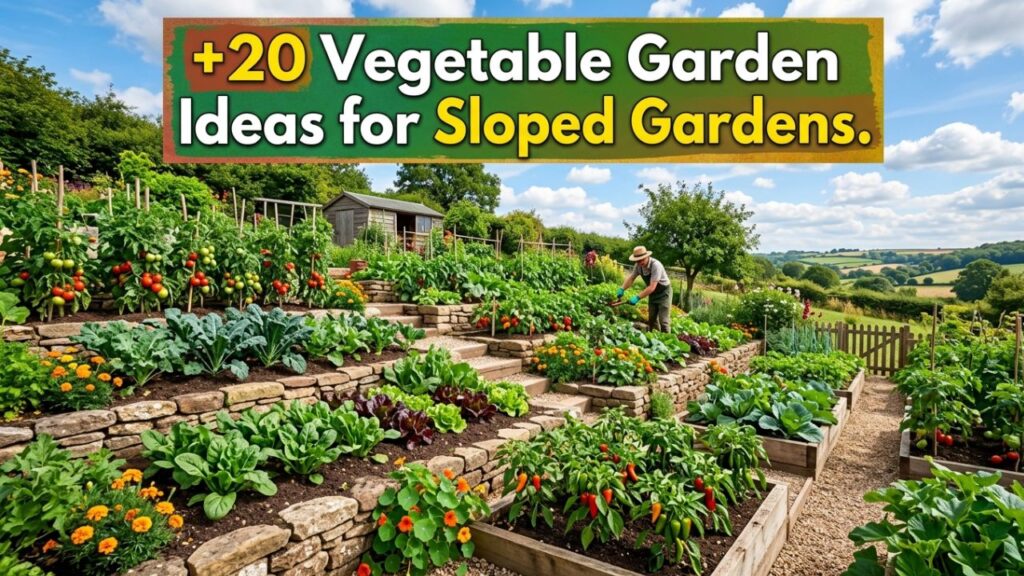
But here’s the good news: some of the most beautiful and productive gardens I’ve ever helped build sit on hillsides. A slope isn’t a curse. With the right approach, it becomes an opportunity for better drainage, gorgeous tiered views, and easier harvesting.
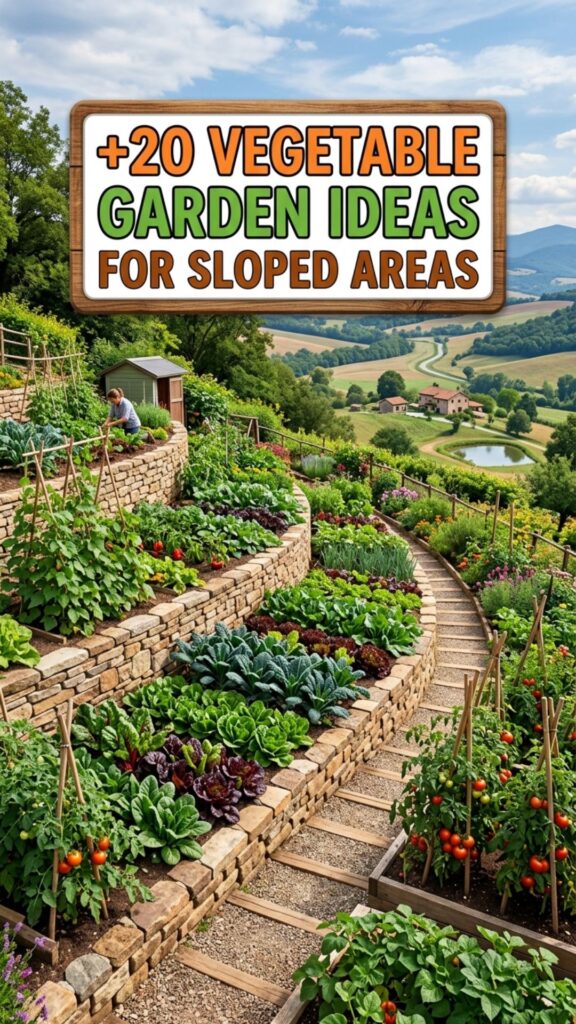
After years of coaxing vegetables out of stubborn hillsides, I’ve collected the ideas that actually work. Below you’ll find 20 vegetable garden ideas on a slope that solve real problems like erosion, drainage, and access. Whether you have a gentle grade or a steep drop, there’s something here you can start this weekend.
1. Build Terraced Garden Beds
Terracing is the gold standard for growing food on a slope. You cut the hillside into flat “steps,” each held in place by a retaining wall of timber, stone, or concrete blocks. These level platforms stop soil from sliding away and give roots the stable, deep footing vegetables love.
Start with the steepest sections first, since they lose the most soil. Even two or three terraces can transform an unusable bank into productive growing space. I’ve seen a modest 15-degree slope turned into four tidy beds that yield more than a flat garden of the same footprint, simply because each level captures and holds water.
2. Install Raised Beds Along the Contour
Raised beds are a fast fix for uneven ground. Place them so their long sides follow the natural contour lines of the slope, running across the hill rather than up and down. This orientation slows runoff and keeps your soil where you put it.
Use taller boards on the downhill side to keep the bed level inside. A bed that looks 8 inches tall uphill might need 16 inches of board downhill. Fill it with a rich mix of compost and quality soil, and you’ve created a flat, controlled environment that ignores the slope entirely.
3. Create Gravel and Timber Steps for Access
Nothing kills gardening motivation faster than slipping while carrying a watering can. Build simple steps into your slope using landscape timbers pinned with rebar, then backfill with gravel. Safe, sturdy access means you’ll actually tend your plants.
Space the steps so the climb feels natural, and keep the treads wide enough for a bucket or wheelbarrow tire. Good paths also protect your beds, because people walk on the steps instead of compacting your growing soil.
4. Use Retaining Walls as Planting Space
A retaining wall does double duty. It holds back soil and, if you choose the right style, becomes a planter itself. Dry-stack stone walls have pockets between the rocks that are perfect for herbs like thyme, oregano, and trailing strawberries.
When you build, tilt the wall slightly back into the hill for strength and tuck small plants into the gaps as you go. Over a season, greenery softens the hard edges, and you gain extra growing room without using any flat ground.
5. Plant Deep-Rooted Vegetables to Anchor Soil
Some vegetables fight erosion for you. Deep-rooted crops such as artichokes, rhubarb, and asparagus send anchors down into the hillside and hold the soil together while they grow.
Position these perennials on the more exposed parts of your slope where washouts tend to start. Once established, they need little attention and quietly stabilize the ground year after year, giving you food and structure at the same time.
6. Set Up a Drip Irrigation System
On a slope, water from a hose or sprinkler races downhill before it soaks in. Drip irrigation solves this by delivering water slowly, drop by drop, right at the root zone. Less waste, healthier plants, and no muddy runoff.
Run your drip lines along the contour and add pressure-compensating emitters so plants at the top get as much water as those at the bottom. A simple timer takes the guesswork out of watering and keeps every level of your garden evenly moist.
7. Design a Keyhole Garden on a Flatter Landing
If part of your slope levels out, a keyhole garden fits beautifully. This round raised bed has a notch cut into one side, like a keyhole, letting you reach the center without stepping on the soil. A composting basket in the middle feeds the bed as it breaks down.
Keyhole gardens are efficient in tight or awkward spaces, which sloped yards often have. They hold moisture well too, making them a smart choice for the drier upper sections of a hillside.
8. Grow Vining Crops Downhill
Let gravity work for you. Sprawling plants like squash, pumpkins, and melons can trail down a slope, covering bare soil and shading out weeds. Their broad leaves also reduce erosion by softening the impact of rain.
Plant them near the top and guide the vines downward. The fruit sits on the sunny hillside where it ripens evenly, and you avoid the crowding that these hungry plants cause on flat ground.
9. Add Swales to Capture Rainwater
A swale is a shallow, level ditch dug across the slope to catch and hold rainwater. Instead of letting water rush away, the swale gives it time to sink into the soil and reach your plant roots. This technique comes straight from permaculture and works wonders on dry hillsides.
Dig the swale on contour and pile the removed soil on the downhill lip to form a small berm. Plant that berm with vegetables, and they’ll tap into the moisture the swale collects, cutting your watering needs dramatically.
10. Try Container Gardening on Terraced Steps
Not ready to dig? Containers let you garden on a slope with zero excavation. Line up pots, grow bags, and half-barrels on existing steps or leveled patches, and you have an instant vegetable garden.
Grow bags are especially handy because they’re light and drain well. I move mine to chase the sun through the seasons, something you simply can’t do with an in-ground bed. Start small with tomatoes and peppers, then expand as you gain confidence.
11. Build a Living Wall for Vertical Growing
When floor space is scarce, grow up. A living wall of stacked planters or wall-mounted pockets turns a vertical face of your slope into a productive surface. Lettuce, herbs, and strawberries thrive in these compact setups.
Mount your system on a sturdy fence or retaining wall and add drip irrigation at the top so water trickles down to every pocket. It’s a striking feature that produces real food while making the most of a small yard.
12. Use Mulch Heavily to Prevent Runoff
Bare soil on a slope is asking for trouble. A thick layer of mulch, straw, wood chips, or shredded leaves, shields the ground from pounding rain and slows water long enough to soak in. It also locks in moisture and feeds the soil as it breaks down.
Apply mulch 2 to 3 inches deep around your vegetables and refresh it each season. On steeper spots, straw held down with jute netting stays put through heavy storms and gives young plants time to root.
13. Plant a Ground-Cover Border of Edible Greens
Edge your beds and pathways with low, spreading edibles like creeping thyme, oregano, or nasturtiums. These plants knit the surface soil together, fight erosion, and pull double duty as ingredients in your kitchen.
Their roots form a living mat that holds the slope, while their leaves and flowers add color and pollinators to your garden. It’s a practical border that earns its keep in more ways than one.
14. Create Zigzag Pathways for Gentle Access
A straight path up a steep slope is exhausting and prone to washing out. Instead, cut a zigzag or switchback path that climbs gradually across the hill. The gentler grade is easier on your knees and far more stable.
Line the paths with stone or timber edging and mulch the walking surface. As a bonus, the switchbacks divide your slope into natural planting sections, giving each part of the garden its own identity.
15. Install French Drains for Problem Wet Spots
Some slopes collect water in soggy pockets that drown vegetable roots. A French drain, a gravel-filled trench with a perforated pipe, redirects that excess water away from your beds and toward a safe outlet.
Lay the drain above your problem area so it intercepts water before it pools. Once the ground dries out, crops that struggled in the muck will bounce back. It’s an underground fix that quietly saves your harvest.
16. Group Plants by Water Needs on Different Levels
Water behaves predictably on a slope. The top dries out fastest, while moisture settles at the bottom. Use this to your advantage by planting drought-tolerant crops like rosemary and peppers up high, and thirsty plants like celery and lettuce down low.
This simple grouping, a practice pros call hydrozoning, means you water less and waste nothing. Each plant sits exactly where the slope’s natural moisture matches its needs.
17. Use Sleeper Beds for a Modern Look
Railway sleepers, or landscape timbers, make sturdy, handsome retaining beds that suit contemporary yards. Stacked two or three high, they hold back soil and create crisp, level growing spaces with a clean, architectural feel.
They’re heavy and long-lasting, so build once and enjoy for years. I like to run electrical conduit or drip tubing along the back before backfilling, hiding the irrigation for a tidy, professional finish.
18. Plant Cover Crops in the Off-Season
Never leave your slope bare over winter. Cover crops like clover, rye, and vetch protect exposed soil from erosion and add nutrients when you turn them under in spring. They’re the secret weapon of gardeners who want healthier soil for free.
Sow them thickly after your fall harvest. Their roots hold the hillside through winter rains, and their leafy growth smothers weeds. Come spring, you’ll have richer, looser soil ready for planting.
19. Build a Spiral Herb Garden
A herb spiral is a compact, mounded bed that winds upward like a small hill, perfect for a slope that already has some rise to it. The design creates several microclimates: a dry, sunny top for Mediterranean herbs and a cool, damp base for moisture lovers.
Build it with stones or bricks, filling as you spiral upward. Plant rosemary and thyme near the peak, and chives, parsley, and mint toward the shaded bottom. It packs a surprising amount of variety into a tiny footprint.
20. Add a Rain Garden at the Bottom of the Slope
Water always ends up at the base of a hill, so plan for it. A rain garden is a planted basin that catches runoff, letting it soak in slowly instead of flooding or eroding. Fill it with moisture-tolerant edibles like watercress, taro, or leafy greens.
Dig a shallow depression at the lowest point and amend the soil so it drains within a day or two. This turns your slope’s biggest drainage headache into its most lush, productive corner.
Conclusion
A sloped backyard doesn’t limit your garden, it shapes it into something special. From terracing and raised beds to swales, drip irrigation, and clever plant placement, these vegetable garden ideas on a slope tackle the real challenges of erosion, drainage, and access head-on. The key is working with your hillside instead of fighting it.
You don’t need to do all 20 at once. Pick one project that fits your slope and your weekend, maybe a single terrace, a few raised beds along the contour, or a simple mulch-and-cover-crop routine. Start there, learn what your land wants, and build from that success. Grab a shovel, choose your first idea, and turn that tricky slope into the productive garden you’ve been picturing.
What is the best way to grow vegetables on a slope?
The best way to grow vegetables on a slope is to create level planting areas using terraces or contoured raised beds. These stop soil erosion, improve water retention, and make planting and harvesting far easier than working directly on the incline.
How do you stop soil erosion in a sloped vegetable garden?
Stop erosion by combining several methods: build retaining walls or terraces, apply thick mulch, plant deep-rooted crops and cover crops, and dig swales across the contour to slow water. Together these hold soil in place through heavy rain.
Can you use raised beds on a slope?
Yes. Raised beds work well on a slope when placed across the contour with taller boards on the downhill side to keep the soil level inside. This creates flat growing space and controls runoff without major excavation.
What vegetables grow best on a hillside?
Deep-rooted and vining vegetables do best on hillsides. Artichokes, asparagus, and rhubarb anchor the soil, while squash, pumpkins, and melons trail downhill to cover bare ground and reduce erosion.
How steep is too steep for a vegetable garden?
Slopes up to about 15 degrees can often be gardened with contoured beds and mulch. Steeper grades usually need terracing or retaining walls to create safe, stable, level areas before you plant.