Nothing kills the joy of a backyard faster than feeling like the whole neighborhood can watch you sip your morning coffee. If your yard feels a little too exposed, you’re not alone, and the good news is that privacy landscaping for backyards can fix it without turning your space into a fortress.
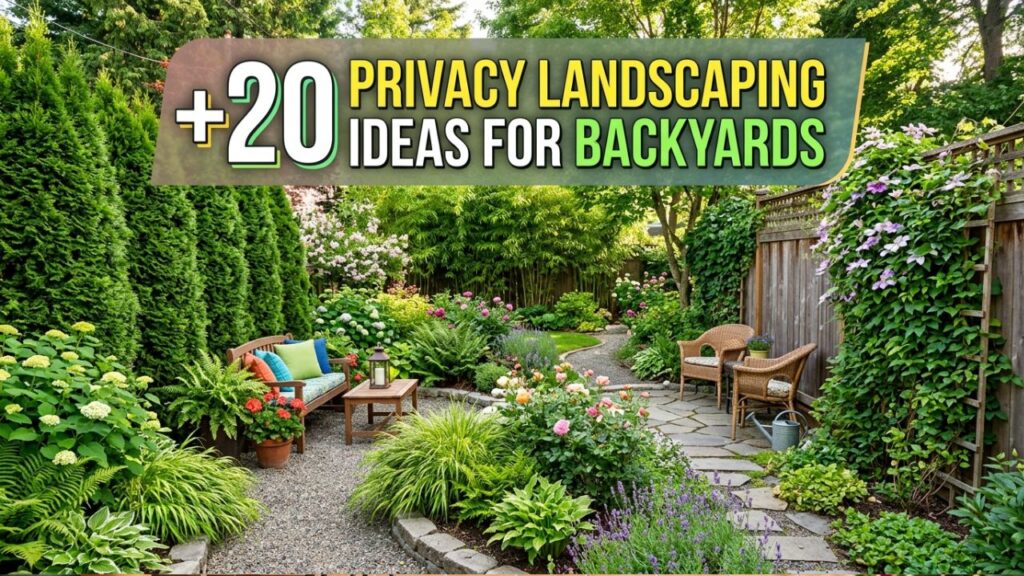
Over years of helping homeowners rethink their outdoor areas, I’ve learned that the best privacy solutions do double duty. They screen out prying eyes while making your yard prettier, cooler, and more inviting.
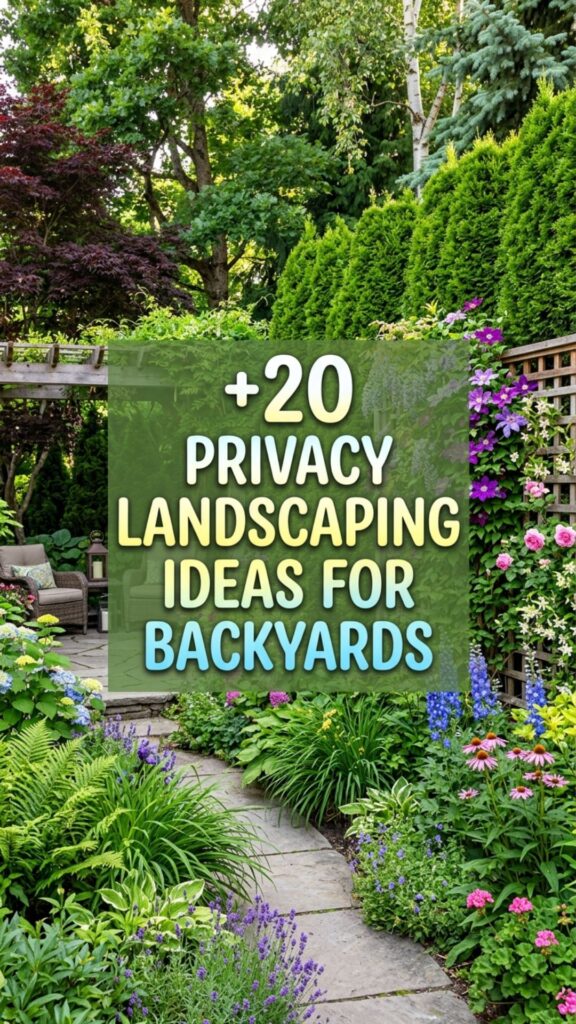
Below you’ll find 20 tested ideas ranging from quick weekend projects to long-term plantings. Pick a few that match your budget, climate, and style, and you’ll be enjoying a calmer, more secluded backyard before you know it.
1. Plant a Living Privacy Hedge
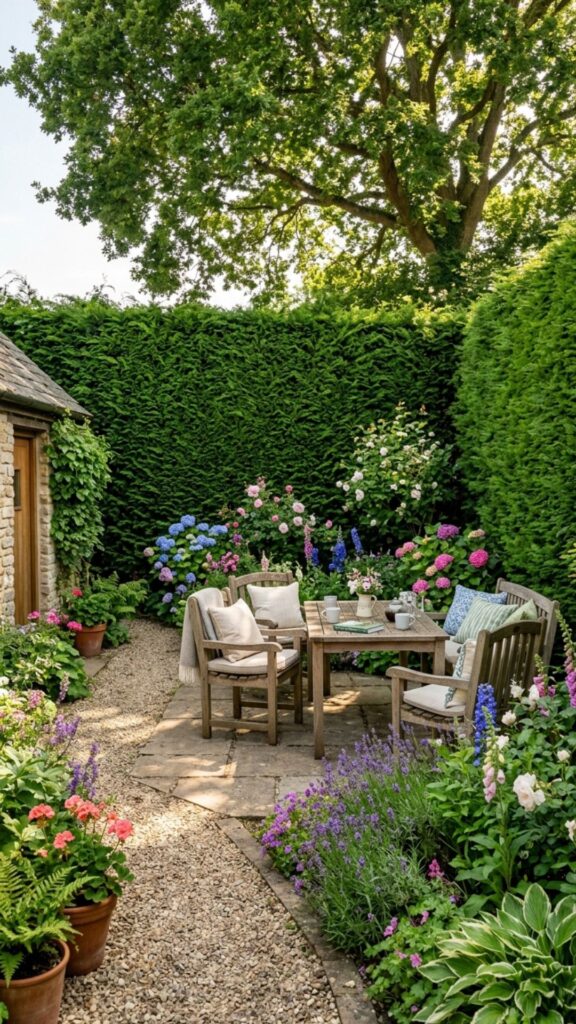
A dense evergreen hedge is the classic answer for a reason. Shrubs like boxwood, privet, and holly grow thick enough to block sightlines year-round, and once established they need little more than a seasonal trim. Space plants closer together for faster coverage, usually about two to three feet apart depending on the variety.
The trade-off is patience. Hedges take a couple of growing seasons to fill in, so buy the largest healthy plants your budget allows. If you want speed, look for fast growers like cherry laurel, which can add up to two feet a year while still looking lush and formal.
2. Grow a Bamboo Screen
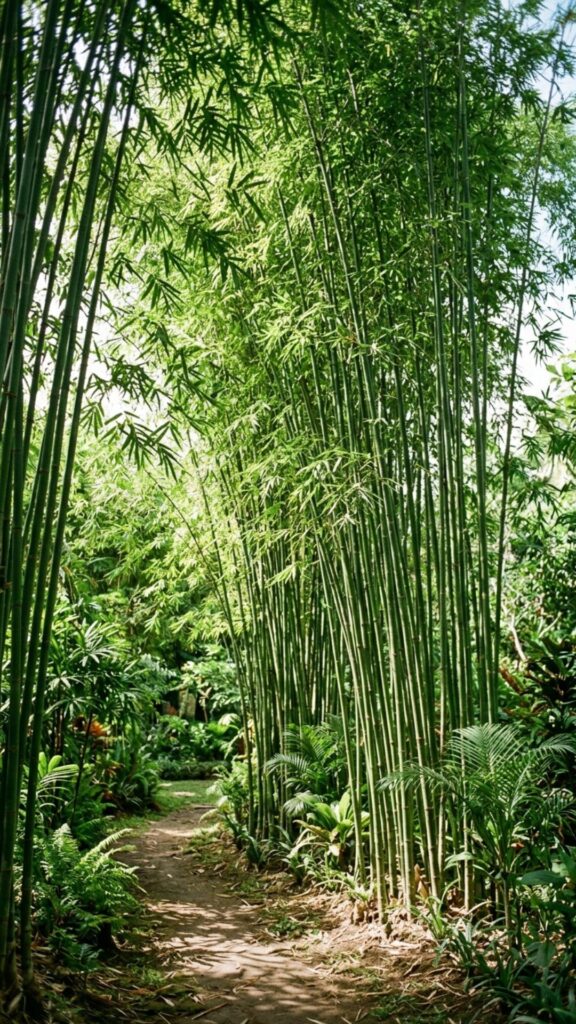
Bamboo creates an instant tropical wall that sways gently in the breeze. It’s one of the fastest-growing screens on earth, so it’s perfect if you want coverage in a single season. Choose clumping bamboo rather than running types to avoid it spreading into your neighbor’s yard.
Plant it in raised beds or install a root barrier to keep it contained. Golden bamboo and black bamboo both offer striking color and reach heights of 10 feet or more, giving you a tall, elegant screen that feels far more expensive than it actually is.
3. Build a Cedar Slat Fence
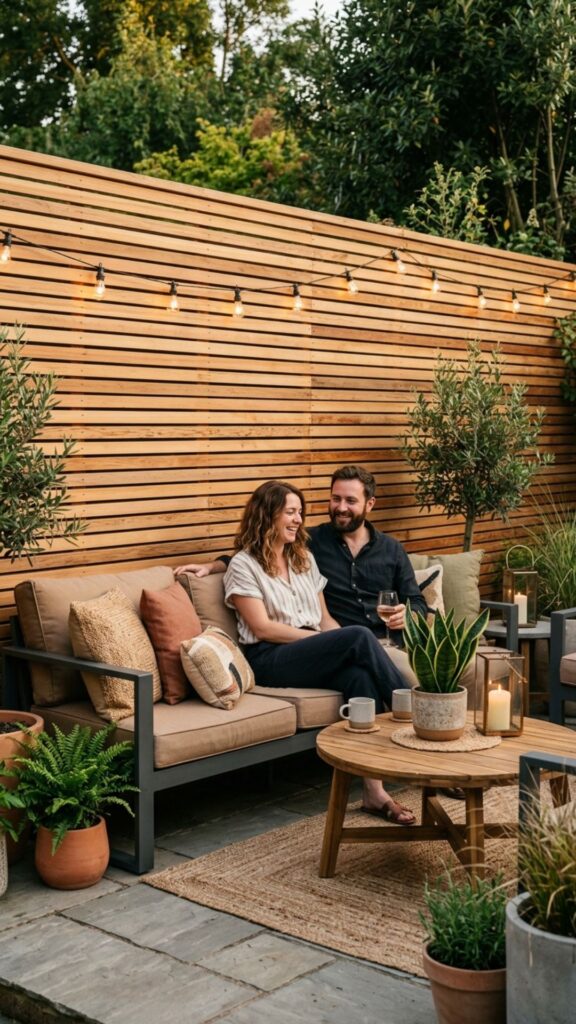
When you want privacy today, a solid fence is hard to beat. Horizontal cedar slats have a modern look that pairs beautifully with contemporary homes, and cedar naturally resists rot and insects. You can leave gaps between boards for airflow while still blocking direct views.
Cedar weathers to a soft silver-gray if left untreated, or you can seal it to keep the warm honey tone. Either way, a well-built fence lasts 15 to 20 years and gives you a clean backdrop for climbing plants and hanging planters.
4. Add a Trellis With Climbing Vines
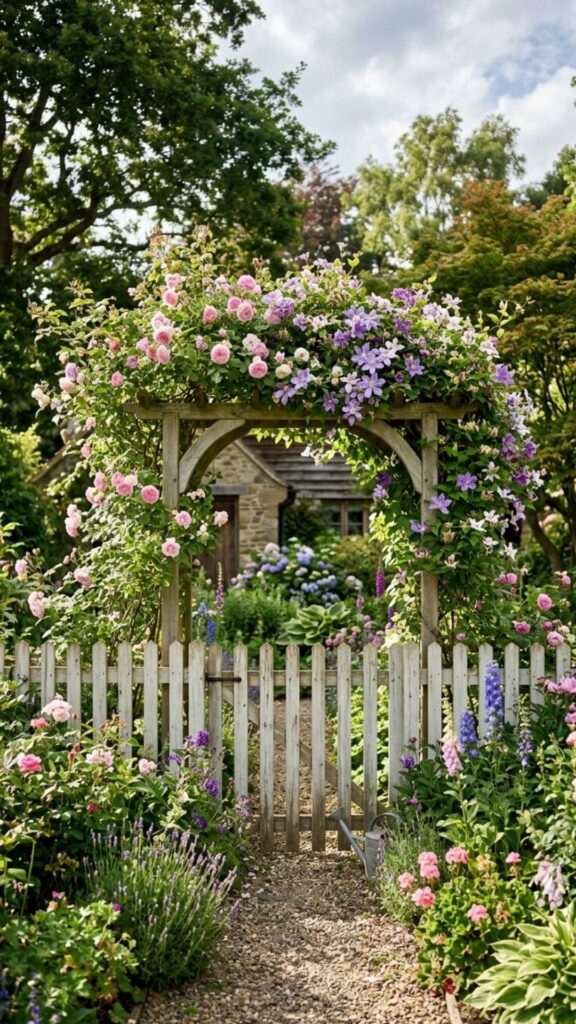
A trellis topped with vines softens hard lines and adds height without the bulk of a full wall. Star jasmine, clematis, and climbing roses cover a trellis quickly and reward you with fragrant blooms. Attach the trellis to an existing fence to gain a few extra feet of screening.
Because vines grow up rather than out, this option works great in tight spaces. Just give the roots room and check that your support can handle the weight of a mature plant, which gets surprisingly heavy once it fills in.
5. Install a Living Green Wall
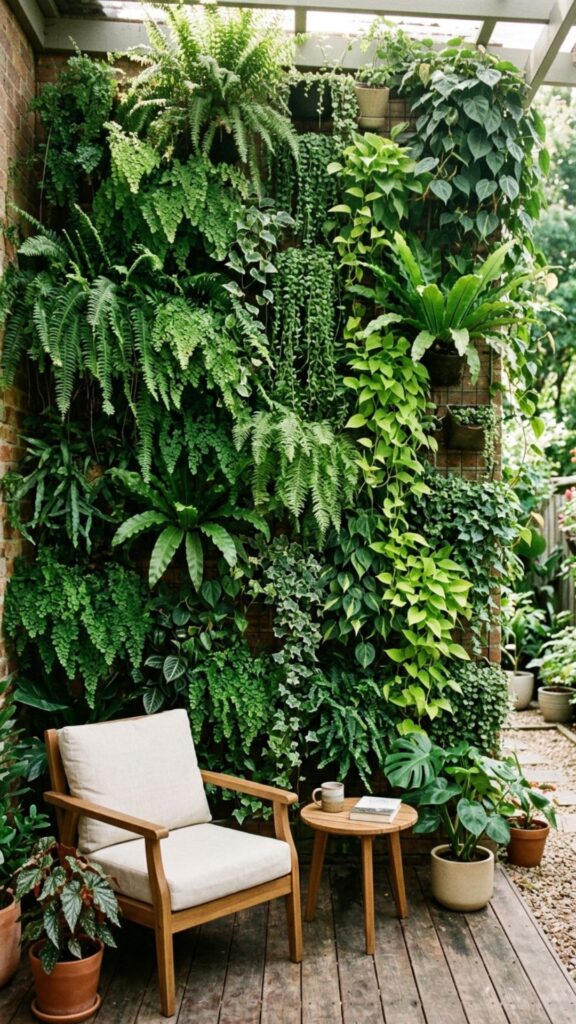
Vertical gardens turn a bare wall into a lush tapestry of greenery. Modular pocket panels let you plant ferns, succulents, and trailing plants in a small footprint, making them ideal for patios and courtyards where ground space is scarce.
Green walls do need a reliable watering system, so plan for drip irrigation to keep maintenance low. The payoff is a stunning focal point that muffles noise, cools the air, and blocks the view from second-story windows next door.
6. Layer Ornamental Grasses
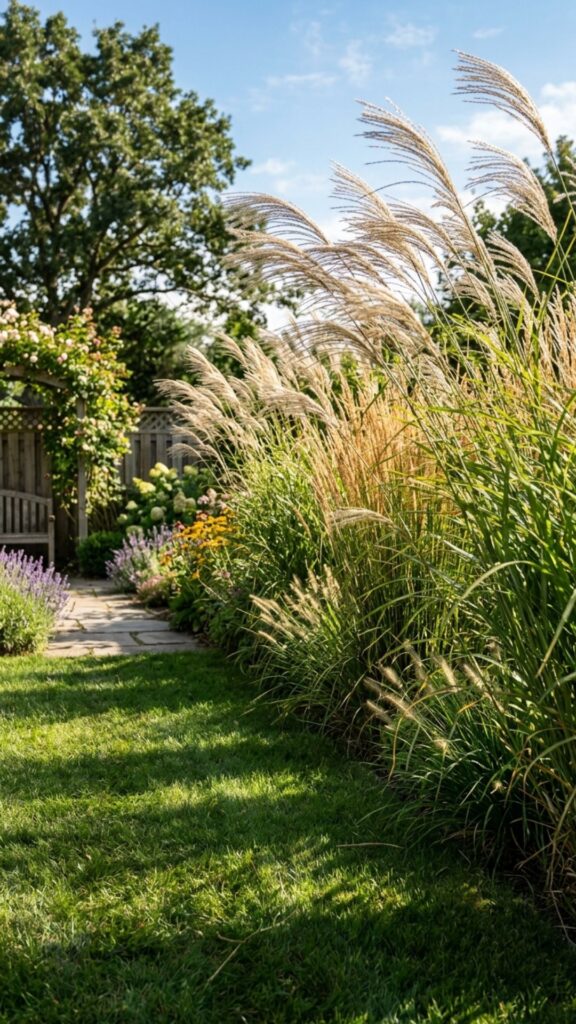
Tall ornamental grasses like maiden grass and switchgrass create a soft, natural screen that moves with the wind. Planted in a row, they form a feathery barrier that reaches five to eight feet in a single season and adds gorgeous texture.
These grasses thrive with little fuss and handle drought well once rooted. Cut them back in late winter and they bounce right back. Grouping several varieties together gives your privacy landscaping for backyards a wild, meadow-like charm.
7. Set Up Potted Trees on Wheels
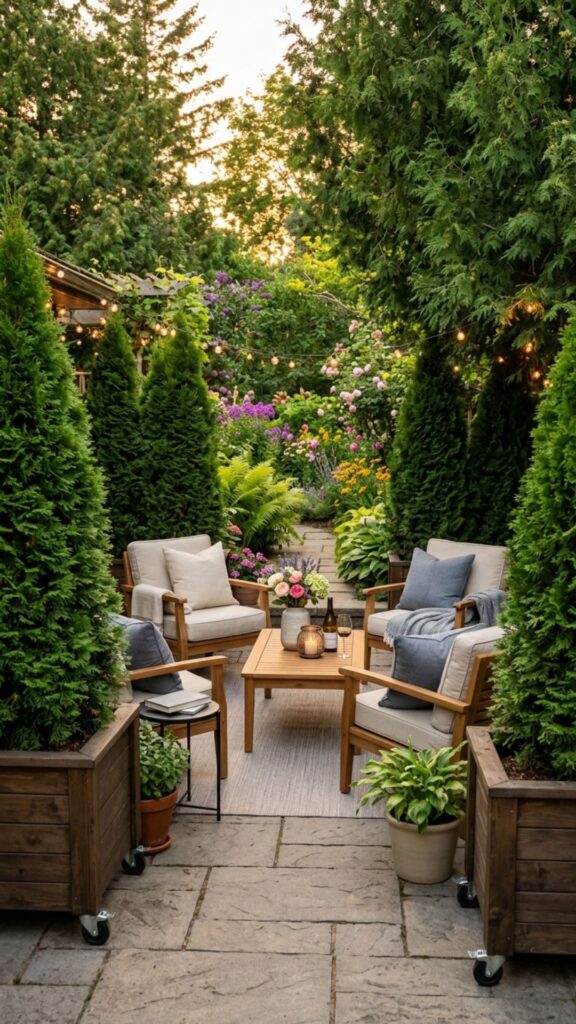
Renters and anyone who wants flexibility should love this trick. Large potted trees, such as arborvitae or Italian cypress, give you portable privacy you can rearrange for parties or move indoors during harsh winters.
Put the pots on rolling casters so you can shift them wherever you need cover. Choose weather-resistant containers and self-watering pots to cut down on upkeep. It’s an easy way to test placement before committing to permanent plantings.
8. Create a Pergola With Draped Curtains
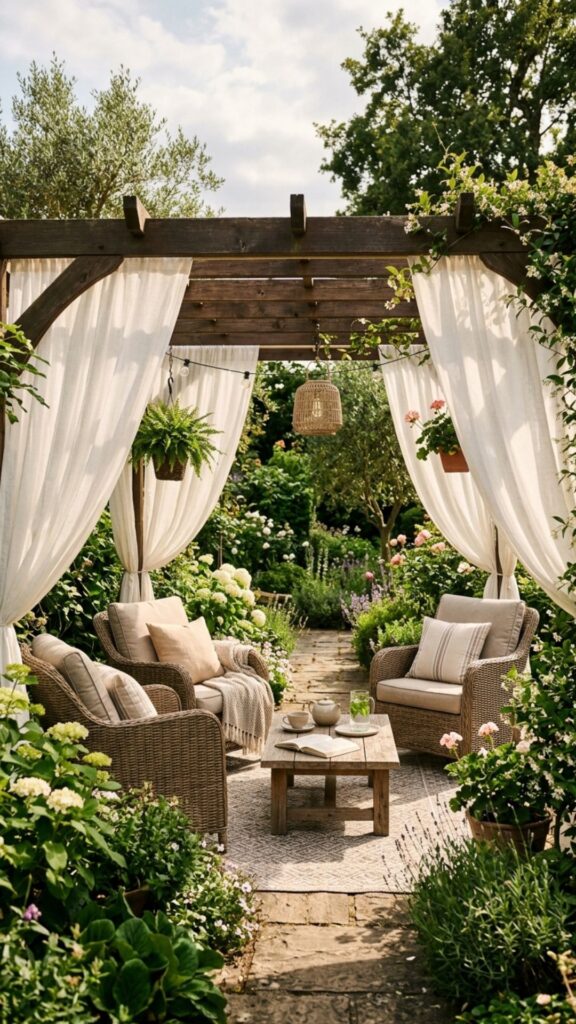
A pergola overhead defines your seating area and, with outdoor curtains, becomes a private retreat in seconds. Flowing fabric panels block side views and shade you from the sun, then tie back when you want an open feel.
Pick weatherproof, fade-resistant fabric in a color that complements your home. Add string lights or a climbing vine across the top and you’ve got a cozy outdoor room that feels tucked away from the world.
9. Stack a Stone or Gabion Wall
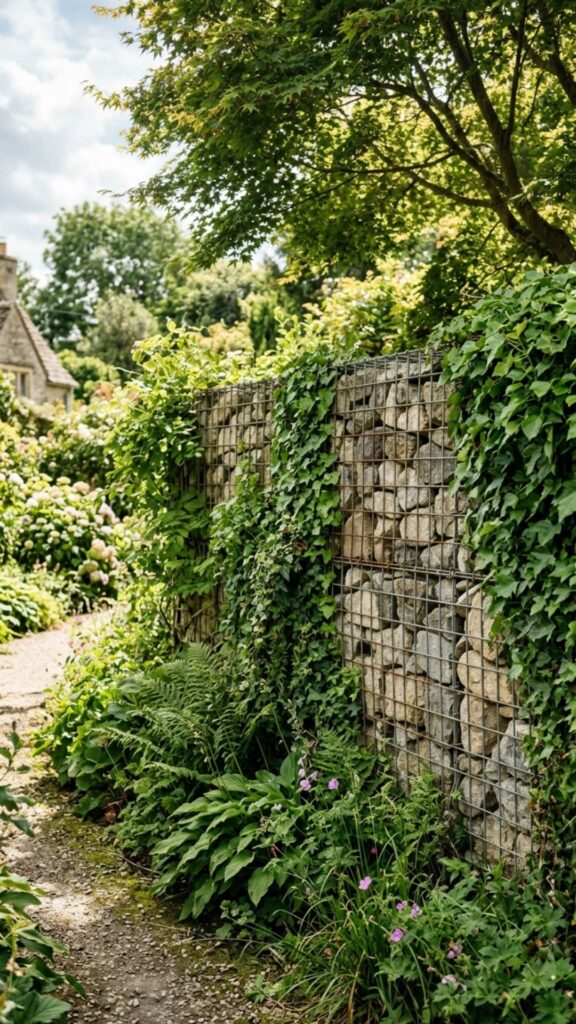
For a permanent, low-maintenance barrier, stone walls bring timeless texture and total privacy. Gabion walls, which are wire cages filled with rock, offer an industrial-chic look and cost less than solid masonry while still feeling substantial.
Both options double as noise buffers, an underrated perk if you live near a busy road. Soften the hard surface by tucking creeping plants into the crevices or planting a border of soft grasses along the base.
10. Combine Layered Plantings
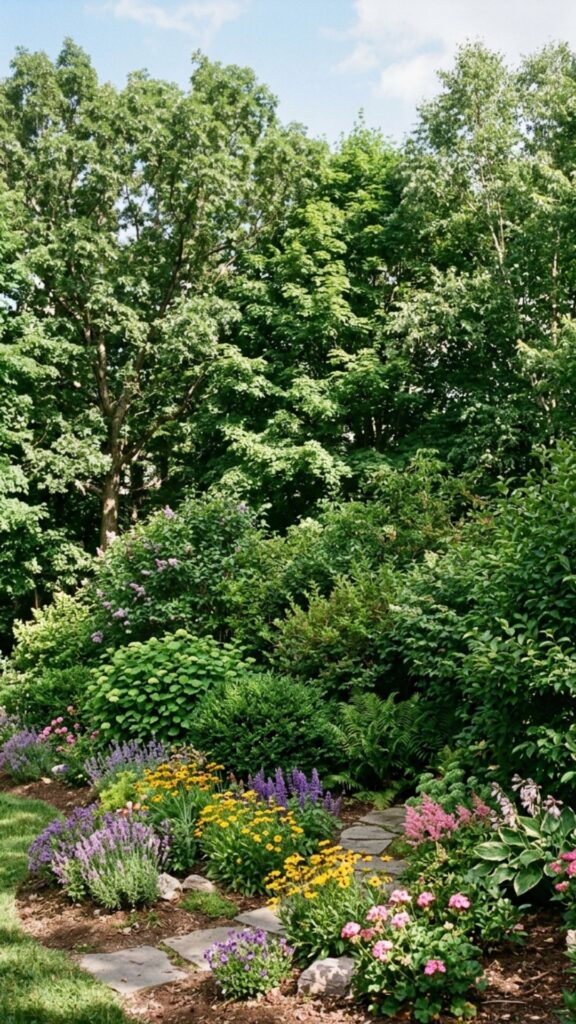
Rather than relying on one row of shrubs, mix tall trees, mid-height shrubs, and low perennials in staggered layers. This tiered approach mimics nature, fills gaps at every eye level, and looks far more polished than a single-species hedge.
Layering also supports birds and pollinators, adding life and movement to your yard. Plant the tallest specimens in back and cascade down to ground covers in front for depth that screens views from multiple angles.
11. Use a Water Feature for Sound Privacy
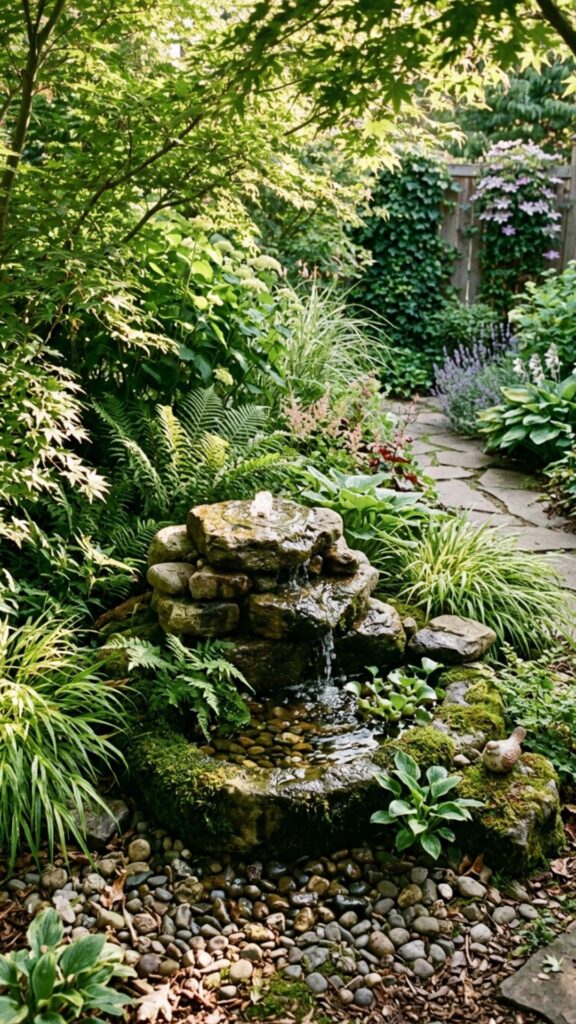
Privacy isn’t only visual. A bubbling fountain or small waterfall masks conversation and traffic noise so you feel more secluded even in a tight lot. The gentle sound also makes the space feel calm and resort-like.
Pair a water feature with tall plantings and you cover both sight and sound. Solar-powered fountains keep running costs near zero, and the moving water attracts birds that add extra charm.
12. Plant Tall Flowering Shrubs
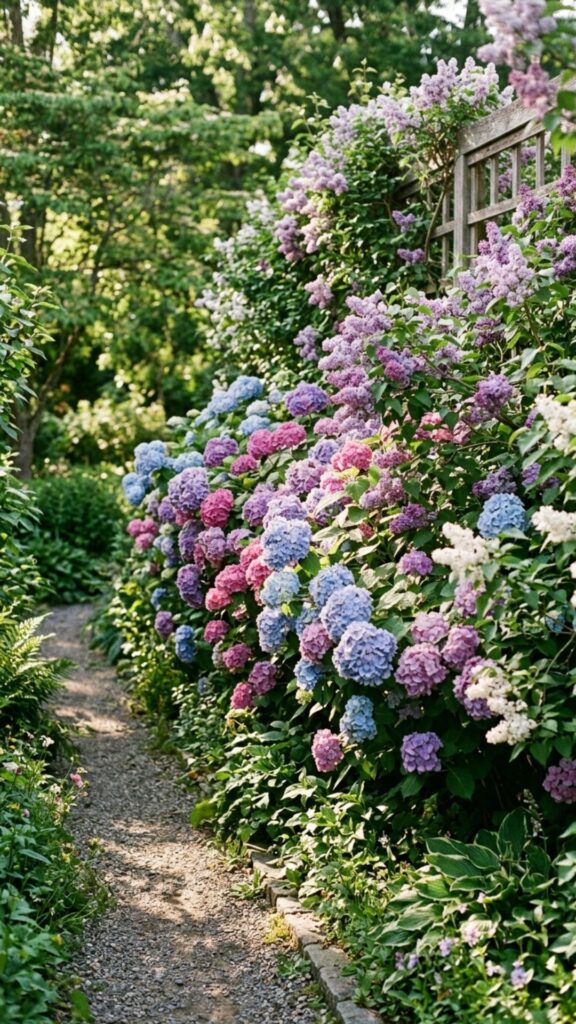
Hydrangeas, lilacs, and butterfly bushes give you privacy plus a burst of seasonal color. These flowering shrubs grow dense and tall, screening views while filling the air with fragrance and drawing pollinators to your yard.
Because they bloom on and off through the seasons, your screen never feels boring. Prune after flowering to keep the shape tidy and encourage fuller growth the following year.
13. Hang a Slatted Privacy Screen Panel
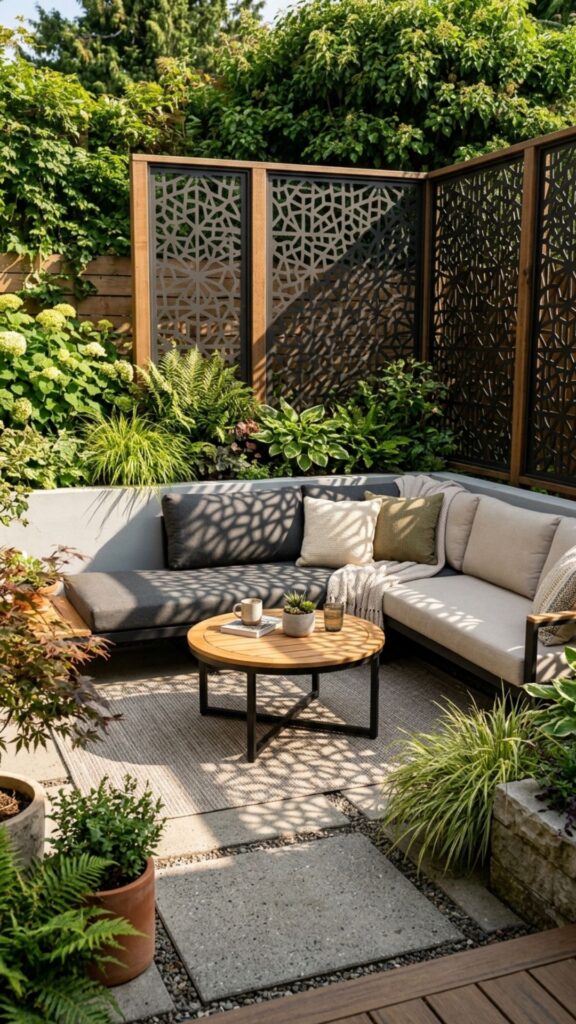
Decorative laser-cut metal or composite panels add architectural flair while blocking views. Their patterns cast beautiful shadows in the afternoon sun and instantly modernize a plain corner of the yard.
These panels install fast and need almost no upkeep. Use them to hide unsightly spots like AC units or trash bins, or mount several in a row to divide your yard into cozy zones.
14. Grow an Espalier Fruit Tree
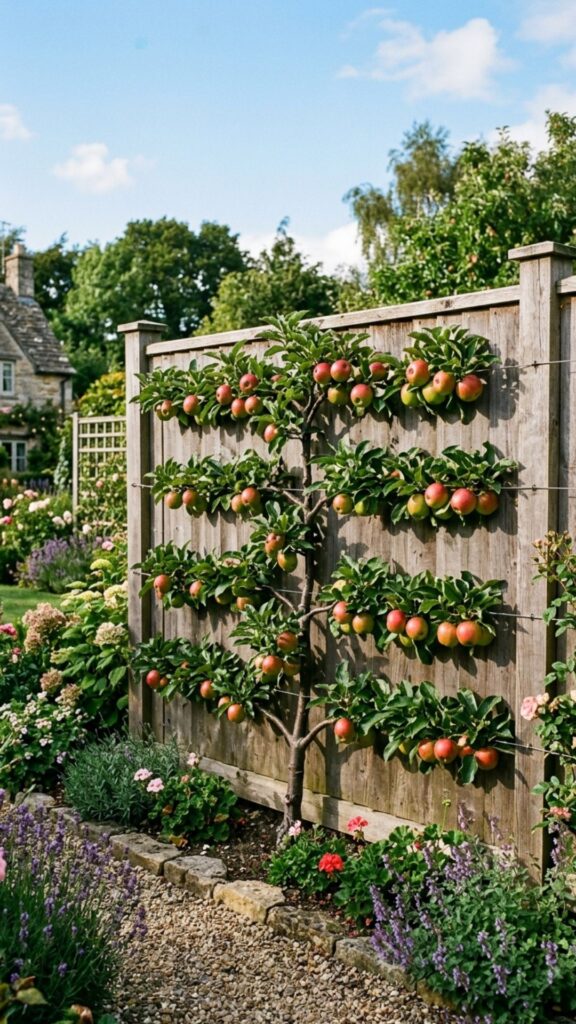
Espalier is the art of training trees to grow flat against a wall or frame. Apple, pear, and fig trees trained this way form a living screen that produces fruit while saving space, perfect for narrow side yards.
It takes some pruning know-how, but the result is a stunning, productive feature that neighbors will envy. Attach horizontal wires to your fence and guide the branches as they grow for a tidy, geometric look.
15. Build Raised Planter Boxes With Screens
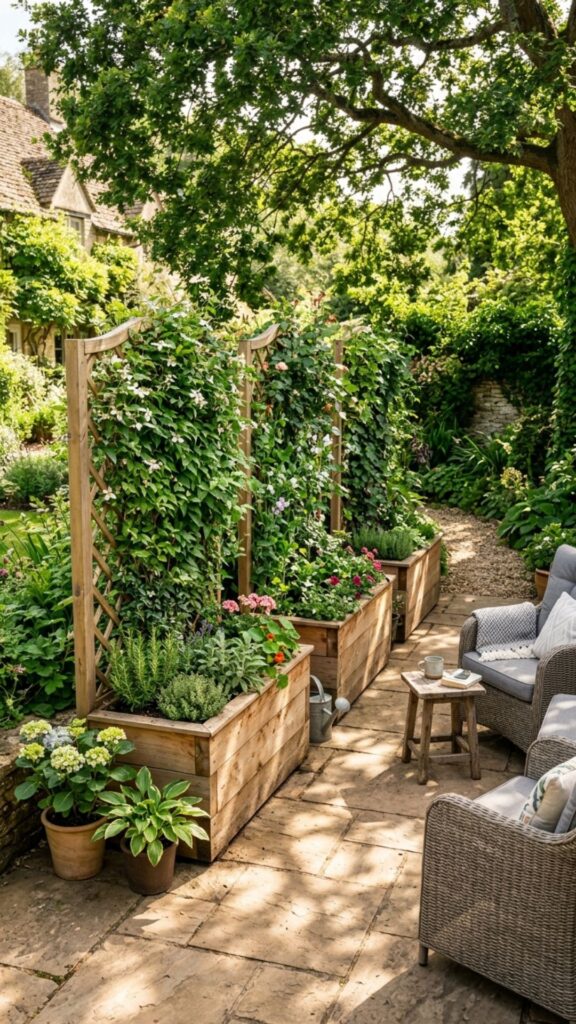
Combine a raised bed with a built-in trellis or slat topper to get privacy and gardening space in one structure. Fill the box with tall grasses or climbing edibles like beans and cucumbers for a screen you can harvest.
This setup works wonderfully along a patio edge or deck railing. It raises the greenery to eye level, so you gain privacy without waiting years for plants to grow up from the ground.
16. Frame the Yard With Columnar Trees
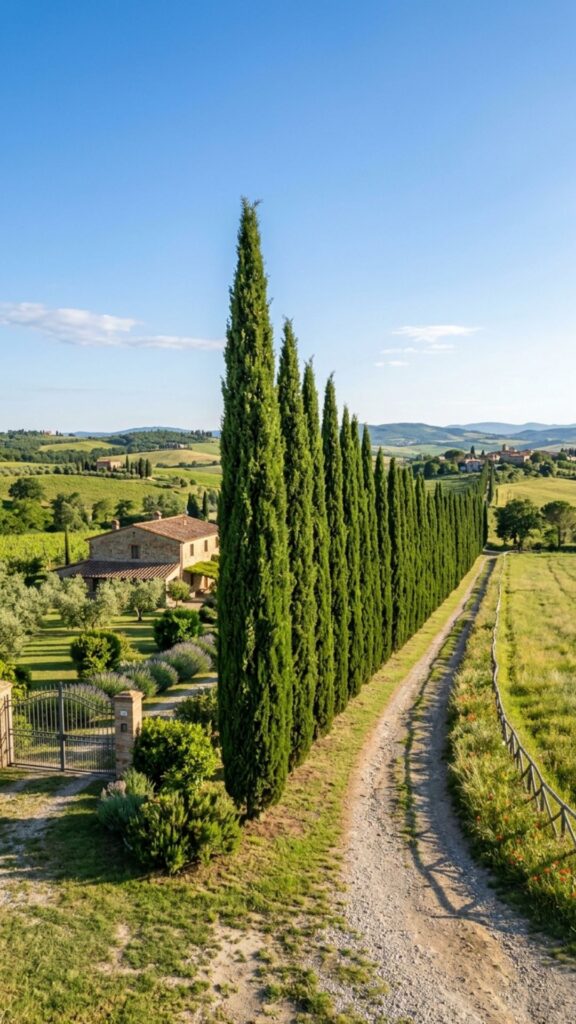
Narrow, upright trees such as Sky Pencil holly and columnar oak fit skinny spaces where a wide tree won’t. Lined up in a row, they form a tall green column that screens views without eating up precious yard space.
Their slim shape makes them ideal for property lines and side yards. Most stay tidy with minimal pruning, giving you a formal, elegant look that suits both modern and traditional homes.
17. Add an Outdoor Shade Sail
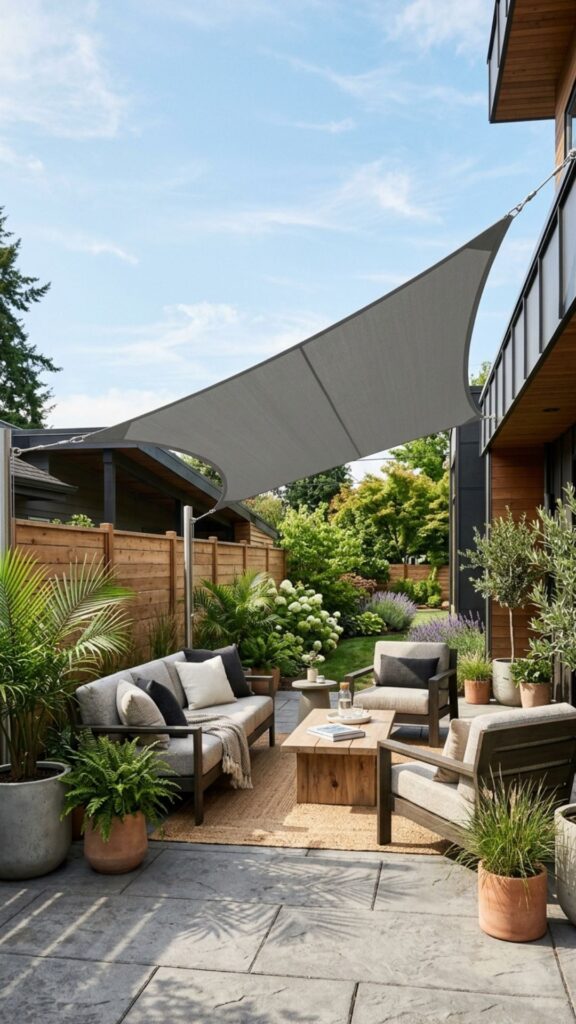
A tensioned shade sail overhead blocks the view from taller neighboring buildings while cooling your patio. These sleek triangular canopies come in many colors and mount to posts or your house wall.
Beyond privacy, they protect furniture and skin from harsh sun. Angle the sail to shield the direction that feels most exposed, and layer it with side plantings for full coverage.
18. Plant a Wildflower Buffer Strip
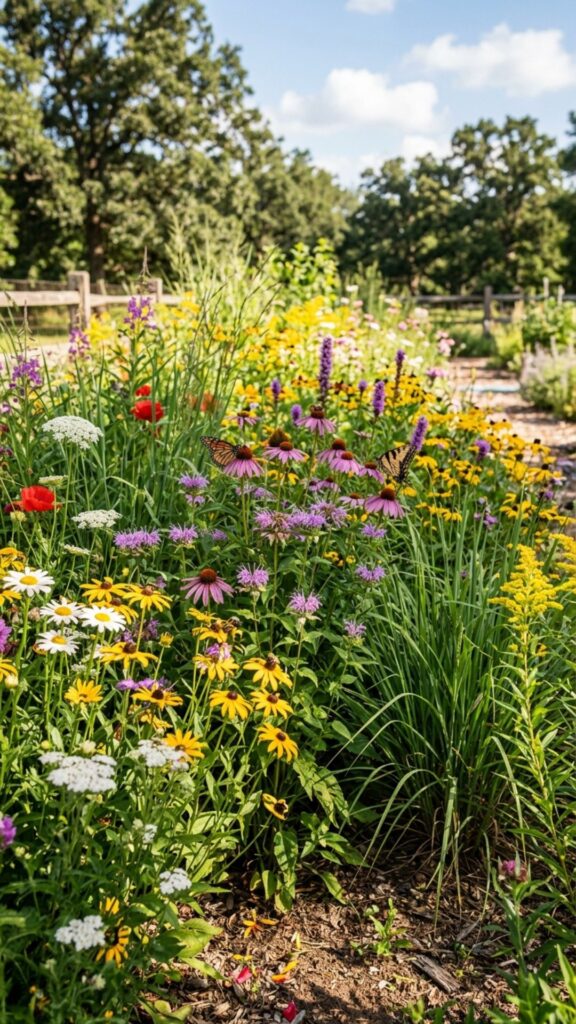
A wide band of tall native wildflowers and grasses creates a natural, low-cost screen that hums with bees and butterflies. Species like coneflower, black-eyed Susan, and Joe-Pye weed reach four to six feet and need almost no watering once established.
This relaxed, meadow style suits cottage and country homes beautifully. It also cuts mowing time and supports local ecosystems, making it one of the most eco-friendly options on this list.
19. Install a Retractable Awning or Screen
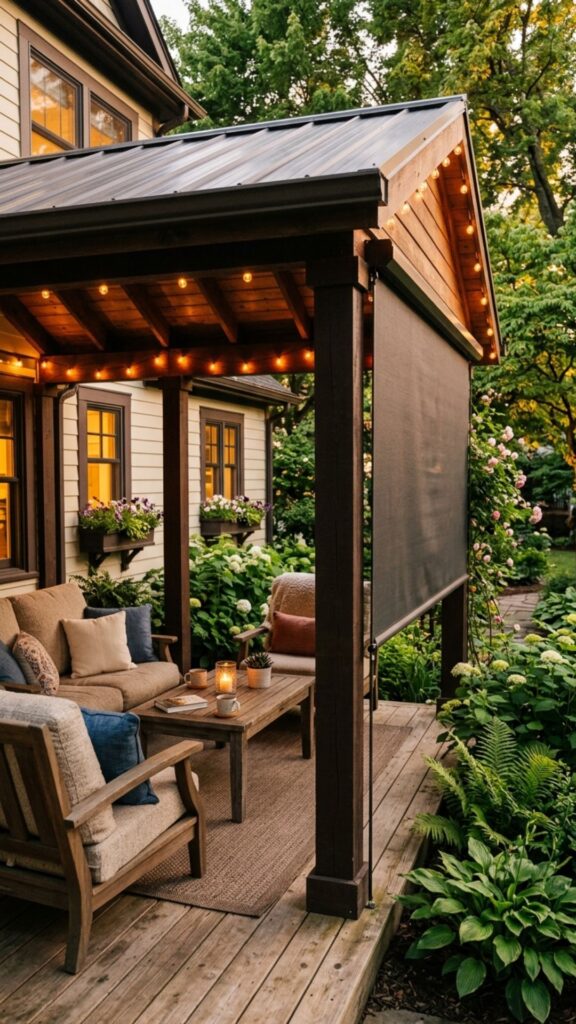
For controllable privacy, motorized retractable screens roll down at the push of a button and tuck away when you want an open view. They’re perfect for porches and pergolas where you want flexibility.
Look for weather-rated fabric and a sturdy track system. While the upfront cost is higher, the convenience of instant privacy on demand makes it worthwhile for frequently used outdoor spaces.
20. Zone the Yard With Mixed Materials
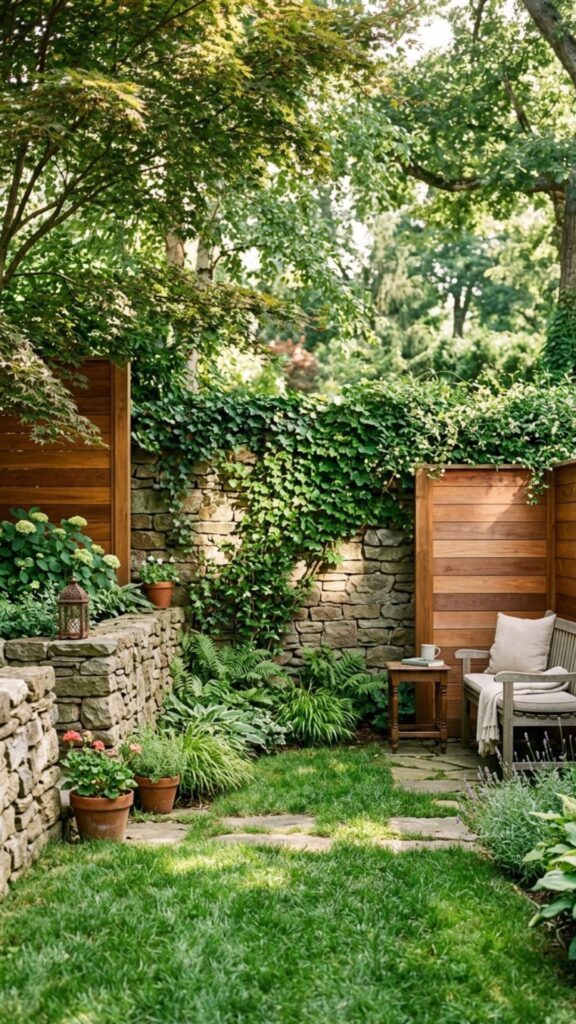
The most beautiful privacy landscaping for backyards often blends several ideas rather than relying on one. Pair a low stone wall with tall grasses, a slat panel with a climbing vine, or a hedge with a water feature to layer both function and style.
Mixing materials breaks up monotony and lets you tailor privacy to each part of your yard. Screen the dining area heavily, keep the garden open, and you’ll create a space that feels intentional, cozy, and truly your own.
Conclusion
Creating a private backyard doesn’t mean sacrificing beauty. Whether you plant a fast-growing bamboo screen, build a cedar slat fence, or layer flowering shrubs with a bubbling fountain, the right mix gives you seclusion and serious curb appeal. Start with the areas where you feel most exposed, choose one or two ideas that fit your climate and budget, and build from there.
Ready to reclaim your backyard? Grab a notepad, walk your space, and mark the spots that need screening most. Then pick your favorite ideas from this list and start with a single weekend project. Small steps add up fast, and before long you’ll have the private, beautiful retreat you deserve.
What is the fastest-growing plant for backyard privacy?
Bamboo is the fastest-growing privacy plant, adding several feet per season. Among trees and shrubs, cherry laurel and Leyland cypress grow up to two to three feet per year, giving you a full screen in just a few seasons.
How can I get backyard privacy without a fence?
You can create privacy without a fence using hedges, tall ornamental grasses, potted trees, a pergola with curtains, trellises with climbing vines, or a living green wall. These options screen views while looking softer and more natural than solid fencing.
What is the cheapest way to add privacy to a backyard?
The cheapest options are fast-growing plants like ornamental grasses and wildflowers, or a simple trellis with climbing vines. Seeds and small starter plants cost far less than fencing or stone walls and fill in quickly.
How tall should privacy landscaping be?
Aim for six to eight feet to block standing sightlines from neighbors at ground level. If you need to block views from a second-story window, choose taller trees or elevated screens reaching 10 feet or more.
Which privacy plants stay green all year?
Evergreen choices like arborvitae, boxwood, holly, Italian cypress, and cherry laurel keep their leaves year-round, giving you consistent coverage even in winter when deciduous plants lose their foliage.