A small patio doesn’t mean small dreams. If you love the idea of fresh herbs, trailing vines, and pops of green but feel boxed in by limited floor space, the answer is simple: grow up, not out. Vertical gardens turn bare walls, railings, and forgotten corners into lush, living features.
I’ve spent years designing outdoor spaces for cramped balconies and sprawling terraces alike, and vertical gardening is the trick I reach for most.
In this guide, you’ll learn 20 practical vertical garden patio ideas you can actually build, plus tips on plants, materials, and upkeep. Whether you’re working with a tiny apartment ledge or a roomy deck, there’s something here for you.
1. Mount a Living Wall Panel System
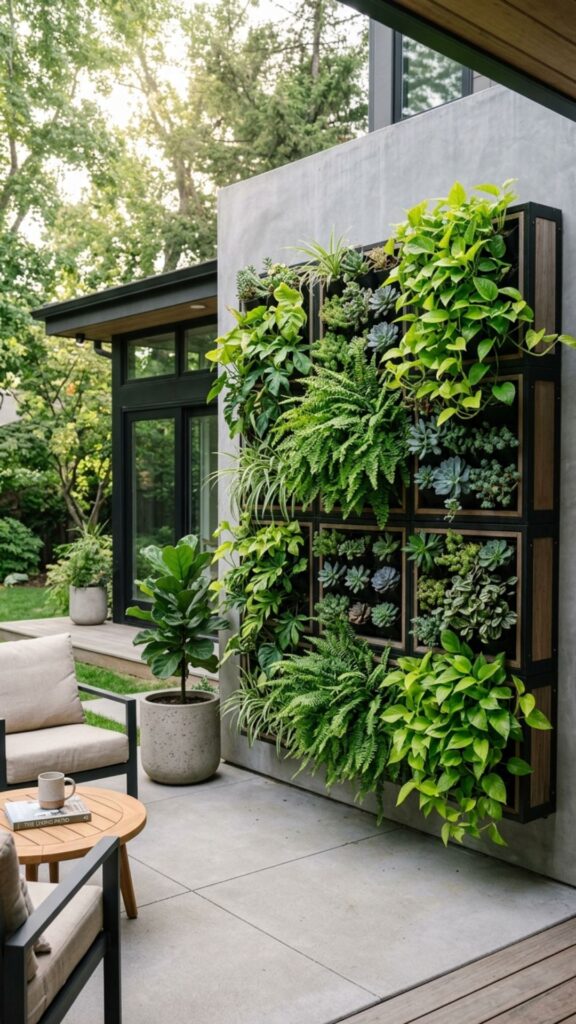
Modular living wall panels are the fastest way to get a full green wall without much fuss. These pre-built pockets or trays snap onto a frame, hold soil or felt, and let you plant a dense tapestry of greenery in an afternoon. Many come with built-in drip irrigation, which takes the guesswork out of watering.
For modern patios, I recommend sticking to a tight palette—think ferns, pothos, and small succulents—for a clean, curated look. If you’re renting, choose a freestanding frame instead of drilling into walls. You’ll still get the wow factor without losing your deposit.
2. Hang a Pallet Planter Garden
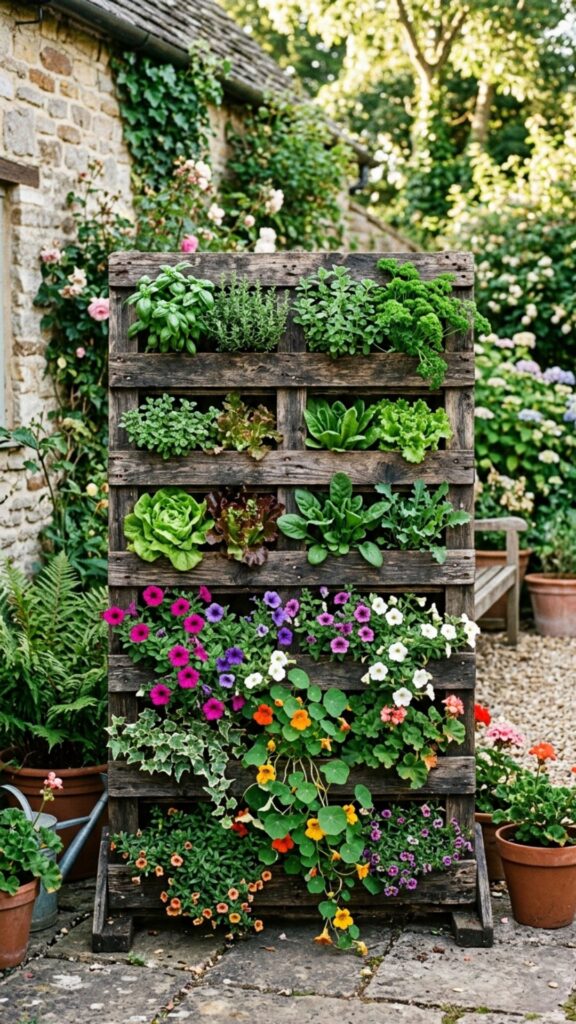
Reclaimed wooden pallets remain one of the most budget-friendly vertical garden ideas around. Stand one upright, line the back and bottom of each gap with landscape fabric, fill with soil, and plant. Herbs, lettuces, and trailing flowers all thrive in these slim horizontal pockets.
Sand the wood well and seal it with an outdoor-safe finish to prevent rot and splinters. A pallet garden brings instant rustic charm, and it pairs beautifully with industrial or farmhouse-style patios. Just make sure the pallet is stamped “HT” (heat treated) rather than chemically treated.
3. Install a Trellis With Climbing Plants
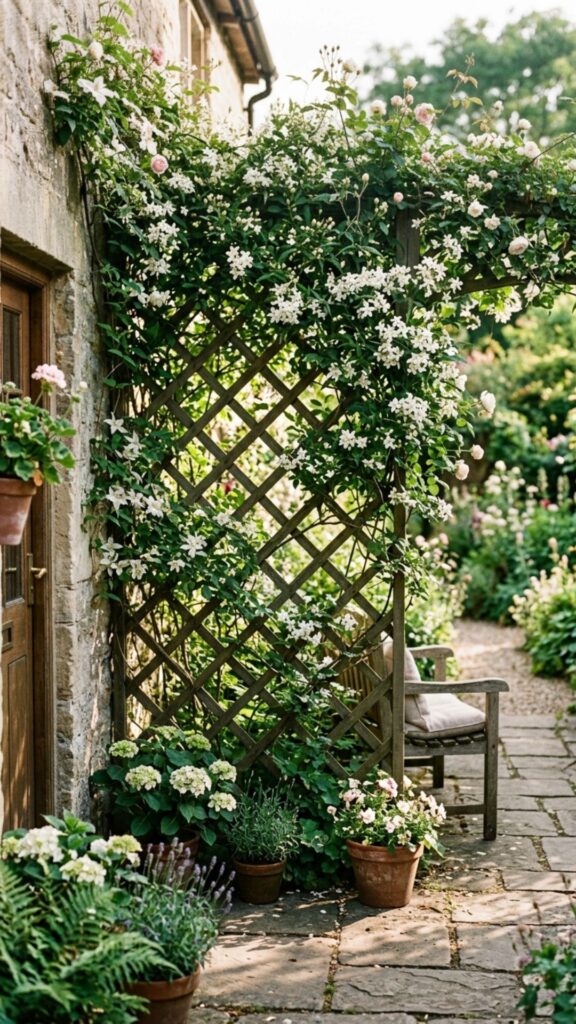
A trellis is the classic vertical solution, and for good reason. Attach one to a fence or wall, then train climbers like jasmine, clematis, or star jasmine to weave through the framework. Within a season or two, you’ll have a fragrant, flowering screen that doubles as privacy.
Choose a metal or powder-coated trellis for a sleek modern feel, or go with cedar for warmth. Climbing edibles like cucumbers and pole beans work here too, giving you a patio that’s as productive as it is pretty.
4. Build a Tiered Ladder Planter
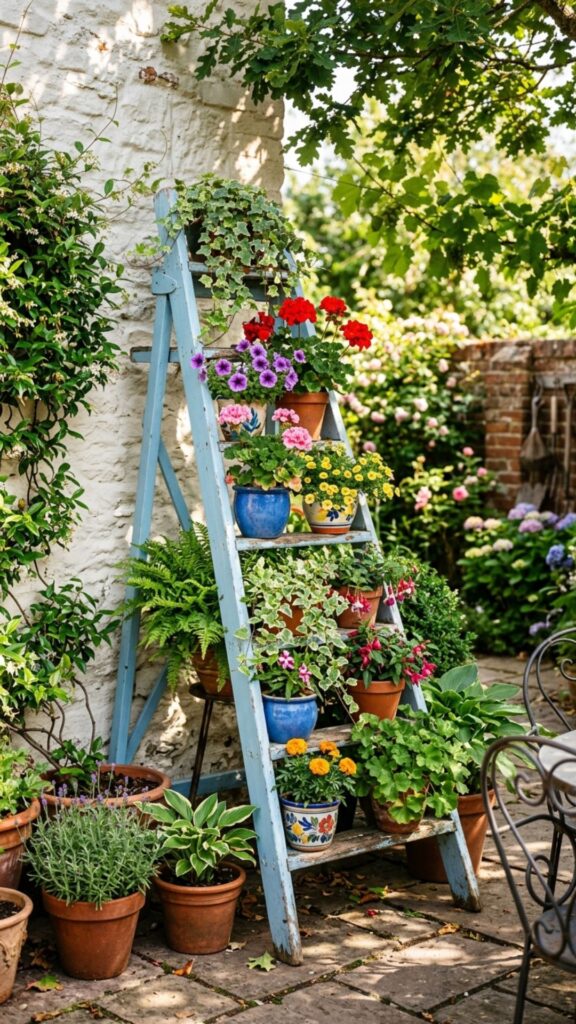
An old wooden ladder or a purpose-built tiered stand makes staggered planting effortless. Each rung or shelf holds a row of pots, so you can display sun-lovers up top and shade-tolerant plants below. The height difference creates depth and draws the eye upward.
This idea shines in corners where floor space is precious. Group herbs by cooking use, or mix flowering annuals for a cascade of color. A quick coat of exterior paint lets you match the ladder to your patio palette.
5. Create a Gutter Garden
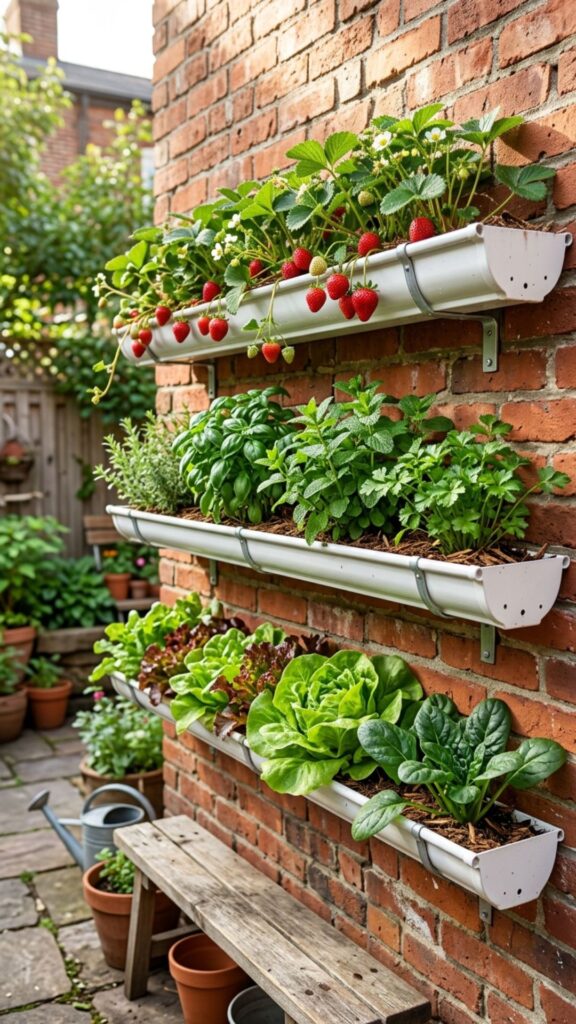
Rain gutters aren’t just for roofs. Mounted horizontally in rows along a wall, they become shallow planters perfect for lettuce, spinach, strawberries, and herbs. Drill small drainage holes, cap the ends, and space each row far enough apart for growth.
Gutter gardens are ideal for anyone chasing a minimalist, linear look. Because they’re shallow, water them a bit more often and feed regularly. This setup keeps your salad greens at eye level and off the ground, away from pests.
6. Use Stackable Planter Towers
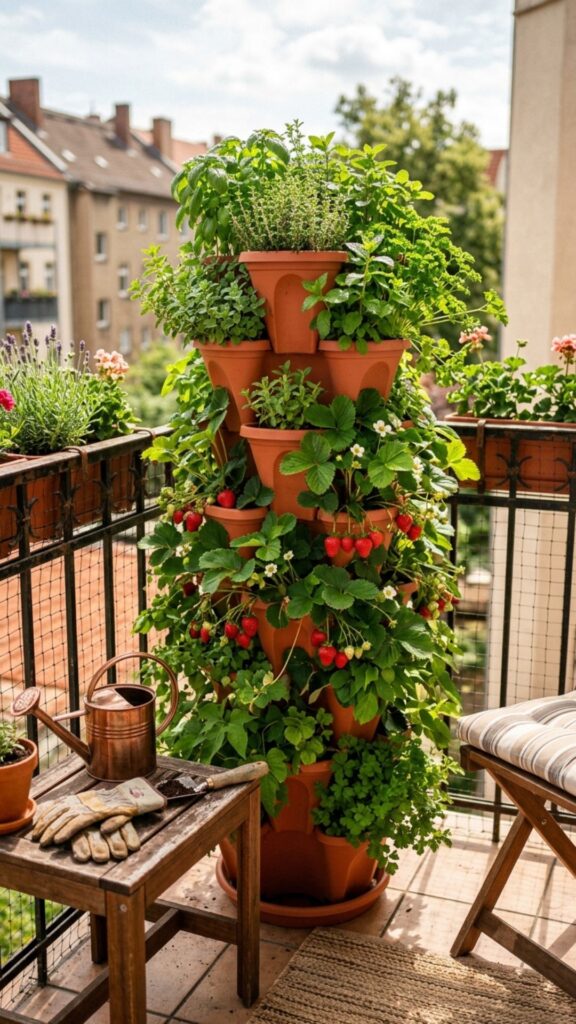
Stackable planters interlock to form a single tall column, giving you multiple planting pockets in one small footprint. Many rotate so plants get even sun, and some include a central watering tube that feeds every level at once.
These towers are a favorite for strawberry patches and herb gardens on compact balconies. They’re lightweight, easy to move, and take up barely a square foot of floor. For renters and beginners, they’re one of the simplest entry points into vertical gardening.
7. Hang Macramé Plant Holders
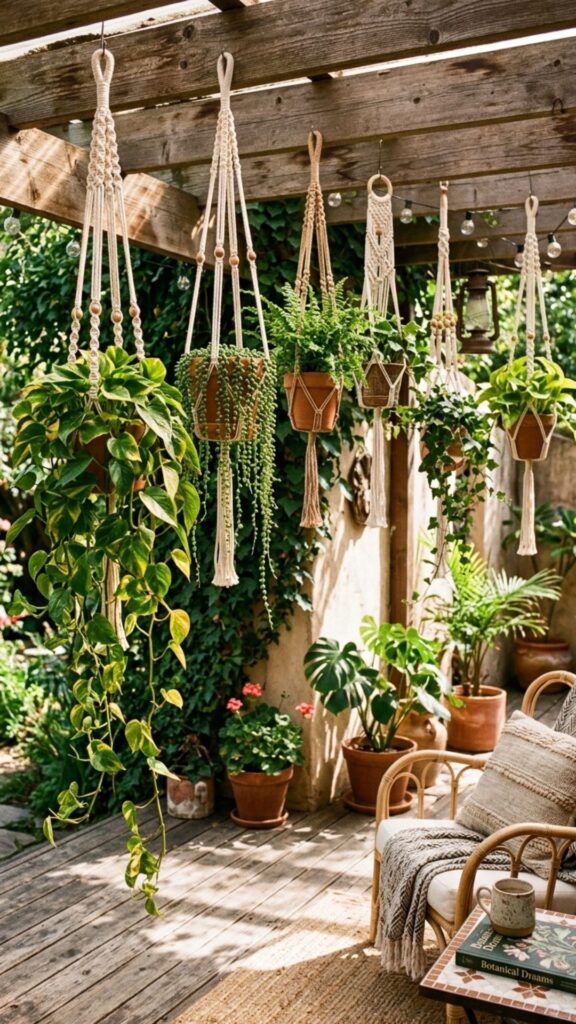
Macramé holders bring texture and a relaxed, bohemian vibe to any patio. Suspend them from a pergola, ceiling hook, or sturdy bracket to fill empty overhead space with trailing greenery. Spider plants, string of pearls, and pothos all look stunning cascading down.
Vary the rope lengths to create rhythm and movement. Because hanging pots dry out faster, choose plants that tolerate a little neglect, and consider a self-watering insert. The result is soft, layered greenery that feels effortless.
8. Mount Wall-Hung Pocket Planters
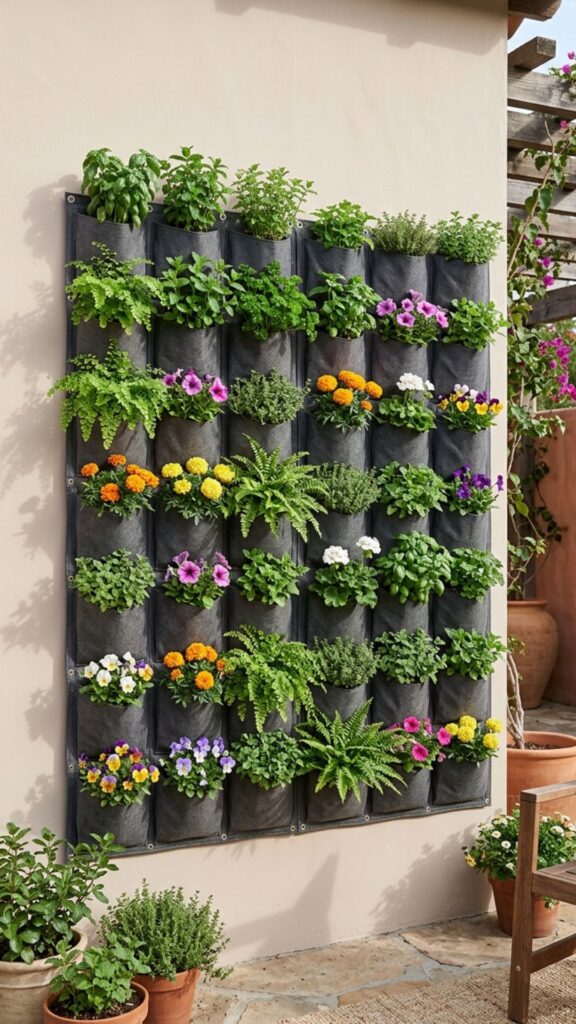
Felt or fabric pocket planters attach flat against a wall and hold surprisingly large plants. They’re lightweight, foldable, and easy to reposition, making them perfect for experimenting with layout before committing.
Fill them with a lightweight potting mix and group plants with similar water needs in the same row. These pockets suit herbs, small ferns, and compact flowers. For a modern edge, arrange them in a grid and keep the plant colors consistent.
9. Repurpose a Shoe Organizer
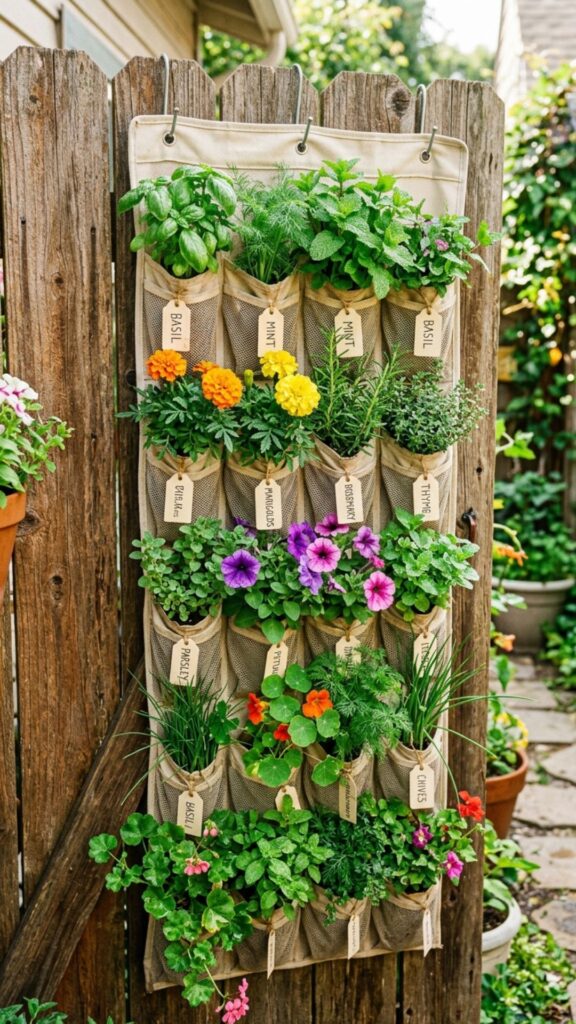
A hanging fabric shoe organizer is a clever, low-cost hack that gardeners have loved for years. Each pocket becomes a mini planter for herbs, lettuce, or flowers. Hang it over a railing or on a wall hook, and you’ve got instant vertical growing space.
Poke a few drainage holes in each pocket and use a well-draining mix. This idea is perfect for testing the vertical waters without spending much. When the season ends, it folds flat for easy storage.
10. Design a Green Wall Around a Mirror
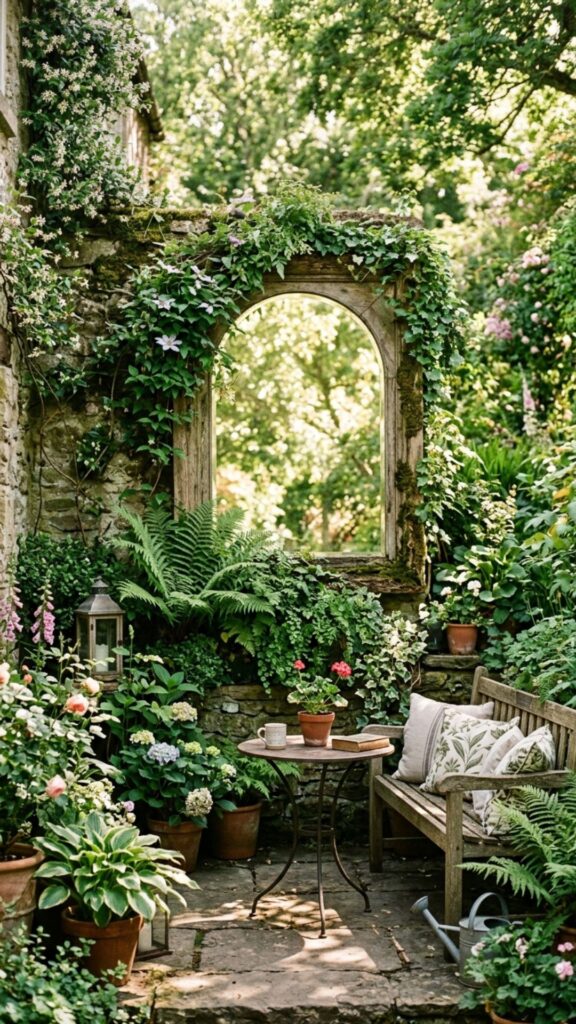
Framing an outdoor mirror with lush foliage is a designer trick that makes small patios feel twice as big. The mirror reflects your greenery and light, creating the illusion of a deeper space. Surround it with a living frame of ferns and trailing plants.
Use a weatherproof mirror rated for outdoor use to avoid warping. This idea works wonders in shady courtyards where you want to bounce light around. It’s equal parts practical and dramatic.
11. Add Railing Planters to Balconies
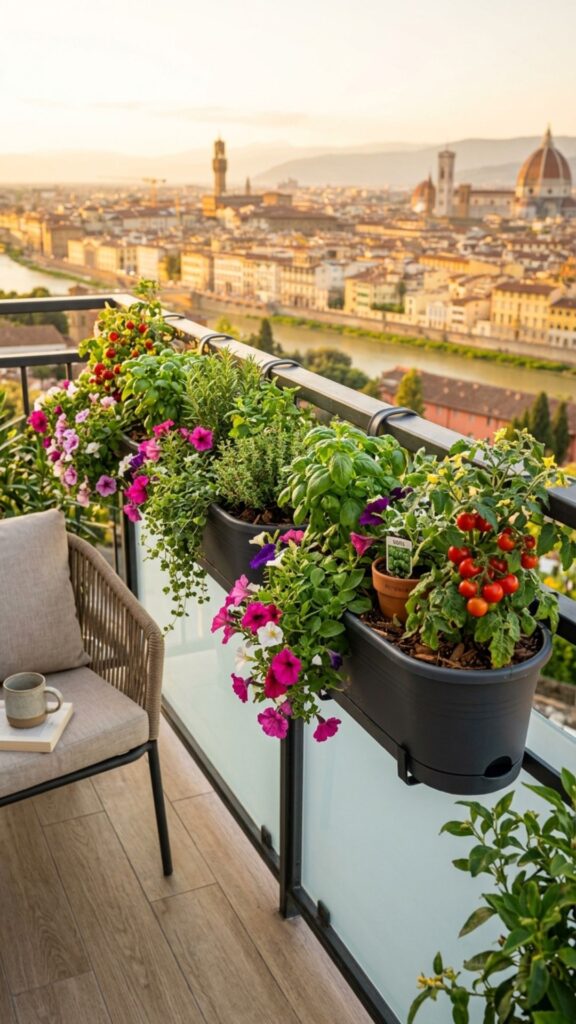
Balcony railing planters saddle over the top rail and free up every inch of floor. They’re perfect for herbs, cascading petunias, or cherry tomatoes, keeping your greenery within arm’s reach.
Secure them tightly with brackets or straps, especially in windy areas—safety first. Match planter colors to your railing for a seamless look, or contrast them for a bold statement. This is one of the easiest wins for apartment dwellers.
12. Grow a Vertical Herb Wall
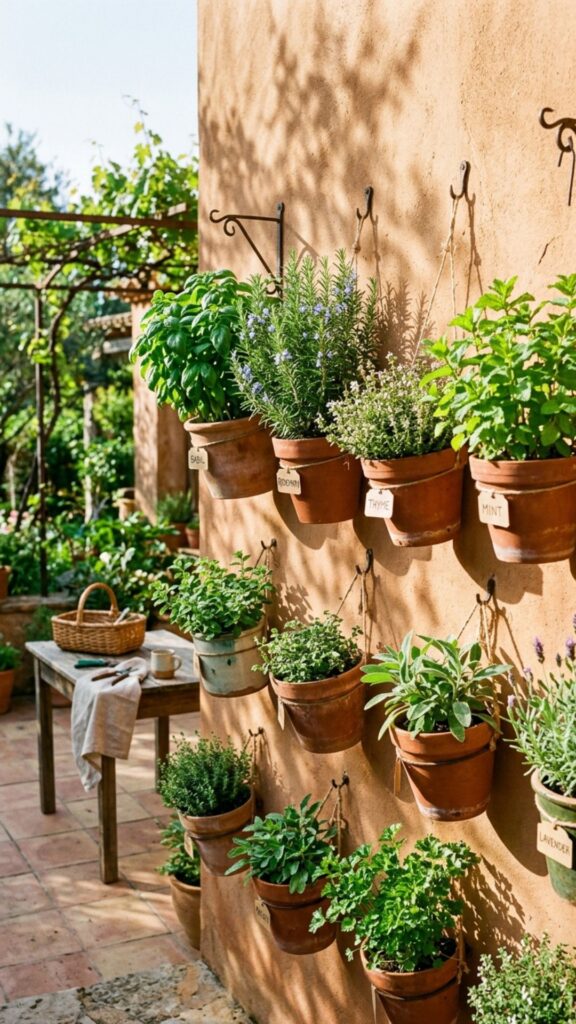
A dedicated herb wall keeps basil, thyme, rosemary, and mint steps from your kitchen. Use a wall-mounted rail with hanging pots, or a pocket system positioned near your patio door. Fresh seasonings within reach make cooking a joy.
Group herbs by their water needs, and give sun-lovers like rosemary the brightest spot. Regular harvesting keeps plants bushy and productive. A herb wall proves vertical gardens can be both beautiful and genuinely useful.
13. Repurpose Old Wooden Crates
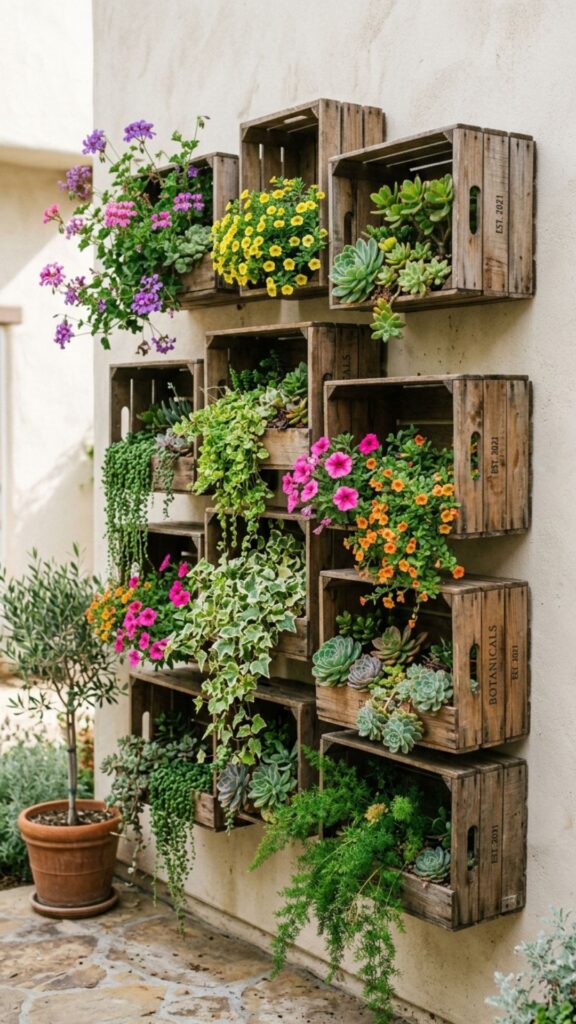
Stacked and mounted wooden crates create a modular, staggered garden with tons of character. Fix them to a wall in a loose grid, then fill each box with soil and plants. The varied depths suit everything from succulents to trailing flowers.
Line the interiors with landscape fabric to hold soil and slow drainage. Leave the wood raw for a rustic look or paint it for a contemporary finish. Crates are easy to source secondhand, keeping costs low.
14. Install a Metal Grid Wall
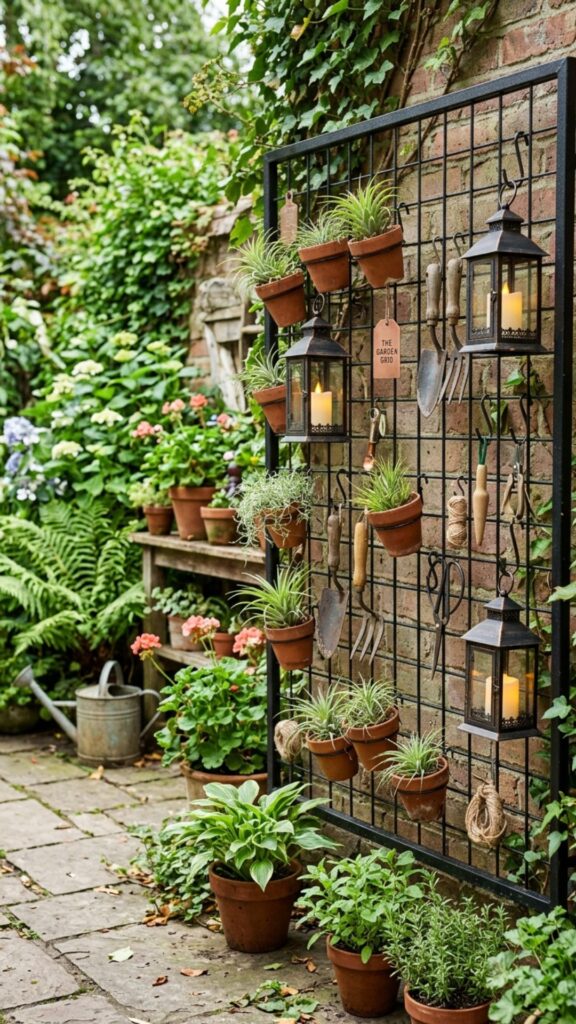
A powder-coated metal grid mounted to a wall lets you hang pots, tools, and small shelves wherever you like. This flexible system suits minimalist and industrial patios, and you can rearrange it endlessly as plants grow.
Use S-hooks and lightweight pots to keep the load manageable. The open grid feels airy rather than bulky, and it doubles as display space for lanterns or air plants. It’s a favorite among design-forward gardeners.
15. Try a Freestanding Green Screen
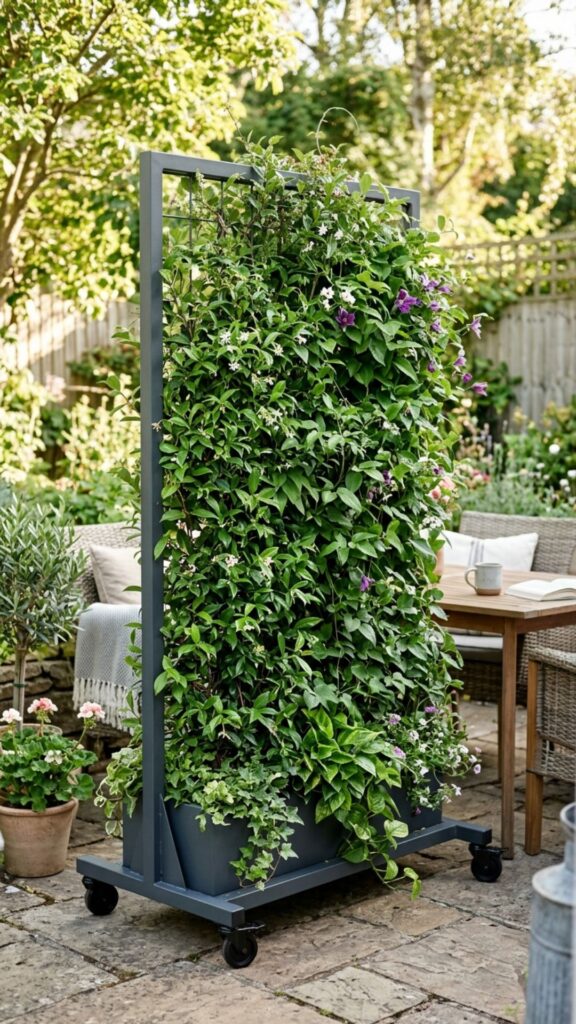
A freestanding green screen acts as a living privacy divider you can move anywhere. Built on a rolling base, it holds a dense wall of foliage that blocks sightlines without permanent construction—ideal for renters.
Plant fast-growing climbers or fill built-in troughs with bushy foliage. Position it to hide an unsightly view or carve out a cozy nook. When you rearrange your patio, it simply rolls along with you.
16. Hang Terracotta Pots on Rails
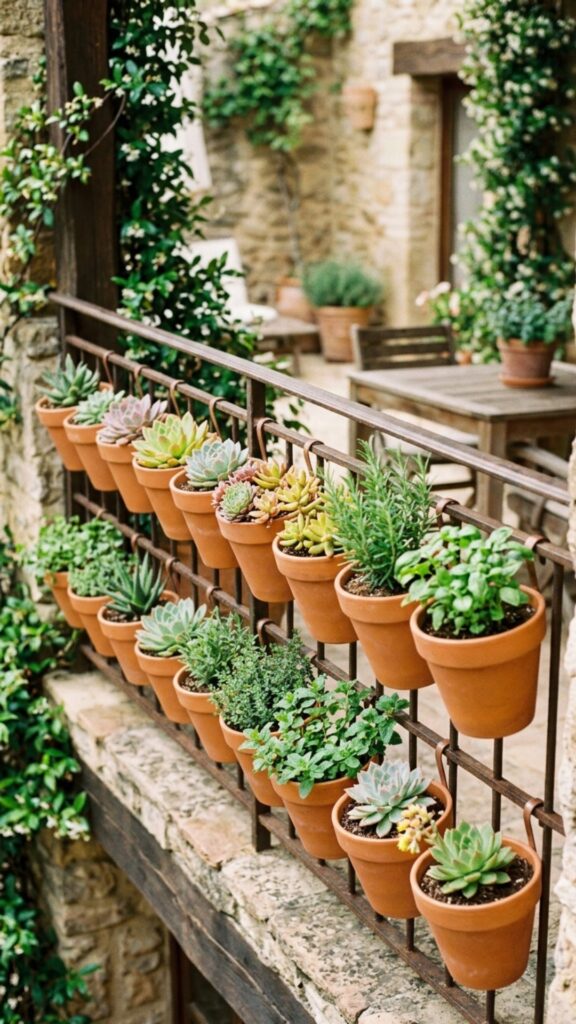
Rows of small terracotta pots clipped to metal rails create a charming Mediterranean look. The warm clay tones pair beautifully with greenery and age gracefully over time. Herbs and small succulents feel right at home here.
Because terracotta breathes, it wicks away excess moisture—great for plants that hate wet feet. Water a touch more often in summer to compensate. This idea delivers timeless style at a modest price.
17. Build a Rain Chain Planter Feature
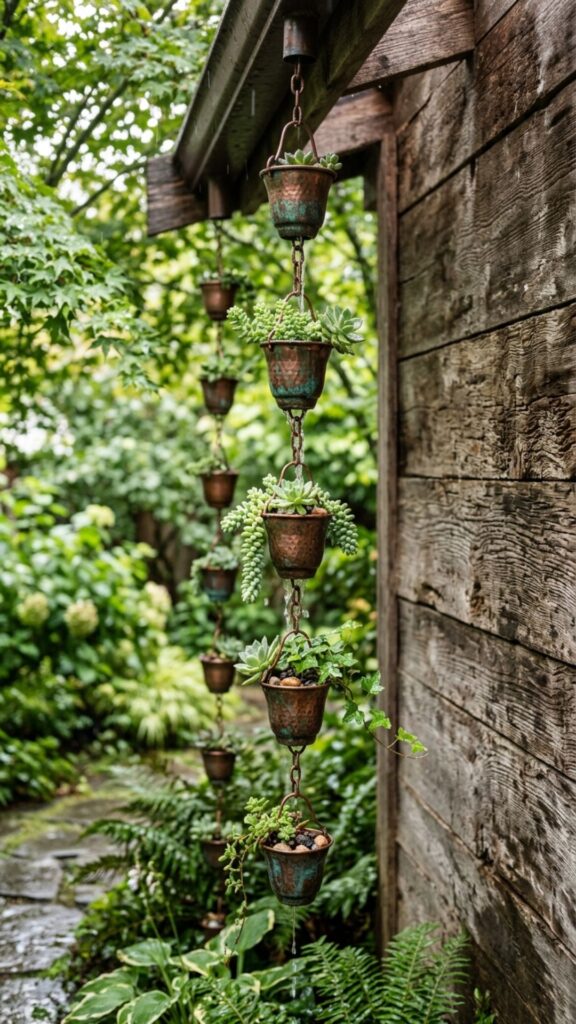
Combine a decorative rain chain with small hanging planter cups for a feature that’s both functional and lovely. As rainwater trickles down the chain, it can help hydrate the plants along the way, turning drainage into decor.
Position it under a downspout or pergola edge. Choose drought-tolerant plants that also handle occasional soaking. This creative touch adds gentle sound and motion to your patio while making smart use of vertical space.
18. Create a Succulent Living Frame
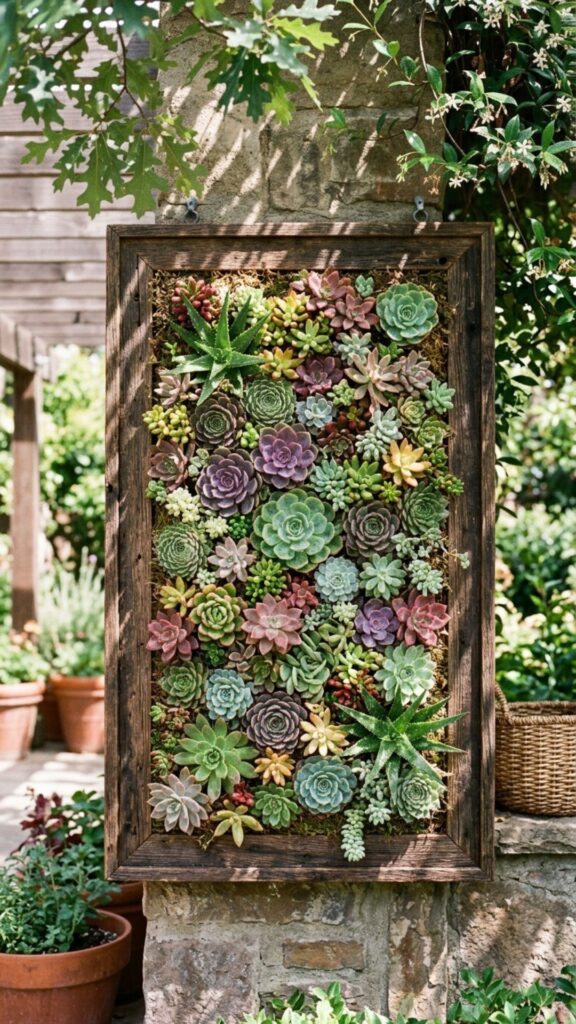
A living picture frame filled with succulents hangs like art on your wall. Plant a variety of colors and textures into a shallow framed box, let the roots establish flat, then mount it vertically once secure.
Succulents are perfect here because they need little water and hold their shape. Mix rosette echeverias with trailing sedums for contrast. This is a striking, low-maintenance centerpiece that never fails to spark conversation.
19. Use Hanging Basket Columns
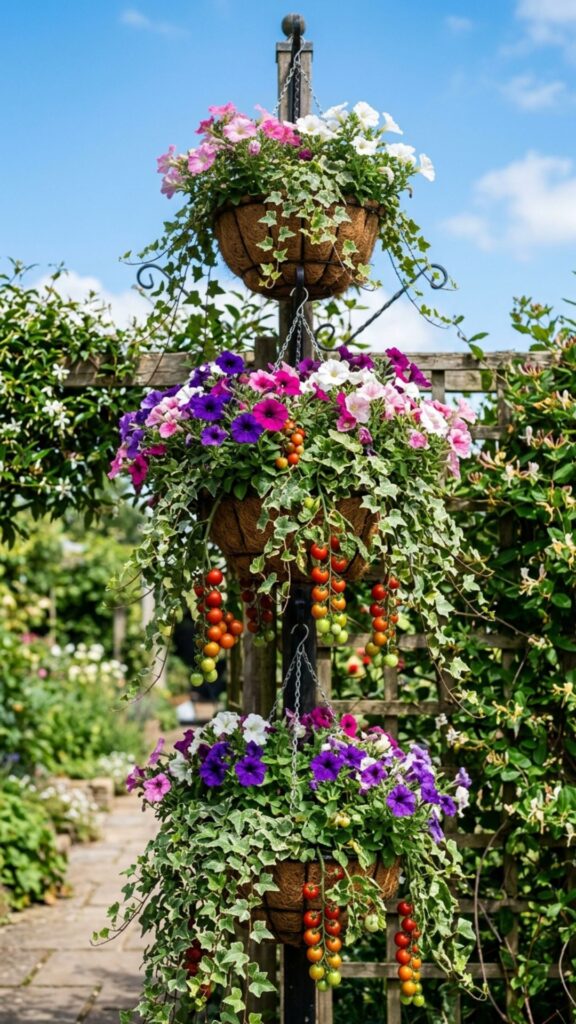
Stack a series of hanging baskets on a single sturdy chain or pole to build a vertical column of blooms. Each tier holds trailing flowers or edibles, creating a waterfall of color from top to bottom.
Anchor the support firmly and check the weight limit before loading up. Petunias, ivy, and trailing tomatoes all suit this setup. It’s an easy way to add height and drama to an otherwise flat corner.
20. Design a Full Botanical Feature Wall
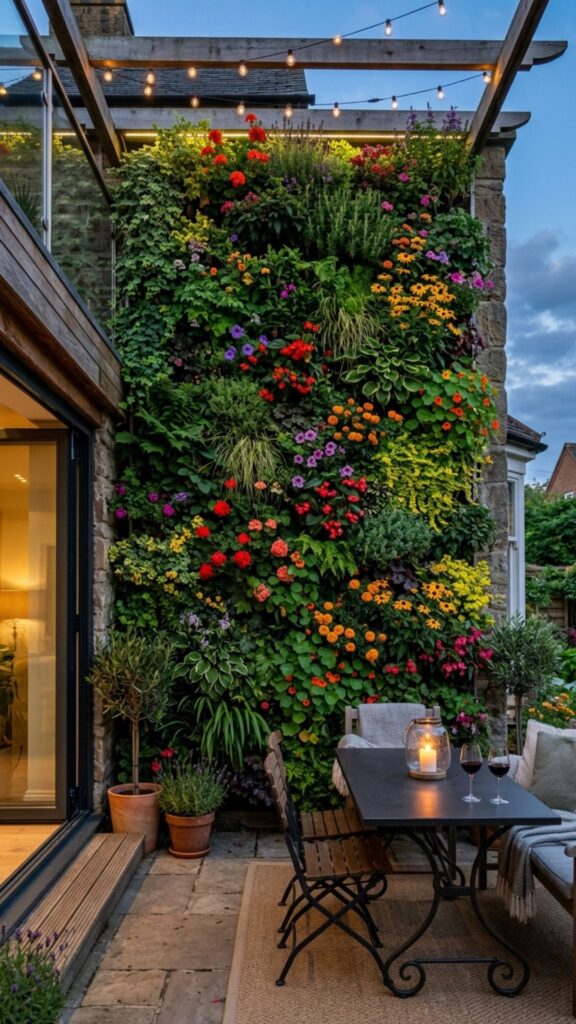
For the boldest statement, dedicate an entire wall to a lush, floor-to-ceiling green installation. Combine a modular panel system with irrigation, layer in varied textures, and add integrated lighting for evening ambiance. This is the showpiece that transforms a patio into a retreat.
Plan for maintenance access and a reliable watering line, since a wall this dense needs consistent care. Mix evergreens with seasonal color for year-round interest. Done well, a feature wall becomes the heart of your outdoor space.
Bring Your Patio to Life
Vertical gardens prove that limited space is no barrier to a thriving outdoor oasis. From simple shoe-organizer hacks to full botanical feature walls, these vertical garden patio ideas give you flexible ways to grow more greenery, boost privacy, and add serious style. Start with one project that fits your budget and sunlight, then build from there as your confidence grows.
Ready to transform your patio? Pick your favorite idea from this list, grab your plants, and start building this weekend. Your greener, calmer outdoor space is closer than you think.
What is a vertical garden for a patio?
A vertical garden is a growing system that uses walls, railings, or freestanding frames to grow plants upward instead of across the ground. It maximizes greenery in small spaces using panels, pockets, trellises, or stacked planters.
What plants grow best in a vertical patio garden?
Herbs (basil, thyme, mint), leafy greens (lettuce, spinach), succulents, ferns, pothos, and trailing flowers like petunias grow best. Choose plants that match your patio’s sunlight and group them by similar water needs.
Are vertical gardens hard to maintain?
Not usually. Vertical gardens dry out faster than ground beds, so consistent watering is key. Adding drip irrigation and choosing hardy, low-maintenance plants keeps upkeep to just a few minutes a week.
Can renters install a vertical garden patio?
Yes. Renters should choose freestanding frames, railing planters, hanging baskets, or fabric pocket systems that don’t require drilling. These options deliver lush results while protecting walls and security deposits.
How much does a vertical garden cost to set up?
Costs range widely. Budget hacks like pallets or shoe organizers cost under $30, while modular living wall systems with irrigation can run several hundred dollars. Start small and expand over time.