There’s nothing worse than setting up the perfect patio dinner only to watch napkins fly and candles blow out. Wind can turn a relaxing outdoor space into a frustrating one fast. If your patio catches every breeze, you’re not stuck with it. A few smart changes can block the gusts and keep things calm.

I’ve spent years testing different ways to tame windy patios, and the good news is you don’t need a huge budget or major renovation.
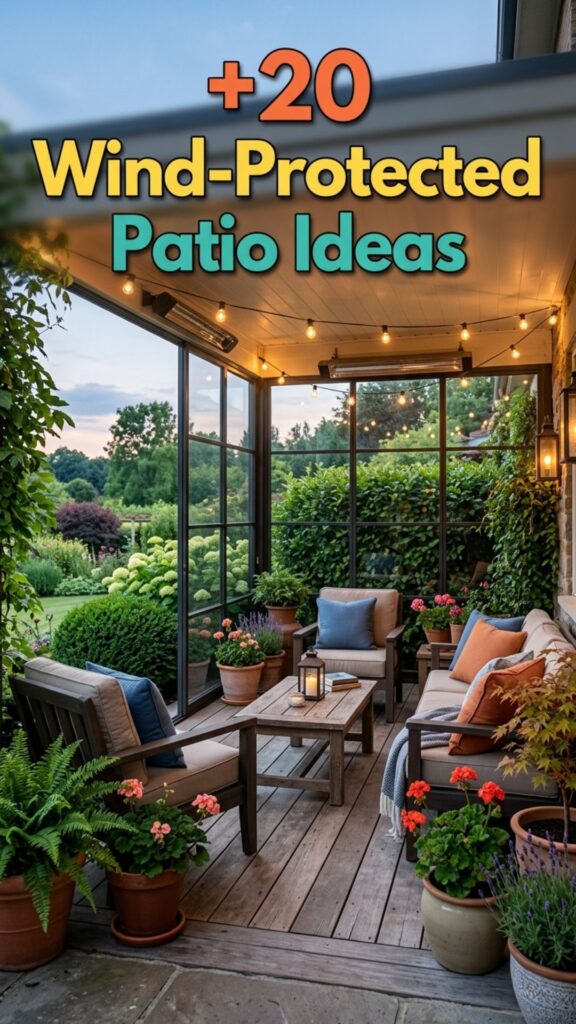
Below, you’ll find 20 wind-protected patio ideas that range from quick weekend fixes to long-term upgrades. Some add privacy, some add greenery, and all of them help you enjoy your outdoor space no matter the weather. Let’s dig in.
1. Install a Solid Privacy Fence

A solid fence is one of the most reliable ways to block wind. Choose a design without gaps, like tongue-and-groove wood or composite panels, so air can’t sneak through. A fence between five and six feet tall will shield most seating areas while still feeling open above.
Placement matters just as much as height. Figure out which direction your prevailing wind comes from, then position the fence on that side. If you’re not sure, spend a few breezy afternoons watching how leaves and flags move. That simple observation will tell you exactly where to put your barrier.
2. Add a Pergola With a Retractable Canopy
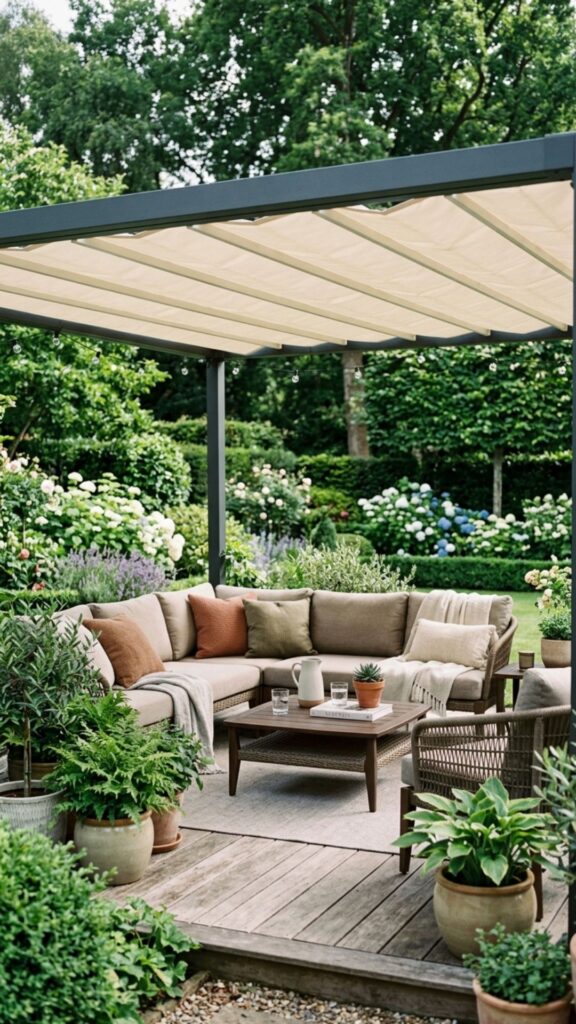
A pergola gives you structure overhead, and a retractable canopy lets you control both sun and wind. On calm days you can open it up. When the breeze picks up, you close the canopy and add a sense of enclosure that softens gusts from above.
Look for canopies made from weather-resistant fabric like acrylic canvas, which holds up against fading and moisture. Pair the pergola with side panels or curtains, and you’ve built a flexible shelter that adapts to changing conditions throughout the day.
3. Use Outdoor Curtains

Outdoor curtains are an affordable, stylish way to cut the wind. Hang them from a pergola, gazebo, or a simple rod system mounted to your house. When a breeze rolls in, draw them closed to create an instant windbreak that also adds a soft, resort-like feel.
Choose heavier fabrics that won’t billow too easily, and add tiebacks so you can open them on calm days. Weighted hems or curtain rings with clips help keep the fabric anchored. This is one of the easiest fixes on this list, and you can complete it in an afternoon.
4. Plant a Living Hedge

A dense hedge acts as a natural windbreak while adding beauty and privacy. Evergreens like boxwood, arborvitae, or privet stay full year-round, so you get protection even in winter. Plant them close together along the windiest edge of your patio for the best results.
The bonus with hedges is that they filter wind rather than block it completely. That’s actually better than a solid wall in some cases, because solid barriers can create turbulence on the other side. A living hedge slows the air down gently, which keeps your space calm without odd swirling gusts.
5. Set Up a Windbreak With Tall Planters

If you rent or want flexibility, tall planters filled with grasses or shrubs make a movable windbreak. Line up several large containers along one side of your patio to form a green barrier you can rearrange whenever you like.
Ornamental grasses such as feather reed grass or bamboo work beautifully here because they sway without snapping. Choose heavy planters, or add gravel at the base for extra stability, so they don’t tip in strong gusts. This idea blends function with fresh, natural style.
6. Build a Slatted Screen

A slatted screen offers a modern look while still slowing the wind. The small gaps between slats break up gusts and reduce turbulence, giving you comfort without a heavy, closed-in feeling. Horizontal or vertical slats both work, so pick what suits your style.
Cedar and composite materials are popular choices because they resist rot and weathering. You can build a freestanding version or attach panels to posts. For extra warmth, mount a screen on two or three sides to wrap your seating area in gentle protection.
7. Add a Solid Roof or Covered Structure

Sometimes wind comes with rain, and a solid roof handles both. A covered patio, attached veranda, or standalone gazebo with a real roof gives you year-round shelter. You’ll be able to use the space during light storms and windy stretches alike.
If you’re building from scratch, angle the roof slightly and add gutters to manage runoff. Combine the roof with partial walls or screens, and you’ll create a genuine outdoor room. This is a bigger investment, but it pays off in the number of extra days you get outside.
8. Use a Fire Pit as a Cozy Anchor

A fire pit won’t block wind on its own, but it creates warmth that makes a breezy evening far more bearable. Position it in the most sheltered corner of your patio so the flames stay steady and the heat sticks around.
Choose a design with a wind guard or glass surround for windy locations. Gas models let you control the flame easily, while wood-burning pits add crackle and atmosphere. Surround the fire pit with comfortable seating, and you’ve got a natural gathering spot that draws people together even when the air is cool.
9. Install Glass Wind Panels

Glass panels block wind without blocking your view. Tempered safety glass is the go-to material because it’s strong and clear. Mount panels along a railing or as freestanding dividers to keep gusts out while you still enjoy the scenery around you.
These work especially well on elevated decks or patios with a nice outlook you don’t want to hide. Frosted or tinted options add privacy if you prefer. Glass does need occasional cleaning, but the payoff is a bright, open feel with real wind protection.
10. Create a Sunken Patio

A sunken patio sits below ground level, which naturally shelters it from wind. By lowering the seating area even a couple of feet, you let the surrounding ground act as a barrier. Gusts pass overhead while you stay tucked in comfort.
This works best during new construction or a full patio redesign, since it involves excavation. Add built-in seating along the edges and some soft lighting, and the space feels like a private retreat. It’s a striking design choice that solves the wind problem at its root.
11. Hang Bamboo or Reed Fencing

Rolled bamboo and reed fencing offer a quick, budget-friendly windbreak with a warm, natural look. Attach it to an existing fence, railing, or frame to fill gaps where wind sneaks through. It’s lightweight, easy to install, and adds instant texture.
Because it’s affordable, you can replace it every few seasons if it wears down. Secure it well with zip ties or wire so it stays put in strong gusts. This idea suits tropical, bohemian, or casual patio styles and comes together in just an hour or two.
12. Position Furniture Strategically

You don’t always need new structures. Sometimes rearranging your furniture makes a real difference. Place large pieces like sofas or storage benches along the windy edge so they act as low barriers for the rest of the space.
Group your seating in a tighter cluster rather than spreading it out, which keeps everyone in the calmest zone. Face chairs away from the prevailing wind for extra comfort. This costs nothing and is worth trying before you spend on bigger projects.
13. Add a Retractable Awning
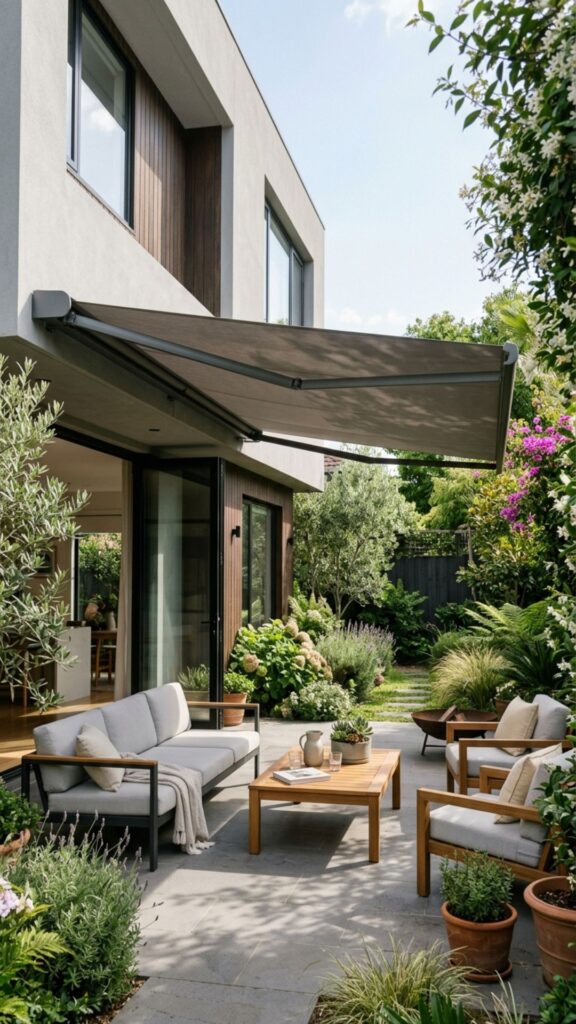
A retractable awning attaches to your house and extends over the patio when you need it. It shields you from wind coming over the roofline and offers shade too. Roll it back in when the weather calms, and your space opens right up.
Motorized versions make operation effortless, and many include wind sensors that retract automatically in strong gusts to protect the fabric. Pair an awning with side screens for even more coverage. It’s a clean, adaptable solution for patios attached to the home.
14. Build a Stone or Brick Wall

A masonry wall is the most permanent windbreak you can build. Stone, brick, or concrete block walls last for decades and add serious value to your outdoor space. A partial wall around two or three feet high blocks ground-level gusts while keeping sightlines open.
For full protection, go taller on the windiest side. Add a bench cap along the top for extra seating, or plant climbing vines to soften the look. This is a bigger project, but few things beat masonry for durability and quiet, lasting comfort.
15. Use Outdoor Rugs and Soft Textiles

Wind protection isn’t only about barriers. Layering in soft textiles makes a sheltered space feel cozy and inviting, which encourages you to linger. An outdoor rug anchors your seating area and keeps things feeling grounded even on breezy days.
Add throw pillows, weighted blankets, and cushions in weather-resistant fabrics. Choose heavier materials that won’t blow around easily. Once you’ve blocked the worst of the wind with a screen or hedge, these finishing touches turn the patio into a warm outdoor living room.
16. Plant Trees for Long-Term Shelter

Trees are the ultimate natural windbreak, though they take time to grow. Plant a row of fast-growing species like leyland cypress or hybrid poplar on the windward side, and within a few years you’ll have a living wall of protection.
Space them properly so their canopies fill in without crowding. Trees also cool the air, provide shade, and support local birds and pollinators. Think of this as an investment in your future comfort. Every season, the shelter grows stronger and the payoff increases.
17. Add a Gazebo With Side Panels

A gazebo gives you a defined, protected space right in the middle of your yard. Choose one with mesh or fabric side panels you can close when the wind kicks up. These panels stop gusts while letting in filtered light and air.
Hardtop gazebos handle wind and rain better than soft-top models, so pick based on your climate. Set it on a level base and anchor it firmly to the ground. Inside, add cozy furniture and lighting to create a sheltered getaway you’ll use all year.
18. Install Corrugated Metal or Polycarbonate Screens

For an industrial or modern look, corrugated metal and polycarbonate panels make sturdy, weatherproof windbreaks. They’re tough, affordable, and easy to mount on a frame. Polycarbonate is clear or tinted, so it blocks wind while letting light through.
These panels stand up to harsh weather without warping or rotting. Attach them to wooden or metal posts along your patio’s edge. Mix them with planters or wood accents to soften the look. It’s a practical choice that handles demanding conditions with ease.
19. Create a Courtyard Layout

If you’re designing from scratch, a courtyard layout surrounds your patio with walls or building sides on multiple edges. This enclosed shape blocks wind from nearly every direction and creates a private, protected pocket outdoors.
Even a partial L-shape using your house and a single wall makes a big difference. The enclosure traps warmth and calm, so the space feels comfortable earlier in spring and later into fall. Add plants and lighting, and your courtyard becomes a true extension of your home.
20. Combine Multiple Windbreaks
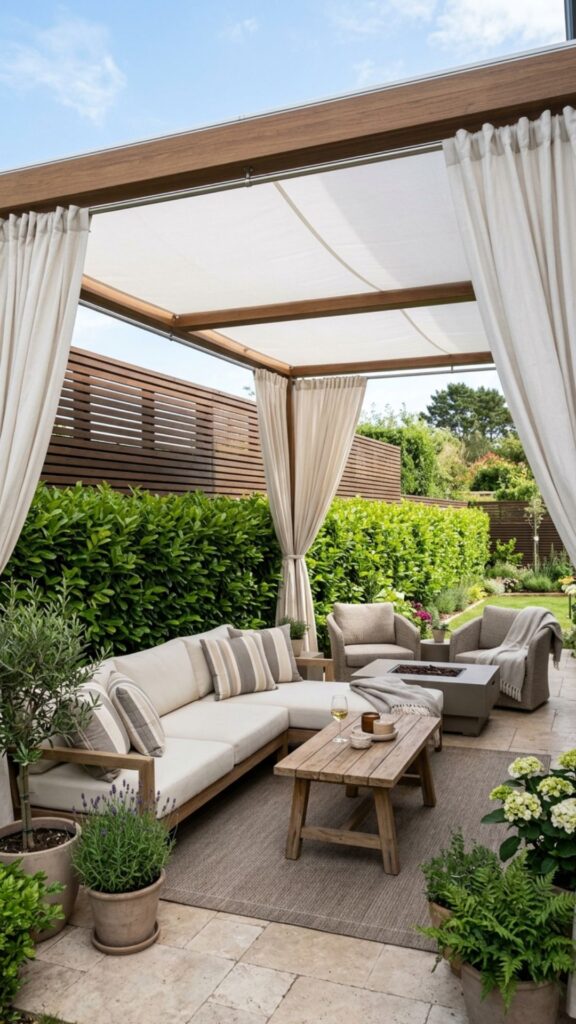
The most effective wind-protected patio ideas often use more than one solution. A hedge on one side, a slatted screen on another, and outdoor curtains overhead work together to handle wind from every angle. Layering gives you flexibility and complete coverage.
Start by identifying your windiest directions, then match each with the right barrier. You might pair a solid fence with tall planters and a pergola canopy. This layered approach adapts to shifting conditions and turns even the breeziest yard into a calm, cozy retreat.
Conclusion
A windy patio doesn’t have to sit empty. With the right mix of these wind-protected patio ideas, you can block gusts, add warmth, and create a space you’ll actually want to use. Whether you start small with outdoor curtains or go big with a masonry wall, every step brings more comfort.
The best approach is to watch how wind moves through your yard, then choose the solutions that fit your budget and style. Ready to reclaim your outdoor space? Pick one idea from this list and get started this weekend. Your cozy, sheltered patio is closer than you think.
What blocks wind best on a patio?
A solid privacy fence or masonry wall blocks the most wind, but a dense hedge or slatted screen often works better because it filters gusts and reduces turbulence. For the best results, position your barrier on the side facing your prevailing wind.
How do I stop wind on my patio without blocking the view?
Use tempered glass wind panels or clear polycarbonate screens. Both stop gusts while keeping your view open. Outdoor curtains you can draw as needed are another great option that preserves sightlines on calm days.
Are plants effective as windbreaks?
Yes. Hedges, ornamental grasses, and trees make excellent natural windbreaks. They filter wind gently rather than blocking it completely, which prevents the swirling turbulence that solid walls can sometimes cause behind them.
What is the cheapest way to protect a patio from wind?
Rearranging furniture costs nothing and can help right away. For a low-cost upgrade, outdoor curtains or rolled bamboo fencing offer real protection for a small investment and install in just a couple of hours.
How tall should a windbreak be?
A windbreak between five and six feet tall shelters most seated areas well. For blocking only ground-level gusts, a two- to three-foot barrier works. Match the height to how the wind moves through your specific space.