A cluttered patio feels stressful before you even sit down. Too many mismatched chairs, tangled string lights, and pots crammed into every corner turn what should be a relaxing spot into visual noise. The good news? You can fix that without a full renovation or a huge budget.
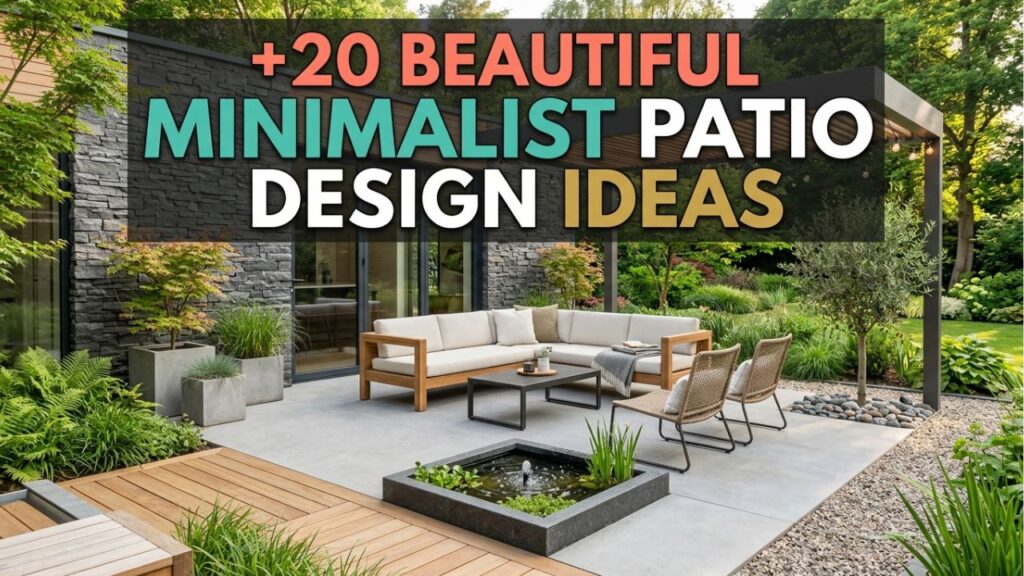
Minimalist patio design ideas focus on clean lines, breathing room, and a few pieces that actually earn their place. I’ve helped homeowners rethink small balconies and sprawling backyards alike, and the same principles work every time: less stuff, better choices, and a clear sense of calm.
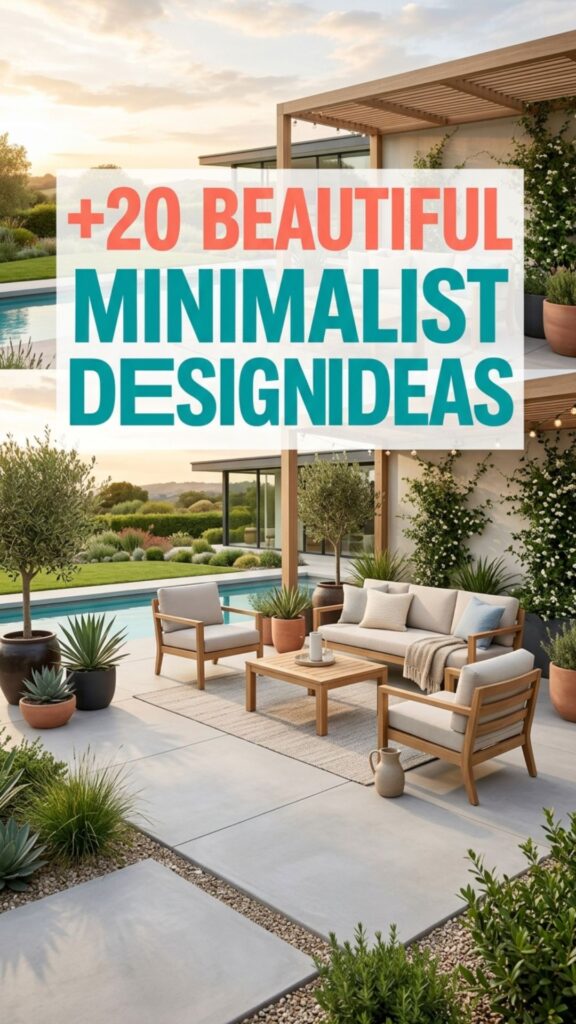
Here’s what you’ll walk away with:
- 20 practical ideas you can mix and match
- Tips that fit tiny balconies and big yards
- Budget-friendly swaps and material advice
- Answers to the questions people ask most
Let’s get into it.
1. Start With a Neutral Color Palette
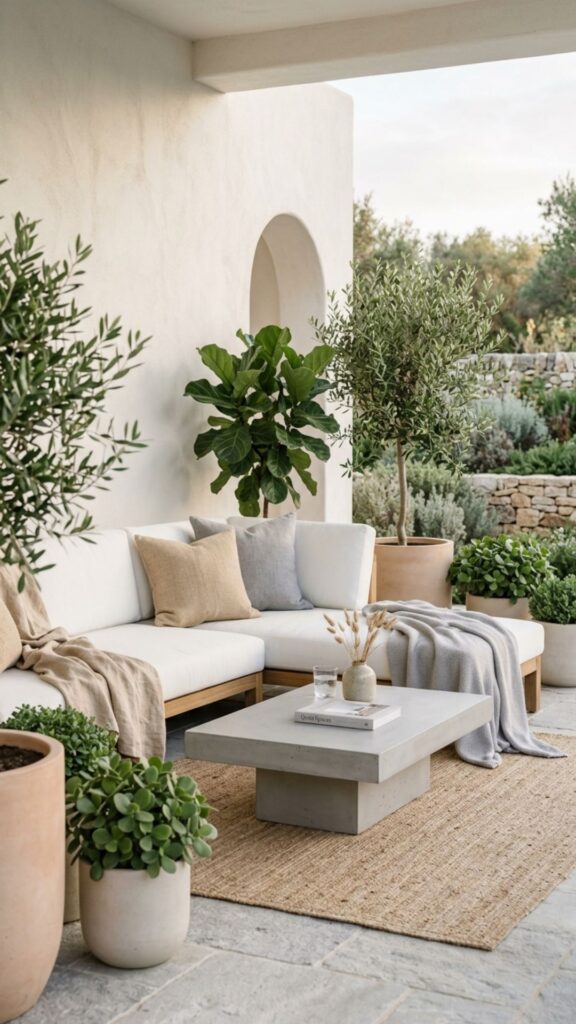
Color sets the mood, and minimalist patios lean on calm, quiet tones. Think warm whites, soft grays, sandy beiges, and muted greens. These shades let your space feel open and let natural elements—like plants and wood grain—do the talking.
Stick to two or three main colors across your furniture, cushions, and planters. When everything shares a family of tones, the whole patio reads as one relaxed scene instead of a jumble of competing hues. If you want a pop, add it through a single throw pillow or a leafy plant.
2. Choose Furniture With Clean Lines
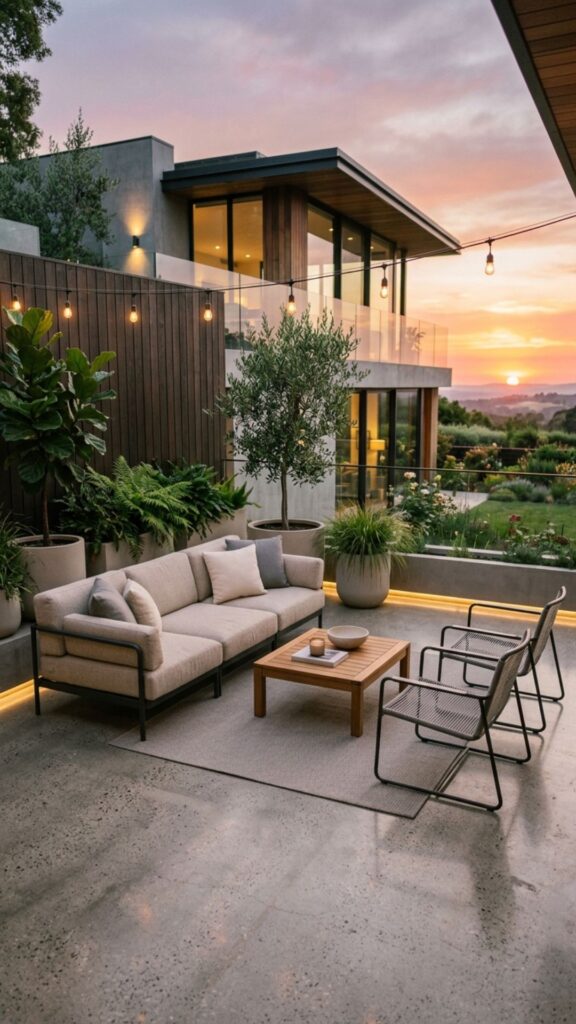
Bulky, ornate furniture fights the minimalist look. Instead, pick pieces with straight edges, slim frames, and simple silhouettes. A low-profile sofa or a sleek bistro set instantly feels more modern and uncluttered.
Quality matters more than quantity here. One well-built teak chair beats three flimsy plastic ones. Invest in a few solid pieces you genuinely love, and your patio will look intentional rather than pieced together.
3. Embrace Negative Space
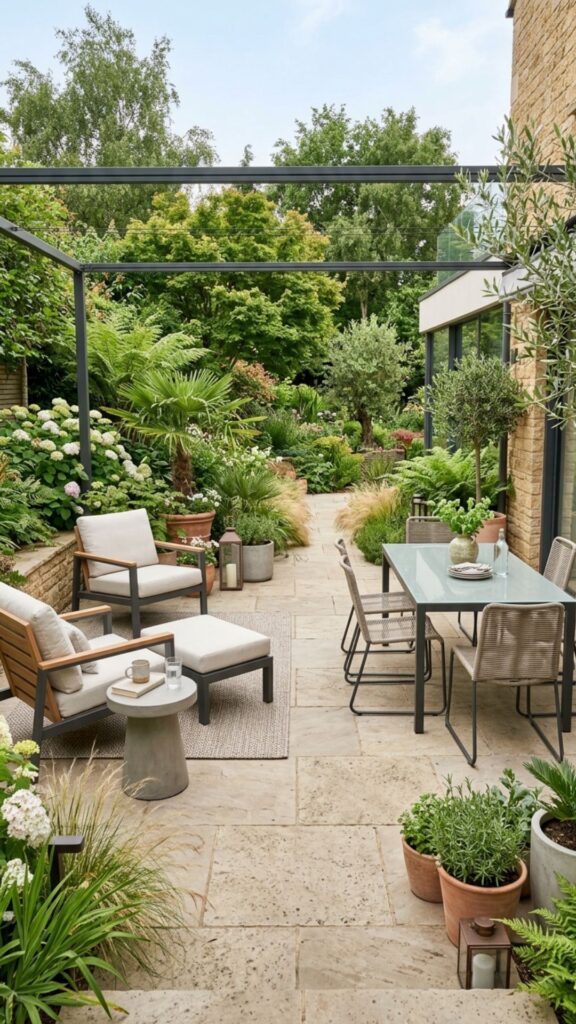
Empty space isn’t wasted space. In minimalist design, the gaps between objects are just as important as the objects themselves. Resist the urge to fill every corner.
Leave room to walk freely and let your eyes rest. A patio with breathing room feels larger, calmer, and more inviting. If you’re unsure whether something belongs, try removing it for a week. You probably won’t miss it.
4. Use Natural Materials
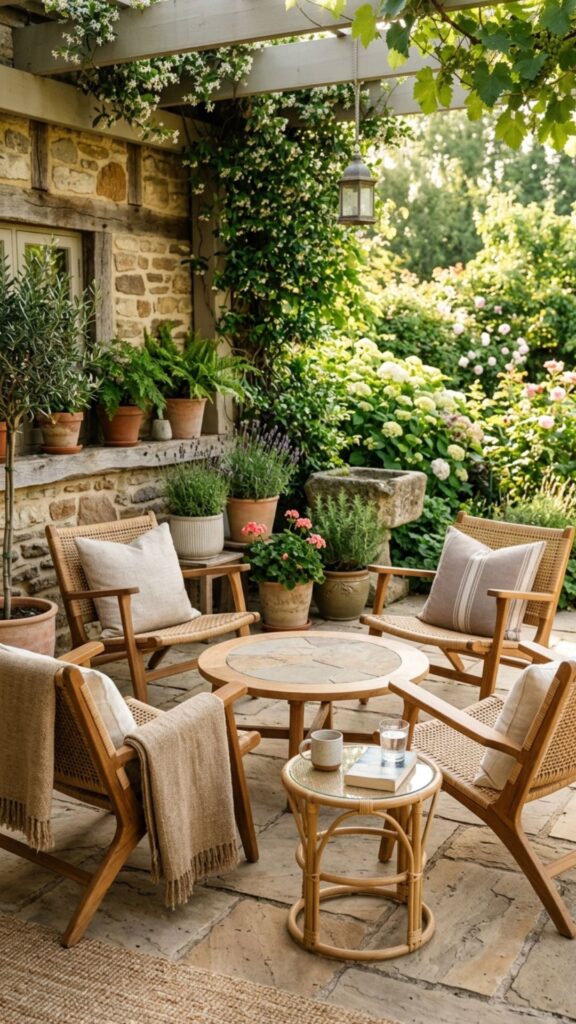
Wood, stone, rattan, and linen bring warmth that keeps minimalism from feeling cold. These materials age beautifully and connect your patio to the outdoors in a natural way.
A weathered teak bench, a concrete side table, or a jute rug adds texture without adding clutter. Mixing a couple of natural materials creates depth while keeping the palette calm and cohesive.
5. Add a Single Statement Plant
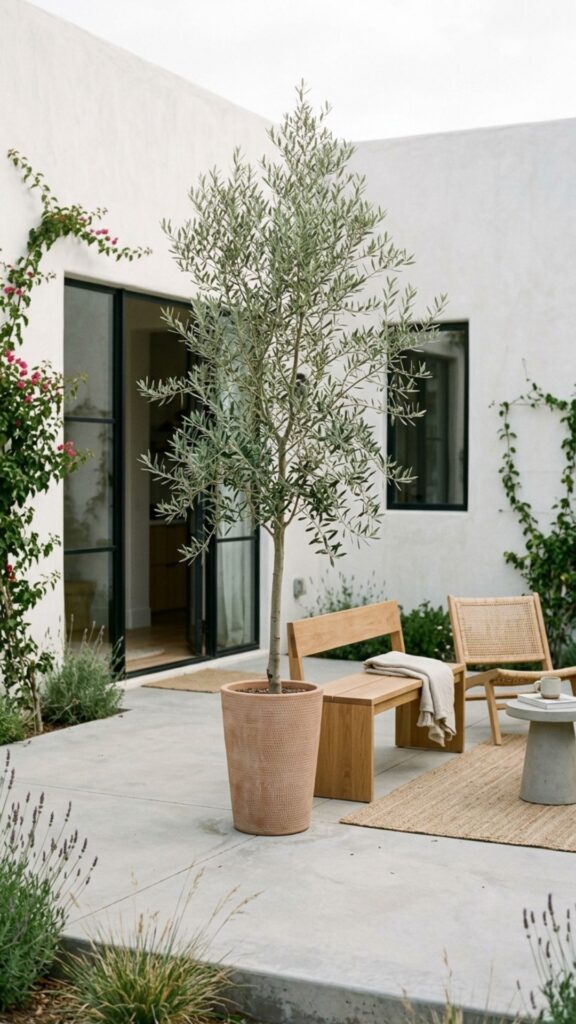
You don’t need a jungle to feel connected to nature. One striking plant—like a potted olive tree, a fiddle-leaf fig, or a tall grass—can anchor the entire space.
Place it where it naturally draws the eye, such as beside a seating area or next to a doorway. A single bold plant delivers impact with almost no maintenance stress, which is exactly what minimalist living is about.
6. Install Simple, Low-Profile Seating
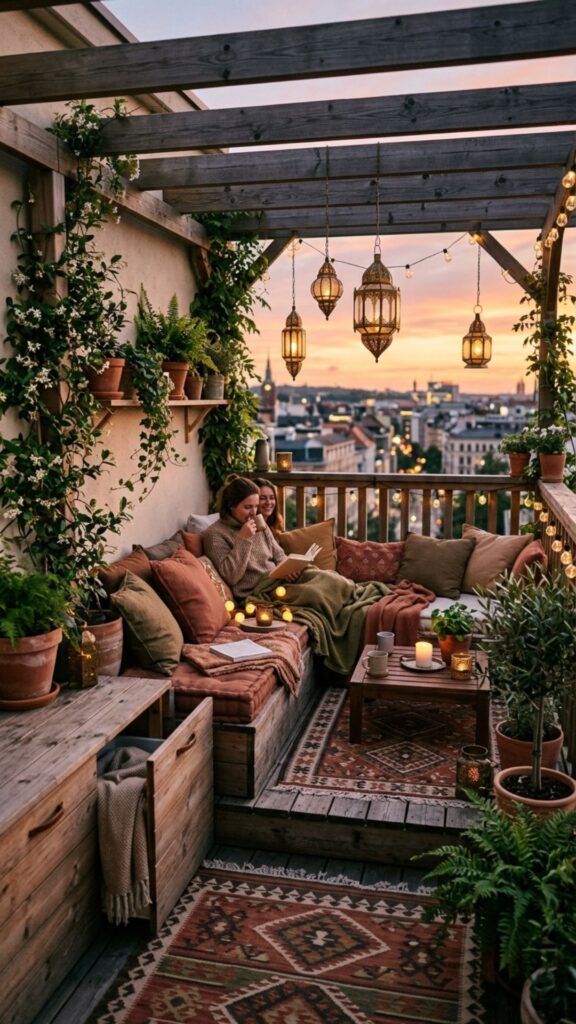
Floor cushions, built-in benches, and low platform seating keep the sightline clean. Lower furniture makes ceilings and sky feel taller, opening up even a small patio.
This approach works especially well on balconies. A built-in bench with hidden storage underneath gives you a place to sit and a spot to stash cushions when the weather turns. Function and calm, all in one.
7. Keep Decor to a Minimum
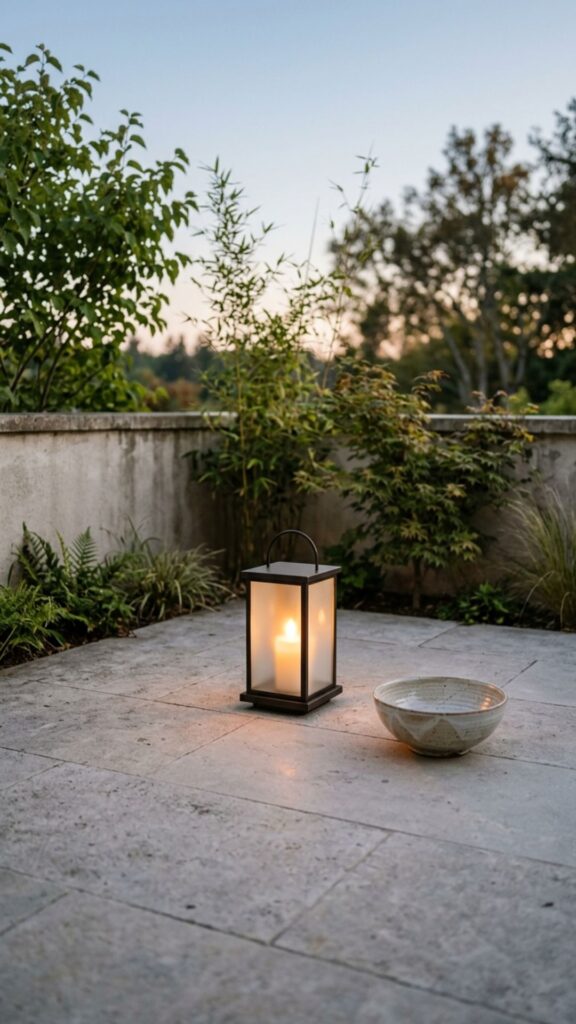
The fastest way to lose the minimalist feel is over-decorating. Choose a small number of decor items and give each one space to shine.
A single lantern, one ceramic bowl, or a sculptural piece says more than a shelf full of trinkets. When you edit down to your favorites, those pieces feel curated and meaningful instead of random.
8. Layer in Soft, Warm Lighting
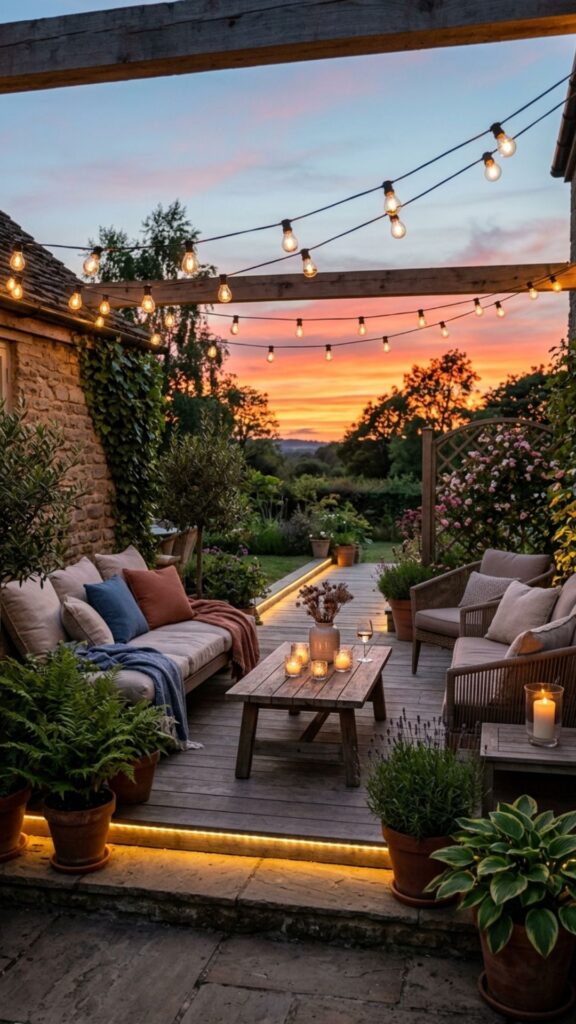
Lighting shapes how a patio feels after sunset. Skip the harsh floodlights and reach for soft, warm glows that create a cozy mood.
A single strand of subtle string lights, a few flameless candles, or discreet LED strips along a step do the job beautifully. The goal is gentle light that invites you to linger, not a stadium-bright glare.
9. Define the Space With an Outdoor Rug
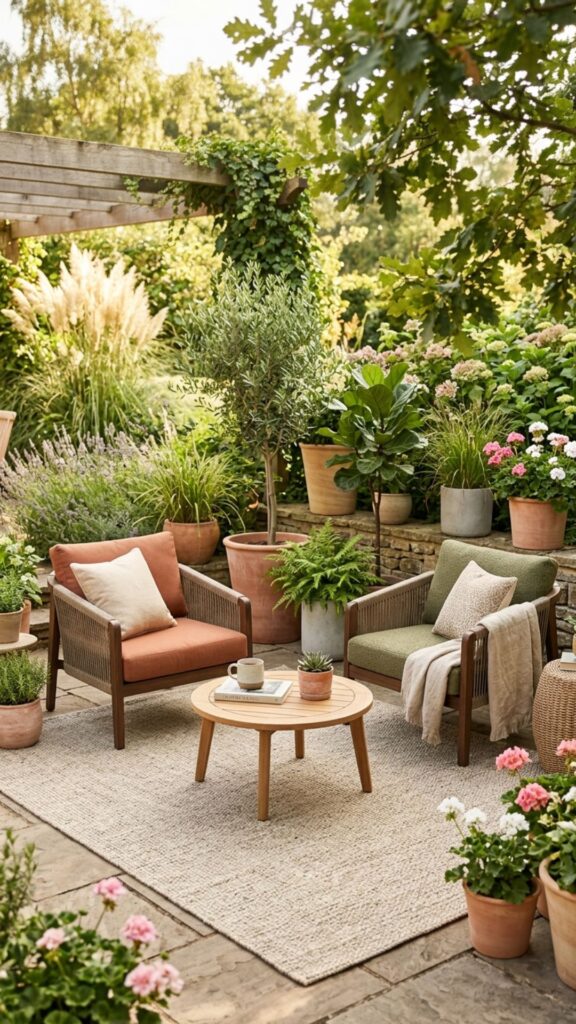
An outdoor rug grounds your seating area and gives the patio structure. It quietly tells your eyes, “This is the lounge zone,” without needing walls or dividers.
Choose a rug in a solid tone or a subtle geometric pattern that matches your palette. Natural fibers like jute or a flatweave polypropylene hold up well outdoors and add warmth underfoot.
10. Try a Monochromatic Look
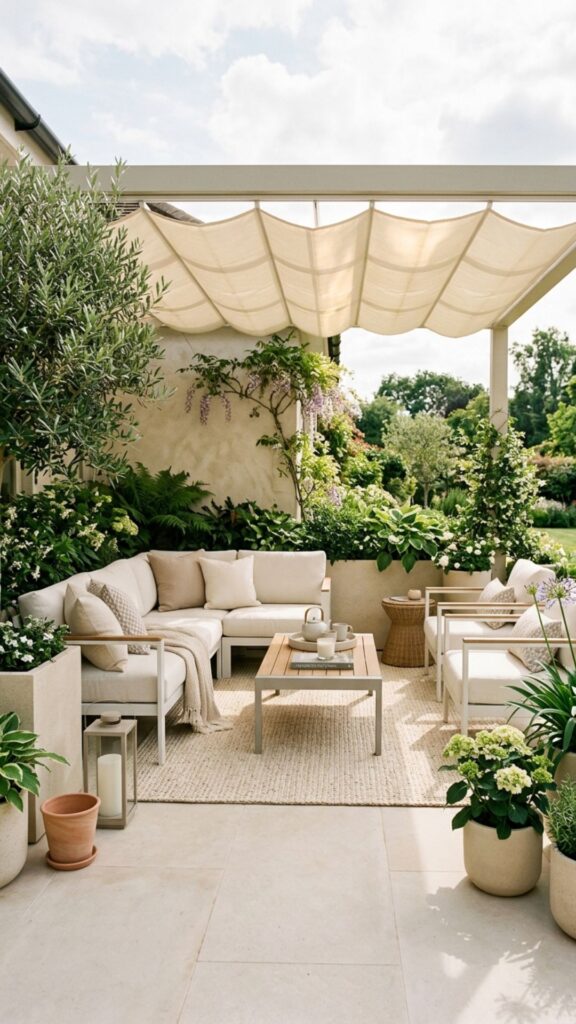
Going nearly single-color creates instant sophistication. Pick one shade and layer different textures and tones within it—say, cream cushions, an ivory rug, and a bone-colored planter.
This trick works wonders on small patios because it removes visual breaks and makes the space feel seamless. The variation in texture keeps it interesting so it never reads flat.
11. Add a Compact Water Feature
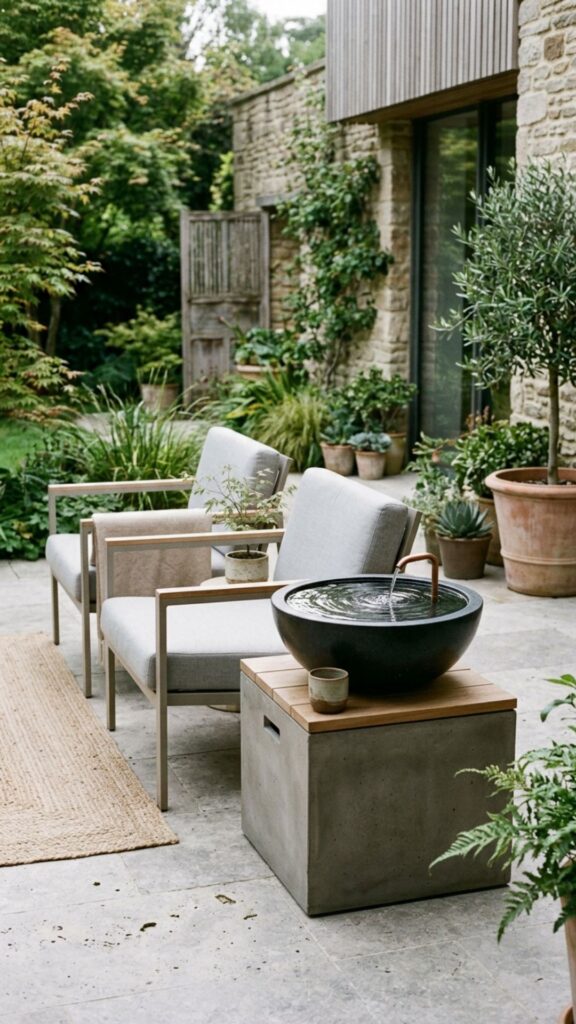
Sound matters in a relaxing space. A small, simple water feature adds a gentle trickle that masks street noise and calms the mind.
You don’t need an elaborate fountain. A sleek tabletop water bowl or a minimalist standing feature blends right in. Keep the design clean and unfussy so it complements the space instead of dominating it.
12. Use Built-In or Hidden Storage
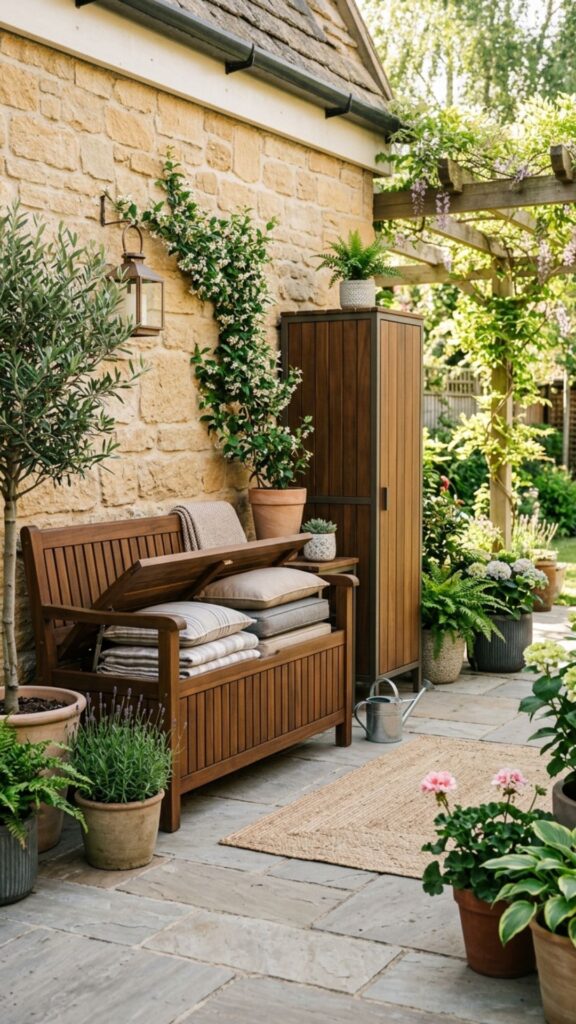
Clutter is the enemy of calm, so give everything a home. Storage benches, weatherproof boxes, and slim cabinets keep cushions, tools, and toys out of sight.
The best storage disappears into the design. A bench that doubles as a chest or a low console that hides garden supplies keeps surfaces clear and your patio looking effortless.
13. Go Vertical With Greenery
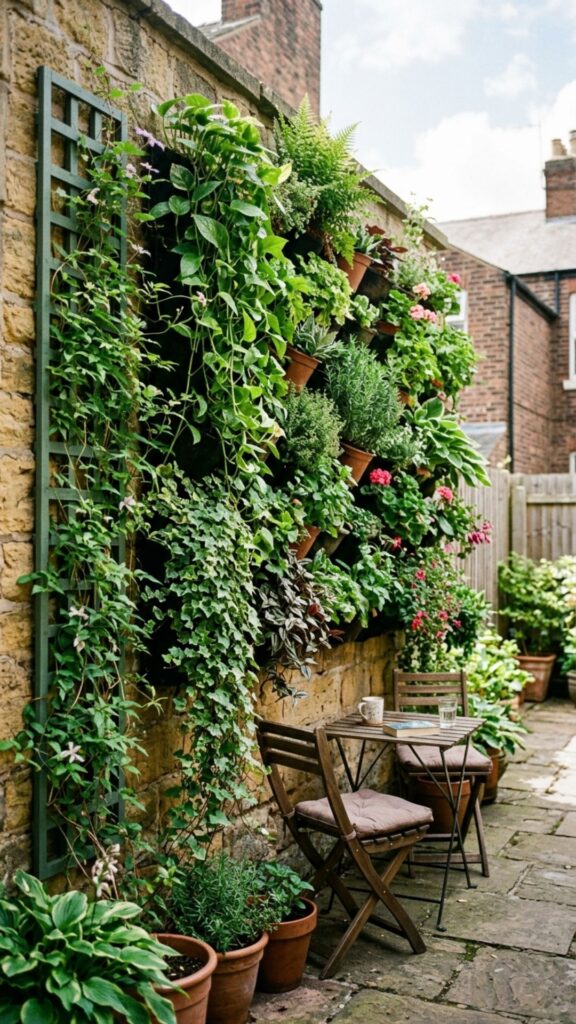
When floor space is tight, grow upward. A vertical garden, a few wall-mounted planters, or a slim trellis adds life without eating into your seating area.
Vertical greenery also draws the eye up, making the space feel bigger. Choose low-maintenance climbers or trailing plants so you get the lush look without a heavy care routine.
14. Pick a Simple Focal Point
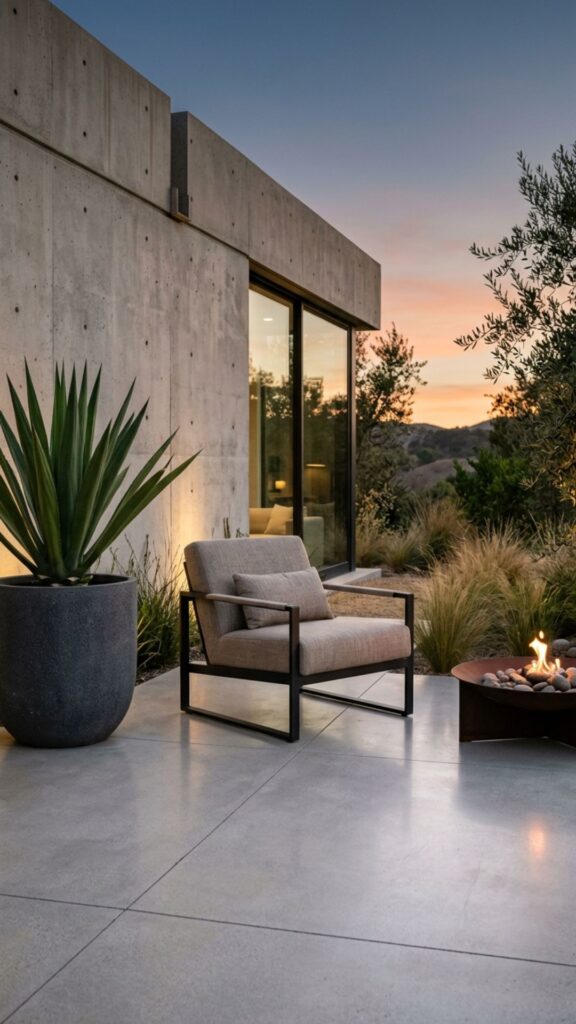
Every well-designed patio has one thing that anchors it. It might be a fire bowl, a striking chair, a piece of outdoor art, or that statement plant from earlier.
Choose one focal point and let everything else support it. When your eye knows where to land, the whole space feels organized and intentional rather than scattered.
15. Choose a Sleek Fire Feature
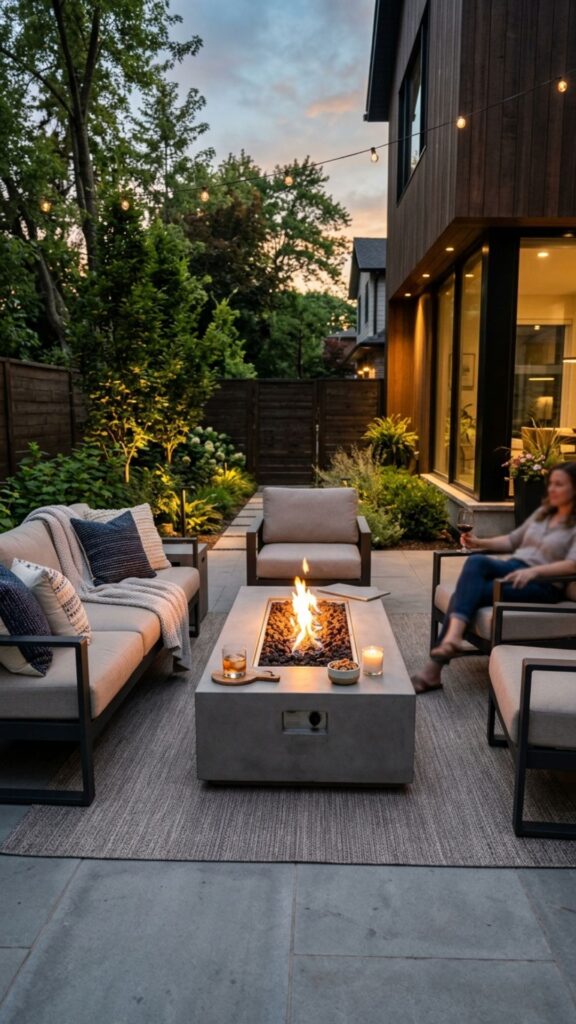
A modern fire pit or a linear fire table brings warmth and a natural gathering spot. Look for clean geometric shapes—square, rectangular, or a smooth bowl—that fit the minimalist theme.
Beyond the cozy factor, a fire feature extends your patio season into cooler months. Keep the surrounding area clear so the flame becomes the star and the space stays uncluttered.
16. Match Your Patio to Your Home’s Style
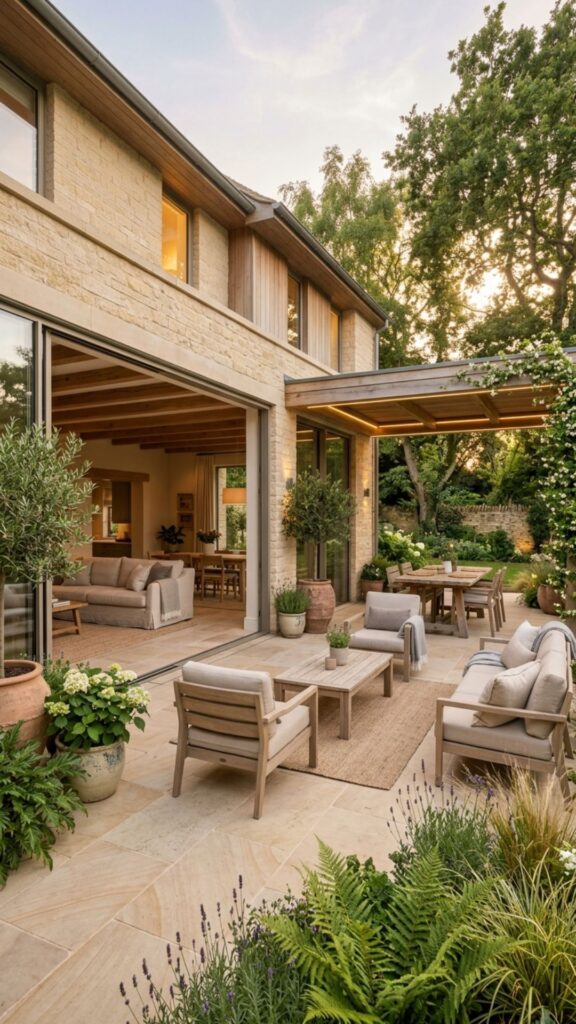
Minimalism adapts to any architecture. A modern home pairs well with concrete and black metal, while a farmhouse leans toward light wood and soft linen. A Mediterranean-style house loves terracotta and whitewashed walls.
Take cues from your home’s existing materials and colors. When your patio echoes the house, indoor and outdoor spaces flow together and everything feels deliberate.
17. Keep Pathways Clear and Open
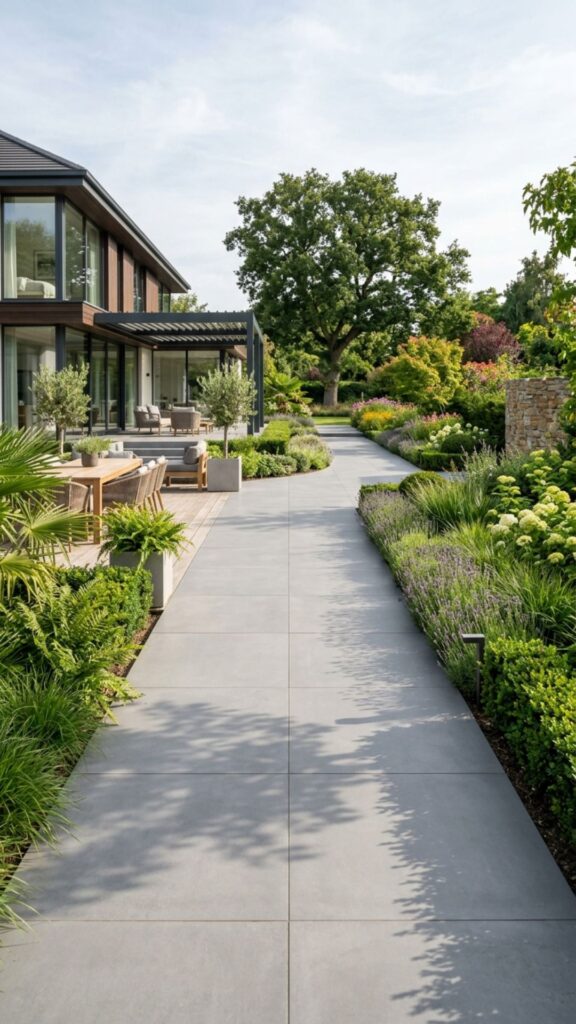
A clean path invites people in and reinforces the sense of order. Avoid crowding walkways with pots, furniture, or decor that people have to step around.
Simple paving—large-format tiles, poured concrete, or evenly spaced stepping stones—keeps the ground clean and modern. Fewer joints and lines mean a calmer, more spacious feel.
18. Add Texture Instead of Color
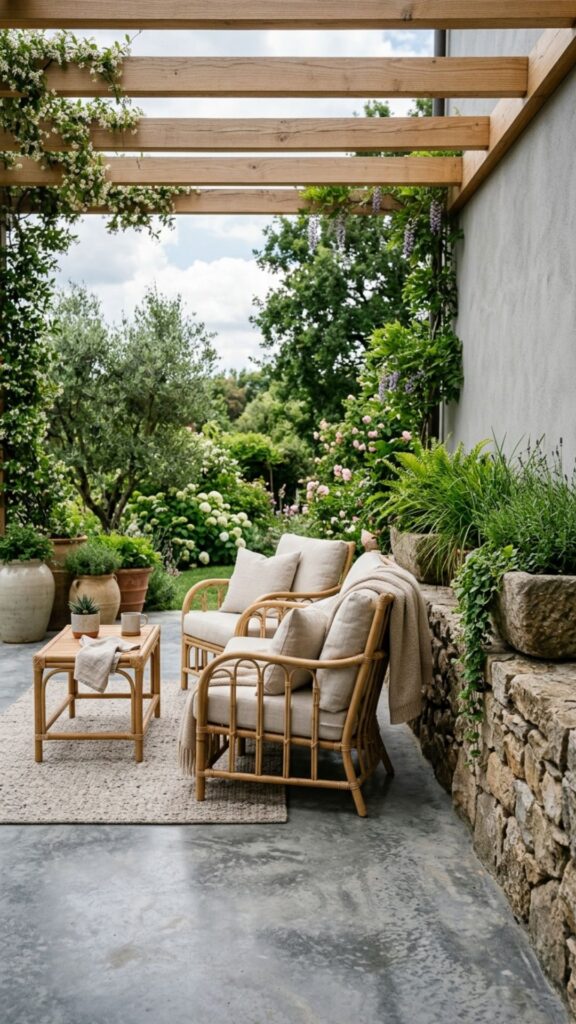
When your palette is quiet, texture does the heavy lifting. Combine smooth concrete with rough stone, soft linen with woven rattan, or a chunky knit throw with a sleek metal table.
These contrasts keep a neutral space from feeling boring. You get visual interest and depth without adding a single loud color, which is exactly the minimalist balance you want.
19. Create a Cozy Reading or Coffee Nook
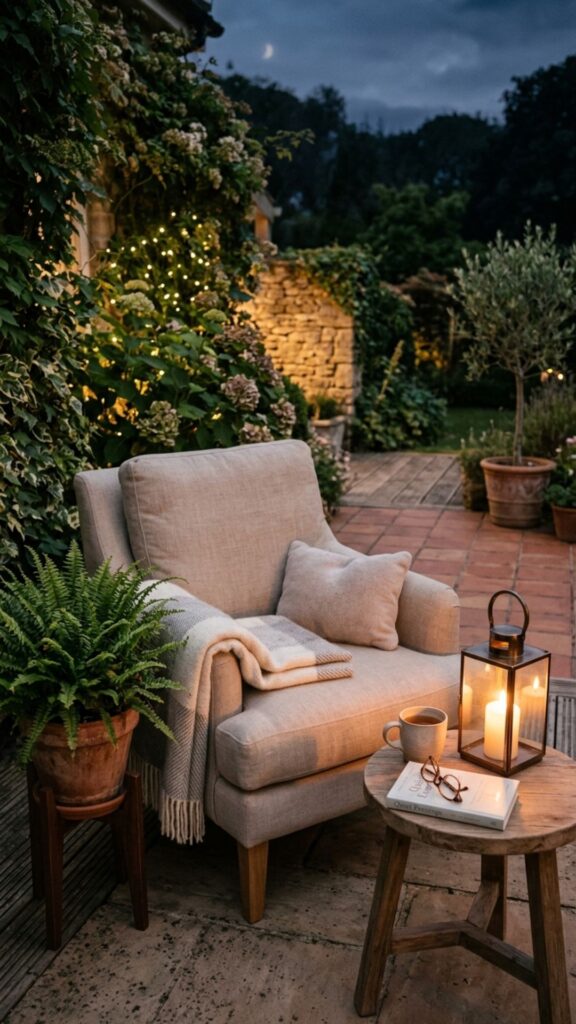
You don’t need a huge area to carve out a peaceful corner. A single comfortable chair, a small side table, and good light create a spot you’ll actually use every day.
Tuck it into a quiet corner with a bit of shade and maybe one plant nearby. This kind of small, purposeful zone shows minimalism isn’t about emptiness—it’s about spaces that serve you well.
20. Edit Ruthlessly and Maintain Regularly
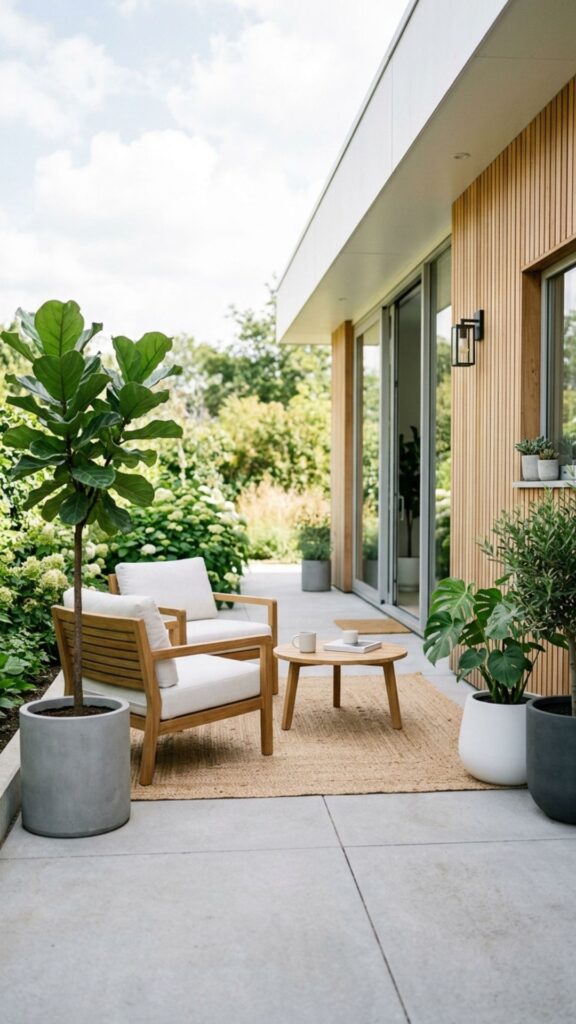
Minimalist design is a habit, not a one-time project. Every few weeks, look around and ask what’s earning its place. Remove anything broken, unused, or purely decorative that no longer feels right.
Regular upkeep keeps surfaces clear and plants healthy, which protects that calm feeling you worked to create. A quick reset each season keeps your patio looking fresh and intentional year-round.
Bringing It All Together
Great minimalist patio design ideas share the same core: fewer, better choices and plenty of breathing room. Start with a calm color palette, choose clean-lined furniture, add one or two natural touches, and edit out the rest. You don’t need every idea on this list—pick the three or four that fit your space and style, then build from there.
Ready to transform your outdoor space? Choose one idea from this list and act on it this weekend. Whether you clear the clutter, add a single statement plant, or swap in warm lighting, that first small step sets the tone for a calmer, more beautiful patio you’ll love spending time in.
What is a minimalist patio?
A minimalist patio is an outdoor space designed with clean lines, a neutral color palette, and only essential furniture and decor. The goal is to create a calm, clutter-free area that feels open and intentional rather than crowded.
How do I create a minimalist patio on a budget?
Start by removing clutter, which costs nothing and makes an instant difference. Then focus on a few quality pieces, use a neutral palette you can build over time, and add texture through affordable items like a jute rug or linen cushions. Repurposing what you already own keeps costs low.
What colors work best for a minimalist patio?
Neutral and earthy tones work best, including warm whites, soft grays, beiges, and muted greens. Stick to two or three colors across your furniture and decor so the space feels cohesive and calm.
Can a small balcony have a minimalist design?
Absolutely. Small spaces are ideal for minimalism because the style thrives on restraint. Use low-profile or built-in seating, grow plants vertically, and keep decor to one or two pieces to make the balcony feel larger and more relaxing.
How do I keep my minimalist patio looking clean?
Give every item a designated home, use hidden storage for cushions and tools, and do a quick reset each season. Regularly editing out unused or broken items keeps surfaces clear and preserves that open, calm feeling.